Electronics embroidered baseball caps Unit Cost Review sounds narrow until you look at how these caps actually get used. They show up in trade-show kits, technician uniforms, dealer welcome packs, and resale programs, then keep working long after the brochure is discarded. That repeat wear changes the math. A cap that costs a little more up front can deliver a lower cost per impression if the blank fits well, the embroidery stays clean, and the logo still looks sharp after months of use.
For electronics brands, the cap usually sits beside chargers, cables, cleaning cloths, and other small branded items. That context matters because the cap is often the one object people keep on their head, not in a drawer. Embroidery adds texture and perceived value, but only if the logo is sized correctly and the fabric can support it. A crowded design on a flimsy front panel looks expensive only on the quote sheet.
The practical buyer question is not whether embroidery is premium. It is whether the premium is justified by the job. A staff cap used by field reps needs comfort, consistency, and a look that survives daily wear. A giveaway cap needs a lower landed cost and enough quality that it does not read as disposable. Resale adds a different constraint: the cap has to support margin after freight, packaging, and any retail finishing are included.
That is why the first pass should focus on use case, not decoration complexity. Most cost overruns start when buyers approve artwork before they settle the blank, the fit, and the quantity band. The order becomes more expensive than it should be because the spec is trying to serve too many goals at once.
Electronics Embroidered Baseball Caps Unit Cost Review
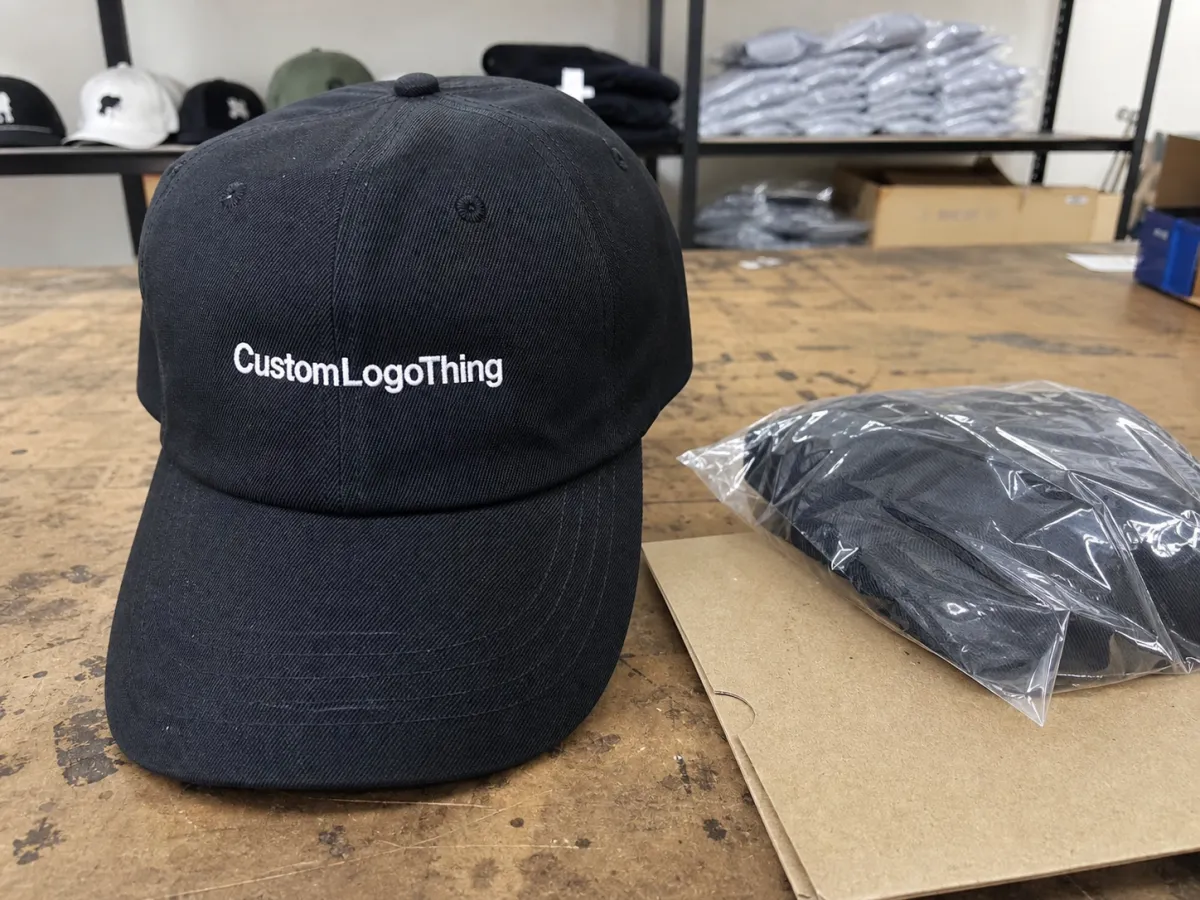
A useful electronics Embroidered Baseball Caps Unit Cost Review treats the cap as a working item, not a novelty. The blank, crown structure, closure, stitch count, and placement all affect how often the cap gets worn and how long the logo remains legible. Those are commercial details, not cosmetic ones. In practice, the best value is usually a mid-profile structured cap with a single front embroidery location, a standard closure, and a logo that stays readable from a few steps away.
Cheap promo caps can work for a one-day event, but they often lose shape quickly and carry logos that look cramped once the cap is on a head instead of lying flat on a table. Better blanks tend to hold their front panels, which matters because embroidery reads most cleanly on a stable surface. If a logo is positioned too low, too high, or too close to a seam, the result looks off even when the artwork itself is fine.
Electronics buyers also need to think about where the cap will be seen. A cap worn on the floor by a service team has different visibility requirements from a cap handed out at a booth. Field wear rewards comfort and durability. Trade-show wear rewards fast recognition. Resale rewards finish quality. Those three goals overlap, but they are not identical.
There is a habit in procurement to judge a cap by its sample alone. That can be misleading. A clean pre-production sample may hide problems that appear in a larger run, such as inconsistent panel tension, thread density that puckers thinner fabric, or a closure that feels less refined when inspected in bulk. Buyers who compare the sample against the full spec sheet usually avoid surprises later.
For electronics brands, the logo often needs to stay simple. Tiny model numbers, thin lines, and small text are hard to translate into embroidery. Thread does not behave like print. It fills space differently, and details below a certain scale blur into texture rather than communication. A simplified wordmark, icon, or short lockup often outperforms a complicated design on the cap front.
High-contrast colors matter more than many quotes admit. Dark thread on dark fabric can look elegant in a flat lay and disappear in a conference hall. Bright thread on a neutral cap often reads better in photos, under mixed lighting, and from across a booth aisle. For electronics teams that care about event visibility, legibility is not decoration; it is utility.
Cap Styles, Stitching, and Placement Options
Start with structure. Structured caps hold the front panel upright, giving embroidery a flatter, more consistent base. Unstructured caps feel softer and more casual, which can work for internal wear, but they can also let denser logos wrinkle if the fabric is too light. A six-panel structured cap remains the safest default for most electronics programs because it balances appearance, fit, and production reliability.
Profile changes the look more than many buyers expect. Low-profile caps sit closer to the head and feel less bulky. Mid-profile caps give the front panel extra space, which helps when the logo has a longer name or a second line. Flat-brim styles skew more retail and youth-oriented. Curved brims remain the most universally accepted for staff programs and trade events.
Placement determines both readability and cost. Front embroidery is the standard because it is visible and efficient. Side embroidery can carry a department name, model line, or URL. Back embroidery is useful for roles, team identifiers, or dealer names. Under-brim or sandwich-brim decoration can look polished, but it adds setup complexity and is harder to quote cleanly when the artwork is not already finalized.
Patch applications deserve attention when the logo has gradients, micro-text, or fine line detail. They can preserve artwork that would otherwise collapse in thread. The tradeoff is that patches change the tactile feel and may not suit every blank. A flat woven patch reads differently from raised embroidery, and buyers should treat that difference as a design decision rather than an automatic upgrade.
Color pairing is another quiet variable. A cap can look sophisticated on screen while failing in real use because the thread and fabric are too close in tone. The same logo that disappears on a charcoal crown may pop on a stone, navy, or heather gray base. If the program depends on visibility at events, ask for a physical thread card or a sample swatch instead of guessing from a monitor.
Most embroidery problems begin in artwork approval, not on the machine. If the supplier has to enlarge thin lettering or simplify internal lines, the logo may drift from brand expectations unless that change is discussed early. A clear proof should show location, size, stitch direction, and any simplifications made for production. If those details are missing, the proof is incomplete.
Specs That Change Fit, Durability, and Logo Clarity
Fabric choice has a direct effect on feel, price, and durability. Cotton twill is familiar, breathable, and usually lands in the middle of the price range. Brushed twill feels softer and slightly more finished. Polyester is more resistant to wrinkling and often works well for outdoor teams or frequent laundering. Performance blends dry faster in heat, though they do not always feel as natural on first wear. For tech brands that want a sharper, more utilitarian look, polyester or blended twill is often the more practical choice.
Thread choice matters more than many buyers realize. Polyester embroidery thread generally holds color better in sun and repeated wear, which makes it a strong fit for field teams. Rayon can look a little richer under indoor lighting, but it is less forgiving in harsh conditions. For most electronics programs, color retention and consistency matter more than a slight sheen.
Closure style affects both fit and cost. Snapback is usually the most budget-stable choice because it fits a wide range of wearers and keeps production predictable. Strapback feels a bit more finished. Buckle closures can look premium, but they add labor and can slow production. Velcro is easy to adjust and quick to use, though it rarely reads as elevated. If the caps are going into a staff program with mixed head sizes, the closure should be chosen for fit first and appearance second.
Front-panel support is another detail buyers should ask about. A structured cap often uses buckram or another stabilizing layer behind the front panels. That backing helps embroidery sit cleaner and prevents the crown from collapsing after repeated wear. Without enough support, even a simple logo can pucker the fabric or lose its shape after a few uses. This is one of those details that is easy to miss in a photo and obvious in hand.
Sweatband quality, seam reinforcement, and visor construction also affect how long the cap feels decent. A cap can look fine in a mockup and still disappoint in wear because the sweatband is rough, the stitching is weak, or the visor bends too easily. For active crews, those small failures show up quickly. For giveaway programs, they show up as low retention rates because recipients do not keep the cap in rotation.
Quality control should focus on placement tolerance, thread tension, and color match. A logo that is slightly off-center or set too low on the crown looks rushed even if the stitch work is technically accurate. Too much tension can pull the fabric and distort the panel. Too little tension creates a fuzzy edge. Buyers should ask the supplier how they inspect first-run output and what happens if the color shifts from one batch to the next.
Fit is not theoretical. A cap that feels perfect on a sample head may sit shallow, tight, or awkward once it reaches a wider group. That is why crown depth, front panel width, and adjustment range should be part of the quote discussion. If the vendor cannot tell you those measurements or refuses to specify the blank, the order is not fully defined.
Pricing, MOQ, and Unit Cost Breakdown
Any serious Unit Cost Review needs the full stack, not just the headline price. The quote should show the cap blank, digitizing, embroidery labor, setup charges, packing, freight, and any rush fee. A low per-piece price that hides one-time charges is not efficient; it is just incomplete. Buyers who compare landed cost instead of catalog price usually make better decisions.
MOQ changes the economics fast. The fixed work behind embroidery does not disappear just because the order is small. Digitizing, machine setup, thread matching, and proofing all have to happen whether the order is 24 caps or 2,400. That is why small runs look expensive on a per-unit basis and why larger bands often produce a dramatic drop in cost per cap.
| Quantity band | Typical unit cost | What is usually happening | Best fit |
|---|---|---|---|
| 24-49 pieces | $11.00-$16.00 | Setup and digitizing are spread across a small run | Staff drops, samples, pilot tests |
| 50-99 pieces | $8.00-$12.00 | Pricing starts to stabilize, but fixed costs still weigh on the quote | Dealer kits, branch teams, event crews |
| 100-299 pieces | $5.75-$8.50 | Bulk efficiency improves and the decoration cost spreads more evenly | Trade-show programs, regional rollouts |
| 300+ pieces | $3.90-$6.75 | Recurring production becomes cheaper, especially on repeat orders | Distribution programs, retail, inventory builds |
Those ranges assume a standard six-panel cap, one front embroidery location, and a logo in the roughly 5,000 to 7,000 stitch range. Once the design adds a second location, larger stitch counts, or more color changes, the quote moves upward. A more premium blank moves it again. That is normal and should be expected.
One-time charges deserve separate attention. Digitizing often runs about $35 to $85, depending on complexity and whether the logo has to be simplified for thread. Some suppliers label this as tooling, but the accounting idea is the same: the first order pays for the setup, and repeat orders should be cheaper if nothing changes. Sample fees may be credited back on bulk approval, but that should be confirmed in writing.
A strong quote should answer a few basic questions without evasiveness: what is the blank, what is the stitch count, what is the closure, what is the freight assumption, and what changes on reorder? If the vendor answers only with a low number and no detail, the quote is not ready for comparison. The best suppliers make the price structure easy to inspect because they are not hiding margin in the fine print.
For real comparison, ask for the same spec from more than one vendor. A slightly higher price can be justified by better blank quality, cleaner stitch definition, or more reliable freight handling. A cheaper quote that uses a weak cap body or vague shipping assumptions often costs more by the time the order lands.
Production Process and Lead Time
The production sequence is straightforward: artwork intake, digitizing, proofing, approval, embroidery, finishing, quality check, and packing. The delays usually come from missing information rather than the machine time itself. A supplier can move quickly when the artwork is clean and the blank is in stock. If either one is uncertain, the schedule slips.
Proofing commonly takes a few business days. Standard production often lands in the 10 to 20 business day range after approval, though larger runs, complex decoration, or custom sourcing can stretch the schedule. Rush orders exist, but they work best when the artwork is already production-ready. A rushed job with unclear files is still a slow job; it just costs more.
The predictable delay points are easy to list. Blurry artwork slows digitizing. Missing Pantone references create color decisions that should not be made by guesswork. Slow approvals stall the queue. Cap substitutions happen when the original blank runs short. Peak season, trade-show spikes, and holiday buildouts all compete for machine time. None of that is unusual. It is simply how production behaves under load.
Good planning reduces friction. Send vector files, quantity tiers, cap style, thread color count, placement notes, and the delivery deadline up front. If the caps are for field crews, mention that. If they are for client gifts, mention that too. The more the supplier understands about how the cap will be used, the easier it is to match the blank to the program.
Packaging can quietly extend the timeline. If the caps are being packed into larger kits with chargers, cables, or printed inserts, the supplier has to account for carton strength, packing order, and transit risk. For pack-out performance, suppliers familiar with ISTA testing standards usually make better shipping choices than vendors who only think about decoration. If branded inserts matter, ask for FSC-certified paper when that claim is part of the program.
Lead time is not just embroidery time. It also includes sourcing, packing, handoff to freight, and the possibility that one small approval issue pauses everything. A buyer who sees the timeline as a chain of separate steps tends to plan more accurately than one who treats it as a single factory number.
What a Reliable Cap Supplier Should Prove
A reliable supplier proves the order can survive production, not just the sales call. Transparent pricing, a clear MOQ, readable proofs, and an honest explanation of what the embroidery can and cannot do are all good signs. If the supplier keeps pushing a complicated decoration method when a simpler approach would improve clarity and reduce cost, that is not expertise. It is padding.
The best suppliers tend to reduce cost in practical ways. They will tell you when the logo should be simplified for embroidery, when a patch will preserve detail better than stitching, and when a particular blank is too soft for the design. That kind of advice matters because it prevents rework. It also separates a production partner from a quotation engine.
Consistency becomes more important on repeat orders than on first runs. Electronics companies often reorder the same cap for staff, events, dealer networks, or regional teams. If the embroidery shifts, the cap body changes without notice, or the thread colors drift, the program starts to look patchy across locations. The cheapest initial run can become the most expensive long term if it creates mismatched inventory.
Communication quality is a quick test. A vendor that cannot answer basic questions about stitch count, blank brand or equivalent, closure type, and freight assumptions is not ready to support the order. These are not special requests. They are the minimum needed to compare one quote against another.
There is also value in suppliers who do not overstate how unique every order is. Most cap jobs are not special. They need to be accurate, consistent, and delivered on time. A calm, repeatable process is usually more useful than a dramatic pitch. Buyers do not need theater; they need a production path that stays stable when the run scales up.
For packaging components, certification can matter if your brand is tracking sourcing claims. For shipping durability, transit standards matter more than a polished brochure. A supplier that understands both will usually produce fewer surprises. That is the sort of practical confidence worth paying for.
Next Steps for an Accurate Quote
For a clean quote, send vector artwork, preferred cap style, thread color count, quantity tiers, shipping zip code, and the target delivery date. If the cap is meant for staff, say so. If it is for resale or dealer distribution, say that too. Different end uses justify different blanks, and the wrong assumption can distort the price.
Ask for a tiered price table that separates setup, unit cost, sample charges, and freight. That exposes the real landed cost instead of hiding it behind a headline number. It also makes weak assumptions visible. If the cap price is low but freight is inflated, or if the setup fee is padded, the difference will show up immediately.
Request a digital proof or pre-production mockup before payment. A useful proof should show logo size, placement, stitch direction, and any simplification made for embroidery. If the design has fine text, ask how it will be treated. If the supplier cannot explain that clearly, the quote is not ready for approval.
When the program mixes internal wear and giveaway stock, compare at least two cap options instead of forcing one blank to do everything. A better cap for staff and a lower-cost cap for handouts is often the cleaner split. That usually protects appearance where it matters and keeps the budget under control where it can.
The right electronics embroidered baseball Caps Unit Cost Review narrows the spec before it locks the spend. That is what keeps the final price honest, the delivery timeline realistic, and the finished caps worth wearing after the event is over.
Frequently Asked Questions
What does an electronics embroidered baseball caps unit cost usually include?
It usually includes the cap blank, embroidery labor, digitizing or setup, and standard packing. It often excludes freight, taxes, rush charges, and special packaging unless the supplier lists them explicitly. A useful quote should separate one-time setup costs from the recurring per-cap price.
How does MOQ affect embroidered baseball cap pricing?
Lower MOQ usually pushes unit cost higher because the fixed work is spread across fewer pieces. Once the order moves into larger quantity bands, the price per cap should fall noticeably. Tiered pricing is the best way to see where the breakpoints actually land.
What is the normal lead time after proof approval?
Standard production is often about 10 to 20 business days after artwork approval. The real timeline depends on decoration complexity, order size, blank availability, and the supplier’s workload. Rush orders are possible, but they usually cost more and require cleaner artwork.
Can I mix cap colors or styles in one embroidered order?
You can often mix colors within the same cap style, though too many variations may change the quote. Mixing different styles usually adds complexity and can raise sourcing or setup costs. Keeping the same logo placement and decoration method helps preserve better unit pricing.
What artwork files do you need for an accurate quote?
Vector files such as AI, EPS, or PDF are best. Include Pantone references, logo placement notes, size limits for the front panel, and your quantity tiers. A shipping zip code and target delivery date help the supplier quote landed cost instead of a rough estimate.
Done well, this review gives you a realistic cap spec, a more accurate timeline, and a price that still makes sense after freight is added. That is the point of the exercise.


