Soap trucker caps Unit Cost Review matters because the blank cap is rarely the expensive part. Decoration, setup, freight, and sample revisions are what usually move the price.
For soap brands, trucker caps work as a low-friction merch item: they promote the line, pack easily with other goods, and feel more useful than a throwaway insert. That makes them a practical fit for launch kits, retail bundles, staff gear, and event giveaways.
The useful way to buy them is to focus on cost per piece, MOQ breaks, decoration method, and proofing. If those are clear early, the order is easier to compare and harder to overpay for.
Why soap trucker caps are the low-risk merch buy most brands miss
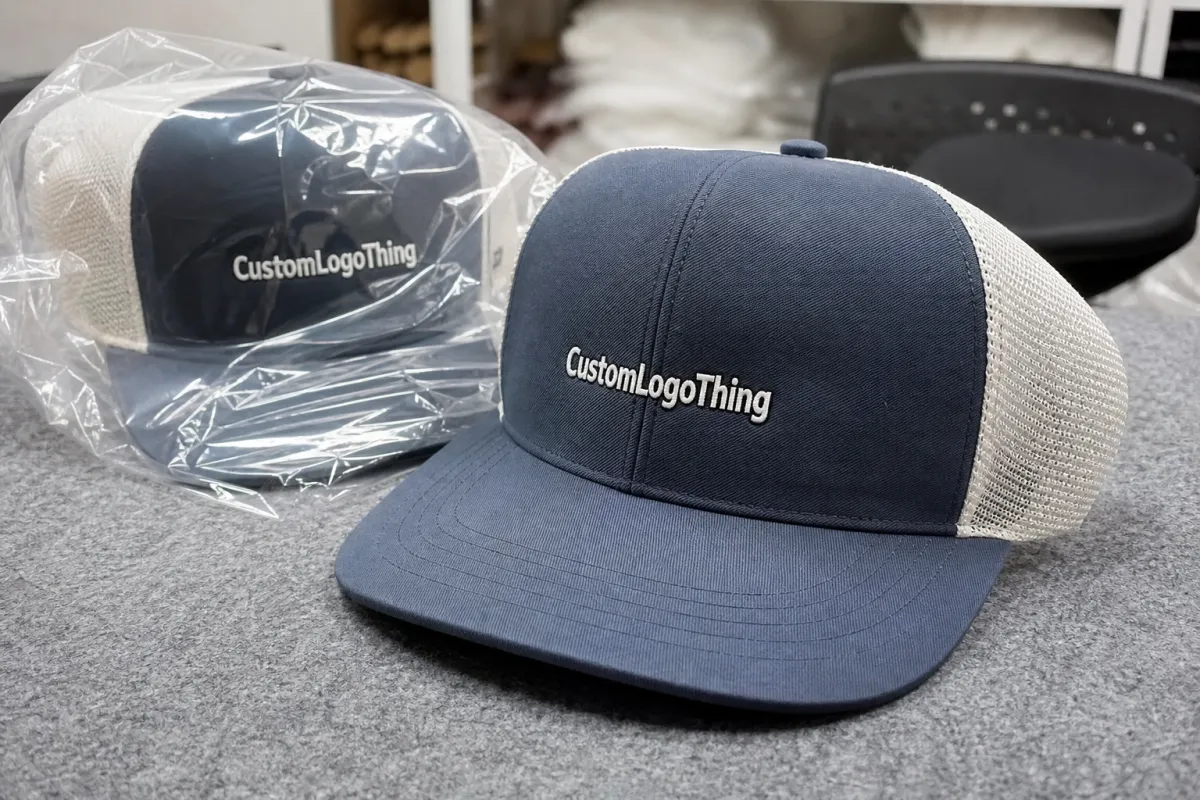
Soap brands often overspend on packaging that looks premium but is awkward to ship or slow to kit. A trucker cap is simpler. It is wearable, easy to sample, and usually less risky than a full custom packaging program.
The low-risk part is that you can test the design with a modest order, check how the logo reads in real life, and decide whether it deserves a larger run. If it works, you have a repeatable brand asset. If it does not, you have not committed to expensive tooling or a custom structure that is hard to unwind.
They are most useful when the product needs quick visual impact:
- Promo drops for seasonal scents or launch campaigns.
- Retail bundles where the cap raises perceived value without changing the soap itself.
- Staff kits for trade shows, markets, or pop-ups.
- Event giveaways where people are likely to keep wearing the item.
That last point is why the item can outperform other promo spend. A wearable piece keeps the brand visible after the event, while a small insert usually disappears. If you are kitting with other goods, it is still worth checking shipping and carton handling basics through ISTA before you approve a packed-out run.
Cap details that change the look, feel, and quote
Two caps can look similar at a glance and still land in very different price bands. The gap usually comes from details buyers skip early: structure, mesh quality, brim shape, closure, and sweatband grade.
Front panel structure is the first choice. A structured front keeps its shape and tends to look more retail-ready. An unstructured front feels softer and more casual, which may work for giveaways but can read less polished next to premium soap packaging.
Mesh type changes the finish too. Finer mesh tends to look cleaner and slightly more premium. Coarser mesh is often cheaper, but it can push the cap toward a more promotional look. Sweatband quality matters for comfort and can also affect how the item is perceived.
Decoration is where cost often changes the most:
- Embroidery is usually the most durable option for simple logos.
- Woven patches work well when the artwork needs finer detail.
- PVC patches are bold and tactile, but they usually raise cost.
- Screen print can be efficient for flat graphics, though it may feel less premium on a cap front.
- Mixed decoration can look strong, but each added layer adds cost and approval time.
Logo size and placement also affect the quote. A small front-left mark is often simpler than a large front-panel design. If a seam cuts through the artwork, the supplier may need to redraw the file or convert it into a patch. The art can look fine on screen and still be awkward to produce.
The practical test is whether the cap belongs beside the rest of the product line. If the soap is botanical, artisan, or giftable, the cap should support that tone instead of looking like generic merch.
For sourcing discipline across the broader packaging mix, buyers sometimes also check FSC standards for nearby materials and inserts. That will not fix a weak cap spec, but it helps keep the full presentation consistent.
Specs to lock before sampling so nothing drifts
Sampling moves faster when the spec sheet is actually specific. “Black trucker cap with logo” is not enough. Lock the basics before you ask for a sample so you are not paying to rediscover them later.
The fields that matter most are straightforward:
- Crown height and whether you want low, mid, or high profile.
- Brim shape, including flat or curved bill preference.
- Closure type, usually plastic snapback, but sometimes Velcro or buckle.
- Logo dimensions and the exact decoration position.
- Target colors with Pantone references if color accuracy matters.
- Use case, since a retail add-on, staff uniform, and giveaway do not need the same finish level.
That last point saves money. A premium retail bundle may justify a cleaner patch and more structure. A one-day event giveaway usually does not need that level of finish. Same product, different job, different quote.
Sampling also gets easier when the artwork is ready. Clean vector files reduce back-and-forth on stitch count, line thickness, and patch shape. If the logo is too detailed for embroidery, it is better to learn that early.
Packaging and carton details belong in the conversation too. If the caps need to be polybagged, paired with soap, or shipped direct to customers, say so up front. That affects packing labor, carton count, and damage risk.
A tight spec sheet is one of the cheapest ways to control cost. It reduces revisions, rejected proofs, and color drift, which is usually where a simple order turns into a delay.
Soap trucker caps unit cost review
This is the part buyers care about most. Unit cost moves with quantity, decoration method, and how much custom work is involved. Lower runs carry heavier setup costs per piece. Higher runs spread those fixed costs out more efficiently.
For a typical stock trucker cap with simple branding, these are realistic planning ranges before freight:
| Quantity | Basic embroidered logo | Patch decoration | Typical notes |
|---|---|---|---|
| 100 pieces | $4.20-$7.50 | $5.10-$9.20 | Heaviest setup burden, usually the least efficient tier |
| 250 pieces | $3.10-$5.40 | $4.00-$7.10 | Common MOQ break for better cost per piece |
| 500 pieces | $2.60-$4.30 | $3.40-$5.90 | Better bulk pricing if artwork stays simple |
| 1,000 pieces | $2.15-$3.70 | $2.95-$5.10 | Setup costs spread well; best fit for repeatable programs |
Those ranges are planning numbers, not promises. Specialty thread, 3D puff, multi-location branding, or a custom patch can move the price quickly. If the blank cap is standard but the decoration is complex, the decoration can become the real cost driver.
Break the quote into line items:
- Cap blank
- Decoration
- Setup charges
- Tooling fees, if a patch mold or special component is needed
- Sampling
- Packing
- Freight
Once the quote is itemized, you can compare offers without guessing. A lower factory price can become a worse deal after freight and packing are added. That is the difference between factory price and landed cost.
MOQ is another lever. Simple embroidered runs can sometimes start lower because the blank cap is standard and the decoration is easy. Custom colors, specialty patches, and unusual trim usually require a higher minimum. Ask where the price breaks are and what changes at each tier.
“The cheapest quote is often just the least honest one until freight and extras show up.”
That applies to cap buying and to most packaging orders. A useful Unit Cost Review is less about chasing the lowest sticker and more about paying the right amount for the right finish at the right quantity.
Process, timeline, and proofing steps that keep orders moving
A clean order usually follows the same path: inquiry, artwork review, digital proof, sample or pre-production check, approval, bulk production, inspection, and ship-out. Most delays come from rushed decisions, not from the process itself.
Digital proofing is usually the fastest step. If the specs are locked and the artwork is clean, a supplier can often turn it quickly. Sampling takes longer because it involves actual production, not just mockup edits. Bulk production depends on decoration complexity, stock availability, and how many revisions happened before approval.
Typical timing ranges look like this:
- Digital proof: often 1-3 business days.
- Sample or pre-production piece: often 5-10 business days, sometimes longer for patch work.
- Bulk production: often 10-20 business days after approval.
- Freight: depends on lane, carton count, and service level.
Rush timelines can help, but they usually reduce flexibility or raise cost. If a soap launch has a fixed date, a simpler cap design is often smarter than a more complicated one that misses the window.
The common delay triggers are predictable:
- Incomplete artwork files
- Late color changes
- Unclear sizing
- Approval loops that restart after every small revision
A supplier that asks for details early is usually protecting the schedule. Good proofing keeps the order moving and prevents problems from showing up after production starts.
What a dependable supplier should prove before you order
Trust is not about polished sales language. It is about whether the supplier can prove the final product will match the proof. Clear mockups, real product photos, and plain MOQ guidance matter more than a nice-looking quote sheet.
A dependable supplier should be able to show:
- Current product photos of the cap style being quoted.
- Spec handling that matches your requested crown, brim, closure, and decoration placement.
- Sample traceability so the approved version is documented.
- Inspection steps before ship-out.
- Defect policy in plain language.
Factory-direct control can help with repeat orders because it reduces the distance between the proof and the production floor. That matters when the same cap needs to be reordered later and color or placement needs to stay consistent.
The best suppliers usually explain tradeoffs rather than overpromising. They tell you when embroidery is better than a patch, when MOQ goes up, and when a rush timeline will limit options. That honesty is usually worth more than a slightly lower quote.
For packaging buyers, the test is simple: does the cap support the larger presentation? If the soap line is premium, the cap should feel deliberate. If the line is high-volume and playful, a simpler cap can be the right buy. Either way, the supplier should help match the cap to the brand and the budget.
What to send for a faster quote and cleaner approval
If you want a fast quote, send real inputs instead of a short message and a deadline. The best approvals come from buyers who know what they want and what they can compromise on.
Send these details in the first message:
- Logo file in vector format if possible.
- Target quantity with a backup quantity if you are near an MOQ break.
- Preferred cap style, including color and structure.
- Color references, ideally Pantone or close visual matches.
- Deadline with the actual event or launch date.
- Ship-to postal code so freight is quoted against reality.
Ask for two or three quote options if the order matters. For example: one simple embroidered option, one patch option, and one premium option. That gives you a cleaner way to compare bulk pricing, lead time, and presentation value.
If the cap is tied to a product launch or retail bundle, approve one sample path before you lock the full order. It is cheaper to catch a bad fit, off-tone color, or awkward logo scale on a single sample than on 500 units in cartons.
Compare landed cost, not blank price. A low cap price with high freight and extra packing can be a mediocre deal. A slightly higher factory quote with cleaner packing and lower shipping may be the better buy. That is the point of a proper soap trucker caps Unit Cost Review: it helps you choose the right quantity, finish, and timeline instead of chasing the lowest number on the page.
What is a realistic soap trucker caps unit cost at 100, 250, and 500 pieces?
Expect the per-piece price to drop as quantity rises because setup and decoration get spread over more units. At 100 pieces, a simple embroidered cap often lands around $4.20-$7.50 before freight. At 250 pieces, many buyers see $3.10-$5.40. At 500 pieces, $2.60-$4.30 is a sensible planning range for a straightforward run. Patch work usually costs more.
What MOQ should I expect for custom soap trucker caps?
Simple stock-cap runs can start lower, while custom colors, patches, or specialty decoration often need a higher MOQ. In practice, MOQ is driven more by the decoration method than by the cap shell itself. Ask where the MOQ break happens and what changes in price at each tier so you can decide whether it is worth moving up.
Which decoration method keeps soap trucker cap pricing lowest?
Basic embroidery or a simple woven patch is often the most cost-controlled choice. PVC, 3D puff, and multi-location decoration usually push the price up. If the artwork is busy, simplify it before asking for a quote. Clean art is cheaper than clever art that nobody can execute cleanly.
How long do soap trucker caps take from proof to delivery?
Digital proofing is usually quick, while physical sampling takes longer and depends on stock and decoration method. Bulk production commonly takes 10-20 business days after approval, and freight adds its own clock. Rush timelines are possible, but they usually reduce flexibility and increase cost.
What do I need to quote soap trucker caps accurately?
Send the cap style, quantity, logo file, color references, deadline, and delivery ZIP or postal code. Tell the supplier whether you want factory price or landed cost so the quote is comparable. If you have reference photos, include them. They cut out a lot of avoidable guessing.

