Beauty embroidered Beanies Unit Cost Review sounds simple until the quote arrives with setup, packaging, and a few extras hidden in the fine print. That is usually where budgets drift. The embroidery itself often moves the price less than buyers expect. The bigger swings come from the knit, yarn blend, finish, minimum order quantity, and how much handwork the piece needs before it ships.
For beauty brands, salon retail, staff apparel, and seasonal kits, embroidered beanies can feel premium without pushing the order into luxury territory. They photograph well in product sets and can leave room for margin if the spec stays disciplined. The catch is that every design choice has a cost implication, so the buyer should separate the blank, decoration, packaging, and freight before comparing quotes.
Why These Embroidered Beanies Can Beat Other Promo Hats on Price
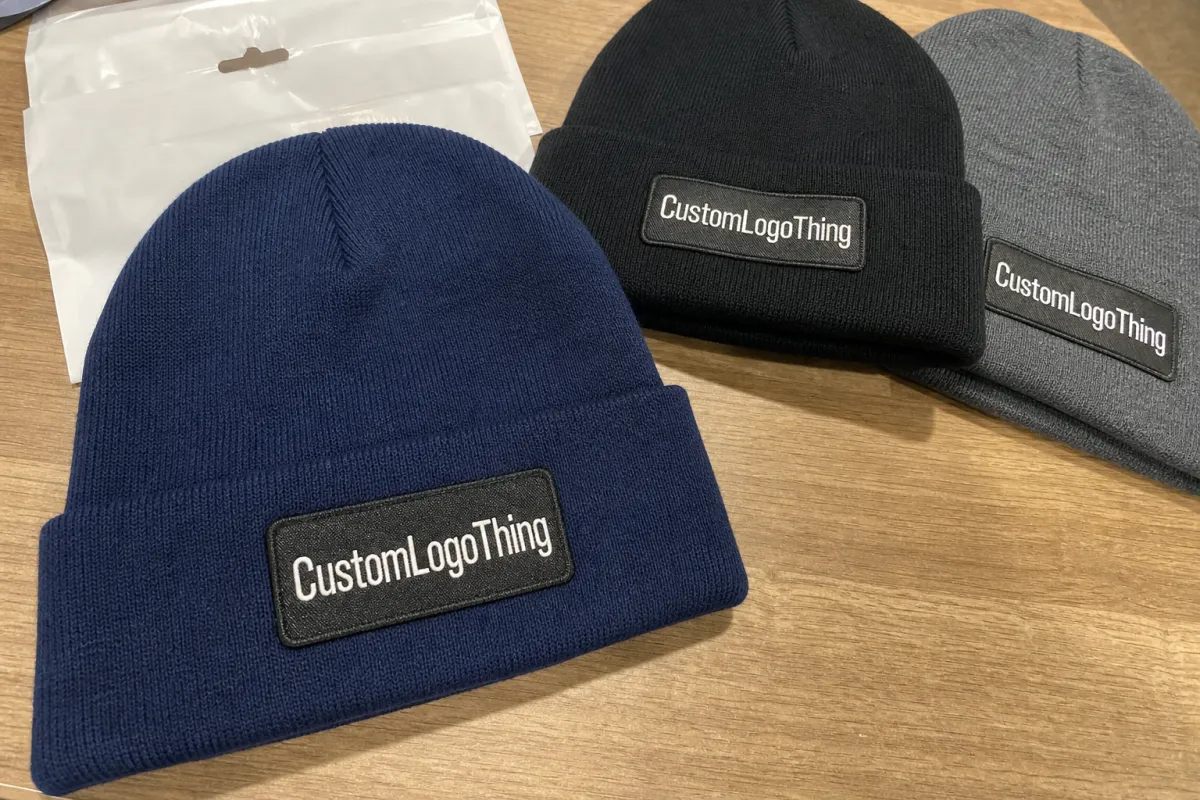
A decorated beanie is often cheaper than it looks. Buyers focus on the logo, but the body of the hat usually drives most of the unit cost. A basic cuffed acrylic beanie with one-color embroidery can be a cleaner purchase than a fancier blank with heavier yarn, multiple placements, and custom packaging. The latter feels elevated. The former is easier to price, easier to approve, and less likely to need rework.
That matters in beauty, where merchandise has to work as both shelf product and bundle component. A plain cuffed style helps because it uses fewer components and less labor than more structured promo headwear. Fewer moving parts also means fewer chances for the quote to change later.
Before requesting pricing, compare these levers:
- Cuffed vs. slouchy - cuffed styles usually give a more stable decoration zone and a cleaner fit.
- Acrylic vs. wool blend - acrylic is usually lower cost and easier to scale; wool blend raises the blank price.
- One placement vs. two - each added placement adds stitching time, proofing, and rejection risk.
- Standard trim vs. custom trim - labels, hang tags, and special folding instructions can add real money.
"If the quote looks cheap but the beanie pills after one wear, you did not save money. You just postponed the expense."
That is the practical lens for a beauty embroidered beanies Unit Cost Review: not hype, just the parts that change what you actually pay per piece and what you can realistically resell or include in a kit.
Decide the Beanie Style Before You Talk Decoration
The body style should be settled before anybody starts placing a logo on a mockup. A cuffed beanie gives you a defined front area, a predictable fold, and a decoration zone that is easier to repeat across production runs. Cuffless styles look cleaner in some collections, but they give the logo less structure. Slouchy styles feel more fashion-led and relaxed, while fisherman profiles sit shorter and tighter.
For salon merch and basic retail programs, cuffed acrylic is usually the safest starting point because the fit is familiar and the branding reads clearly from a distance. For spa retail or bundled gift sets, a slouchier knit can feel more premium if the knit density is strong enough to keep the embroidery from warping. Loose, airy knits can look soft in a photo and disappointing in person because they stretch and embroidery does not forgive stretch very well.
The handfeel matters, but so does the shelf test. A good retail beanie should keep its shape in packaging, show the logo without effort, and avoid obvious distortion where the cuff meets the crown. If the fold collapses or the knit pulls when the beanie is handled, perceived value drops fast.
Placement changes visibility and risk
Front cuff placement remains the most common choice because it is visible, easy to approve, and easy to reproduce. Centered cuff embroidery usually keeps the logo in a predictable zone. Side placement can work when the front needs to stay open for a larger label or a knit pattern. Body placement is possible, but it is the most sensitive to stretch and can lose crispness on softer knits.
Color choice matters more than buyers sometimes expect. Dark beanies can hide wear better in shipping and retail handling, but they also absorb detail. Black thread on charcoal can disappear. Light thread on cream may look sharper in person than it did on a screen. The mockup is a starting point, not the finished object.
From a resale standpoint, the cheapest blank is not always the smartest one. A slightly better knit with improved shape retention often sells better and gets reordered more reliably.
Embroidery Specs That Change the Look, Feel, and Risk
Small decoration choices can create large production differences. Stitch count, logo size, line thickness, and thread color count all affect how clean the finished hat looks. A simple logo in the 3,000 to 5,000 stitch range is usually much easier to keep crisp on knit fabric. Once the design gets more detailed, the knit starts fighting back. Fine serif type, hairline outlines, and tiny interior spaces tend to fill in or collapse.
Fabric structure matters just as much. Tighter gauges usually support cleaner edges and better letter formation. Loose knits can let forms sink or widen under tension, especially if the artwork is oversized. That is why a mid-weight acrylic or acrylic blend often performs better for logos than a softer fashion knit that looks luxurious but behaves poorly under a needle.
Thread count and texture should stay modest unless the design truly needs more complexity. More thread colors mean more handling and more chances for the embroiderer to lose efficiency. If the brand mark can be built in one or two colors, the order is usually easier to approve and easier to repeat.
Presentation does not stop at the knit surface. Consider the whole package:
- Woven label - good for a retail finish and consistent branding.
- Sewn-in tag - useful when the identity mark needs to feel permanent.
- No-label packaging - practical for private label or white-label runs.
- Custom hang tag - adds shelf presence, but only if it justifies the extra cost.
Most embroidery mistakes are familiar:
- small serif text that turns muddy on textured knit
- too many thread colors for a simple winter accessory
- oversized logos that cross seams or fall into the fold
- placement too close to the cuff edge, where tension changes the shape
My practical rule is simple: if the logo cannot be read at arm’s length in the proof, it probably does too much for a knit beanie. Lock the size, thread colors, and placement before production starts.
Beauty Embroidered Beanies Unit Cost Review: MOQ, Setup, and Pricing
This is the part buyers usually need spelled out. A quote should be separated into the blank beanie cost, digitizing or setup, embroidery labor, packaging, and freight. Some suppliers call digitizing a tooling fee. The label does not matter much. What matters is whether the cost is visible and whether it is a one-time charge or something that appears again on every reorder.
MOQ changes the economics immediately. At 50 units, setup gets spread over a small run, so the unit cost stays high. At 100 units, a simple one-placement order often gets closer to reasonable. At 250 units, the same spec can become much easier to justify. That is why one price tier is never enough to judge a program.
| Beanie Build | Typical MOQ | Estimated Unit Cost | Best Use | Watch-Out |
|---|---|---|---|---|
| Cuffed acrylic, one-color front embroidery | 50-100 pcs | $4.25-$6.50 | Salon merch, staff gifts, starter retail drops | Small text can blur on looser knits |
| Cuffed acrylic, one placement, custom woven label | 100-250 pcs | $4.85-$7.25 | Retail-ready brand programs | Label and pack-out charges add up quickly |
| Slouchy acrylic blend, one placement | 100-250 pcs | $5.25-$8.25 | Fashion-led beauty bundles | Stretch can distort lettering if the knit is too soft |
| Wool blend, one or two placements | 100-250 pcs | $6.75-$10.50 | Premium seasonal collections | Higher blank cost and more texture-related rejection risk |
For a clean Unit Cost Review, these are the usual drivers:
- Extra embroidery locations - every additional placement adds labor and proofing time.
- 3D puff - visually strong, but less forgiving on knit surfaces and usually pricier.
- Specialty yarns or blends - wool, cashmere blends, and thicker rib knits increase blank cost.
- Rush timing - compressed schedules usually add a fee and reduce room for revisions.
- Custom labels or packaging - useful for retail, but only if the margin still works.
Setup charges for straightforward digitizing usually fall in the $35 to $85 range, though that can rise if artwork needs cleanup or if the logo requires multiple stitch simulations. A physical sample often lands around $30 to $100 depending on complexity. Custom labels can add roughly $0.30 to $1.25 per unit. Individually, none of those numbers is shocking. Together, they can reshape the order.
If you want a true comparison, ask every supplier to quote the same beanie body, the same stitch count, the same decoration placement, the same packaging, and the same delivery term. Otherwise you are comparing different products while pretending the numbers mean the same thing.
Quote, Sample, and Production Steps: What Happens First
The order flow should be predictable. First comes artwork review. Then digitizing. Then a digital proof. Then a sample or pre-production approval if the project needs one. After that comes bulk production, quality control, and shipping. If the sequence changes, the buyer usually pays for the confusion.
Delays tend to come from the same places every time: missing vector art, slow approvals, last-minute color changes, or packaging edits after production has already begun. A phone screenshot is not a production file. Send a clean vector logo in AI, EPS, or PDF format. If the thread color is sensitive, provide a Pantone reference or a clear visual target so the supplier is not guessing at tone.
"The cheapest quote is usually the one that assumes your artwork is already production-ready."
Lead time depends on the build. A simple 100-piece run with one placement and no special pack-out often needs about 10 to 15 business days after proof approval. Add a physical sample, custom hang tags, or multiple decoration locations, and the project is more like 15 to 25 business days. Seasonal orders stretch further, especially in the fall and holiday window.
If you want to keep the schedule under control, send four things first:
- the logo file
- target quantity
- preferred beanie style
- required delivery date
That gives the supplier enough information to quote properly instead of filling in the blanks.
What Makes a Supplier Worth Reordering From
A good first sample is useful. A repeatable second order is more valuable. Consistency protects margin over time: stable stitch registration, repeatable thread color, and the same fit across reorders. If a supplier delivers one polished run and cannot match it six months later, the problem is not solved.
Clear proofing and revision limits also matter. A supplier that tells you what is included, what counts as a revision, and what changes the cost is saving everyone time. That is especially important for beauty buyers, where the product often sits inside a larger campaign and the calendar is already tight.
Packaging control is another real differentiator. Retail-ready presentation can include fold consistency, tissue, insert cards, and the correct hang tag stock. If a supplier handles those details cleanly, fewer hours are spent fixing mistakes after the fact. For transit durability, ask how cartons are tested rather than assuming they will hold up.
What should a repeat-worthy supplier offer?
- Transparent pricing - the quote shows where the number comes from.
- Practical minimums - MOQ should fit the order, not punish it.
- Good records - prior stitch files, thread colors, and label specs are saved.
- Useful proofing - the mockup reflects what will actually be made.
- Stable QC - the bulk run matches the approved sample closely.
That is the standard worth expecting. If a supplier makes the process repeatable, reorders become less risky and the margin is easier to protect.
Next Steps: Build a Cleaner Quote and Lock the Order
If you want a clean quote, do not send partial information and then fill in the gaps later. Start with the logo file, quantity, preferred beanie style, and delivery date. Then ask for three versions: a basic option, a presentation-focused option, and a retail-ready option. That makes the cost difference between blank, decoration, and packaging visible instead of hidden.
Before approving anything, confirm the sample method, embroidery placement, and label choice. Late changes are where margins disappear. One early decision is usually cheaper than three revisions after proof approval.
Use this checklist before the purchase order goes out:
- logo file is vector and readable
- beanie style matches the intended use
- embroidery size and placement are locked
- MOQ tier is selected intentionally
- setup charges and sample costs are shown separately
- packaging and freight are quoted clearly
That is the cleanest way to approach a beauty embroidered beanies Unit Cost Review. No clutter. No vague line items. Just the inputs needed to get a fair quote and a product that holds up in real use.
What drives beauty embroidered beanies unit cost the most?
Quantity usually matters first because setup gets spread across more units. Beanie style, stitch complexity, and extra decoration locations come next. Packaging, rush timing, and specialty yarns can push the price up fast.
How does MOQ affect embroidered beanie pricing?
Lower MOQ usually means a higher per-piece cost because setup is spread across fewer hats. Higher tiers often unlock better bulk pricing, especially on simple one-color embroidery. Ask for tiered quotes so you can see the breakpoints before you commit.
Can I get a sample before bulk production on beauty embroidered beanies?
Yes, and you should if placement, thread color, or sizing matters to the final buyer. A digital proof confirms layout, while a physical sample checks feel, stretch, and stitch quality. Approve the sample before the bulk run to avoid expensive rework.
Which beanie style gives the best price per piece?
A simple cuffed acrylic beanie is usually the most cost-efficient starting point. One-color embroidery and standard packaging keep the quote cleaner. Specialty fibers, loose knits, and extra branding raise the unit price.
How fast can a beauty embroidered beanie order ship?
Lead time depends on artwork approval, stitch complexity, quantity, and current production load. Simple orders move faster when the logo file is ready and approvals come back quickly. Rush orders are possible in some cases, but they usually cost more and leave less room for revisions.

