For buyers comparing wedding favors, the wedding woven label beanies Unit Cost Review is really a question of usefulness. Do you want something that disappears with the cake boxes, or something guests wear through the colder months and keep seeing in the mirror weeks later? A knit beanie with a clean woven label tends to win on practicality, photo value, and after-event life span.
That matters because favors are judged twice. First in the room, where they need to look intentional. Then after the event, where the item either earns a second life or becomes clutter. Beanies sit in a better category than most disposable gifts because they solve a real problem and still carry the wedding identity in a restrained way.
Why a wedding beanie beats another disposable favor
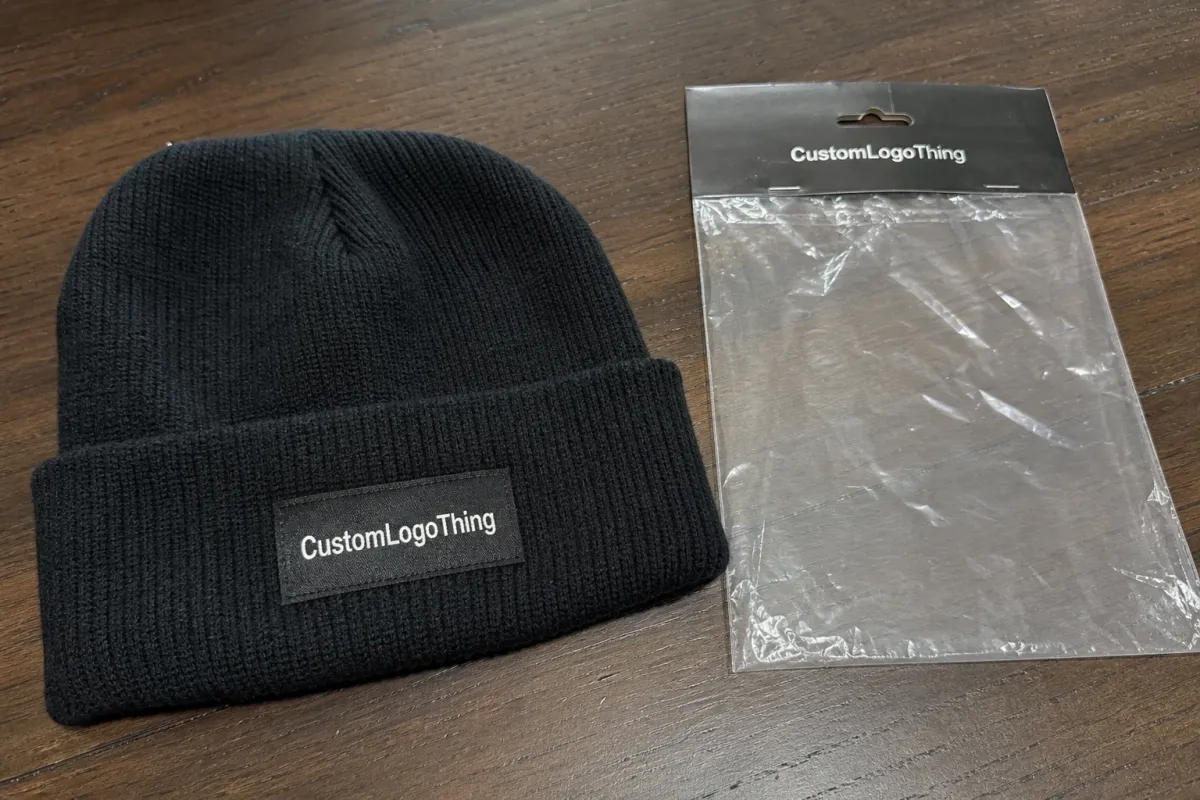
Disposable favors are easy to hand out, but they rarely survive the exit. Candles burn down, cookies get eaten, and novelty trinkets usually end up in a drawer. A beanie behaves differently. It is personal, useful, and easy to style without turning the whole gift into a branded billboard.
That is one reason cold-weather weddings, outdoor ceremonies, rehearsal dinners, and welcome bags often use knit headwear instead of another temporary souvenir. The economics are better when guests keep the item. If a favor gets worn ten times, the per-use cost drops fast compared with anything that is consumed in one sitting.
There is also a design reason. Knit texture photographs well, especially in winter light. A cuffed beanie gives the label a defined stage, and the rest of the garment can stay quiet. The result looks more like a considered gift than a promotional freebie.
Practical reality matters here. A wedding beanie makes the most sense when the event already gives it a seasonal role. If the ceremony is outdoors in November, or if the guest bag includes cold-weather items, the choice feels natural. For a warm-weather wedding, the same item can still work as a keepsake, but the buyer should think harder about presentation and whether guests will wear it soon after the event.
Woven label placement and decoration choices that matter
Placement changes the whole read of the beanie. A center-front label is easiest to spot in photos and on social posts. A cuff placement feels more controlled and usually more refined, especially if the logo is compact. Side placement can look understated and elegant, though it only works if the mark is readable at a glance.
The decoration method matters just as much. A woven label is not the same thing as embroidery, and it behaves differently on knit fabric. Woven labels are thin and sharp, which makes them good for text and tight logos. Woven patches create a more badge-like presence and can add a little structure. Embroidery can look rich, but dense stitching on a soft beanie can pull the fabric or blur small lettering. A quote that ignores those differences is usually a quote that will disappoint later.
Buyers also need to think about edge finishing, thread density, fold style, and color count. A small label with clean borders usually looks better on a knit surface than a busy graphic that fights the texture of the beanie. The common mistake is asking for too much information in too little space. It reads fine on a screen, then turns muddy in textile form.
If the final presentation includes hang tags, care cards, or matching labels, it helps to align those pieces early with Custom Labels & Tags. Even a simple shared color note can make the set feel planned instead of assembled from separate orders.
The strongest beanie spec does not try to cram the logo everywhere. It puts the mark where the eye lands, keeps it legible, and lets the knit texture do part of the work.
Fabric, knit, and fit specifications to confirm before ordering
If decoration is the visible part, fabric is the part that protects the budget from hidden disappointment. Acrylic is still the most common event headwear base because it stays soft, is usually the lowest-cost option, and can be produced with consistent color. Recycled blends can strengthen the sustainability story and feel more current. Wool or wool-rich blends tend to raise the price and may require closer attention to handfeel, pilling, and guest comfort.
Knit gauge changes both the look and the cost. A looser 7-gauge or chunky knit gives a warmer, more casual texture. A tighter 9-gauge or 12-gauge style usually holds a cleaner silhouette, which helps labels sit flat and stay readable. Cuff depth, crown height, and stretch range should all be checked before ordering, especially if the beanies are meant to fit a broad adult audience.
- Acrylic: usually the lowest-cost route, with dependable color consistency and a familiar soft touch.
- Recycled acrylic blends: often add a modest premium and a stronger materials story.
- Wool blends: warmer and more premium in feel, but they raise expectations on comfort and price.
- Tighter knits: better for label clarity and less visual noise across the fabric surface.
Color matching deserves restraint. Yarn shade, knit density, and lighting all affect what a buyer sees on screen versus what arrives in hand. Pantone references help, but textile color always has some tolerance. A dark label on a dark cuff can vanish. A high-contrast label can feel louder than expected. The best sample usually lands in the middle: visible enough to read, quiet enough to feel like part of the garment.
Quality control should include seam finish, pilling resistance, wash behavior, and packing readiness. For welcome bags, flat-fold consistency matters. For shipped gifts, the beanies need to survive folding, carton pressure, and a few rough edges in transit. Standards resources such as ISTA are useful because they remind buyers that presentation is only half the job; shipping durability counts too.
One more point tends to be overlooked: adult unisex sizing is not the same as one-size-fits-all in a casual sense. A beanie can fit within a broad range and still feel too shallow, too tight at the cuff, or too loose after a few wears. Asking for sample measurements is faster than correcting an entire run later.
Wedding woven label beanies unit cost review: what drives pricing
A useful Wedding Woven Label Beanies Unit Cost Review breaks the quote into separate parts. Start with the blank beanie. Add the woven label production and application labor. Then account for artwork setup, packing, and freight. Once the order is split into pieces, the price stops looking mysterious and starts looking like a set of controllable variables.
Setup charges often look minor until the order is small. Then they matter a lot. A woven label may require a dedicated weave file, a custom fold, or a special attachment method. Some suppliers roll those charges into the per-piece rate. Others list them separately. Either approach can be legitimate, but the comparison only works if the scope is identical on both quotes.
| Order size | Typical MOQ fit | Estimated unit cost | What usually changes the price |
|---|---|---|---|
| 100 pieces | Often below the most efficient MOQ tier | $3.25-$5.50 | Setup charges and label prep have more impact per piece |
| 300 pieces | Common starting point for custom event runs | $2.45-$4.10 | Better spread on tooling fees and simpler packing economics |
| 500 pieces | Usually a strong bulk pricing tier | $2.05-$3.55 | Lower cost per piece if fabric colors stay standard |
| 1000 pieces | Best for larger guest counts or mixed event bundles | $1.75-$3.10 | Material efficiency improves, but freight and packing still matter |
Those ranges assume a stock knit beanie with one woven label sewn on, not a fully custom knit pattern or specialty packaging. Once custom hang tags, individual polybags, size stickers, or luxury inserts enter the order, unit cost rises quickly. Buyers who compare only the headline price often miss the total landing cost by a wide margin.
A practical planning band for many custom event orders sits between $2.05 and $4.10 per piece at mid-size quantities. Smaller orders usually sit above that. Larger orders can move below it. Knit density, label size, color count, and packing style all shift the number. Freight can shift it too, especially if the order moves by air instead of sea.
There is another wrinkle: two quotes can look close and still behave differently. One may include folding and bagging. Another may charge separately for each carton label. One may include domestic delivery to the venue or warehouse. Another may stop at the port or factory gate. The cheapest line item is rarely the cheapest order.
Process and timeline from artwork approval to shipment
The order flow should be easy to follow. Brief, proof, approval, sample if needed, production, inspection, packing, shipment. If the supplier makes that sequence feel foggy, the order deserves scrutiny. Clean production usually comes with clean milestones.
Artwork quality shortens the front end more than a lot of buyers expect. Vector files are best because they scale cleanly and give the label builder a clear read on line weight, border detail, and text size. Low-resolution artwork slows everything down. A proper artwork packet should include logo files, Pantone references, placement notes, and exact wording for any text that cannot change.
Lead time depends on order size, label complexity, and stock availability. For straightforward runs, 12-15 business days after proof approval is a realistic planning target. More custom jobs can take longer if yarn matching, special finishing, or extra packaging is involved. Samples can add several days, so anyone buying for a wedding should work backward from the event date rather than forward from approval.
Freight changes the calendar as much as production does. Air freight is faster and usually better for tight event deadlines. Sea freight can make sense for larger quantities when the schedule is less urgent. Lower ex-factory pricing may not stay lower after transport, carton handling, and local delivery are added.
For broader packaging context, packaging.org is a helpful reference for secondary packaging, presentation, and material thinking. That matters because wedding gifts are judged as a set, not as isolated items.
One caution: if a supplier is slow to confirm revisions, vague about ship dates, or unclear on packing method, the schedule can slip quickly. Wedding orders leave little room for drift once the date and guest count are fixed.
How to compare suppliers without paying for avoidable extras
A serious wedding woven label Beanies Unit Cost Review is not only about unit price. It is about whether the supplier can deliver the same result from proof to carton label without surprise charges. Speed matters, but accuracy matters more. A fast answer that ignores the label spec is not a useful answer.
Start with the proof process. Does the supplier send a real visual proof, or just a generic mockup? Do they show label placement on the cuff? Do they place the artwork against the fabric tone? Those details tell you more than polished sales language. A credible supplier usually works from a spec sheet, sets a revision limit, and confirms approval in writing before production starts.
Hidden cost traps show up in a few predictable places. Freight terms can be incomplete. Artwork revisions can be billed after the fact. Bundled extras may include packaging that the buyer does not need. If the wedding already uses gift bags or inserts, there is no reason to pay twice for presentation. Watch the minimum order quantity too; a low per-piece quote can hide a larger MOQ than the event can use.
The best suppliers keep the scope visible. They state what is standard, what counts as an upgrade, and what changes the price. That is especially useful for event buyers balancing favor budget, shipping deadlines, and the visual standard expected at a wedding.
What good support looks like:
- Clear material notes with fiber content and knit style.
- Defined MOQ and tiered bulk pricing.
- Itemized setup charges and tooling fees.
- Real proof images before production starts.
- Packaging and freight terms written plainly.
It also helps to ask what happens if the artwork changes late in the process. Some suppliers allow minor text edits without much penalty. Others treat any revision as a new setup. That difference can move the budget more than a small change in fabric ever will.
Order checklist and next steps for a clean quote
A clean quote starts with a complete brief. Quantity by size, artwork files, label placement, target budget, and the in-hands date should all be included from the start. That removes a lot of back-and-forth and usually produces a sharper unit cost read.
A useful comparison checklist is simple:
- Does each quote include the same fabric content and knit gauge?
- Is the woven label size and placement identical across suppliers?
- Are setup charges, tooling fees, and packing costs shown separately?
- Are the MOQ and bulk pricing tiers clearly stated?
- Does the delivery estimate match the wedding schedule with a buffer?
Ask for sample photos, material notes, and a line-by-line unit cost breakdown before approving production. If the order is time-sensitive, confirm proof revision timing and whether sampling changes the bulk schedule. That matters more for winter weddings and destination events, where a missed shipping window is hard to recover from.
For buyers comparing suppliers, the cleanest path is usually the least flashy one: send the spec, review the proof, check the numbers, and confirm the timeline in writing. That is how a wedding woven label Beanies Unit Cost Review turns into a decision grounded in real constraints instead of a number that looks good only on the first screen.
One last buying rule helps more than people expect. The best beanie is not the cheapest line on the page. It is the one with the right fabric, the right label placement, the right MOQ, and a delivery window that actually fits the event.
What is the usual MOQ for wedding woven label beanies?
MOQ depends on the knit style, label method, and whether the supplier is using stock product or a more custom run. Smaller quantities are sometimes possible, but the unit cost usually rises because setup charges and tooling fees are spread across fewer pieces. Ask for tiered pricing so you can see the cost at your target quantity and the next break point.
How does a woven label change the unit cost compared with embroidery?
A woven label often adds a separate decoration step, but it can be more efficient than dense embroidery on knit fabric. Final cost depends on label size, thread count, placement, and whether the label is sewn, folded, or patched on. For small logos and short text, woven labels can deliver a cleaner look and more predictable pricing than complex stitching.
How long does the process usually take after artwork approval?
Timing depends on sampling needs, order size, and whether the base beanie is already in stock. Clean artwork and quick proof approval shorten the front end, while custom yarn matching or packaging adds time. Freight method matters too, so buyers should plan backward from the wedding date rather than from the approval date.
Can I request samples before placing a bulk order?
Yes. Samples are useful when you need to verify knit feel, label placement, color contrast, and the overall presentation. Ask whether the sample is a pre-production piece or a similar reference sample, because that changes how closely it matches the final run. If the event is time-sensitive, confirm how sampling affects the bulk schedule.
What artwork files are best for a clean quote and faster approval?
Vector files are best because they scale cleanly and make label construction easier to review. Include logo files, color references, placement notes, and any text that must appear exactly as written. The more complete the artwork packet, the faster the supplier can return an accurate quote and proof.


