Soap unstructured dad hats Bulk Order Planning looks simple until the sample shows where the details matter. A soft crown can fit well but still change the logo placement, the brim curve can look different from the mockup, and a finish that seemed minor on screen can move the price or the lead time.
The safest approach is to choose the blank cap first and let the rest of the spec follow. The body fabric, closure, crown depth, and decoration method determine how consistent the run will be, how the quote is built, and how much risk sits in the bulk order.
Why the blank cap changes the economics of the order
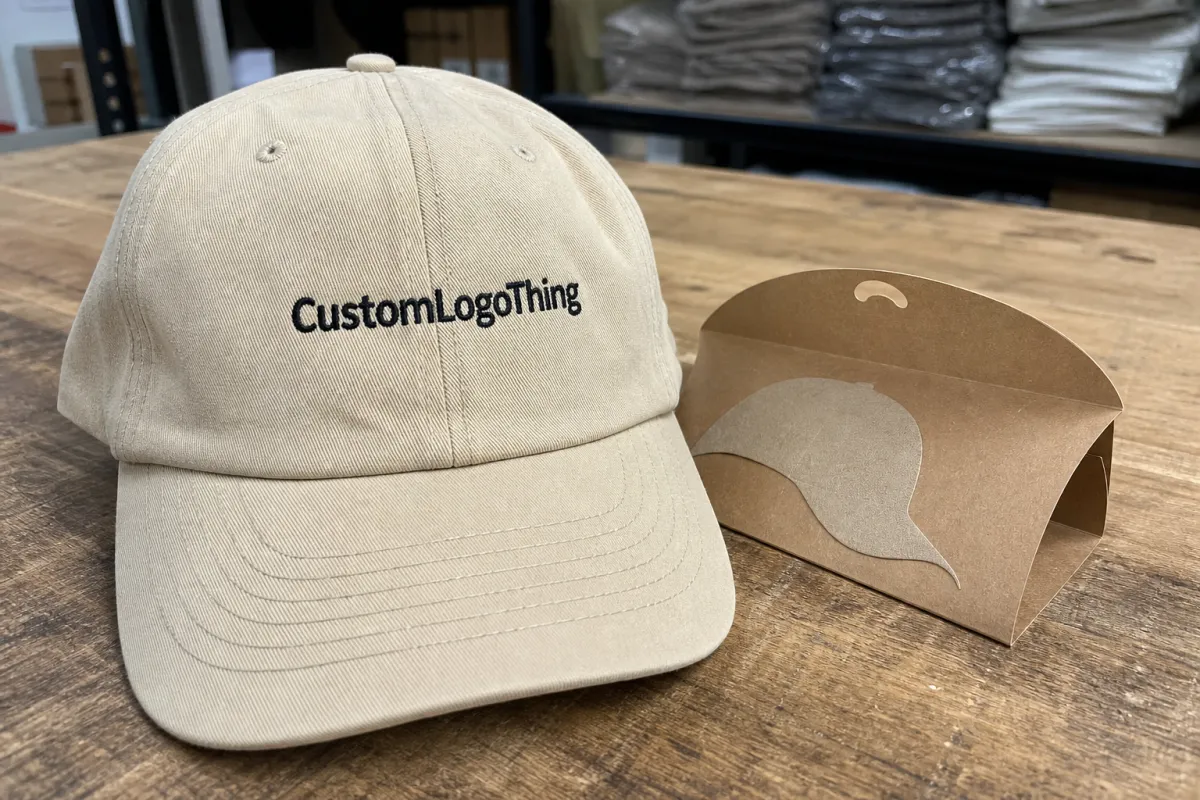
Buyers often start with the logo, but the blank drives the economics. A low-profile unstructured crown gives the relaxed look many teams want, yet it also leaves less room to hide sewing variation. If the fabric is too light or the crown shape varies from lot to lot, the same design can look different across cartons.
Fabric choice matters more than many first-time buyers expect. Cotton twill is the usual baseline because it is stable and easy to decorate. Brushed cotton feels softer but can vary more in shade. Garment-washed or pigment-dyed caps may look better on a shelf, but they usually make color matching harder in bulk. For repeatability, a 100% cotton twill in the 8-10 oz range is often the safest middle ground.
Structure also changes the quote. An unstructured cap skips some support materials, which can help comfort and cost, but it puts more pressure on panel consistency and decoration placement. On a larger order, even small crown differences become visible. That is why the blank should be selected with the final decoration in mind, not treated as a generic starting point.
Low-profile, unstructured caps work best when the body stays consistent enough to decorate cleanly and pack the same way every time.
The other cost driver is the hardware. A self-fabric strap is usually the least expensive closure. A leather strap with antique brass hardware, custom washing, or upgraded sweatband materials can raise the landed price quickly. The blank is not just a background item; it sets the ceiling for what the order can become.
Picking the right unstructured body, brim, and decoration method
The standard six-panel, low-profile, pre-curved dad hat remains the most practical starting point because it is familiar, comfortable, and easy for factories to sew at scale. From there, the details decide whether the piece feels deliberate or generic. Crown depth changes fit, brim stiffness changes the silhouette, and stitch density changes how the front panel holds up after decoration.
Decoration should follow the artwork. Flat embroidery is still the most practical choice for many bulk orders because it balances cost, durability, and turnaround. A simple one-color or two-color logo usually embroiders cleanly and keeps the cap looking finished without overworking the front panel. If the artwork is detailed, a woven patch often preserves the shapes better than thread alone.
Heat transfer can work on tighter budgets or simpler graphics, but it depends more heavily on film quality and application control. For caps that will be worn often, embroidery or a patch usually survives better than a low-cost print method. Subtle branding also matters for soap-branded programs, where the cap should support the identity instead of turning into a loud promo piece.
| Decoration method | Best use case | Typical setup burden | Practical bulk note |
|---|---|---|---|
| Flat embroidery | Simple logos, staff wear, clean retail basics | Low to moderate | Usually the best balance of cost and durability at 100+ pieces |
| Patches | Detailed artwork, vintage feel, stronger shelf presence | Moderate | Better when setup can be spread across more units |
| Woven labels | Minimal branding, subtle premium look | Moderate | Useful when the mark should stay quiet rather than dominate |
| Heat transfer | Simple graphics and budget-sensitive orders | Low to moderate | Fast, but less forgiving on wear and finish quality |
Placement is part of the spec, not a last-minute detail. Center-front branding is the easiest to read and still the most common for staff wear. A smaller front mark or a restrained side placement can work better when the goal is a cleaner retail look. For transit, the hat also needs packaging that will survive stacking, so carton strength and packout should be part of the quote.
Spec details buyers should lock before requesting samples
Sample requests move faster when the brief is specific. The factory should not have to guess panel count, fabric weight, closure style, sweatband construction, brim stitching, or logo size. Each of those choices can change the sample and the bulk quote, so vague input usually creates revisions later.
Artwork needs the same discipline. Final vector files, thread colors, patch dimensions, and placement measurements should be fixed before sampling. A 3-inch five-color embroidery is not the same as a 2.25-inch one-color mark; stitch count, setup time, and puckering risk all change with the design.
Start with the use case. Retail, staff wear, event distribution, and bundled products all push the spec in different directions. Retail usually wants cleaner finishing and tighter consistency. Staff wear asks for durability and repeatable sizing. Event giveaways usually need a simpler decoration path and lower setup cost. If multiple colorways are involved, the MOQ should be clear per color or for the total order.
- Cap body: six-panel, low-profile, or alternate crown depth
- Fabric: cotton twill, brushed cotton, or washed cotton finish
- Closure: self-fabric strap, buckle, or hook-and-loop
- Decoration: embroidery, patch, woven label, or transfer
- Artwork: final vector file, PMS references, and placement size
- Packing: bulk-packed, individual polybag, or retail insert card
Front-panel behavior is easy to overlook. Unstructured hats are forgiving on wear, but they are less forgiving on inconsistency. If one lot has a softer crown and another feels firmer, the same logo can look slightly different from carton to carton. A tighter brief reduces that risk and keeps the proof stage from turning into a guessing game.
Cost, pricing, and MOQ thresholds that shape the quote
Pricing usually comes down to quantity, decoration complexity, and the blank body. A 50-piece order and a 500-piece order live in different economies because setup costs spread across more units as the run gets larger. That saves money, but the savings can disappear if the artwork is complicated or the order includes multiple colorways.
For a straightforward stock cap with simple embroidery, smaller runs usually sit in a visibly higher per-unit band than mid-size orders. As a rough benchmark, many bulk buyers see basic decorated dad hats land in the high single digits per piece before freight on modest runs, then move lower as quantity rises. Special washes, upgraded hardware, and patch construction can push that higher quickly.
The hidden costs are where quotes become hard to compare. Digitizing, patch tooling, Pantone matching, sample charges, rush handling, split shipments, and custom inserts may all sit outside the headline number. Buyers should ask for each line item separately so the landed price is clear.
MOQ rules vary more than many people expect. Some suppliers set minimums by decoration method. Others set them by colorway or artwork version. A factory may accept 300 total pieces but insist on 100 per color, while another prices only by total quantity. If those rules are not written down early, the order can get stuck even when the design is approved.
| Order factor | How it affects price | What to confirm |
|---|---|---|
| Quantity tier | Higher volume usually lowers unit cost | Ask for quotes at 50, 100, 250, and 500 pieces |
| Decoration method | Embroidery is often simplest; patches add setup | Compare at least two decoration paths |
| Colorway mix | Multiple colors can raise handling and minimums | Confirm whether MOQ applies per color or per total order |
| Rush timing | Compressed schedules can trigger overtime or air freight | Request standard and rush pricing side by side |
If a supplier cannot explain the price in plain language, the order is still unsettled. The safest comparison is true landed cost, not the lowest unit price quoted without freight or setup.
Process and turnaround from proof approval to delivery
The production flow is usually the same: quote review, artwork proof, sample or pre-production approval, bulk sewing, inspection, packing, and freight booking. The schedule stays manageable only when each step has a date and a sign-off. If one piece is vague, the order can slip before production really starts.
Most delays come from the same few issues. Late artwork changes are common, as are slow color approvals. Blank-cap stock can also be the bottleneck, especially when a specific wash finish or closure style is requested. Shipping delays usually appear when the address, carton count, or labeling instructions are incomplete.
A simple embroidered run can move quickly if the blank is in stock and the proof is approved without revision. Patch-heavy or multi-color orders need more time. A realistic planning window is often 7-15 business days for straightforward production after approvals, then more time for freight. More complex orders can stretch to 15-25 business days or longer if stock has to be sourced first.
- Day 1-2: quote confirmation and artwork submission
- Day 2-4: digital proof review and corrections
- Day 4-7: sample approval or pre-production signoff
- Day 7 onward: bulk production and quality inspection
- Final stage: packing, carton labeling, and freight booking
That timeline is not universal, but it is a useful planning tool. For launches or staff rollouts, a small cushion is usually safer than a tight promise with no margin. Asking for the schedule in writing against the final approved spec also gives both sides the same reference point if the order shifts.
What a dependable supplier should verify before production
A dependable supplier does more than accept the order. It verifies that the blank cap is actually in stock, checks that the artwork can be produced cleanly, and points out any mismatch between the requested spec and the quoted cost before production starts. That is where many bulk apparel orders go wrong.
Quality control on hats should be concrete. Seam alignment needs to be checked so the logo does not drift off center. Thread tension should stay even so the embroidery does not pucker. Brim curve should match across the lot, and closure stitching should survive packing and repeated wear. If the order includes multiple cartons or split shipments, carton count accuracy matters as much as the decoration.
Packaging deserves the same attention. Individual polybags, retail inserts, and custom carton marks all need to be built into the process early. If the order is going into distribution, the cartons should hold their shape under stacking and transit. The buyer does not need a lab report for every cap, but the packout should be realistic enough to survive the route.
- Artwork approved: logo size, placement, and colors locked
- Blank verified: cap style, fabric, and closure confirmed in stock
- Sample matched: crown shape and decoration look right before bulk
- Packing agreed: bulk pack or retail pack specified in writing
- Shipping details set: address, timeline, and carton labels confirmed
What separates a dependable partner from a risky one is how clearly it communicates the weak points. If the front panel is too soft for a dense stitch count, that should be said before approval. If the dye lot is slightly off from the sample, that should be said before shipping. Silence is expensive because it leads to rework, returns, and delays that could have been avoided.
Next steps for turning the brief into a clean purchase order
By the time the brief is ready, the order should be reduced to a few hard facts: cap style, fabric, closure, decoration method, quantity by colorway, packaging format, ship date, and delivery address. That is enough to turn soap unstructured dad hats Bulk Order Planning into a quote a supplier can price without guessing.
The best purchase orders are not long; they are clear. Separate lines for unit cost, setup cost, sample cost, and freight make comparison possible. If those numbers are blended together, it is hard to tell whether one supplier is actually cheaper or simply hiding cost in a different place.
It also helps to state the constraints plainly. If the logo cannot move, say so. If the order must ship by a certain date, say so. If retail-ready packaging is required, say so. Clear constraints reduce revision cycles and lower the chance that the final product misses the brief by a small but costly margin.
Bottom line: soap unstructured dad hats Bulk Order Planning works best when the blank cap is chosen first, the decoration method matches the artwork, and the quote is broken into real cost drivers. That keeps the order easier to price, easier to approve, and easier to ship on time.
What is the usual MOQ for soap unstructured dad hats bulk orders?
MOQ depends on the blank, the decoration method, and whether the order includes one colorway or several. For comparison, ask for tiered pricing at 50, 100, 250, and 500 pieces so you can see where the unit cost changes.
How do I get the fastest quote for soap dad hats in bulk?
Send the hat style, color, logo file, quantity breakdown, target delivery date, decoration location, and packaging needs in one message. Quotes slow down when the supplier has to ask for basic spec details one by one.
Which decoration method is best for unstructured dad hats?
Flat embroidery is usually the most practical for simple logos because it balances durability, speed, and cost. Patches work better for detailed artwork or a more textured look, but they add setup and can raise minimums.
How long does production take after proof approval?
Simple orders can move in roughly 7-15 business days after approval if the blank is in stock. More complex orders, or orders that need sourcing first, can take 15-25 business days or longer before freight.
What details should I confirm before placing the bulk order?
Confirm the cap body, fabric weight, closure type, decoration method, logo placement, quantity by colorway, packaging format, and shipping destination. Also separate setup, sample, and freight charges so the quote is complete.

