Sports Team Caps with Logo Patch Quote for Bulk Orders
Most sports team Caps with Logo patch quote requests begin with the same tension: the logo is too detailed for a small front panel, but the buyer still needs something repeatable, clean, and durable across a bulk order. A patch solves that in a way direct embroidery often cannot. It keeps the crest legible, supports tighter artwork, and gives teams a consistent look when they need one run for players and another for coaches, staff, or retail.
This is not a decorative preference. It is a production choice. The right cap body, the right patch method, and the right approval process determine whether the order lands cleanly or turns into a round of revisions. A quote should make those decisions visible early, before anyone signs off on artwork or assumes the sample will fix everything later.
For buyers comparing vendors, four points usually decide the order: cost, approval speed, repeatability, and durability. A quote that leaves any of those unclear is incomplete, even if the unit price looks attractive on the surface.
Why logo patch caps beat plain embroidery for teams
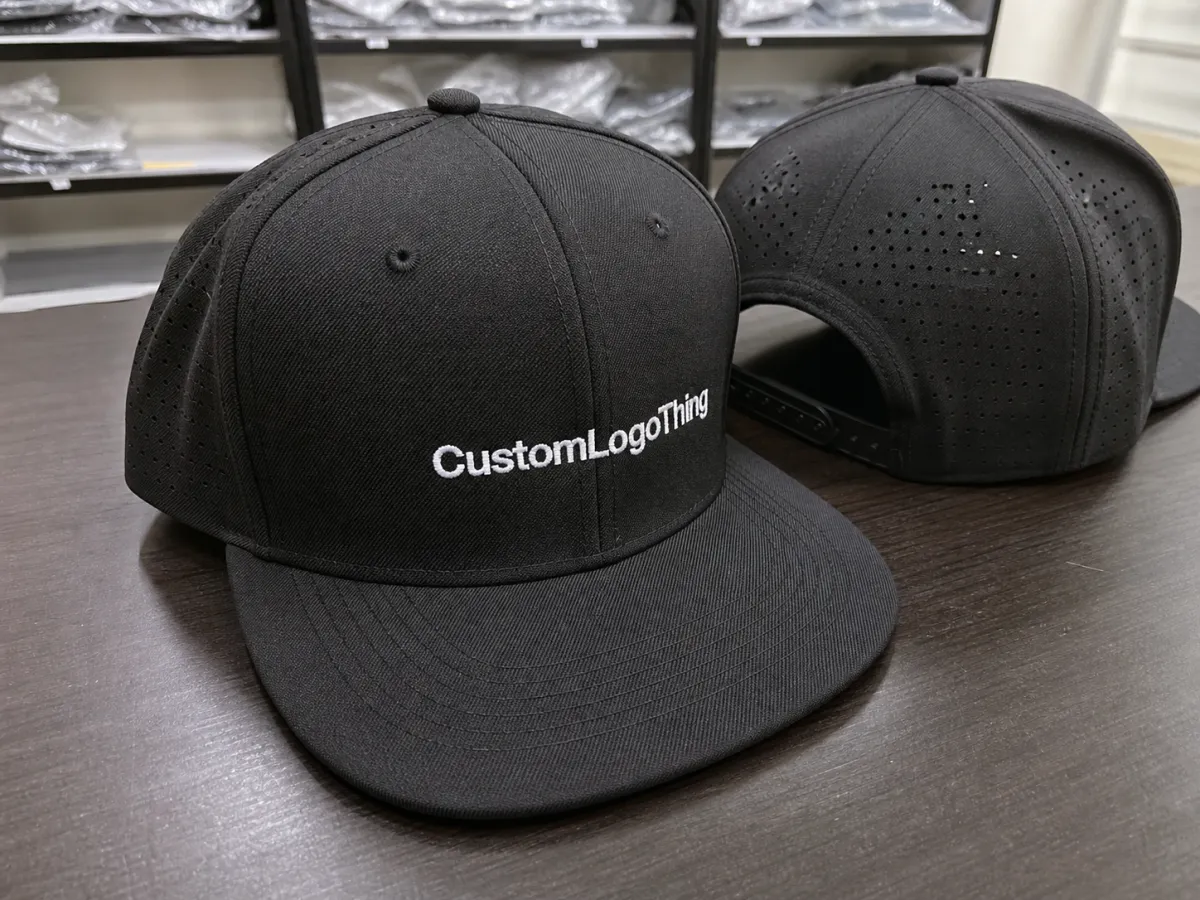
Plain embroidery still works well for simple marks, initials, or bold icons. The trouble starts when the artwork gets small, layered, or text-heavy. A school crest with fine borders, a sponsor logo with narrow lettering, or a badge that relies on sharp edges can lose definition when stitched directly onto a curved cap front. The thread has to pull through fabric, and fabric has limits. Tiny details start to close up, and the logo can look softer than it did on screen.
A patch moves the detail onto a separate piece before it is attached to the cap. That extra step adds process, but it also improves control. The shape can be approved once, the edges can be finished more precisely, and the same patch can be applied across the run with far less variation than direct embroidery usually allows. For teams that reorder mid-season, that consistency matters more than people expect.
There is also a practical durability argument. Dense embroidery can distort if the front panel is too soft or the stitch load is too heavy. A well-made patch, sewn down with clean edge finishing, tends to hold the logo shape better over time. It is not indestructible, but it is better suited to detailed identity marks on headwear.
A low quote is not really low if the logo is muddy, the patch sits unevenly, or the reorder has to be rebuilt from scratch.
Patch caps also simplify repeat ordering. Once the cap style, patch size, border color, and placement are locked, the supplier can reproduce the spec without reworking the entire decoration setup. That reduces room for drift between the first run and the second one, which is one of the easiest ways to protect a team look over a season.
Cap styles, patch shapes, and color matching choices
Cap style changes the way the patch sits and how large the decoration can be without crowding the front. The common team options are snapback, dad hat, trucker, 5-panel, and structured six-panel. Structured six-panels and snapbacks usually give you the cleanest front for a larger patch. Dad hats are softer and more casual, but the lower profile means the patch needs to stay modest in size. Truckers add mesh and ventilation. Five-panels work well for flatter graphics and can carry a streetwear look that teams often want for retail items.
The patch method should match the artwork, not the other way around. Embroidered patches have texture and suit classic sports crests. Woven patches handle small text and tighter linework better, especially when the logo has thin borders or multiple type sizes. PVC patches create strong color blocks and a bold, modern finish, but they are less forgiving with micro-details. Leather patches feel premium and understated, yet they work best when the art is simple. If the mark relies on fine lettering, woven is usually safer. If the design is large and simple, embroidery or PVC may be enough.
| Patch type | Best for | Typical cost impact | Buyer note |
|---|---|---|---|
| Embroidered | Classic team crests and textured logos | Moderate | Good balance of price and appearance |
| Woven | Small text and fine details | Moderate to slightly higher | Best when the art needs sharper definition |
| PVC | Bold graphics and strong color blocks | Higher | Durable, but not ideal for thin lines |
| Leather | Premium lifestyle team branding | Higher | Looks refined; keep the artwork simple |
Patch placement changes the character of the cap. Front-panel placement is still the standard because it gives the logo the most visibility. Side-panel patches can support sponsor marks or secondary branding without overpowering the front. A small back-tab patch is useful for club initials, league marks, or a subtle premium touch. The right placement depends on whether the cap is meant for players, staff, or resale.
Color matching deserves more attention than many buyers give it. Ask for PMS references whenever brand colors matter. Thread color, patch border color, and cap fabric color all shift the final appearance. A navy patch on a black cap can read differently in person than it does in a mockup. Red is another common trap: athletic red and deep maroon may both be called “red,” but they are not interchangeable. A strong quote should make those differences visible before production starts.
Materials, sizing, and decoration specifications buyers should lock in
The quickest way to create quote drift is to leave the spec sheet vague. A useful request should state the crown height, visor shape, closure type, panel count, sweatband, and fabric. If those details are missing, the supplier fills in the blanks, and that can produce a quote that looks fine until the sample arrives with the wrong fit or finish.
For most team caps, patch width usually falls around 2.5 to 3.25 inches on the front panel. Lower-profile dad hats generally sit at the smaller end of that range. Structured six-panels can handle a larger patch without looking crowded. A soft or curved front needs more restraint; an oversized patch can fight the crown shape instead of sitting naturally on it.
Material choice matters more than buyers often expect. Common cap bodies use cotton twill, poly-cotton blends, or polyester twill in weights that feel substantial without becoming stiff. A dense front panel helps the patch lie flat. Thin or overly soft fabric increases the chance of puckering around the stitch line. The same logic applies to the sweatband and closure. A plastic snap, metal buckle, or strap-back finish changes both the feel and the visual cleanliness of the back panel.
For higher-quality bulk orders, ask whether the front panel has structure support such as buckram or a similar backing. That layer helps the cap keep its shape and gives the patch a flatter surface. It is a small detail, but it often separates a cap that looks crisp from one that arrives with subtle wrinkles under the decoration.
File prep is another place where buyers lose time. Send vector artwork whenever possible: AI, EPS, or a clean PDF with outlined text. Include PMS references instead of relying on screen colors, and call out any parts of the logo that are too thin or too small. Woven patches can lose tiny type if the spacing is tight. Embroidery can close up counters and narrow lines very quickly. If the logo has micro-detail, say so before the quote is finalized.
Durability should be discussed before production starts, not after the order ships. Ask how the patch is backed, whether it is fully sewn or partly tacked, and what stitch density is being used. For outdoor wear, polyester thread usually handles abuse better than softer decorative thread choices. If the caps will be worn often, ask for close-up photos of the edge finish and confirm whether the patch can tolerate repeated flexing without lifting.
Pack-out is part of the spec too. Caps may be simple products, but bulk shipping still suffers when cartons are weak or packed too loosely. A crushed shipment can flatten crowns and distort patch placement. For handling references, ISTA test methods remain a sensible benchmark even for basic headwear shipments, because the risk is not the cap itself so much as the damage that happens in transit.
How pricing, MOQ, and unit cost change by order size
Quote structure should be easy to read. The main cost drivers are the cap body, patch method, stitch count, artwork complexity, and any custom additions such as labels, hangtags, or specialty packaging. Once those variables are locked, pricing becomes much more predictable. A vague request usually produces vague numbers because the supplier is forced to price uncertainty.
MOQ, or Minimum Order Quantity, varies by build. A simple stock cap with a standard patch may start at 50 or 100 pieces. A more custom build with special labels, multiple colorways, or premium patch construction often pushes the minimum higher. Buyers testing demand should ask for pricing at 50, 100, and 250 units. That makes the break point visible and shows where unit cost starts to improve.
| Quantity | Typical unit price range | Best fit | Notes |
|---|---|---|---|
| 50 pcs | $6.80-$9.40 | Small team runs, trial merch | Setup cost has more impact here |
| 100 pcs | $5.10-$7.20 | Most club orders | Often the cleanest entry point |
| 250 pcs | $4.20-$5.90 | Retail, boosters, league merch | Better value per unit |
| 500+ pcs | $3.60-$5.10 | Bulk resale and repeat programs | Lowest unit cost, but larger cash outlay |
Those ranges assume a basic stock cap with one standard patch. PVC, leather, unusual closures, or extra decoration can move the price up. That is normal. More work costs more. The real problem is not a higher quote; it is a quote that later changes because setup, proofing, or shipping assumptions were never stated clearly.
Common extras include sample fees, revision fees, rush fees, custom packaging, split shipping, and special label requests. A sample may be inexpensive, but repeated revisions can add cost quickly if the art keeps changing. A good supplier should identify those charges early instead of revealing them after proof approval. Buyers comparing vendors should look beyond the headline unit price and ask what the finished order actually includes.
Production steps from art file to approved sample
A clean production flow usually runs in this order: request details, estimate, mockup, proof approval, sample or photo approval, bulk production, inspection, and shipment. Each step exists for a reason. Skip one and the order tends to pay for it later in delays or avoidable corrections.
- Request details: quantity, cap style, patch type, logo file, colors, deadline, and destination.
- Estimate: the supplier prices the cap body, patch, setup, and shipping assumptions.
- Mockup: you review placement, scale, and overall appearance before production begins.
- Proof approval: colors, backing, border, closure, and sizing are locked in.
- Sample or photo approval: the first physical or documented check catches issues early.
- Bulk production: the factory builds the full order based on the signed spec.
- Inspection and shipment: caps are checked, packed, and sent out.
The proof stage carries the most weight. That is where the buyer should verify patch size, cap shape, placement, border color, backing, and closure type. If the proof shows a 2.75-inch woven patch on a structured six-panel snapback, that is the moment to approve or correct it. Once production starts, changes usually cost time and money, and some changes are no longer practical at all.
Communication speed matters more than people think. A supplier can move quickly when the brief is complete and the buyer responds promptly. Slow approvals stretch the schedule far more than the sewing line does. This is especially true for logos with multiple color references or thin lettering that needs adjustment before the patch can be built correctly.
Inspection should not be treated as optional. Ask what gets checked before shipment: patch alignment, stitch tension, seam finish, crown symmetry, and closure strength. A cap can look right in a render and still arrive crooked if nobody checks the actual sewing. The difference between acceptable and sloppy is often a single inspection pass done carefully.
Packaging deserves a line in the order summary as well. Carton count, carton strength, and label placement matter when a bulk order is headed to a team store, tournament, or distributor. If the shipment crosses multiple stops, the carton spec should be strong enough to survive handling, not just enough to leave the factory.
Timeline, lead time, and rush-order tradeoffs
Lead time has two parts: factory time and transit time. Buyers mix those up constantly, then wonder why a quote that sounded fast does not arrive when expected. The factory may need 12 to 18 business days after approval, but shipping can add another 3 to 10 business days depending on destination and method.
Mockups are usually quick, often within 24 to 48 hours if the brief is clear. Samples or sample photos take longer because the cap body and patch both have to be aligned correctly. Bulk production is where the real schedule begins. A standard patch cap run may finish in about 12 to 20 business days after final sign-off. More complex patch styles, multiple revision rounds, or heavy seasonal demand can extend that timeline.
Several things slow production more than buyers expect:
- Multiple artwork revisions
- Thin lettering that needs redesign
- Color matching questions left unresolved
- Custom labels or hangtags added late
- Peak-season rush around tournaments, camps, or launch dates
Rush orders are possible, but the tradeoffs should be stated plainly. Faster turnaround often means fewer patch options, less revision flexibility, or a higher unit price. Sometimes the schedule can be compressed by using stock cap bodies and standard patch methods. That is practical. What is not practical is expecting fully custom decoration, perfect color matching, and a compressed deadline at the same cost as a normal run. The math does not bend for urgency.
If the date is fixed, say so early. A hard deadline changes production planning, and it is better to know that before the proof than after the queue is already full.
How to compare suppliers before you place a team order
Price matters, but it should not be the only number you compare. A supplier can quote a low unit cost and still make the order difficult through weak proofs, hidden setup charges, or poor reorder records. For team caps, the better comparison usually comes from five things: proof quality, material options, fee transparency, reorder consistency, and inspection discipline.
Start with the proof. Does the supplier show the patch at the right scale? Are the colors clear? Does the placement look believable on the actual cap shape? A clean mockup suggests they understand the build. A fuzzy or generic mockup usually means the production file may be just as vague. That is a warning sign, not a cosmetic issue.
Then ask about reorders. Good suppliers keep specs on file: patch size, border color, PMS notes, placement, closure, and artwork version. That matters when a club wants the same cap later in the season. Reorder consistency saves more time than most discounts on the first run.
Inspection is another useful filter. Ask what gets checked before shipment and how defects are handled. Patch alignment, seam finish, thread tension, crown symmetry, and closure strength should all be part of the check. A cap can look fine from a distance and still fail once someone puts it on. Real inspection catches those problems before they become a customer complaint.
Finally, ask whether the quote includes everything you actually need. That means setup, proofing, sample handling, and shipping assumptions. If the supplier cannot answer directly, keep moving. The right vendor should be able to explain the build in plain language, not hide behind jargon or leave key costs for later.
When comparing several vendors, send the same spec to each one. Otherwise you are comparing different products instead of different prices. For bulk team headwear, apples-to-apples quoting is the only comparison that tells the truth.
What to send for a fast sports team caps with logo patch quote and cleaner proof
If speed matters, the strongest request is also the simplest one: send the full brief the first time. A clearer input produces a cleaner proof and fewer corrections. That sounds basic because it is basic, and basic discipline saves money on bulk orders.
Your request should include vector artwork, quantity, preferred cap style, patch type, colors, deadline, and shipping destination. If you already know the target audience, include that too. A player cap, a staff cap, and a fan retail cap can share the same logo while still needing different body styles or finishes.
Ask for like-for-like options if you are unsure about patch methods. Keep the cap body, patch size, and decoration level the same across alternatives so the numbers mean something. Otherwise you are comparing different products and pretending the prices are equivalent. That is a quick way to choose the wrong build because one quote looked cheaper in isolation.
If the logo includes thin text, small symbols, or several color changes, request a digital proof before production starts. That one step catches most preventable mistakes. It is far less painful to correct a proof than to fix 250 caps with the same bad decision stitched into every piece.
The goal is not to collect any quote. The goal is to get a quote that matches the actual product spec, the real deadline, and the repeat order you may want later. A strong sports team caps with logo patch quote should be specific enough to compare, simple enough to approve, and accurate enough to produce without drama.
What do I need to request a sports team caps with logo patch quote?
Send vector artwork, quantity, cap style, patch type, and your target deadline. Include PMS colors or a clear brand reference so the supplier can price the proof correctly. For useful comparison, ask for the same cap body and patch method across every option.
What is the usual MOQ for logo patch team caps?
MOQ depends on cap style and patch method, but simpler stock builds can start lower than fully custom builds. Expect higher minimums when the order needs custom patch construction, special labels, or multiple colorways. For a practical quote, ask for pricing at 50, 100, and 250 units so the unit cost curve is visible.
Which patch type works best for sports team caps?
Woven patches work well for small text and clean details. Embroidered patches add texture and a classic team look. PVC or leather can make sense for bold branding, but they are usually a weaker choice for tiny artwork or fine lettering.
How long does production usually take after approval?
Mockups are usually quick, while samples and bulk production take longer after the proof is approved. Production lead time depends on patch complexity, cap style, and current factory load. Shipping is separate, so ask for both factory time and transit time in the same quote.
Can you match team colors exactly on patch caps?
You can usually get very close with PMS references and approved proofs. Final color appearance can shift slightly depending on patch material, thread, and cap fabric. If exact color matching matters, ask for a physical sample or detailed digital proof before bulk production.


