Stationery Frosted Zipper Bags material thickness guide is a practical question disguised as a technical one. On paper, two bags can share the same dimensions and still perform very differently once the stationery goes inside. One will sit flat, keep its shape, and frame the contents cleanly. The other will wrinkle at the corners, let the zipper line wander, and make a carefully assembled set look underdone.
That difference matters because stationery is rarely sold as a single loose item. A note card set, sticker pack, invitation bundle, or small PR kit needs packaging that supports the product instead of fighting it. Too soft, and the contents slide. Too heavy, and the package begins to cost more than the job requires. The right spec sits in the middle, where presentation, protection, and cost all behave.
What the stationery frosted zipper bags material thickness guide actually tells buyers
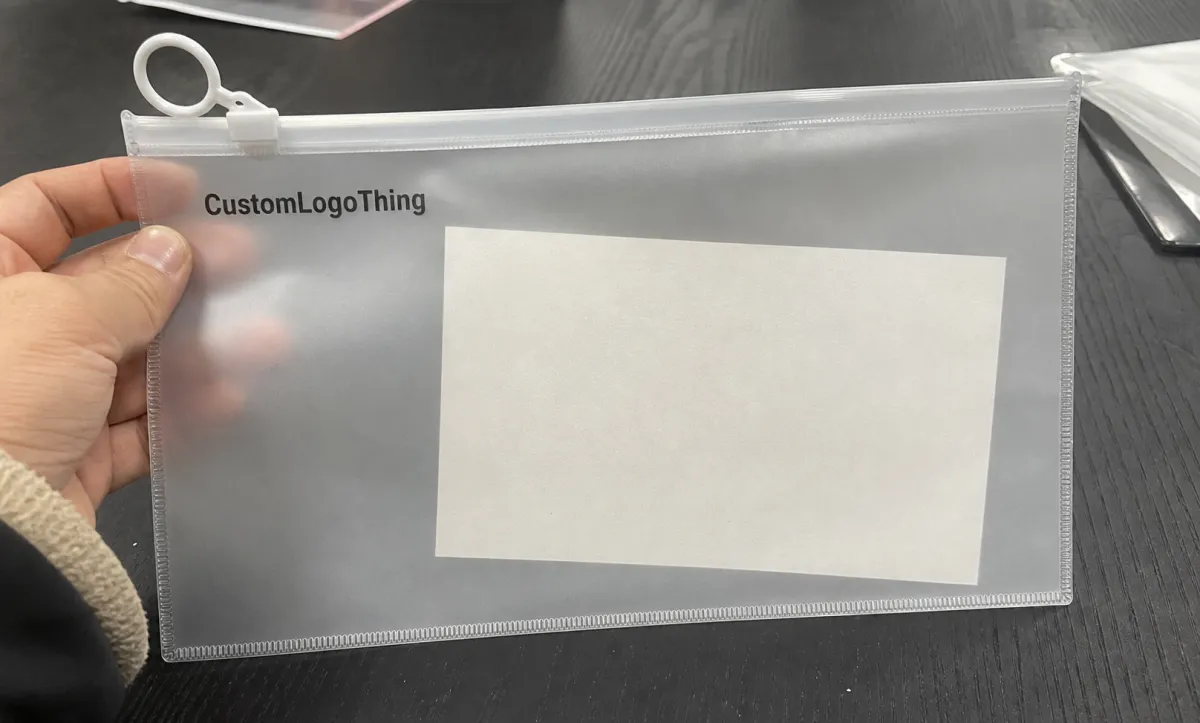
Thickness is not just a measure of strength. It changes the way the bag opens, how the top edge stands after filling, how the film folds in a carton, and whether the zipper track still looks straight after repeated use. That is why a stationery Frosted Zipper Bags Material thickness guide should be read as a fit-and-finish guide as much as a durability guide.
A bag with a lower-gauge film can feel supple and easy to pack, but it may collapse around the contents and lose its retail presence. A heavier film often gives better body and a cleaner silhouette, yet it can also make packing slower and raise the landed cost without adding much value if the contents are light. The best choice depends on the product, the retail setting, and the amount of handling the bag will see.
Frosted finish adds another layer. The haze softens visual clutter and hides small scuffs better than a clear film, but it can also make the same thickness feel more premium or more opaque depending on the resin blend. Buyers often focus on the nominal thickness and overlook the finish, which is a mistake. Two 100 micron bags can look and feel surprisingly different if the surface treatment, zipper profile, or film density is not the same.
For stationery, the real question is simpler than most quoting sheets suggest: what thickness gives the cleanest presentation without creating waste? Flat insert cards, folded invitations, and multi-piece kits do not need identical specs. A good brief starts with the contents, then the handling conditions, then the visual target.
How film thickness changes feel, clarity, and seal performance
Buyers see thickness listed in micron, mil, or occasionally gauge. Those units are not interchangeable, so a quote that sounds thicker may not be thicker at all. One micron is one-thousandth of a millimeter; one mil is one-thousandth of an inch. If suppliers are mixing units, ask for the exact measurement and the tolerance before comparing samples. Otherwise, the comparison is only cosmetic.
As the film gets heavier, the bag gains body. That body shows up immediately in the hand. The edges feel firmer, the top edge holds its line better, and the sides crease less after filling. For stationery sets that need to look orderly in photos or on shelf, that extra structure can matter more than raw strength. A neat top edge often reads as quality before the customer has even opened the zipper.
There is a limit, though. Once the film crosses from “supportive” into “stiff,” the bag becomes harder to fill and less forgiving of unusual corners or small size variation in the product. Thin film is easier to work with when the contents are light and flat. Heavy film helps when the set has pressure points, repeated handling, or a need to stand upright in a carton or display tray. Neither is automatically better.
Seal performance deserves equal attention. A strong zipper profile, consistent side seals, and a clean top edge can make a moderate film outperform a heavier one that was cut or sealed poorly. In packaging, rough closure lines are a bigger problem than many buyers expect. The bag may still close, but it will look tired long before it fails mechanically.
For shipment durability, use packaging-testing logic, not just feel testing. The guidance used by the ISTA community around drop, vibration, and compression is useful even for simple zipper bags because the bag is usually one part of a larger pack-out system. If a frosted bag rides loose inside a carton, the scuffing often comes from the pack structure, not from the bag itself.
A bag can feel strong in the hand and still be the wrong spec if the zipper line wobbles, the film creases too easily, or the contents shift with too much empty space.
Match the bag spec to stationery weight, finish, and zipper style
The cleanest way to choose thickness is to match it to the load. Flat paper inserts and sticker sheets are light, but they still need enough structure that the bag does not droop in a box. Folded cards and small notebooks add corners and pressure points. Mixed kits, especially those containing a notebook, cards, and a small accessory, usually need more body so the bag remains tidy after packing and transit.
- Flat inserts: lighter film usually works if the bag is mainly for dust protection and presentation.
- Sticker packs and card sets: mid-range film often keeps the stack aligned and reduces edge curl.
- Small notebooks or mixed kits: thicker film helps the bag stand better and keeps the top line cleaner.
Finish changes the equation. Frosted film can make a lighter bag appear more refined because the haze softens the view of the contents. A semi-transparent finish shows more detail, which helps when the artwork or paper texture is part of the appeal, but it also exposes uneven packing more quickly. Printed surfaces add a third variable. Heavy print coverage can make the bag look more premium, yet it can also change how the film folds and whether the zipper area still seals neatly.
Zipper style matters as much as film thickness, sometimes more. A crisp, well-aligned zipper gives the bag a reliable feel even when the film is moderate. A sloppy track or poor closure line can make a high-gauge bag feel cheap. That is one of the more common buyer surprises: the film spec is acceptable, but the closure is what gives the game away.
If sustainability is part of the brief, separate the claims carefully. The outer pack can use FSC certified corrugated cardboard, kraft paper void fill, or recycled materials without requiring the bag itself to carry every environmental claim. If recycled resin is requested, ask for a sample run and check whether haze, stiffness, and surface consistency are stable. Recycled blends can vary more from run to run than buyers expect, especially when the visual finish has to stay consistent across a full order.
For brands that want the stationery to arrive crisp rather than compressed, the shipper matters too. Corrugated cardboard strength, internal dividers, and the way the bags are nested can alter the final result almost as much as a 20 micron swing in film thickness. Packaging is a system. The bag is only one part of it.
Cost, pricing, and MOQ drivers for custom zipper bags
Price moves on several axes at once. Film thickness is a major driver, but so are bag size, zipper complexity, print coverage, color matching, and whether the project needs special finishing or custom tooling. A standard frosted bag with a simple logo mark is a different buy from a full-coverage printed bag with a custom zipper pull and tight surface control.
| Thickness range | Typical stationery use | Approx. unit price at 5,000 pcs | What you are paying for |
|---|---|---|---|
| 80-90 micron | Flat inserts, light card sets | $0.12-$0.20 | Lower resin use, lighter feel, simpler packing |
| 100-120 micron | Sticker packs, folded cards, mixed stationery kits | $0.16-$0.28 | Better body, cleaner shelf look, less creasing |
| 130-150 micron | Heavier kits, higher-end retail presentation | $0.22-$0.40 | More structure, stronger perceived quality, improved scuff resistance |
| Custom print-heavy builds | Brand launches, gift sets, PR mailers | $0.30-$0.55 | Artwork coverage, tighter color control, extra setup time |
Those figures are practical planning ranges, not promises. They help buyers avoid quoting shock before formal sampling begins. In many cases, the thicker option is not only more expensive per piece; it also changes packing density and freight efficiency. A slightly wider or stiffer bag may reduce the number of units per carton, which affects storage, shipping, and eventually margin.
MOQ works the same way. Lower minimum order quantities usually carry a higher per-unit cost because the setup work is spread over fewer bags. Larger runs can improve pricing, but only if the spec is already stable. If the dimensions are still moving or the artwork is changing, the savings fade quickly because every revision adds proofing time and waste risk.
One frequently missed cost item is rework. A bag that looks fine on the sample table but shifts inside a retail pack can trigger customer complaints, replacement shipments, or an unplanned second run. Those costs do not show up in the quote, but they still land on the order. In that sense, the “cheaper” film is not always the cheaper purchase.
Process, timeline, and lead time from spec to shipment
A straightforward project usually moves through size confirmation, thickness selection, artwork review, sampling, approval, production, quality checks, packing, and shipment. The timeline depends less on the bag itself than on how quickly the spec gets locked. When the size is uncertain or the print instructions are vague, the whole schedule slows down.
Sampling is often where the schedule stretches. If the first sample is close but not quite right, a second round may be needed to balance structure, visibility, and zipper feel. For standard custom runs, production lead time often falls around 12-20 business days after final approval. Complex print builds or special packaging requirements can take longer. Freight is a separate clock, especially for sea shipments.
Quality control should be specific, not casual. Ask for checks on film thickness consistency, zipper closure alignment, seal integrity, haze consistency, and visible scuffing after handling. If the order is meant for retail presentation, ask how the bags are stacked and packed before they go into the outer carton. A poor inner pack can mark the frosted surface even when the film itself is within spec.
Secondary packaging deserves more attention than it usually gets. FSC certified corrugated cardboard, clean kraft paper wraps, and well-fitted dividers can reduce abrasion during transit. That matters because frosted film shows wear in a different way from clear film; it does not always tear, but it can lose visual quality faster if it rubs against rough packing surfaces. A good shipper protects the look of the bag, not only the product inside it.
Three habits keep the schedule under control: approve the sample promptly, confirm the pack count before production begins, and avoid changing dimensions after the quote is locked. Those decisions sound small. They are not. They prevent the slow drift that turns a normal order into a project with avoidable delays.
A step-by-step way to choose the right thickness
The most reliable method starts with the contents and works outward. The right thickness is usually the thinnest one that still holds shape, protects the stationery, and gives the frosted surface a clean, deliberate look. Anything heavier should earn its place through handling, display, or freight needs.
- Measure the real load. Use the heaviest set, not the average one. Check for sharp corners, stiff inserts, and any parts that press against the zipper line.
- Define the main job. If the bag is primarily for shelf presentation, visual structure matters most. If it is mainly for transit, scuff resistance and closure consistency move up the list.
- Request a narrow sample spread. Comparing 90 micron, 110 micron, and 130 micron in the same size usually shows the tradeoff very quickly.
- Test the bag in real use. Fill, close, reopen, stack, and handle it with the actual stationery set. A spec sheet cannot show how the zipper feels after five cycles.
- Check overnight behavior. Some films relax after being packed for a few hours. That is where a bag may look fine at first and then start to curl or sag.
Once the best option is clear, write the quote request with the exact width, height, micron or mil, zipper style, print method, and pack count. That removes guesswork and gives the supplier less room to reinterpret the job. It also makes it easier to compare recycled content claims, paperboard upgrades, or secondary packaging changes without mixing them into the bag spec.
One more practical point: ask for the measurement unit every time. A buyer who receives one quote in mil and another in micron can easily misread the difference by a wide margin. In packaging, unit confusion is a cost trap, not a clerical detail.
Mistakes that make frosted zipper bags feel flimsy
The first mistake is choosing by adjectives instead of measurements. Words like “premium,” “heavy-duty,” or “strong” mean little unless the film spec is listed beside them. Suppliers may use the same label for very different builds. Ask for the actual thickness, the material structure, and the tolerance range.
Oversizing is another common failure. If the bag is too roomy, the contents shift and the package feels weak even when the film is perfectly adequate. Too tight, and the zipper strains, the top edge bows, and the corners press outward. Both problems make the bag feel less refined than it should.
Buyers also underestimate the role of the closure. A weak zipper seal, rough top cut, or uneven side seal can downgrade the package more quickly than a small change in thickness. In practice, the closure often tells the truth first. If it looks cheap, the whole piece reads cheap.
Scuffing is easy to ignore in sampling and hard to forgive in a finished order. Frosted film can pick up marks from rough cartons, hard inserts, or repeated rubbing inside shipment packs. That is why simple protective details, such as kraft paper wraps or cleaner corrugated cardboard dividers, can matter more than another 10 micron of thickness.
There is also a sustainability mistake that shows up often: asking for biodegradable packaging when what the program actually needs is a reusable frosted zipper bag paired with a recycled outer pack. Those are different claims with different material requirements. If a biodegradability claim is required, the resin, testing, and documentation need to support it. If not, talk about recyclable components, recycled materials, or FSC certified paperboard where those claims are real.
Expert tips and next steps for ordering the final spec
The most useful next step is not a bigger order. It is a cleaner comparison. Request two or three thickness options in the same bag size and compare them with the actual stationery load inside. Most teams can identify the best balance of feel, clarity, and zipper action within one sample round if they test the bags honestly.
Then run a simple handling check. Fill the bag, close it several times, stack it with other units, rub the frosted surface against the materials it will actually touch, and see whether the closure line stays straight. If the bag will ship inside a retail carton, test it in that carton. A stand-alone sample on a table can hide problems that appear immediately in a packed box.
- Gather the product dimensions and the heaviest fill weight.
- Choose the desired finish: frosted, semi-transparent, or printed.
- Ask for thickness options with the exact measurement unit named.
- Confirm MOQ, sample timing, production lead time, and freight method.
- Decide whether the secondary pack should include FSC certified paperboard, kraft paper, or recycled materials.
That is the real value of a stationery Frosted Zipper Bags material thickness guide. It turns a vague packaging decision into a working spec that protects the product, supports the brand image, and keeps the order within budget. For most stationery buyers, the right answer is not the thickest bag on the sheet. It is the one that fits the contents, ships cleanly, and still feels right when the customer picks it up.
What thickness works best for stationery frosted zipper bags?
Use lighter film for flat inserts, note cards, or sticker sheets, and move up in thickness when the contents have corners, weight, or repeated handling. The best choice is usually the thinnest bag that still stands neatly, protects the contents, and gives the frosted finish a clean premium feel.
Does a frosted finish change the thickness I should choose?
Yes. Frosted film can hide contents better and change the visual feel of the bag, so thickness should be chosen with both appearance and structure in mind. If presentation matters, test frosted samples in the actual fill condition instead of relying on a spec sheet alone.
How does stationery frosted zipper bags material thickness affect pricing?
Thicker film usually costs more per bag, and print coverage, zipper style, and custom sizing can add to the quote as well. The right balance often saves money overall by reducing damage, rejects, and reorders.
What MOQ should I expect for custom frosted zipper bags?
MOQ varies by size, film thickness, print method, and whether the bag needs custom tooling or special packaging. Ask for multiple quote tiers so you can compare unit cost at different order levels before locking the spec.
How long do sampling and production usually take?
Sampling depends on how quickly the spec and artwork are approved, while production lead time depends on order size and finishing complexity. The fastest way to stay on schedule is to approve one sample direction early and avoid changing dimensions after quoting.


