Book Frosted Zipper Bags Material Thickness: Buy Smart
The book Frosted Zipper Bags material thickness guide matters because two bags both labeled 3 mil can behave like different products. One hangs softly around a paperback and feels almost textile-like in the hand; another has enough body to keep a hardcover from bowing the film at the corners. Same number, different outcome. That gap usually comes from resin blend, film orientation, zipper profile, and whether the supplier is quoting one wall or the full structure.
That is not packaging trivia. Thickness affects corner protection, zipper life, shelf appearance, and freight cost. It also changes how the bag runs on a packing line. A film that looks fine in a photo can crease badly under speed, while a slightly heavier spec may reduce rework because operators do not need to fight the opening.
For books, the right bag is a compromise between softness and structure. Too thin and the corners print through, the zipper line twists, or the bag picks up handling marks before the customer ever sees it. Too thick and the pack becomes stiff, bulky, and expensive to move. The ideal choice depends on the book format, the finish on the cover, and whether the bag is serving display, dust protection, or transit protection.
A bag can look premium and still fail where it matters most. In book packaging, the closure and seal area usually tell you more about performance than the film number alone.
Book Frosted Zipper Bags Material Thickness Guide
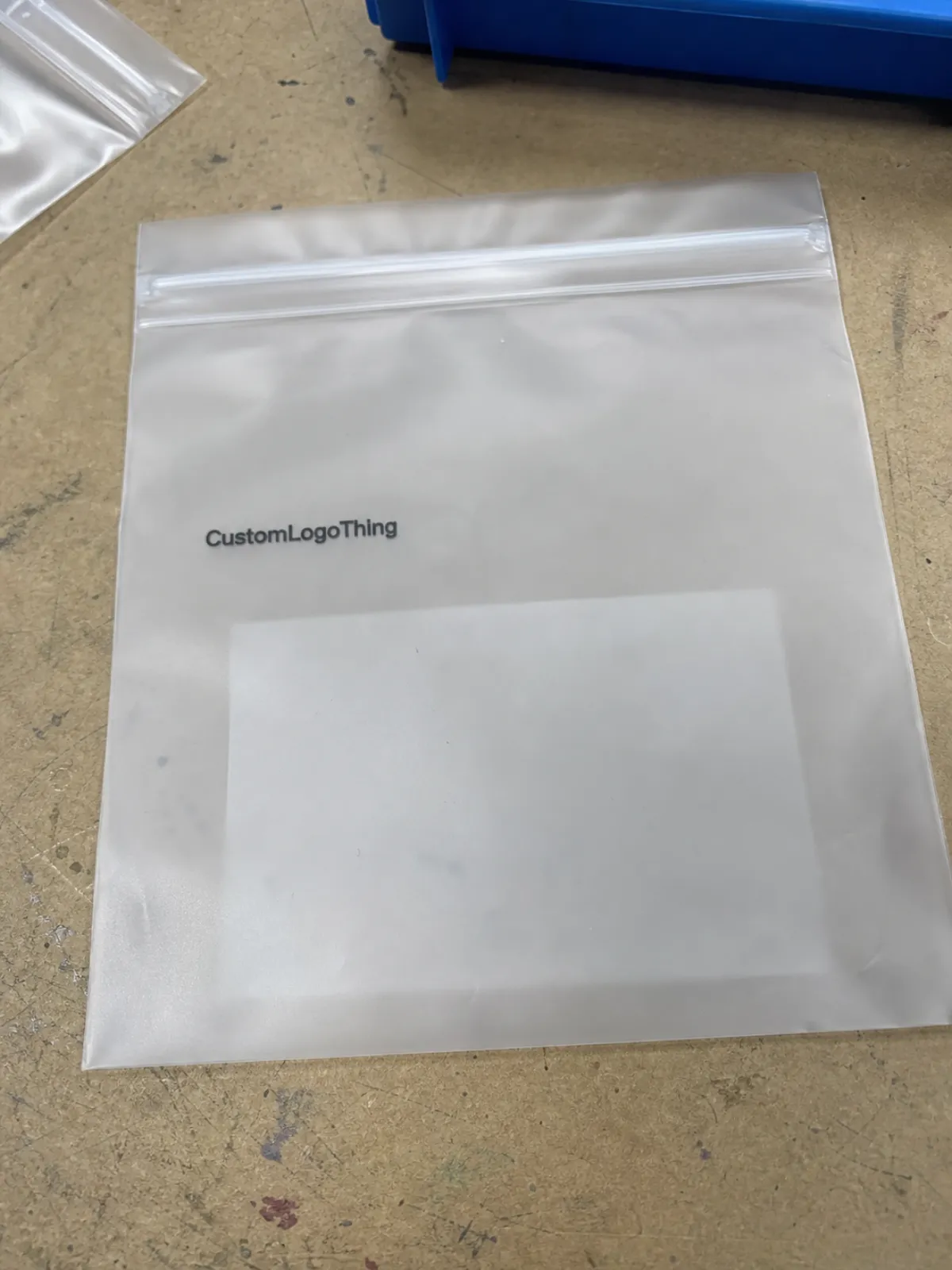
Thickness is not just a line on a spec sheet. It changes how the bag opens, how it folds around a spine, how well it hides scuffs, and how much confidence a buyer gets the moment the package is picked up. The same book in a thin bag may feel casual; in a better chosen bag, it reads as intentional.
The confusing part is that “mil” does not always mean the same thing from one supplier to the next. In flexible packaging, 1 mil equals 0.001 inch, but quoting practice varies. Some vendors list a single-layer measurement, others list total film thickness, and some leave out the zipper area entirely. A 3 mil bag can therefore be 3 mil per side, 3 mil total, or a rounded sales description that hides the actual spec. If the quote does not explain the measurement method, the number is not enough.
For books, frosted film brings another layer to the decision. The matte haze reduces glare, disguises minor fingerprints, and softens the look of the pack. That can make a mid-range gauge feel more premium than clear film at the same thickness. It does not make the bag stronger by itself. It only changes how strength is perceived.
As a practical buying rule, start with the book itself: weight, corner shape, cover finish, and the way it will be shipped or displayed. A lightweight paperback in a bookstore rack has a different requirement from a hardback riding inside a mailer with other items. The first needs polish. The second needs structure.
How Film Gauge, Zipper Style, and Seal Design Work Together
It helps to think of the bag as a system instead of a single material choice. The front and back film layers carry the load. The seals hold the shape. The zipper controls repeated opening. Any gusset, reinforcement strip, or header changes how the pack stacks and how it resists distortion. If one part is underbuilt, the whole bag feels weaker than its thickness would suggest.
This is why a thicker wall does not automatically fix performance issues. If the zipper track is thin or the seal width near the opening is narrow, the weak point simply moves. For book packs, that usually shows up first at the corners and the zipper ends. The film may be fine while the closure splits or the seal starts to whiten under stress.
Book insertion is another real-world test that mockups often miss. A bag that is just a little too tight can make the operator drag the corners against the film. After a few cycles, the wear line appears right where the customer expects protection. A cleaner opening is often worth more than an extra half-mil of film. That is especially true for hardcovers with square corners or dust jackets that should not be scraped during packing.
Frosted film can mask handling marks, but it also makes it easier to underestimate friction and scuffing. Buyers sometimes assume the matte finish is “forgiving,” then discover that the pack still picks up stress marks around the zipper fold. Appearance and structure are related, not identical. Good samples make that clear fast.
What to check in the sample
- Zipper action: Open and close it several times with one hand and watch for drag, misalignment, or ends that do not fully engage.
- Corner clearance: Slide the book in and out to see whether the corners catch on the seal line or inner fold.
- Seal width: Confirm that the welded area is wide enough near the zipper to resist splitting under repeated use.
- Film memory: Check whether the bag springs back cleanly or holds creases that make the front panel look wavy.
Which Specs Affect Clarity, Durability, and Hand Feel
Thickness is only one piece of the equation. Material type, zipper design, finish, dimensions, and sealing quality all influence the result. A 4 mil bag made from one resin blend can feel supple. Another 4 mil bag can feel boardy because of film orientation, additive package, or how aggressively the film was cooled during production. The number alone does not tell the whole story.
For most book applications, durability improves as thickness rises, but only up to a point. More film generally means better puncture resistance, better shape retention, and less corner telegraphing on a hardback. It also adds weight and can make the bag harder to fold or stack. A lighter paperbound title might do fine in 2.5 to 3 mil film. A heavier edition or bundled set often needs 3.5 to 4.5 mil to avoid a flimsy feel. Once you move into very heavy books or multi-item kits, 4.5 to 6 mil starts to make sense.
The frosted finish deserves separate attention because it affects perception more than raw strength. It reduces glare under retail lighting, hides fingerprints, and makes the bag look more controlled on shelf. That is useful when the pack is handled by staff, customers, or fulfillment teams. If the program uses belly bands, inserts, or outer mailers, the frosted surface also pairs well with restrained graphics and muted color palettes. The look can be more expensive than the material actually is.
Many packaging programs also need material or sustainability documentation for other components in the pack. That is where FSC certified paper inserts, kraft paper sleeves, or recycled materials in the outer shipper come into the discussion. Those materials do not change the zipper bag’s structural spec, but they affect how the final kit is judged by buyers and compliance teams. It is common for the bag to remain a conventional flexible film while the carton and inserts carry the verified fiber story.
Be careful with broad environmental claims. Biodegradable packaging is often used too loosely, especially around flexible film. Frosted appearance does not make a bag biodegradable, and recycled content does not automatically mean the whole pack is compostable. Ask for exact documentation, not marketing language. If the label, website, or retail pitch needs a claim, it should be backed by the right standard and the right material.
For transit-heavy programs, many brands reference the testing logic used by ISTA, especially if the book will ride in a mailer or corrugated shipper and needs to survive vibration, compression, and drop handling. On fiber-based parts, chain-of-custody documentation from FSC matters more than a logo on the artwork. Separating testable performance from branding claims usually leads to fewer surprises.
Cost, MOQ, and Unit Cost Tradeoffs
Thickness affects price for obvious reasons. Heavier film uses more resin, may run slower, and increases freight weight per carton. Custom zipper profiles, thicker seals, and special surface treatments add more cost. The real question is not which bag has the lowest unit price. It is which bag creates the lowest total cost after returns, damage claims, packing complaints, and replacement shipments are counted.
MOQ can push the decision as much as spec can. Thicker custom bags often make more sense at higher quantities because setup, tooling, and production time are spread across more units. Standard lighter options are easier to trial in small runs or seasonal programs. For a first order, I would rather see a buyer compare two or three thicknesses than commit to a full run based on a guess. That small test is usually cheaper than a warehouse full of underperforming packaging.
| Thickness Range | Typical Feel | Best Fit for Books | Planning Price Range |
|---|---|---|---|
| 2.5-3 mil | Soft, flexible, lighter hand | Slim paperbacks, dust protection, presentation-only packs | $0.14-$0.22 per unit at 5,000 pcs |
| 3.5-4 mil | Balanced, slightly firmer | Most retail book packaging, moderate corner protection | $0.18-$0.30 per unit at 5,000 pcs |
| 4.5-6 mil | Substantial, more rigid | Heavy hardcovers, bundled sets, transit-heavy programs | $0.26-$0.42 per unit at 5,000 pcs |
Those are planning ranges, not fixed quotes. Dimensions, zipper style, print coverage, carton pack-out, and film source can move them quickly. Still, the table is useful because it shows the cost curve before a buyer gets stuck with a spec that looks cheap on paper and expensive in the field. A return for a bent corner can erase savings fast.
The hidden cost of going too thin is not always obvious in the first shipment. It often appears later as edge wear, zipper splits, or complaints that the package feels flimsy. Once that starts, the apparent savings shrink. That is why a book Frosted Zipper Bags material thickness guide should be tied to the actual use case instead of to the lowest line item in a quote.
Process and Lead Time From Sample to Production
The normal workflow starts with size, thickness, zipper style, and print requirements. After that, the supplier should confirm whether the frosted effect is built into the base film or created by surface treatment. That detail changes both appearance and lead time. It also changes how consistent the bag looks under light, especially if the order needs to match an existing packaging line.
A useful sample should show more than the outside view. It should confirm bag dimensions, zipper alignment, the actual measured thickness method, and the seal quality near the opening. If the sample comes back with only a pretty appearance and no measurable data, there is still too much guesswork left. Ask for the spec in writing before approving production.
Lead time usually stretches in three places: film sourcing, artwork approval if the bag is printed, and revisions after sample review. Thicker bags can also require different seal temperatures or slower run speeds, which means one late approval can affect the ship date. If the book launch is fixed, request sample timing, approval deadline, and final shipping window before the order is placed.
Mixed packaging programs need even more schedule discipline. The bag may be only one component, but the outer shipper, inserts, and wrap all have to arrive together. A corrugated cardboard mailer, a kraft paper sleeve, and an FSC certified insert can each have their own lead time. If one slips, the whole pack slips. The simplest way to avoid substitution is to lock material specs early and keep the approval chain short.
Production quality also depends on realistic testing. A good sample review should mimic the final use: insert the book, close the zipper, place the bag in the outer carton, and check the handling path the finished order will actually follow. That is more useful than squeezing the film in your hand and guessing from feel. Feel matters, but only after function is confirmed.
Step-by-Step: Choosing the Right Thickness for Your Product
Start with the book. Measure height, width, depth, and weight, then look at the corners and surface finish. A softcover with rounded edges behaves differently from a square hardback with a laminated jacket. If the cover has foil, soft-touch lamination, or a delicate matte finish, the bag should open cleanly and avoid abrasion during insertion.
Then define the packaging job. Display-only packaging can stay on the lighter side if it still looks refined and resists scuffing. Dust-cover use for retail shelving usually needs a mid-range gauge. Direct ship or bundled kit use asks for more structure, because the bag is now part of the protection system, not just the presentation layer.
A practical selection order
- Define the book: weight, size, corner shape, and surface finish.
- Set the use case: display, dust cover, direct ship, or bundled kit.
- Choose two thicknesses: one target spec and one step lighter or heavier for comparison.
- Check the closure: verify that the zipper opens wide enough and closes cleanly after repeated use.
- Confirm the whole pack: bag, insert, carton, and any outer wrap should work together, not separately.
That last point is easy to ignore and expensive to learn the hard way. A frosted zipper bag can look excellent in isolation and still fail the system test if the book shifts in the shipper or the zipper rubs the cover during transit. On the other hand, the right thickness paired with a reliable zipper and a wide enough seal can make even a simple pack feel deliberate.
A reasonable rule is to choose the lightest gauge that protects the corners, supports the zipper, and still feels purposeful in the hand. That is usually the best balance between performance and cost for book packaging. If the bag is only one part of a larger presentation kit, the target can be lighter. If the bag carries more of the protective burden, the spec should move up.
Common Mistakes, Expert Tips, and Quote Prep
Three mistakes show up again and again. First, buyers overspec thickness for a lightweight book and pay for stiffness they do not need. Second, they focus on the film number and ignore the zipper quality, even though the closure is often the first failure point. Third, they assume frosted appearance means better protection. It does not. It only changes the look and the way the bag handles fingerprints and surface wear.
From a production standpoint, a few questions save a lot of trouble. Ask whether the thickness is measured per layer or total structure. Ask for the actual mil reading rather than a rounded sales description. Ask about seal width near the zipper, because that zone takes the most abuse when the bag is opened and closed repeatedly.
For quote requests, include the following:
- Exact book dimensions and approximate weight
- Target thickness range and whether the number is per wall or total
- Zipper preference and whether repeated opening matters
- Frosted appearance only or added puncture resistance
- Quantity, artwork needs, sample timing, and final ship date
If you are comparing suppliers, ask for pricing at two or three thickness levels. That gives a better view of where the cost jump starts to matter. It also shows whether the packaging line needs a small adjustment or a different spec altogether. A clean comparison beats an optimistic assumption.
The strongest decisions are usually the least dramatic ones. Not the thinnest bag, not the heaviest bag, but the one that fits the book, closes without effort, and survives normal handling without looking tired. That is the real purpose of a book Frosted Zipper Bags Material Thickness guide: to keep the spec tied to use, not to guesswork.
What thickness is best for frosted zipper bags for books?
Use lighter film for slim paperbacks that mainly need dust protection and presentation value. Choose medium thickness for most retail book packaging because it balances flexibility, corner protection, and cost. Move thicker when the book is heavy, has sharp corners, or will be shipped repeatedly inside outer packaging.
How do I know if the thickness is per layer or total thickness?
Ask the supplier to state whether the mil measurement is one wall only or the combined structure. Request a spec sheet or sample note that shows how the measurement was taken. Compare quotes only after the method is clear, because the same number can mean very different actual film weight.
Do frosted zipper bags protect books better than clear bags at the same thickness?
The frosted finish mainly improves scuff hiding and presentation rather than raw puncture strength. Protection depends more on film thickness, zipper quality, and seal width than on visual opacity. A frosted bag can feel more premium at the same gauge, but it is not automatically stronger.
How does thickness affect pricing and MOQ for custom book bags?
Thicker film usually increases unit cost because it uses more material and can slow production. Higher MOQs are common when you move into custom thicknesses or custom dimensions. Requesting multiple thickness quotes helps you see where the price jump is worth the performance gain.
What should I include when requesting a quote for book frosted zipper bags?
Provide book dimensions, expected weight, target thickness range, zipper preference, and whether the bag needs frosted appearance only or added durability. Share quantity, artwork needs, and any sample approval deadlines so lead time can be estimated accurately. Ask for both sample timing and production timing so you can match the order to your launch or inventory schedule.


