Choosing the right ceramic Frosted Zipper Bags Material thickness guide is less about the bag that feels nicest in your hand and more about the package that survives real use. A frosted pouch can look polished and still fail the moment a ceramic edge, corner, or insert starts pressing against the film. That failure is ordinary, not exotic. It is the kind that shows up after a rushed sample approval, a vague spec, or one too many assumptions about what “premium” is supposed to mean.
Thickness affects protection, yes, but it also changes the hand feel, shelf presence, shipping risk, and unit cost. Buyers who treat the spec as a cosmetic detail often pay twice: once for overbuilt packaging that adds cost without solving a problem, and again for reorders after damage claims. The better approach is to read thickness as part of a system: film gauge, resin blend, zipper quality, seal strength, pouch size, and the way the ceramic product moves inside the bag.
Why ceramic frosted zipper bags material thickness matters
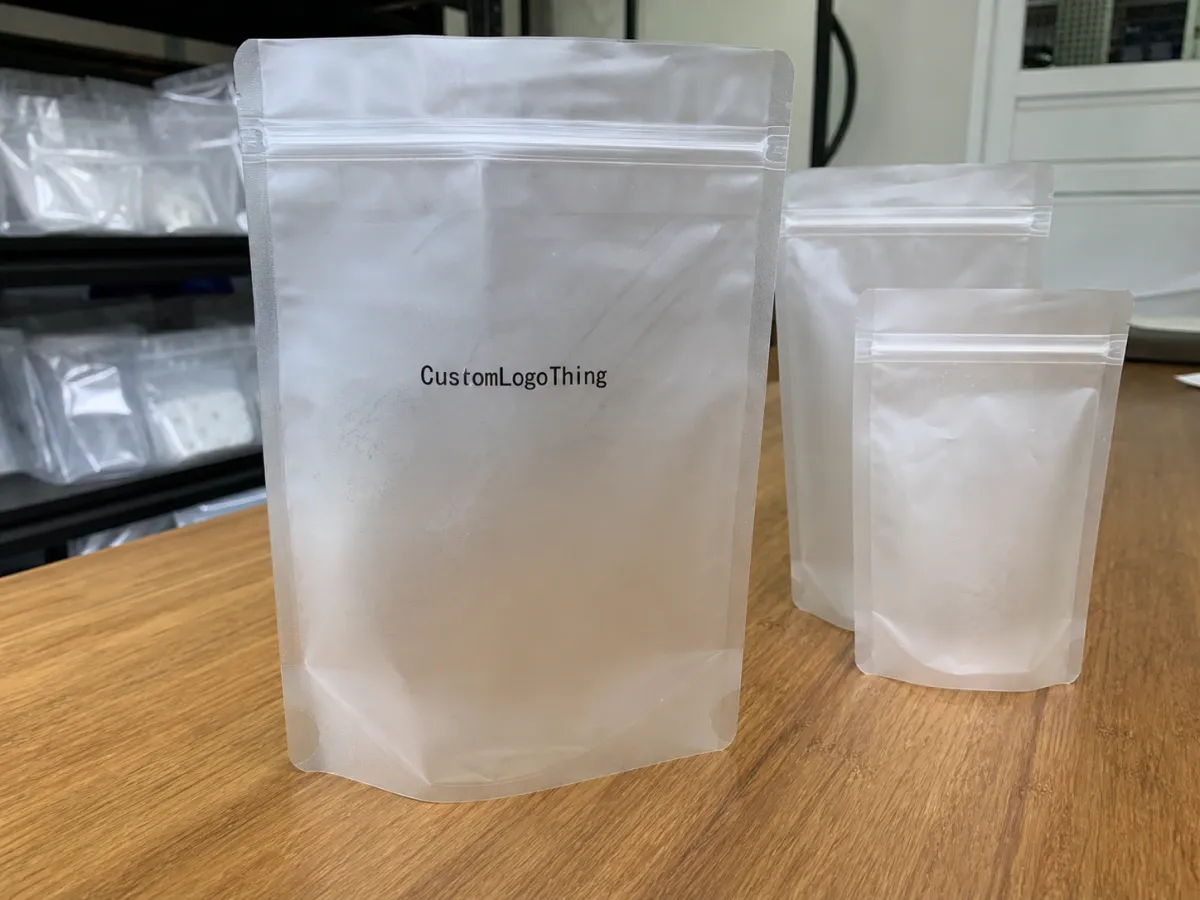
The first trap is visual. Frosted film hides a lot. A matte surface can make thin material look heavier than it really is, which is how buyers approve a pouch that looks premium under lighting but behaves like a light-duty bag on a packing bench. With ceramic Frosted Zipper Bags material thickness guide decisions, you need the spec sheet, a sample, and a load test with the actual item inside. A squeeze test with an empty pouch only tells part of the story.
Thickness is usually measured in mil or in micron-based gauge, depending on the supplier. One mil equals one-thousandth of an inch, or about 25.4 microns. That sounds tiny because it is tiny, but moving from 2.5 mil to 3.5 mil changes how the bag folds, how much it resists puncture, and how well it holds shape under pressure. Even so, thickness alone is not a guarantee. A thick bag with poor seals or an inconsistent zipper can still fail at the first weak point. Packaging people like to sell the number and skip the construction. Convenient, but not useful.
Ceramic goods usually carry a harsher risk profile than soft items. A mug, tile sample, coaster set, or decorative piece does not compress and forgive mistakes. Corners push outward. Edges rub. Inserts shift. If the item is heavy for its size, the stress can be worse than the weight suggests. That is why a useful ceramic Frosted Zipper Bags Material Thickness guide starts with how the product behaves inside the pouch, not how the pouch looks on a table.
There is also a sustainability angle, but it needs to stay grounded. Many buyers pair these bags with corrugated cardboard mailers, kraft paper wraps, or recycled outer cartons. That is a sensible way to build a fuller pack without pretending the inner pouch has to solve every environmental question at once. Some teams want FSC-certified cartons or post-consumer content in the shipper, while the bag remains the protective plastic layer. That is normal. Biodegradable packaging claims should be checked against actual material data, not marketing language.
A frosted bag can look upscale and still be too light for a hard ceramic edge. The finish is the cover, not the proof.
For basic packaging terminology and transit-test thinking, the Packaging School and Packaging Institute resources are a helpful baseline, while the International Safe Transit Association gives a more realistic view of how parcels behave once they leave the packing table.
How film gauge changes feel, seal strength, and durability
Thin bags feel soft. Thicker bags feel structured. That is the first thing people notice, and in packaging, first impressions matter more than they should. Retail buyers often make a judgment in the first three seconds. A pouch that stands a little better, creases less, and feels less flimsy reads as more expensive, even before any graphics are visible. The reverse is just as true. A bag that collapses in the hand can make a perfectly decent ceramic product feel underpowered.
But the zipper and the seals are where the real failure mode lives. A 4 mil film with a weak zipper is still a weak package. Side seals matter. Bottom seals matter. Seal width matters too. With ceramics, pressure often builds at the corners, then travels to the zipper line. If the zipper is under-specified, the bag may survive in storage and still fail after a few open-close cycles or a rough shipping lane. Buyers sometimes focus so hard on thickness that they miss the closure system completely. That mistake is expensive.
Puncture and abrasion are the obvious risks, but they show up in ordinary ways. Rigid ceramic items do not bend away from trouble. They scratch the film every time the parcel shifts, especially if the bag is oversized and the contents have room to move. A small foam insert, tissue wrap, or molded divider can help, but that does not replace the right film build. If the item has square edges, glossy surfaces, or accessories that move independently inside the pack, thickness should rise. The bag needs enough margin to tolerate the motion you know will happen.
Here is the simple rule: thinner film gives flexibility, thicker film gives structure. Flexibility is not bad. It can help with small items, flat inserts, and lower-cost retail packs. Structure is not automatically better either. If the bag is stiff enough to resist folding but too bulky for the product, you have made a more expensive bag that wastes space. The point of the ceramic Frosted Zipper Bags material thickness guide is balance, not bravado.
Practical thickness feel by use case
- 2.5-3 mil: Softer hand feel, lighter duty, better for flat inserts or low-shift contents.
- 3-3.5 mil: A workable middle ground for small ceramic accessories, sample packs, and retail presentation.
- 3.5-4 mil: Better for rigid items, sharper corners, or shipping where the bag will see more compression.
- 4 mil and above: Stronger structure, but usually only worth it if the product truly needs it.
If you want a quick pre-approval check, load the actual item, press on the corners, and open the zipper several times. A good bag should not feel like it is fighting you, but it also should not feel soft enough to cave at the slightest touch. Most buyers land somewhere in the middle. That is not a compromise; it is usually the correct spec.
Key factors that determine the right thickness
The contents come first. Light fills, flat inserts, and soft accessories can often use lighter film. Sharp, irregular, or heavy ceramic pieces need more margin. That sounds obvious, yet buyers still order by habit instead of by load condition. A decorative coaster set is not the same as a wrapped mug. A boxed ornament is not the same as a loose tile sample. Treating them as interchangeable is where weak packs begin.
Weight matters, but geometry matters more. A 200 gram item with rounded edges may behave better in a 3 mil bag than a 120 gram object with a hard corner that rubs like sandpaper. Movement inside the pouch is usually the real enemy. If the item can slide, twist, or bounce, the film will wear faster. A tighter fit often protects better than a thicker film on an oversized pouch. That is one of those unglamorous packaging truths that saves money when people actually follow it.
The use environment matters too. If the bag is for retail display only, the buyer is judging hand feel, gloss, and zipper action. If it is for e-commerce shipping, the bag needs to survive compression from corrugated cardboard, warehouse stacking, vibration, and a fair amount of careless handling. If it is for storage, repeated opening and closing matters more than puncture. Same bag, different risk. The same thickness spec can be right in one channel and wrong in another.
Printing and finish also affect the final feel. Heavy ink coverage can make a pouch seem stiffer. A stronger frost level can soften the look while obscuring surface flaws, which is useful until a thin bag gets approved because it looked expensive under studio lights. Size matters as well. Larger bags flex more, so thickness often needs to rise slightly with dimensions. Small pouch? You can sometimes stay lighter. Large pouch? Expect the structure to behave differently.
Do not ignore the closure area. A zipper bag that opens and closes frequently needs a closure system that can take abuse. If the zipper is low grade, extra film thickness only hides the problem for a while. In buyer language, that means the bag should be specified as a system: film, seal, zipper, and fit. That is the practical version of the ceramic frosted zipper bags material thickness guide, and it prevents a lot of avoidable rework.
Sustainability choices should be tied to the whole pack. Recycled paper, kraft wrap, and FSC-certified outer cartons can all support a cleaner procurement story. They do not fix a pouch that is too light for the item. A prettier box does not stop a cracked ceramic edge from punching through a weak bag.
Cost, MOQ, and unit price tradeoffs
Thicker film costs more because you are using more resin, and sometimes because processing gets fussier. Sealing heavier film can take tighter control, which raises scrap risk if the tooling is not settled. Freight weight may change a little too, especially on larger bags or larger order volumes. So the quote moves in more than one place. Buyers who only read the raw material line miss the rest of the math.
In practice, the jump from 2.5 mil to 3 mil is usually modest. The jump from 3 mil to 4 mil can feel more noticeable. Past that, the cost curve gets less forgiving. That does not mean thicker film is a bad choice. It means you should buy it only where the product and shipping risk justify it. Paying extra for empty air is not quality. It is just expensive emptiness.
MOQ is often driven more by size, print coverage, zipper style, and custom color than by thickness alone. Still, special film specs can push the floor higher because the supplier may need different stock, setup time, or test runs. Ask how the quote is built. If the answer stays vague, expect surprises later. Vague quoting usually hides either a shortcut or a future change order.
| Thickness tier | Typical feel | Best fit | Indicative unit cost impact |
|---|---|---|---|
| 2.5 mil | Soft, flexible | Light accessories, flat inserts, low-shift contents | Lowest baseline, but not ideal for sharp ceramic edges |
| 3 mil | Balanced | Small ceramic samples, retail kits, moderate handling | Usually a small step up, often still cost-friendly |
| 3.5-4 mil | Structured, sturdier | Rigid items, shipping packs, higher puncture risk | Moderate increase, especially with heavier print coverage |
| 4 mil+ | Firm, premium | Heavy or delicate ceramics, aggressive transit conditions | Highest material load; only worth it if the use case demands it |
Most procurement teams end up asking for two or three quote tiers so they can compare landed cost, not just unit price. That means sample charges, plates, setup fees, and shipping belong in the conversation. A bag that is two cents cheaper can become more expensive the moment it triggers rework or damage. That happens more often than it should, and it is almost always preventable.
For planning, thickness changes rarely matter as much as people think unless they force a different zipper style, change the print method, or require new tooling. The quote should show whether the lift in cost comes from material, process, or both. If it does not, ask again.
Production steps, timeline, and approval gates
A clean run usually follows a predictable path: spec sheet, sample, approval, film production, zipper application, printing, sealing, inspection, and shipment. It is not glamorous. It is the part of packaging where quality either survives or gets negotiated away one decision at a time. The less ambiguous the brief, the smoother the run.
Delays usually come from three places. First, unclear artwork. Second, slow sample feedback. Third, changes to thickness after the sample is already approved. That last one is a classic. Someone likes the sample, then changes the content, then asks for a thicker bag, then wonders why the schedule slipped. The factory did not become psychic overnight.
Timing varies by complexity. Repeat orders with no spec changes can move faster. Standard custom runs usually take longer. First-time jobs with new tooling, special zipper requirements, or multiple sample rounds take the longest. A typical sample window may be around 5-10 working days, while production might run 15-30 days depending on complexity, but those numbers shift quickly once print, zipper, or approval steps get complicated. Clean approval cycles matter more than optimism. If the buyer team takes a week to answer each sample round, the calendar will show it whether anyone likes that or not.
For shipping validation, ask for tests that resemble real abuse. ISTA-style drop and vibration checks are useful because parcels do not travel in a polite straight line. Corner-rub checks and zipper-cycle tests help too. If the bag must sit in a warehouse before use, ask for a storage simulation. If it ships with corrugated cardboard mailers, test the combined pack, not just the pouch on its own. The pouch can look fine in isolation and still fail once it is packed the way customers will actually receive it.
One practical habit saves a lot of pain: lock the thickness, zipper style, size, and artwork before production begins. If you want to change the film gauge later, fine, but understand that late changes are where schedules go to die. A ceramic frosted zipper bags material thickness guide only helps if the team keeps the chosen spec in writing and does not improvise at the end.
Common mistakes that cause weak bags or wasted spend
The most common mistake is buying the thickest option just because it sounds safe. It is not always safe. Sometimes it is just overbuilt, stiff, and more expensive than the product deserves. If the ceramic item is light, compact, and protected inside a snug fit, extra thickness may add cost without improving anything measurable. That is especially true when the real problem is movement, not puncture.
Another classic mistake is confusing frosting with strength. Frosted film can look rich and high-end. Fine. It still might be too thin for a hard edge or a shifting insert. Surface appearance does not stop punctures. Packaging buyers know this; marketing teams sometimes need a reminder. A pretty bag that fails in transit is still a failed bag.
People also obsess over the film and ignore the zipper. That is a bad trade. A weak zipper undermines the whole bag. If customers have to fight the closure, or if the teeth separate under load, the complaint will be about the pouch, not the missing detail in the spec sheet. The closure is part of the package. Treat it that way.
Testing is another place where buyers get lazy. A bag can pass the hand test and fail in shipping. That is not unusual. A proper check should include loading the actual product, dropping the packed bag from a realistic height, rubbing the corners lightly, and opening and closing the zipper multiple times. If the item will move through a distribution network, consider a compressed stack test and a transit simulation with the full pack. The goal is not to create a laboratory drama; it is to catch predictable failures before they turn into claims.
There is also a sustainability trap. Some teams ask for eco-friendly packaging, then choose the wrong material for the job and create more waste through damage and replacement. Better to use a durable pouch sized correctly, then support the rest of the pack with recycled materials, kraft paper, or FSC-certified outer cartons where they make sense. Green claims only matter if the pack survives the journey.
Here is the blunt version: the best ceramic frosted zipper bags material thickness guide is the one that matches the product, the route, and the shelf life. Not the thickest bag on the quote sheet. Not the cheapest one either. The right one.
Next steps for a cleaner quote and safer order
Start with the product itself. Write down the weight, edge shape, whether the contents shift, how the bag will be stored, and how it will ship. Those five details do more to determine the right spec than any generic supplier pitch. If the item has sharp corners, say so. If it rides in a carton with corrugated cardboard inserts, say that too. The more honest the brief, the fewer headaches later.
Ask for two or three sample options side by side. Not one. Side-by-side comparison makes differences obvious in hand feel, seal strength, and fit. It is hard to judge from a spec sheet alone, especially with frosted film, where the finish can disguise how light or heavy the pouch really is. A sample that looks fine under soft light may feel alarmingly weak once it is loaded.
Put the chosen film gauge, zipper type, finish, size, and approval standard in writing. That sentence saves more money than most people think. If the supplier is allowed to substitute a lighter film or a weaker zipper, the order is no longer the order you approved. It is a surprise. Nobody wants surprise packaging. The most reliable buying process is usually the least dramatic one.
If you are buying for a branded retail program, connect the inner bag spec to the full pack. A pouch that looks good next to kraft paper, recycled fillers, and an FSC-certified carton can support the brand story without overclaiming anything. If the outer shipper needs extra protection, test the whole system before sign-off. If your team wants a cleaner procurement process, keep the ceramic frosted zipper bags material thickness on the PO and verify the first sample before full production. That is the practical way to use the ceramic frosted zipper bags material thickness guide instead of treating it like decoration.
One last caution: if a quote looks unusually cheap, ask why. It is rarely because the factory suddenly became generous. More often, the thickness, zipper, finish, or inspection standard got trimmed somewhere. Good packaging is specific. Vagueness is where weak bags hide.
FAQ
What thickness works best for ceramic frosted zipper bags?
Start around 3 mil for light to medium fills that do not press hard against the film. Move to 3.5 to 4 mil if the contents are rigid, sharp, or likely to shift in transit. Test with the actual product, not a dummy fill, because corners and edges are what usually cause failures.
Is frosted finish the same as thicker ceramic frosted zipper bags material thickness?
No. Frosting is a surface finish, not a thickness spec. A frosted bag can be very thin or quite heavy depending on the film build. Always ask for the mil rating or gauge, not just the finish description.
How does thickness affect cost and MOQ on frosted zipper bags?
Thicker film usually raises unit cost because material usage goes up first. MOQ is more often tied to size, print, and zipper style, but special specs can still push it higher. Ask for multiple quote tiers so you can see the real cost jump between thickness options.
What is the normal lead time for custom thickness orders?
Sample timing is often faster than production, but it still depends on artwork and spec clarity. Standard production can run about 15-30 days for many custom jobs, though complexity pushes that out quickly. A clean approval cycle matters more than wishful thinking; late changes are what blow up schedules.
How do I test whether the bag is thick enough before ordering?
Load the actual product and check for corner pressure, seal stress, and zipper drag. Do a simple drop test and a few open-close cycles to see whether the bag stays intact. Inspect the film after storage and shipping simulation, because damage often shows up after movement, not at first touch.
If one rule stays after all the spec sheets and sample rounds, let it be this: choose thickness from the product’s real risk, not from a guess about what looks premium. That single decision affects feel, protection, pricing, and approval time more than most buyers expect.

