Stationery Zipper Poly Bags unit cost is rarely shaped by artwork alone. The biggest shifts usually come from finished size, film gauge, zipper construction, and the way the bags are packed for shipment. Two samples can look almost identical on a screen and still price very differently once the run moves into production, because resin usage, sealing time, and scrap allowance do not stay flat as dimensions change.
That is why a useful buying discussion starts with the bag as a working package, not as a clear pouch with a logo on it. A stationery kit, a retail bundle, or a promotional pack needs the bag to fit the contents, protect them, and present them cleanly. The same thinking applies across Custom Packaging Products and, for larger kits that need outer shipping protection, formats such as Custom Poly Mailers.
How a small spec change can move the bag price fast
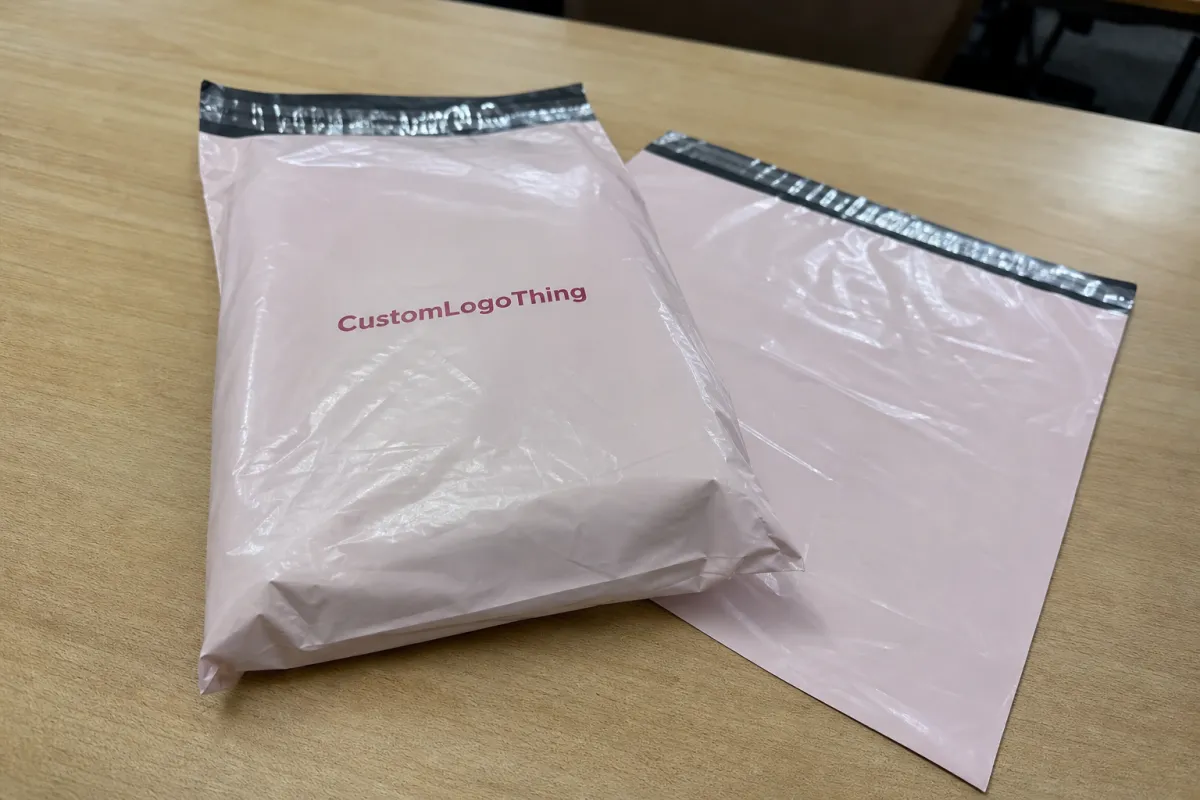
Most buyers start with print because that is the visible part of the job. That is understandable. A logo, pattern, or brand message is easy to discuss, and it feels like the obvious place to negotiate. In practice, stationery zipper poly Bags Unit Cost usually moves more from physical dimensions than from decoration. A pouch that is 20 mm wider uses more film on each wall, more seal area, and sometimes a different cutting layout. Those changes are minor only on paper. Across 5,000 or 20,000 pieces, they add up fast.
Closure style is another quiet cost driver. A standard press-to-close zipper is usually the baseline, but a stronger track, a wider seal margin, or a design that opens and closes more smoothly can increase material use and conversion time. Add a hang hole, a gusset, or a frosted finish, and the price changes again. Buyers often watch the ink bill while the bigger cost is sitting in the footprint, the resin weight, and the handling steps.
For stationery, the inside allowance matters as much as the outside dimension. Pens, sticky notes, cards, rulers, or sticker packs may seem slim on their own, yet the pack becomes thicker once the set includes an insert card or a retail hang tag. If the fit is too tight, the zipper fights the contents and the line slows down. If the fit is too loose, the bag looks underfilled and less deliberate on shelf. Either outcome can create waste.
The simplest way to think about it is this: a good quote starts with the actual product load, not a rough guess. What is the item count? Is the bundle flat or bulky? Will the end user reopen the bag several times? Is the bag going into a carton, a display shipper, or a retail peg? Each answer changes the spec and, by extension, the cost. A clean specification reduces scrap, reduces sample churn, and usually gives a better read on the final unit price.
For branded stationery packs, the bag should also fit the selling method. A pouch intended for retail display needs different proportions than a bag used only inside a fulfillment line. Matching the bag to the use case is usually the fastest way to keep both appearance and cost under control.
What stationery zipper poly bags are built to hold
Stationery Zipper Poly Bags are commonly used for pens, pencils, erasers, note pads, sticker sheets, rulers, card packs, and small promotional sets that need to stay grouped. The bag is doing more than storage. It is bundling, organizing, and protecting the set so the pieces arrive together and remain easy to count. That matters in retail, and it matters just as much in kitting operations where speed and consistency affect labor cost.
Clear LDPE is still the most common starting point because it is flexible, easy to seal, and familiar to buyers. Some programs use a lower-clarity blend for a softer look, while others prefer frosted film for a more premium finish. Neither is automatically better. Clear film is often the lower-cost option, but frosted or matte styles can make a stationery set feel more finished if the presentation needs a quiet upgrade rather than heavy branding.
The structure should match the shelf plan or packing plan. A hang-hole format helps with peg merchandising. A header area creates more room for brand marks or product information. A gusset helps a wider stationery bundle sit naturally instead of forcing the zipper to strain against the contents. For internal fulfillment, plain and efficient usually wins. For retail, the structure should support display first and cost second, provided the unit price still makes sense.
It is common for buyers to try to make one bag work for every use. That usually raises cost and weakens presentation. A pencil set with sharper ends may need a sturdier wall. A flat sticker kit can often use lighter film. A packaged set that includes a printed insert card needs enough open visual area so the branding does not feel crowded. The right design is the one that matches the product shape, the handling method, and the sales channel.
A good rule is simple: if the bag carries a branded stationery kit, it should protect the contents, hold the count, and look intentional on shelf. Once that part is clear, pricing conversations become much easier because the buyer is comparing real structures rather than vague pouch ideas.
“A finished size tells you far more than a rough estimate. Once the dimensions are real, the rest of the pricing discussion gets cleaner and more useful.”
Sizing, thickness, and zipper options that set the spec
Measurements should start with usable interior space, not just the outside dimensions in a spreadsheet. A stationery set that looks flat on the bench can become much thicker once cards, ink barrels, a backing insert, or a hang tag are added. If the width is too tight, the zipper becomes hard to close and the bag looks stressed. If the bag is too large, the product shifts and the package loses its shape.
Film thickness is another place where cost and performance move together. A lighter gauge can work for flat paper goods, but a stronger wall is usually safer when the contents have corners, weight, or repeated handling. For many stationery programs, the goal is not maximum protection. It is the right amount of film for the actual load so the bag does not feel flimsy and does not carry more material than needed. That balance is where unit cost tends to land well.
Zipper style deserves the same attention. A standard press-to-close seal is common and economical. A dual-track closure can improve feel and repeat opening, which matters if the bag will be opened many times. Some styles close more positively near the corners, which helps when the contents include small loose items such as erasers or paper clips. The right answer depends on whether the bag is opened once, handled repeatedly, or used as part of the retail experience.
Before requesting pricing, it helps to gather the spec in one written note:
- Flat width and finished length.
- Depth or gusset, if the design uses one.
- Wall thickness or target gauge.
- Zipper position and closure style.
- Print area and color count, if branding is required.
- Packing format, including loose pack, sleeves, or carton count.
That level of detail makes stationery zipper poly Bags Unit Cost much easier to compare across suppliers. It also shortens the back-and-forth that often slows sampling. For stationery kits with insert cards or retail headers, ask for a plain-language material description instead of marketing language. You want a spec that can be checked line by line, not one that sounds polished while hiding the actual build.
Stationery zipper poly bags unit cost, MOQ, and quote inputs
Stationery zipper poly bags unit cost usually comes down to five things: finished size, film thickness, zipper style, print coverage, and order quantity. Packing method and destination freight matter too, but the first five move the base quote. If a buyer sends only a rough size, the supplier has to assume the wrong gauge or the wrong closure, and the price becomes less useful than it should be.
MOQ changes the picture quickly. A stock blank bag can often be ordered in a smaller quantity because the supplier is using an existing cutter or already has the film available. A custom size usually pushes the minimum higher because tooling or setup work must be spread across the order. A printed bag often needs an even larger run, since press setup and waste allowance have to be absorbed by the full quantity. The logic is simple: the more fixed work there is, the better the unit cost becomes as the order grows.
Broad market ranges are useful for planning, even though every supplier will vary based on material, method, and destination. The figures below are planning ranges, not promises.
| Option | Typical MOQ | Indicative unit cost | Best fit |
|---|---|---|---|
| Stock blank clear bag | 1,000-3,000 pcs | $0.05-$0.12 | Simple kitting, internal use, fast replenishment |
| Custom size blank bag | 3,000-5,000 pcs | $0.08-$0.16 | Exact fit, cleaner presentation, controlled packout |
| Printed custom bag | 5,000-10,000 pcs | $0.12-$0.28 | Retail branding, promotional sets, premium appearance |
Tooling for a custom size or special zipper structure is often a one-time cost, while print setup may show up on each run. The exact handling depends on the factory and the print method, but the buyer should always ask where the fixed costs sit. If a quote looks unusually low, check whether the prep work is included or pushed into a separate line later.
For comparison purposes, it helps to ask for three versions of the same quote: blank, printed one side, and printed both sides. That shows whether decoration is a minor add-on or the main cost driver. It also reveals how much a small design change matters. In many stationery programs, one less color, a slightly smaller bag, or a simpler zipper lowers stationery zipper poly bags unit cost more than expected.
Quote tip: send finished dimensions, product weight, artwork format, target quantity, zipper preference, and pack-out instructions in one note. That gives the supplier enough information to quote against the real job instead of an assumption.
For buyers comparing packaging formats across a broader program, it is often useful to review Custom Packaging Products alongside the stationery pouch spec. If the same brand is also ordering outer mailers or inserts, the full cost picture becomes clearer sooner.
Production steps and lead time from spec to shipment
A clean production path usually starts with inquiry, then sample review, then proof approval, followed by material preparation, bag forming, sealing, inspection, and packing. The sequence sounds straightforward, but delays usually appear where the spec is incomplete. Missing artwork dimensions, uncertain zipper style, and vague pack-out instructions are the repeat problems.
Lead time depends on whether the order is stock, custom-sized, or printed. Stock material can move quickly because the supplier is not waiting on a new film run or a special cutter. A custom build with print takes longer because the job has to pass through proofing, machine scheduling, and line setup. A standard printed order often lands in the 12-15 business day range after final approval, while more customized runs may need more time if the pouch includes a special size, hang hole, or added feature. Shipping adds its own clock, especially if the delivery route is long or the cartons need a specific handling method.
Logistics details matter more than many buyers expect. Confirm the carton count early, along with the shipping method and delivery address, so the schedule reflects reality rather than a rough estimate. If the bags are feeding a retail launch, build time for sample signoff into the calendar. If they are heading into a fulfillment line, make sure the pack format is clear so the warehouse does not have to repack anything on arrival.
For stationery zipper poly bags that are part of a larger set, transit testing and packaging discipline should not be ignored. The International Safe Transit Association resources at ista.org are a practical reference for transport-related checks. For material and sourcing context, especially if sustainability claims are part of the project, the guidance available through packaging.org is worth reviewing.
The cleanest schedule is the simplest one: approve the sample, confirm the proof, lock the carton count, and release the order. That keeps the lead time honest and reduces the chance of a shipment that is technically correct but awkward to receive.
What a reliable supplier should document before you order
A dependable supplier should give you more than a price. The quote should spell out the material description, thickness, dimensional tolerance, zipper type, print method, and packing count. If those details are hidden, the project may still move forward, but the buyer is taking on avoidable risk. A good quote is traceable, not just cheap.
That matters most when the stationery bag has to match an insert card, a retail hanger, or a branded kit. A few millimeters can decide whether the pack looks centered and intentional or slightly off. It also helps to see how the supplier talks about consistency. Can they explain the difference between the sample and the production run? Do they describe how they check seal integrity, zipper function, and ink placement? Those are practical questions, not decorative ones.
Pricing language deserves attention too. A clear supplier should explain whether a lower quote comes from a thinner gauge, a simpler zipper, or a higher MOQ. That is more useful than a vague promise of savings. If the supplier cannot say where the cost is being removed, the quote may not survive the actual run.
For buyers building a coordinated kit, the supplier should also understand the full packaging stack. That includes how the bag fits with insert cards, outer cartons, and any other branded components in the order. A supplier who can discuss the rest of the pack-out is usually easier to work with because they understand the product as a complete unit rather than a single piece.
Useful quote documents include:
- Material and gauge in plain terms.
- Dimensional tolerance so variation is clear.
- Zipper type and whether it is standard or reinforced.
- Print method, color count, and usable print area.
- Packing count and carton configuration.
- Sample-to-run expectations so there are no surprises later.
If a supplier can answer those points cleanly, the project usually moves with fewer problems. That is especially true for stationery zipper poly bags unit cost comparisons, where small wording differences can hide a meaningful change in materials or handling.
Common ordering mistakes that create waste or rework
The most common mistake is choosing a bag that fits the product flat, then forgetting the room needed for insertion and closure. A stationery item may look slim on its own, but once an insert card or retail tag is added, the packout changes quickly. The bag must fit the real assembly, not an idealized version of it.
Another frequent error is specifying a gauge that is too light for the contents. Sharp corners, metal parts, or heavier bundled items can scuff through a weak wall more easily than buyers expect. A slightly stronger film often prevents handling problems and can save money in the long run. Trying to shave a small amount off stationery zipper poly bags unit cost with a film that is too thin is usually false economy, because one rejected batch wipes out the savings fast.
Print issues show up when artwork is sent without bleed, safe margins, or a clear note about the usable window. If the logo sits too close to the seal area, it may look fine on screen but land poorly in production. A solid proof should show where the zipper line sits, where the heat seal lands, and how much graphic space remains after conversion. That level of detail protects both the brand and the budget.
One more mistake gets overlooked often: skipping the physical sample. A flat mockup hides too much. The sample tells you whether the zipper feels right, whether the bag opens easily, and whether the contents sit as expected. For retail work, that check is worth the time. For internal packing, it still helps because the bag has to move smoothly through the line.
To avoid rework, validate the bag with:
- A measured product packout.
- A sample filled with the real stationery set.
- A written approval of the final spec sheet.
That sequence prevents a lot of waste. It also keeps unit cost and schedule under control because the project stops relying on assumptions.
How to request samples and lock the final buying spec
The easiest path is to start with finished dimensions, closure style, print needs, and target quantity, then ask for a sample or prototype. If the bag is part of a branded stationery launch, request a plain sample and a printed sample if both are available. Seeing them side by side makes it easier to compare clarity, feel, and overall presentation before placing the volume order.
From there, ask for at least two quote options. One should show the current spec. The second should show a cost-down alternative, such as a smaller size, simpler zipper, or reduced print coverage. That comparison makes the tradeoff clear. You can see exactly where the price moves and whether the savings are worth the compromise. It is a practical way to judge stationery zipper poly bags unit cost instead of guessing.
Once the approved sample is in hand, save the spec in one place. Keep the finished dimensions, gauge, zipper style, print file, packing count, and approval date together. Reorders become much cleaner when the team does not have to reconstruct the specification from old emails. If the packaging is part of a broader promotional program, keep related items under the same packaging record, including outer mailers, inserts, and display components. That makes the next buy easier to manage.
If you are comparing packaging formats for other parts of the same job, review the related options in our Custom Packaging Products range so the stationery bag spec fits the rest of the kit. Once the bag works with the shipper, the insert, and the retail presentation, the full package is easier to price and easier to run.
Final approval should rest on the confirmed sample, the written spec, and the target order quantity. Once those match, stationery zipper poly bags unit cost becomes a controlled buying decision instead of a moving target.
FAQ
What drives stationery zipper poly bags unit cost the most?
Size and film thickness usually have the biggest impact because they change resin usage and conversion time. Printing coverage, zipper style, and special finishing can add cost after the base material is set. Order quantity matters too because setup charges are spread across more bags at higher volumes.
What MOQ should I expect for custom stationery zipper bags?
MOQ depends on whether the bag is stock-sized, custom-sized, printed, or built with a special closure. Simple blank bags usually carry a lower MOQ than fully custom printed programs. A supplier should tell you whether the MOQ is tied to material ordering, machine setup, or print efficiency.
Are clear or frosted stationery zipper poly bags cheaper?
Clear bags are often the lower-cost option when the material and gauge are otherwise the same. Frosted finishes can cost more if they require a different film blend or a different processing step. The final difference depends on size, thickness, and whether the bag is printed.
What do you need to quote custom stationery zipper bags accurately?
Finished bag dimensions, product dimensions, quantity, and artwork format are the basics. You should also share zipper preference, film thickness target, and any packing or retail display requirements. A good quote is built from a complete spec, not a rough guess.
How long does production usually take for stationery zipper poly bags?
Lead time depends on whether the order is stock, custom-sized, or printed. Sample approval and artwork signoff often determine how quickly the run can start. Shipping method and destination also affect the total timeline, so they should be confirmed early.
If the goal is better control over stationery zipper poly bags unit cost, the best order of decisions is still the same: lock the finished size, then choose the film gauge, zipper style, print level, and MOQ that fit the actual stationery set. That keeps the quote honest, the sample useful, and the reorder simple.

