A toy can fit perfectly on a CAD drawing and still fail inside the real package. Molded corners, instruction sheets, collector cards, backing inserts, hang holes, and zipper clearance all take up usable space, which is why a toy zipper poly Bags Sample Order is not a courtesy request. It is a practical checkpoint before inventory, retail review, fulfillment labor, or launch dates are exposed.
The commercial reality is blunt. A zipper bag that costs cents can decide whether a toy looks retail-ready, scans correctly at checkout, survives warehouse handling, or creates returns because loose pieces spill into a carton. Packaging feels inexpensive until the wrong bag has already been filled, boxed, and routed to a buyer.
What a Toy Zipper Poly Bags Sample Order Proves Fast
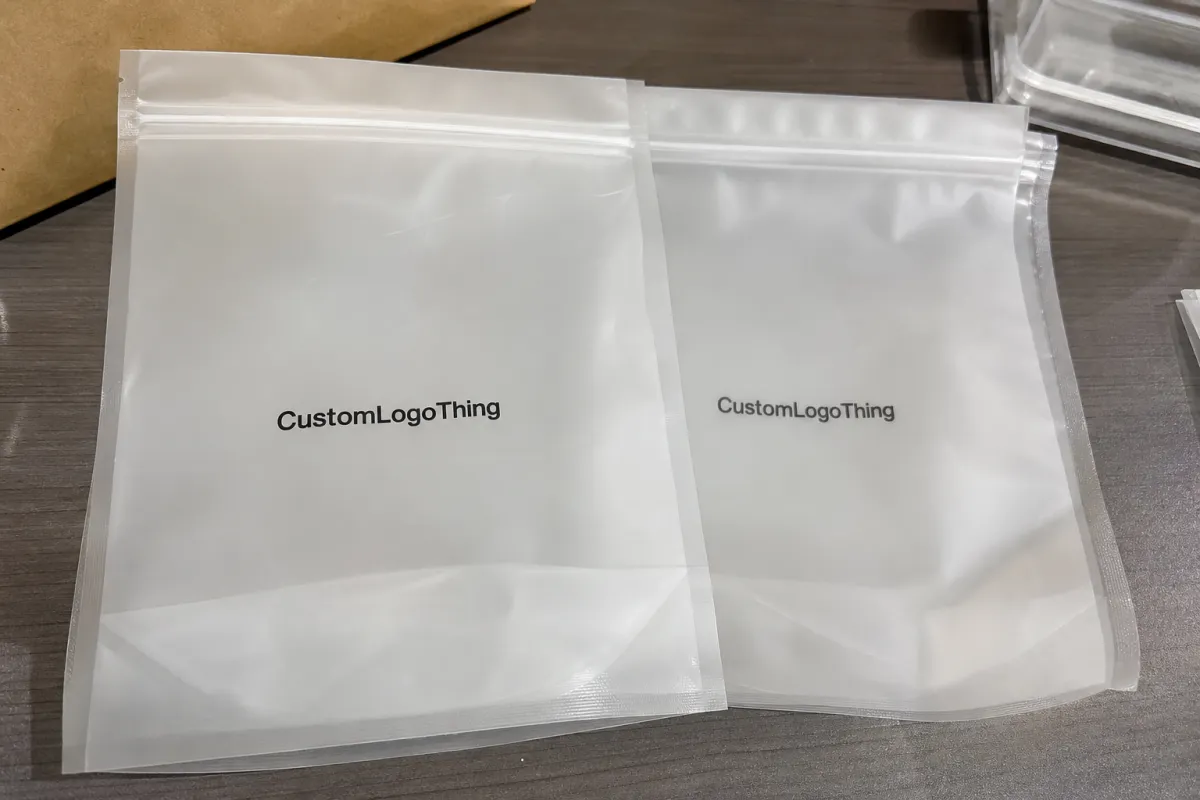
A useful sample proves the physical details a PDF cannot. Can the toy be inserted quickly without forcing the corners? Does the zipper grip feel consistent after repeated opening? Is the bag mouth wide enough for a packing worker wearing gloves or working at speed? Does the logo still sit where the buyer expects once the product presses against the film?
A good toy bag sample should confirm at least eight checkpoints: zipper grip, bag opening, toy insertion speed, print placement, suffocation warning readability, barcode scan quality, shelf presentation, and the way accessories settle after handling. That last point is easy to miss. Small parts migrate, pull the front panel out of shape, and can cover a UPC, warning icon, or brand mark.
Sampling also exposes cost before the cost becomes locked. Once plates, film, zipper material, production labor, and packing plans are committed, a small correction can become expensive. A 6 mm increase in width sounds minor. Across 25,000 bags, it can affect film consumption, carton count, freight volume, and the quoted unit price.
Packaging buyer rule: if the sample does not represent the intended production build closely enough, it may answer the wrong question. A stock bag can prove fit. It may not prove print performance, zipper quality, or retail presentation.
That distinction matters. A plain sample is often enough to check dimensions and packing movement. A printed pre-production sample is better when the decision depends on barcode placement, warning panels, logo position, color density, or the look of a clear window with the actual toy behind it.
Custom Logo Things treats sampling as an evidence step: sample first, revise if needed, then quote the production run with fewer assumptions. That is a more disciplined path than approving bulk packaging from a flat dieline and hoping a molded toy behaves like a rectangle.
Bag Styles That Work for Toys, Parts, Kits, and Retail Sets
Toy packaging is not one bag style with different artwork. A plush charm, building kit, die-cast accessory set, and blind-bag collectible all put different stress on the film, zipper, seams, and print panel. The right sample request starts with the format.
- Flat zipper bags: useful for light toys, small accessories, promotional items, and instruction kits where thickness is controlled.
- Bottom-gusset zipper bags: better for parts kits, craft sets, or toys that need shelf presence and more internal volume.
- Header-style zipper bags: practical when warning copy, age grading, logo, and peg display space must sit above the product.
- Hang-hole retail bags: made for peg display, though the hole area should be tested under the real product weight.
- Heavier utility pouches: suited to multi-piece kits, replacement parts, classroom sets, and subscription box components.
Plush items need compression tolerance and a bag that recovers visually after being squeezed into a shipping carton. Small collectibles need clarity and clean presentation; haze can make a low-cost toy look cheaper than it is. Building kits need puncture resistance because corners, bricks, and small metal parts concentrate force in tiny areas. Carded toys need registration accuracy, especially when a printed window is supposed to frame the product.
Resealable zippers earn their keep in toy packaging. Parents reuse the bag for pieces. Collectors store accessories. Retailers see fewer loose-part complaints. From a buyer's point of view, that reuse value can justify a slightly heavier gauge or a better press-to-close profile, particularly for products with 8 to 40 small parts.
Test the details that affect display and labor: bag mouth width, zipper placement, clear window size, header height, bottom seam strength, and whether the toy distorts the front panel. If the package will move through ecommerce, add a shake test inside the actual mailer. If it will hang in a store, leave it on a peg for at least 24 hours with the real toy weight inside.
Packaging can also carry choking hazard labels, age grading, SKU data, lot codes, suffocation warnings, and retailer routing information when the artwork space is planned early. It cannot rescue a warning panel squeezed into a narrow strip below the zipper after the bag size has already been approved. For broader format planning, buyers can compare related options under Custom Packaging Products.
Material, Zipper, Print, and Safety Specifications to Confirm
Material choice should follow the toy, not habit. LDPE is common for soft, flexible zipper bags with good clarity and a familiar hand feel. HDPE is stiffer and can suit some utility packaging, though it usually feels less soft. CPP can deliver high clarity and a crisper presentation in certain structures. Blended films are often used when a buyer needs a balance of clarity, puncture resistance, softness, and machinability.
Thickness matters, but not as a bragging point. Light promotional toys may work in roughly 2 mil film. Small retail kits often sit around 2.5 to 4 mil, depending on weight and corner profile. Heavier block kits, metal accessories, or reusable storage pouches may need 4 mil or more. Geometry changes the answer: a 90 g rounded plush keychain stresses film very differently from a 90 g kit filled with hard square pieces.
Zipper choice affects consumer use and packing speed. A single-track resealable zipper is usually enough for many toy bags. Slider-style zippers can help on larger pouches, but they add cost, bulk, and another component to evaluate. Press-to-close closures should have enough grip for parents and children to reopen the bag without tearing the header or stretching the film. During a sample review, open and close the zipper at least 10 times, then check whether the track still lines up cleanly.
Print specifications deserve the same attention. A one-color logo may be economical and sharp. Multi-color branding adds shelf impact but brings registration and proofing requirements. White ink underbase can improve color on clear film. Transparent windows need planned safe zones. Barcode quiet zones should be protected from seams, folds, and curved product pressure. Warning panels should be readable at normal handling distance, not just at 200 percent zoom on a screen.
Ask for relevant documentation where it applies: material data, print proofs, dielines, production tolerances, and retailer packaging instructions. Toy packaging may be evaluated alongside broader distribution tests such as ISTA procedures, and environmental or material claims should be treated carefully under guidance from sources such as the EPA. Not every toy bag needs formal transit testing. Many do not. But every sample should be checked against the real handling path.
| Specification | Typical Choice | What the Sample Should Prove |
|---|---|---|
| Light toy or giveaway | LDPE, around 2 mil, simple press zipper | Fit, clarity, basic closure, logo placement |
| Retail accessory kit | 2.5-4 mil film, header or hang-hole format | Seam strength, peg display, warning copy, UPC scan |
| Building blocks or sharp parts | Heavier gauge or blended structure | Puncture resistance, zipper pull, scuffing, carton survival |
| Collector storage pouch | High-clarity film, controlled print area | Viewing quality, repeat use, rub resistance, premium feel |
Pricing, MOQ, and Unit Cost Drivers for Sample and Bulk Orders
Sample pricing changes with the question being asked. A stock-size sample answers basic fit and handling questions. A custom-size prototype answers dimensional questions. A printed pre-production sample answers presentation, barcode, warning, and brand approval questions. A production-grade sample run answers the most, but it costs more because setup work begins to resemble the real order.
The main cost drivers are predictable: bag dimensions, film thickness, zipper type, print colors, artwork complexity, plate or setup requirements, material structure, and order quantity. A small plain zipper bag might price in cents at volume. A custom printed retail pouch with several colors, a header, reinforced hang hole, and heavier film can move materially higher. For many custom toy zipper poly bags, broad bulk pricing may land around $0.08-$0.35 per unit depending on size, gauge, quantity, and decoration. Unusual structures can exceed that range, and freight changes landed cost.
MOQ logic is mostly math, not mystery. Low quantities carry more setup cost per bag. Larger runs spread tooling, printing, waste, and labor across more units. A 500-piece prototype batch may be useful for a pilot launch, but it will not price like 25,000 pieces. Procurement should ask for tiered pricing so the team can compare prototype quantity, launch quantity, and reorder quantity in one decision.
Send quote inputs in one clean package: target size, film thickness, quantity, zipper style, print colors, toy weight, packed dimensions, retail channel, artwork files, and deadline. If the packed toy measures 120 mm wide by 180 mm tall by 38 mm thick, say so. If the bag must hang from a 6 mm round peg, include that as well.
A toy zipper poly Bags Sample Order may feel like another line on the budget, but compare it with the defect cost. Mis-sized inventory can require repacking. Unreadable barcodes can block retail receiving. Weak seals create returns. A warning panel printed too small can trigger a retailer rejection. The sample is not free insurance, but it is usually cheaper than finding the defect after filled cartons are waiting for shipment.
Brands planning repeat toy launches can also review Wholesale Programs to align sampling, launch volume, and reorder pricing instead of treating every bag as a one-off purchase.
Process and Timeline From Sample Request to Production Approval
The clean process is straightforward: inquiry review, bag specification confirmation, artwork or dieline check, sample option selection, sample production or stock pull, shipping, buyer testing, revision, final quote, and bulk approval. Each step removes an assumption.
Clear inputs speed the work. Actual packed dimensions, product weight, vector artwork, retailer packaging rules, target quantity, and a realistic in-hands date allow a supplier to recommend the right sample path faster and with fewer follow-up emails.
Delays usually come from smaller gaps: missing artwork fonts, unclear bag thickness, late compliance copy, oversized accessories, barcode changes, or switching from a plain sample to a printed sample after the timeline has already been built. None of these issues is dramatic alone. Together, they can add several business days.
Stock samples can often move faster because they do not require custom cutting, printing, or setup. Printed or fully custom prototypes need proofing and production coordination. Bulk lead time should begin only after final specifications, proof approval, quantity, ship method, and delivery target are confirmed in writing.
Review the sample like production is already watching. Insert the toy repeatedly. Shake the bag. Scan the barcode with a phone and, if available, a warehouse scanner. Hang it on a peg if retail display matters. Inspect print alignment against the zipper and seams. Check how the zipper feels after several uses. A sample earns its value only if the buyer treats it as a test article, not a desk prop.
Approval discipline protects both sides. Written sign-off should lock the size, film, zipper, print, quantity, ship method, and delivery target before production starts. Timeline accuracy improves when the open questions are resolved before the clock begins.
Retail, Ecommerce, and Collector Packaging Details Buyers Miss
Good samples can still be under-tested. The missed details are often physical and slightly annoying: glare under store lighting, crushed corners in cartons, small parts settling at the bottom, or the bag face bowing so the printed logo looks warped.
Retail has its own pressure points. Hang-hole reinforcement matters when a product sits on a peg through multiple store resets. Header visibility matters when products overlap. UPC placement must avoid folds and curved pressure points. Peg spacing can affect whether the package hangs straight or twists. Warning copy needs enough contrast and size to survive real lighting, not just proof approval.
Ecommerce creates different abuse. Bags rub against inserts, mailers, and other components. Zippers can open during transit if the product pushes directly against the track. Film can cloud after abrasion. Loose components may concentrate in one corner when the outer carton is dropped or rotated. For toys sold through subscription boxes or marketplace fulfillment, test the sample inside the actual shipper if possible.
Collectors are stricter. Clear viewing windows, anti-scuff expectations, accessory compartments, limited-edition labels, and repeat storage all change the standard. A toy sold as a keepsake needs packaging that still looks controlled after opening. Many brands underprice that expectation; for collector products, the bag becomes part of the ownership experience, not just a disposable wrapper.
Labor deserves more scrutiny than it gets. A slightly wider opening might cut 2 seconds from packing time. That sounds tiny until a run moves from 500 pilot units to 50,000 retail pieces. At 2 seconds each, the difference is more than 27 labor hours. A poorly placed zipper can do the opposite by forcing workers to fuss with closure or straighten the product before sealing.
Test the sample in the real workflow, not only at a desk. Packing tables, carton loading, warehouse bins, store pegs, and mailers reveal failures that flat review cannot.
How Custom Logo Things Reduces Sampling Risk Before Bulk Runs
Custom Logo Things helps buyers move from a rough packaging idea to measurable specifications: size, material, film gauge, zipper style, print method, warning placement, and production quantity. That sounds basic because it is. It is also where many toy bag problems begin.
The common mistakes repeat across categories. Bags are too tight for fast packing. The zipper sits too close to the product. Warning text is too small. Artwork is built without bleed or safe zones. A barcode is placed where the toy bends the film. A clear window looks good on screen but awkward once the toy settles.
Brand teams often think visually. Procurement teams think in units, tolerances, lead times, and cost. The packaging work sits between those needs, translating visual goals into specs a production team can quote and repeat. Film gauge, zipper style, and print method should follow toy weight, retail channel, and order quantity rather than guesswork.
Sample feedback should become revised specifications, not scattered comments in an email chain. If the opening needs 12 mm more clearance, update the dieline. If the white ink underbase makes the logo look too heavy, revise the print. If the hang hole deforms, adjust the header, material, or reinforcement. The final order should reflect what the buyer physically tested.
Custom poly packaging gives buyers room to tailor size, branding, closure, and presentation instead of forcing a toy into a stock bag that almost fits. Sometimes the best answer is not the most complex bag. It is the bag that performs correctly at scale. Buyers comparing related shipping formats can also review Custom Poly Mailers for outer-packaging context.
Next Steps Before You Request a Toy Bag Sample
Start with measurements. Record the toy at its widest, tallest, and thickest points. Then measure the packed set, not only the main toy. Include accessories, instruction sheets, collector cards, coupons, safety inserts, or backing cards. A 4 mm insert can change how the zipper closes.
Define the use case before asking for a quote: retail peg, shelf bin, ecommerce kit, subscription box, event giveaway, collector storage, or internal parts packaging. Each use case changes the sample value. Retail needs display and scan checks. Ecommerce needs abrasion and transit checks. Internal parts packaging may prioritize durability and speed over decoration.
Send Custom Logo Things the practical inputs: target bag size if known, toy weight, estimated quantity, desired film thickness, zipper style, print colors, artwork files, compliance copy, and delivery deadline. If the project has retailer requirements, include them early. If artwork is not final, say that clearly so the sample path can separate fit testing from print approval.
Order the closest useful sample rather than the cheapest possible sample. The point is to test the variables that affect the bulk run. Document feedback with photos, measurements, and specific changes: “increase internal width by 10 mm,” “move zipper 15 mm higher,” or “keep barcode away from bottom seam.” Vague notes like “too loose” or “better print” slow the revision process.
If you have general ordering questions, the FAQ can help, but the strongest quote will always come from real product details. With those details ready, a toy zipper poly Bags Sample Order gives buyers a physical checkpoint before they authorize production, pricing, and launch inventory.
FAQ
How do I place a custom toy zipper bag sample order?
Send the toy dimensions, packed weight, target quantity, zipper preference, artwork files if available, and the intended sales channel. Custom Logo Things can help determine whether a stock sample, custom-size sample, or printed pre-production sample makes the most sense. The most useful request includes the actual toy, accessory list, insert size, and any retailer packaging requirements.
What should I test when my toy zipper poly bag sample arrives?
Check toy fit, zipper closure, bag clarity, print location, barcode scan quality, warning copy visibility, and seam strength. Pack and unpack the toy several times to see whether the zipper remains reliable and whether the film stretches, clouds, or scuffs. If the bag will hang in retail, test it on a peg with the real toy weight inside.
Can I get printed samples before a bulk toy zipper poly bag order?
Printed samples may be available depending on size, artwork, print method, and production setup requirements. A printed sample is useful when logo placement, warning panels, barcodes, or retail presentation must be approved before bulk production. If timing or budget is tight, a plain fit sample plus a digital proof may be a faster first step.
What affects the MOQ for custom zipper poly bags for toys?
MOQ depends on bag size, material, thickness, zipper type, print colors, and whether the order requires custom setup or tooling. Higher quantities usually reduce unit cost because setup and production labor are spread across more bags. Buyers should request tiered pricing for launch quantity, reorder quantity, and full production quantity.
How long does a toy zipper bag sample and bulk order usually take?
Timeline depends on whether the sample is stock, custom-size, or printed, and whether artwork is ready for review. Bulk production lead time starts after final specifications, proof approval, quantity, and shipping details are confirmed. Providing accurate dimensions, vector artwork, compliance text, and a target delivery date helps prevent avoidable delays.

