Subscription ribbed winter Beanies Material Sample guide sounds specific because the buying decision is specific. A ribbed beanie can look nearly identical in a flat photo and still behave very differently once it is stretched, folded into a box, worn against skin, or packed for a cold-weather shipment. The rib structure, the yarn blend, the seam finish, and the trim all affect how the hat sits, how fast it recovers, and whether it still feels worth keeping after repeated use.
That is the part many teams miss. For a subscription box, seasonal drop, or replenishment program, the beanie is not only a garment; it is part of a recurring experience that has to be repeatable. A small change in yarn softness, cuff depth, or label backing can shift the whole impression. The difference between “acceptable” and “premium” is often hidden in the sample stage, long before the bulk order is placed.
Packaging adds another layer. A ribbed knit can arrive cleanly in corrugated cardboard with kraft paper or recycled paper fill, or it can come crushed enough to distort the cuff and mislead the reviewer. If the final shipment will use biodegradable packaging or an FSC certified insert, that should be visible during sample approval, not introduced after the beanie is already approved. Presentation affects judgment more than most buyers admit.
Why a Ribbed Beanie Sample Matters Before You Order
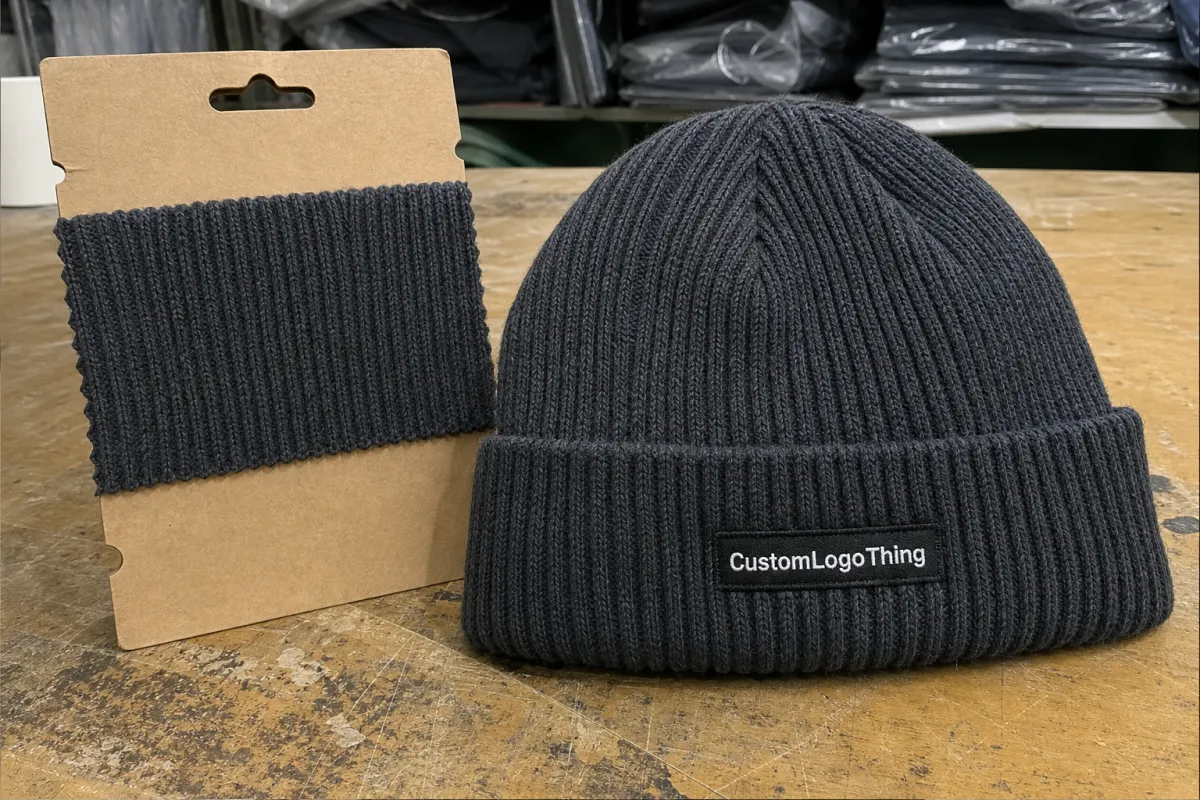
Ribbed knits are easy to underestimate. On a table, two samples may seem close enough to approve in a hurry. Put them on a head, though, and the differences become obvious. One opens too much at the ribs and loses shape. Another grips the forehead too tightly. A third feels fine for a minute, then starts to itch or bag out after a few hours.
That is why the first sample should be treated as a functional test, not a decoration check. Color and logo placement matter, but recovery, silhouette, and comfort matter more. Buyers who only compare the sample visually often approve a beanie that looks polished in a photo and disappoints the end user in real wear.
A useful sample tells the truth about the fabric, the knit, and the trim. A bad one only shows what the design looked like before it was worn.
A practical sample kit usually includes more than one piece. A full beanie sample, yarn or fabric swatches, color references, label options, and any trim or patch variants give a clearer picture of the final item. If the brand is using recycled materials or wants to verify post-consumer waste content, those details should be part of the sample package too. The yarn content affects feel, color consistency, pilling risk, and price.
For subscription programs, the sample also has to answer a repeatability question: can this item be made again, at the same standard, three or six months later? That sounds simple, but it is where many buying programs fail. A material that looks luxurious in one lot may behave differently in another dye lot, especially if the fiber blend contains wool, recycled polyester, or mixed synthetics. The approved sample should show what the supplier can actually hold steady.
Packaging review belongs in this same stage because it can change the customer experience and the product condition. A beanie packed loose in a polybag will not tell you much about the final unboxing. A beanie placed in a branded insert with recycled materials or FSC certified board gives a better read on presentation, but it also introduces space constraints, pressure marks, and fold memory. Those tradeoffs matter.
How the Sampling Process Translates to the Final Beanie
The sample begins with the spec sheet, and a useful spec sheet does more than state the logo size. It should list yarn composition, rib count, gauge, finished measurements, cuff depth, crown height, seam style, decoration method, and packaging notes. The clearer the spec, the less room there is for guesswork during knitting and finishing.
Fiber choice changes the hat in very practical ways. Acrylic is common because it is consistent, color matches well, and usually stays in range on cost. Wool adds warmth and a more natural handfeel, but it can raise cost and may need more careful finishing. Recycled polyester and other mixed yarns support sustainability goals, yet the exact blend matters more than the marketing line on the fiber spec. If the yarn contains post-consumer waste, ask how much, whether the percentage is verified, and whether the dye lot can hold color without drifting.
Construction matters just as much as content. A tighter rib usually improves shape retention, while a looser rib can feel softer but relax faster over time. Gauge affects density, warmth, and the way the knit reacts to embroidery or patch backing. Heavy embroidery can pull a ribbed surface slightly off balance; a stiff woven patch can change the drape more than a buyer expects.
Sample approval should focus on the following elements:
- Spec match: confirm measurements, rib style, yarn blend, and finish.
- Handfeel: judge softness, itchiness, and surface consistency.
- Recovery: stretch the cuff and crown, then check return shape.
- Branding impact: inspect embroidery density, patch stiffness, and label comfort.
- Packaging fit: review whether inserts, sleeves, or boxes distort the knit.
The branding check deserves extra attention. A woven label can scratch if the seam sits in the wrong place. A thick patch can stiffen the cuff. Dense embroidery can change the way the fabric folds, especially in ribbed knits that already have a pronounced structure. Small changes in decoration are easy to overlook on a digital proof and hard to ignore once the sample is worn.
It also helps to think about the final use case before approving the material. A subscription box item may need less elaborate packaging and a softer handfeel because the customer experiences it as part of a larger kit. A retail winter accessory may need stronger shelf presence, cleaner trim, and more controlled color matching. Those are not the same job, so the sample should not be judged as if they were.
Material Cost, Pricing, MOQ, and Quote Variables
Pricing starts with the yarn, but it does not end there. Fiber content, stitch density, number of colors, decoration method, finishing steps, and packaging all influence the quote. A basic knit swatch costs very little compared with a fully branded sample that includes a patch, woven label, custom fold, and presentation packaging. Shipping and revisions can also add cost if the first round is not accepted.
MOQ is another reality buyers need to respect. Setup costs do not disappear just because the order is small. Machines still need to be programmed, yarn still needs to be sourced, and the factory still needs to assign labor to knitting, linking, finishing, and inspection. A 300-piece order often carries a much higher unit price than a 3,000-piece order with the same construction. That is normal math, not a surprise markup.
Sample fees are usually separate from bulk pricing. A buyer may pay for an initial prototype, then move into production after approval. If revisions are needed, there may be added charges for re-knitting, color adjustment, embroidery changes, or re-shipping. That is one reason a line-item quote is better than a single lump number. It shows which parts are fixed costs and which parts move with the design.
| Sample Option | What You Get | Typical Sample Fee | Best For |
|---|---|---|---|
| Basic knit swatch | Small material and stitch reference only | $15-$35 | Early yarn and gauge comparison |
| Unbranded full beanie | Complete fit sample without decoration | $45-$90 | Checking stretch, shape, and comfort |
| Branded prototype | Logo, label, or patch plus finished knit | $70-$140 | Approval for retail or subscription use |
| Presentation sample kit | Sample, swatches, color references, and packaging mockup | $120-$220 | Buyer presentations and stakeholder review |
For bulk pricing, a standard acrylic ribbed beanie in a moderate run may land around $2.25-$3.50 per unit. Wool blend styles, recycled yarn versions, or heavily branded pieces can move into a higher range, especially with custom packaging. Smaller runs usually sit at the upper end of the scale. The cleanest way to compare suppliers is to request the same beanie three ways: plain, branded, and fully packed.
If the final shipment requires biodegradable packaging or an FSC certified carton insert, ask for that in the first quote. Packaging materials are easy to leave out of a quick estimate and difficult to add later without shifting the cost structure. The same goes for individual polybags, hangtags, or pre-folding requirements. Every extra handling step adds labor.
For shipment language and transit testing standards, the guidance from ISTA and the educational material at Packaging School can help teams ask better questions about compression, presentation, and protection during transport.
Sampling Process and Lead Time to Production
A clean sampling workflow usually follows a simple order: inquiry, spec review, yarn and trim selection, first sample knit, internal review, revision if needed, and production release. The process slows down when the buyer sends measurements, artwork, and finish direction in separate messages, because the factory has to keep re-checking which version is current. One complete brief is faster than five partial ones.
Lead time depends on more than the factory schedule. Yarn availability can change the timeline if a shade needs matching or a specific fiber blend has to be ordered. Factory capacity also matters, especially during the colder months when knit accessories compete for machine time. Buyer response time is another major variable; an approved sample held up in inboxes is still a delay.
As a practical estimate, a simple sample may take 7-10 business days once the spec is clear. A branded prototype often needs 10-15 business days, especially if embroidery or special labels are involved. Bulk production after approval can take 20-30 business days before shipping. If the season is already moving toward peak winter demand, those windows can stretch.
Photos help, but they do not replace an in-hand review. A photo can show color and layout. It cannot tell you whether the cuff scratches, whether the knit relaxes after stretching, or whether the seam lands comfortably against skin. For ribbed beanies, touch still beats a screen.
Sample shipping should be planned with the same care as production shipping. If the beanie arrives packed in corrugated cardboard with kraft paper or recycled fill, that is fine as long as the packaging does not crush the knit or flatten the cuff before approval. The sample should arrive in a state that reflects the final product, not a distorted version of it.
Step-by-Step Review Checklist for Ribbed Beanie Samples
Start with the use case. A retail shelf style needs sharper presentation, more exact color control, and a more polished label system than a simple subscription insert. A seasonal promo item may accept a simpler finish if the price target is tight. That decision should be made before sample review, not after someone falls in love with a version that is too expensive to repeat.
Measure the sample in multiple states. Check the beanie relaxed, stretched, and folded at the cuff. Rib knits can look forgiving at rest and still fail under wear because they do not recover evenly. Record width, height, cuff depth, and stretch limit so the team has more than a visual impression to work from.
Comfort testing should happen on an actual head. Feel for itchiness, pressure points, breathability, and how the knit behaves after a few minutes of movement. Wool-rich blends may be warmer and feel more premium, but they can irritate some wearers. Synthetic-heavy blends often keep cost down, though they can trap heat or feel less natural against the skin.
A clear review checklist helps keep approvals consistent:
- Confirm measurements against the approved spec.
- Stretch and release the cuff to judge recovery.
- Inspect the seam, crown, and label for comfort.
- Check logo placement from multiple angles.
- Wear the sample long enough to catch pressure points.
- Test wash behavior if the item will be reused often.
That last point is easy to skip and expensive to ignore. A short wash-and-air-dry trial can reveal whether the yarn relaxes too much, pills early, or holds shape after cleaning. If the beanie is meant to be worn repeatedly through winter, wash performance is part of quality, not a separate issue.
Packaging should be reviewed alongside the garment. If the plan uses kraft paper sleeves, FSC certified inserts, or recycled materials, check whether the package creates pressure marks, snag risk, or extra moisture retention. The right package protects the beanie without changing the approval outcome.
Common Mistakes That Distort Sample Decisions
Color is the most common trap. Yarn that looks balanced under office lighting can read warmer, darker, or flatter in daylight. A sample approved under the wrong light can create avoidable disappointment once the production lot arrives. Review color in more than one setting and, if possible, beside other approved winter accessories.
Another mistake is comparing unlike samples. A tighter gauge, heavier yarn, or different rib count can make one beanie feel warmer or softer even if the main difference is construction rather than quality. If the two samples are built differently, the comparison is already distorted. Apples-to-apples matters here.
Branding gets underestimated often. A logo that looks clean on screen can distort the rib, feel stiff near the forehead, or cause the cuff to fold awkwardly. Dense embroidery, patch backing, and label seam placement all influence comfort. If the in-hand feel conflicts with the photo, trust the sample, not the render.
Documentation gaps create another kind of error. If the approved label size, knit density, or yarn shade is not written down, teams start relying on memory. That is how small differences turn into expensive rework later. One version in the inbox and another version in production is a common failure mode, and a preventable one.
Packaging can distort judgment too. A beanie packed too tightly in corrugated cardboard may arrive with creases that are really shipping artifacts, not product flaws. On the other hand, a loosely packed sample may hide how the final packaged product will look on arrival. The review should separate product quality from transit damage, then assess both.
If the sample needs a second look, that is normal. If nobody can explain what changed, the process needs tightening.
Expert Tips and Next Steps for a Cleaner Approval
If you are deciding between two materials or two gauges, ask for both. Side-by-side comparison settles a surprising number of arguments about softness, warmth, and shape retention. A slightly different rib depth can change the whole feel of the hat, even when the raw yarn cost is close.
Use a pass-fail sheet before the sample arrives. Keep it practical: fit, stretch recovery, comfort, color match, label placement, and overall handfeel after wear. When every reviewer uses the same criteria, internal sign-off gets faster and less subjective.
Standardize the photo set as well. Ask for front, back, side, cuff close-up, seam close-up, and label close-up. If merchandising, operations, and marketing all review the same angles, there is less room for confusion later. That matters more in recurring programs, where a future reorder may need to match the same product exactly.
Good suppliers will usually speak plainly about tradeoffs. Softer yarn may pill sooner. A tighter rib may recover better but feel less relaxed. Richer embroidery can sharpen branding and still change drape. Those compromises are part of real production. The goal is not to find a magical material that does everything; it is to choose the right mix of comfort, cost, and durability for the use case.
For reorders, keep the approved sample, the spec sheet, the final quote, and the packaging notes together. That file becomes the reference point for the next round and keeps the team from rebuilding the decision from memory. Used properly, a subscription ribbed winter Beanies Material Sample guide is not a one-time checklist. It is a control document that keeps repeat orders cleaner, faster, and easier to quote.
Once the sample is approved, the next steps are straightforward: confirm the final quote, lock quantity, finalize packaging, and move into production with the same material references that earned approval. That is the simplest way to protect fit, feel, and margin while keeping small details from drifting during handoff.
What should a subscription ribbed winter beanies sample kit include?
It should include a full beanie sample, yarn or fabric swatches, and color references so the buyer can judge both construction and finish. If branding matters, add label, patch, or trim options, since those details can alter comfort and visual balance. Care notes and measurement specs help later if the style is reordered.
How do I compare ribbed winter beanie samples for stretch and recovery?
Stretch each sample to the intended wear size, then let it relax and check whether it returns to shape without bagging out. Record relaxed and stretched measurements so the team can see how much the rib opens under pressure. Compare cuff and crown separately, because they often recover at different rates.
What affects pricing for beanie material samples and bulk orders?
Yarn type, knit density, number of colors, decoration method, finishing steps, and packaging all affect the quote. Smaller runs usually carry a higher unit cost because setup and labor are spread across fewer pieces. Rush timing, revisions, and special color matching can add cost if the first sample is not approved as-is.
How long do the process and lead time usually take for sample approval?
A simple sample can move faster than a fully branded one, but the timeline still depends on yarn availability and factory capacity. Buyer response time matters because each revision adds another review loop before production starts. Seasonal winter demand can extend the schedule, so a small buffer helps.
How many revisions are normal before approving a ribbed beanie sample?
One revision is common when the first sample is close but needs a better fit, color tweak, or branding adjustment. Two rounds can still be reasonable when the team is balancing warmth, handfeel, and unit cost at the same time. If the sample still misses the target after repeated changes, reset the spec sheet before moving forward.
For teams buying custom winter accessories at scale, the smartest approach is usually the simplest one: sample carefully, compare honestly, and lock the material story before production starts. A clear subscription Ribbed Winter Beanies material sample guide keeps the order grounded in real feel, real measurements, and real cost control, which is exactly what a bulk run needs before it goes live.


