Hotel Logo Patch Beanies Factory Quote for Bulk Orders
If you need a hotel Logo Patch Beanies factory quote for a winter welcome kit, staff uniform, ski resort retail rack, or guest giveaway, the real task is not finding a supplier. It is getting a clean spec, a realistic price, and a timeline that still works after freight and sampling are added. The beanie body is usually straightforward. The logo choice is where the order either looks polished or starts drifting into “we had to make do.”
That is why experienced buyers ask for a quote before locking the style. They want MOQ, lead time, decoration method, and the difference between factory price and landed cost. Those details matter more than a glossy product photo. A quote that leaves them vague on setup fees or shipping is not a quote they can approve with confidence.
A useful first response should answer a simple question: can this be produced cleanly at the requested quantity, on time, and without compromising the logo? If the answer is unclear, the rest of the conversation will probably be slow. Good hospitality programs do not have much patience for slow.
When a hotel logo patch beanies factory quote actually makes sense
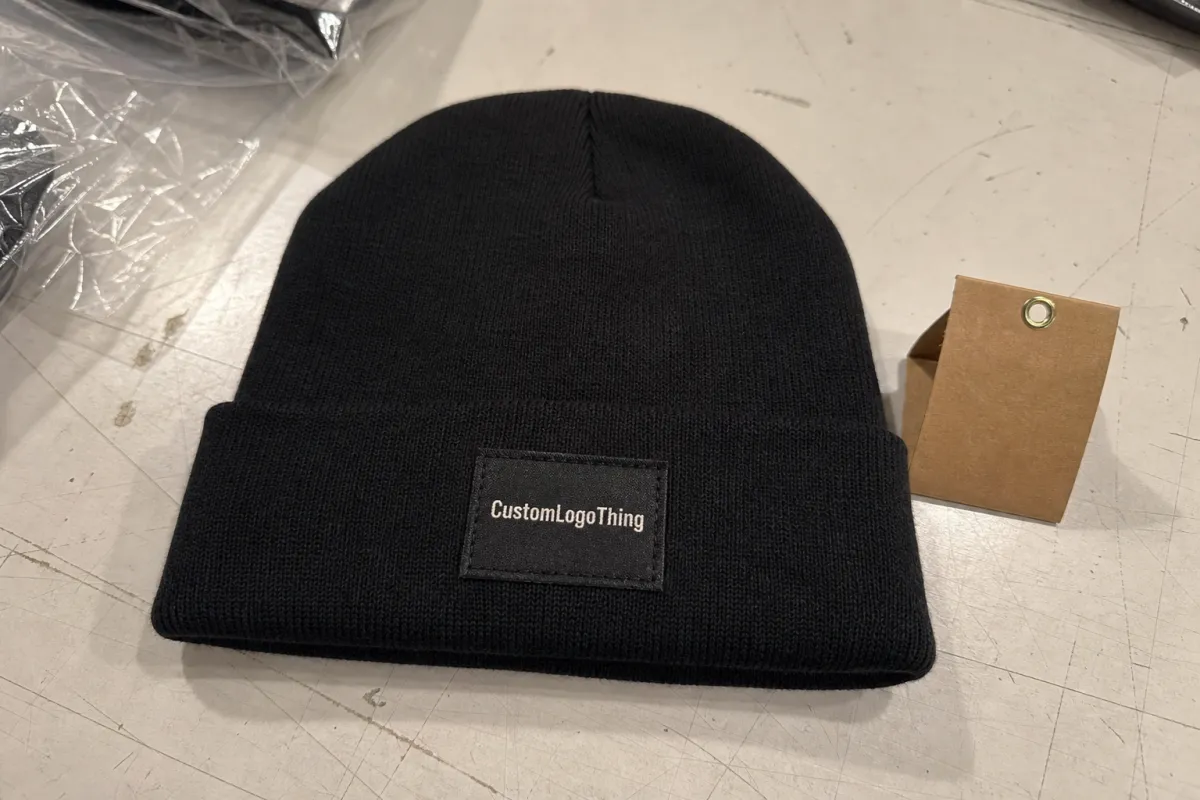
A hotel logo patch Beanies Factory Quote makes sense any time the beanie has to carry brand value, not just warmth. That includes concierge uniforms in a mountain property, welcome gifts for VIP arrivals, retail at a ski lodge, seasonal staff packs, and branded merchandise sold next to mugs or keychains. A plain knit cap can do the job in some settings. A patch beanie usually looks more intentional because the logo sits in a fixed place and the cap still stays simple enough to produce in volume.
From the buyer side, the decoration choice changes the result more than most people expect. One woven patch on a stock acrylic beanie can look controlled and premium enough for a guest kit. The same cap with an oversized patch, fuzzy embroidery, or poor contrast can look cheap even if the yarn itself is fine. That mismatch is common. Buyers often focus on the body fabric first and only notice logo readability after the sample arrives.
“If the logo reads cleanly from six feet away, the beanie is doing its job. If it does not, the softness of the yarn will not save it.”
For most hospitality programs, the first quote should state four things plainly: unit price, MOQ, lead time, and decoration method. Everything else is secondary until those numbers are usable. A quote should also say whether pricing is factory-only or landed. Freight can change the economics quickly, especially for small runs where packaging and shipping take up a larger share of the total.
There is another reason to quote early: it helps you decide whether the order should be stock-based or fully custom. Stock bodies move faster and cost less. Fully custom knits give you more control over color and hand feel, but they slow the schedule and push the minimum up. That tradeoff is normal, not a warning sign. The mistake is pretending both options belong in the same budget.
Patch placements, knit weights, and logo readability
Patch placement is not a tiny detail. A strong logo can still look awkward if the patch sits too high, too low, or off-center by a few millimeters. For hotel buyers, the safest placement is usually the front cuff. It reads quickly, photographs well, and gives the brand a clear zone without crowding the knit. Centered cuff placement suits retail or guest gifts. A side patch feels quieter and can work for premium properties. Lower hem branding is the most restrained option, but it only succeeds if the mark is simple and legible.
Patch size matters just as much. On most adult beanies, a patch around 45-55 mm usually feels balanced. Move toward 60-70 mm if the logo needs to be visible from a distance or if the mark is very simple. Smaller than that, and text starts to collapse. Bigger than that, and the beanie begins to resemble a walking signboard, which is not the tone most hotels want.
- Woven patch: best for fine text, small lines, and crisp edges.
- Embroidered patch: adds texture, though tiny details soften faster.
- Leather patch: gives a premium look for simple marks and minimal copy.
- PVC patch: handles bold shapes well and tolerates wipe-clean use.
Contrast is where many logos fail in real life. A black patch on charcoal knit may look tasteful in a proof and nearly disappear at lobby distance. A white patch can solve that, but it can also feel too bright if the rest of the palette is muted. A supplier with actual production experience will flag contrast problems early, but only if the artwork is readable and the brand colors are supplied clearly.
One clean patch usually outperforms a crowded front. Extra labels, large embroidery, and multiple brand hits tend to compete with each other on a small knit surface. The beanie already has warmth, fit, and texture. The logo only needs one good place to sit.
Materials, sizing, and finishing specs that change the product
Material choice changes the quote and the feel. Acrylic remains the most common option for bulk hospitality orders because it is affordable, easy to knit, and available in a wide color range. It also behaves predictably, which matters more than people admit. A standard 100% acrylic beanie is warm enough for winter guest kits and staff use without pulling the budget out of shape. Recycled polyester usually costs more, but some buyers prefer it for sustainability reporting. Wool blends feel richer and warmer, though they raise the price and need clearer care guidance. For a softer, more structured look, a tighter rib knit generally beats a loose, slouchy body.
Fit is not cosmetic. For a universal-size hotel beanie, a cuff depth of about 7-8.5 cm and a crown length around 20-22 cm usually gives a neat adult fit. That profile works for staff and guests without drifting into an intentionally slouchy style unless that is the design brief. Stretch recovery matters too. If a cap bags out after one wear, staff stop wearing it and guests stop keeping it.
Several finishing details have outsized influence on how the product feels in hand:
- Seam type: a flat, tidy seam looks better in hospitality than a bulky join.
- Patch size: should match the cuff width instead of overpowering it.
- Thread color: should be matched intentionally, not approximated loosely.
- Label placement: side seam labels are safer than oversized outer tags.
- Care tag: useful for retail, less critical for staff-only programs.
If the beanie is for a high-end property, the spec should lean soft and polished. If it is for outdoor staff or ski operations, a heavier build with better warmth retention often makes more sense. That is a real product decision, not a style preference. A lightweight promotional cap might work in mild weather. It becomes a weak choice when people are actually outside in winter.
Packaging deserves the same practical thinking. FSC-certified paper is worth asking about if your team tracks sourcing claims, and the certification framework is clearly laid out at fsc.org. For packed cartons headed into retail or e-commerce channels, factories that understand ISTA guidance usually make fewer mistakes with compression, scuffing, and loose-unit counts.
Pricing, MOQ, and quote variables that move the number
A hotel Logo Patch Beanies factory quote only becomes useful when the supplier shows what is driving the number. The main cost drivers are fiber content, knit gauge, patch type, logo complexity, and the number of color changes in the artwork. A stock beanie with a woven patch is usually the cheapest route. A fully custom knit with special labeling and bespoke packaging climbs quickly. That is not aggressive pricing. It is production math.
MOQ depends on how much of the product is custom. Stock beanies with standard patch decoration often start lower because the body is already available. Fully custom knits need a higher minimum because the factory has to set yarn, knitting, and finishing around your exact spec. If the request is for 100, 300, 500, and 1,000 pieces, tiered pricing should show the break points clearly. That is the only honest way to compare options.
| Run size | Stock acrylic + woven patch | Stock acrylic + embroidered patch | Fully custom knit |
|---|---|---|---|
| 100 pcs | $3.20-$5.10 each | $3.60-$5.80 each | $5.80-$8.50 each |
| 300 pcs | $2.40-$3.90 each | $2.80-$4.60 each | $4.50-$6.80 each |
| 500 pcs | $2.05-$3.35 each | $2.45-$4.10 each | $4.00-$6.20 each |
| 1,000 pcs | $1.75-$2.95 each | $2.10-$3.60 each | $3.60-$5.40 each |
These are factory-only ranges, not landed totals. Add setup fees, sampling, packaging, freight, and import charges if you want the real number. A simple patch setup may be modest. A more detailed logo with multiple colors can cost more because patch tooling or digitizing takes time. Sample fees often land around $25-$90 depending on the decoration method. Packaging can add $0.08-$0.35 per unit if the order needs individual bags, tissue, belly bands, or hang tags.
The most common mistake is comparing a factory-only quote against a landed quote and calling one supplier expensive. That comparison tells you very little. Ask the same questions every time: what is included, what is extra, and what changes if the order moves from 300 pieces to 500 or 1,000?
There is also a hidden cost in vague artwork. If the logo has five colors, tiny lettering, or unclear line weights, the supplier may need more setup time, more sampling, or a wider patch boundary than expected. Clean art files reduce friction. Sloppy files create it.
Production steps and turnaround from artwork to shipment
The production flow is simple on paper, but only if the artwork is ready. A typical run goes through logo review, mockup, approval, sample or proof, patch production, beanie production, patch attachment, QC, packing, and shipment. When each step is clean, the order moves without drama. When the logo file is low resolution or the colors are not defined, the schedule starts slipping before production has even begun.
Realistic timing usually looks like this:
- Artwork review: same day to 1 business day if files are ready.
- Digital mockup: 1-2 business days.
- Physical sample: 4-7 business days, sometimes longer for complex patch work.
- Bulk production: often 10-18 business days after approval.
- QC and packing: 1-3 business days.
- Transit: depends on destination and shipping method, so it should never be guessed.
A digital proof is useful for patch placement, color blocking, and approximate size. A physical sample gives a better read on hand feel, logo contrast, and how the patch sits on the cuff after wear and stretch. If the order is for a hotel chain, a ski resort, or a premium guest program, the extra time for a sample is often justified. Fixing a bad bulk run costs more than checking one sample.
Speed improves when the request is specific. Vector art, final color references, approved quantities, and one clear deadline remove a lot of back-and-forth. Every round of “can we see one more version” adds time. Suppliers can move fast, but they still need a complete spec to do it.
QC should not be an afterthought. For beanies, a serious inspection typically includes stitch consistency, cuff dimension checks, patch alignment, color tolerance, and basic attachment strength. Some buyers also ask for pull testing on the patch bond, carton count verification, and photo confirmation of packed goods. Those checks are not glamorous, but they prevent the kind of mistake that only appears after the shipment has already left.
Why hospitality buyers keep reordering these beanies
Hotels reorder patch beanies because they are practical and easy to place across different use cases. They hold a logo well, they suit winter timing, and they can move between staff wear, guest gifting, and retail without feeling out of place. A housekeeping team can wear the same style as a front-desk winter promotion, and a guest can actually keep the item because it does not look like a throwaway freebie.
Consistency is a big part of the appeal. Factory-direct production makes it easier to keep patch size, cuff depth, thread color, and label placement aligned from one run to the next. That matters when multiple properties are ordering the same item. Small drift is what makes a brand wall look uneven: one black is slightly different, one patch is a touch larger, one label is mounted in a different spot. None of those errors is dramatic on its own. Together, they look careless.
Reorders are easier when the supplier keeps the production history. If the original patch dieline, artwork, and stitch notes are saved properly, the second and third runs move faster because the spec does not need to be rebuilt. That saves time on the buyer side and also reduces the chance of a quiet revision slipping in. For hospitality, that is more valuable than most people realize. The item looks the same, and nobody has to explain why it changed.
Quality still decides whether the product survives repeat use. Clean stitching, secure patch attachment, and tidy packing make the difference between a cap that gets worn and one that ends up in a drawer. A beanie that arrives with the right count, the right labels, and no random loose units feels professional before it is even unpacked. That matters whether the destination is a lobby shelf or a staff closet.
There is a reason this category repeats even when budgets tighten. The item is small enough to ship efficiently, visible enough to carry a brand, and useful enough that people do not immediately discard it. Very few promotional products manage all three.
What to send for a fast, accurate quote request
If you want a hotel logo patch Beanies Factory Quote that comes back quickly and accurately, send the essentials in the first message. Do not make the supplier dig for basic information. The best quote requests usually include the logo file, target quantity, preferred beanie color, patch size, deadline, and shipping location. That is enough to build a serious starting point.
Here is the short list worth sending:
- Logo file: AI, EPS, or PDF is best.
- Quantity: give one target and two backup tiers if possible.
- Beanie color: exact shade or a reference image.
- Patch choice: woven, embroidered, leather, or PVC.
- Patch size: approximate width in millimeters.
- Use case: staff, guest gift, retail, or seasonal merch.
- Deadline: a date, not just “soon.”
- Shipping address: needed if landed pricing is the goal.
It also helps to ask for two spec options. One can prioritize cost. The other can prioritize appearance or hand feel. That makes the tradeoff easier to judge. A stock acrylic beanie with a woven patch may be the sensible answer for 500 guest gifts. A wool blend with a leather patch may fit a boutique mountain property better. Same brand. Different job. Different result.
If the order is still loose, send a reference photo and ask the factory to recommend the patch size and placement. That is often enough to start a quote without waiting for a polished tech pack. Still, the cleaner the first message, the faster the reply. A supplier can work with a short request, but not with missing basics.
For reorders, include the previous spec, the approved artwork, and the quantity you need now. If the patch dieline and production notes are already on file, the new quote should be shorter and easier to approve. That is the real benefit of getting the first run right: the next one does not need to start from zero.
Frequently Asked Questions
What is the usual MOQ for hotel logo patch beanies?
MOQ depends on patch type, body material, and whether the beanie is a stock knit or a fully custom program. Simple stock beanies with a woven or embroidered patch often start lower than fully custom knit orders. Ask for tiered pricing at 100, 300, 500, and 1,000 units so you can see where the cost really changes.
How fast can I get a hotel patch beanie quote?
A complete quote can often come back the same day or within 24 hours if the logo file and quantity are ready. Missing artwork, vague patch size, or no target deadline slows the response. Ask whether the number includes sample cost, freight, and setup fees, because a quote that hides those details is not very useful.
Which patch type is best for hotel logo beanies?
Woven patches are usually best for crisp logos with small details. Leather patches look more premium and simple. PVC patches handle bold shapes well, while embroidered patches add texture but can soften fine details. The best choice depends on how much contrast your logo needs and how formal the property wants the beanie to feel.
Can I approve a sample before bulk production starts?
Yes, and for hospitality branding it is often worth doing if logo placement or color matching matters. A digital proof is faster, but a physical sample gives you a better read on fit, patch size, and overall finish. Ask whether sample fees can be credited back on the bulk order so the review stage does not feel like a sunk cost.
What files do you need for a custom beanie quote?
A vector logo file is best, ideally AI, EPS, or PDF. Also send quantity, color preferences, patch size, target date, and shipping location. If you do not have exact specs yet, a reference image still helps the factory quote the job properly and keeps the first round from turning into guesswork.
What should I do if I need a quick reorder?
Send the previous spec, the last approved artwork, and the quantity you need now. If the factory already has your patch dieline and production notes on file, the reorder can move much faster. That is the point of keeping the original run clean: the next hotel logo patch beanies factory quote should be shorter, clearer, and easier to approve.


