Brands building a subscription Woven Label Beanies sample checklist usually start with the wrong assumption: that the knit body is the hardest part. It rarely is. The first problems tend to show up in the label itself, where weak contrast, small type, loose weave density, or stiff backing turns a promising sample into a rejection after one real-world wear test.
That matters more in subscription programs than in one-off retail buys. A subscription beanie has to survive the whole chain: unboxing, quick inspection, photo review, shipping compression, and the actual wearing experience. A sample that looks polished in a flat lay can still fail once the cuff stretches or the label edge rubs against skin. Buyers learn quickly that appearance is only one layer of approval.
A beanie can pass the photo test and still fail the customer test if the label scratches, curls, or fades into the knit at arm’s length.
Subscription woven label beanies sample checklist: what fails first
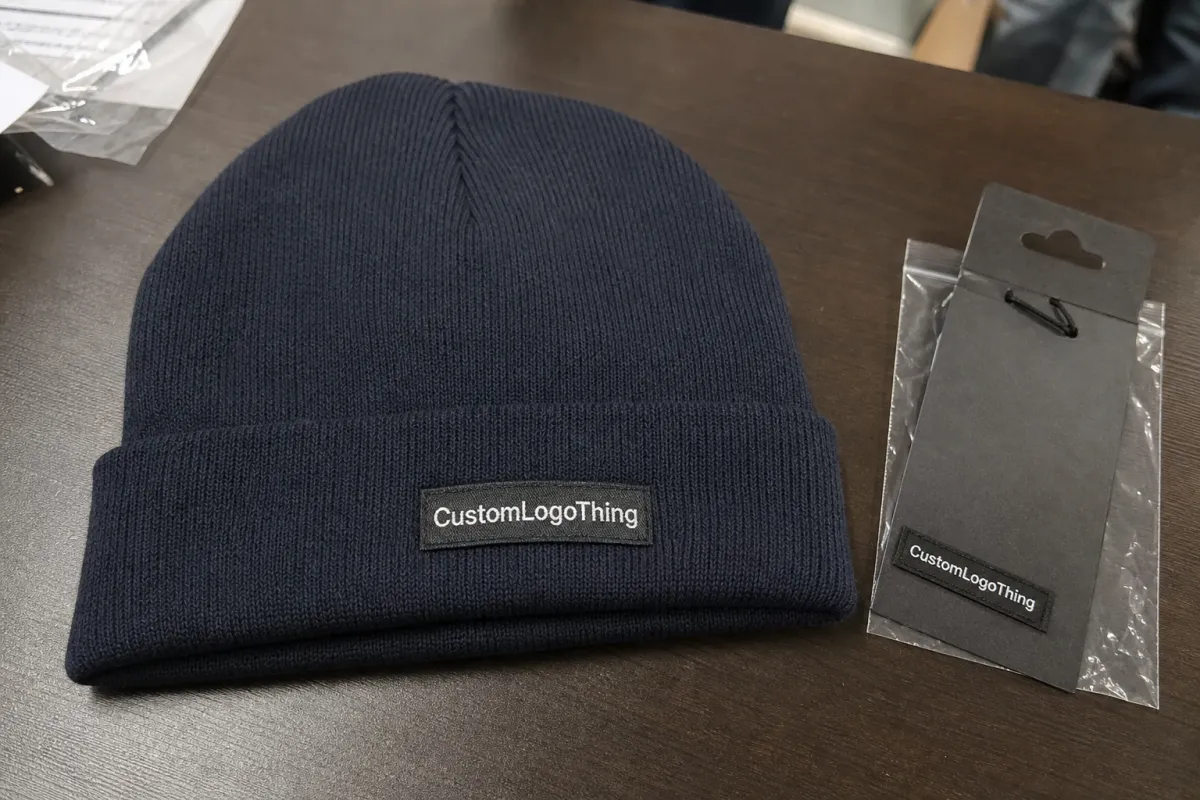
The quickest way to waste a sample is to judge it only by the hat body. In actual review cycles, the rejection often starts with the woven label: the logo is too fine, the thread colors flatten against the knit, or the edge treatment leaves the cuff feeling heavier than expected. What looks crisp on a monitor can vanish on a beanie from six feet away.
That visual problem becomes bigger in subscription packaging. If the beanie is sitting on tissue in a mailer, the label has to read instantly. If the hat is part of a winter welcome kit, the color relationship between label, yarn, and insert changes the first impression. A checklist that ignores presentation is incomplete.
The sample should answer three separate questions. Does it look right? Does it wear right? Does it pack right? Those are different things. A product can be acceptable in one and poor in the other two.
- Set the sample on a table and step back six to eight feet.
- Check whether the label still separates cleanly from the knit background.
- Stretch the cuff lightly and watch for distortion or seam pull.
- Run a thumb along the label edge to feel for scratchiness or stiffness.
The most useful buyer habit is simple: do not ask whether the sample is attractive; ask whether a subscriber can understand it in two seconds. That is the real bar. If the beanie needs explanation, the artwork is too subtle, the label is too small, or the placement is off.
Use the product’s end use to guide the check. Retail shelf beanies can tolerate a little more visual contrast. Premium gift beanies usually cannot. If the project uses multiple trims, align the woven label spec with the broader label system from Custom Labels & Tags so the backing, fold, and placement are set before the first sample is cut.
How the sampling process works from brief to signoff
Good samples begin with a brief that leaves little room for improvisation. Send vector artwork, label dimensions, exact placement, Pantone targets if color matters, fiber content, and packaging notes. If the cuff should fold at a specific point, say so. If the woven label must sit 12 mm above the hem, say that too. Small ambiguities are where costly revisions start.
The approval process should split into two layers. Visual approval asks whether the beanie looks correct. Production approval asks whether the same result can be repeated at scale without shifting seam positions, changing trim width, or distorting the label after finishing. Blurring those two decisions is how teams end up redoing a sample that was “close enough” but not actually buildable.
A clean workflow usually follows this sequence:
- Brief and artwork handoff.
- Label setup or digitizing.
- First physical sample.
- Revision notes from one decision owner.
- Revised sample or final approval.
- Bulk production signoff.
That one-owner point saves time. If marketing, operations, merchandising, and finance all feed comments into the same sample without a final decision maker, the process drifts. The beanie sits while people debate wording. The clock keeps moving. For subscription schedules, slow internal review often causes more damage than a minor label flaw.
Use the sample round to create a record that can be repeated later. Save front, side, cuff, and close-up photos. Note the sample date, approved artwork version, label placement, and any tolerance changes. If the order comes back six months later, that documentation is more useful than a box full of memory.
Cost drivers that change quote accuracy and unit cost
Beanie pricing looks opaque until the cost is broken into separate pieces. The largest drivers are knit complexity, label size, thread count, yarn choice, finishing method, and whether the supplier has to rework artwork or placement after the first proof. If the sample price feels high, setup and labor are often folded into it without much explanation.
Ask directly about sample fees. Some suppliers credit the first sample against bulk production, others do not. That difference matters. A $45 sample that gets credited later is very different from a $45 dead cost, especially if the team expects multiple revisions. Rush charges are another variable, and they can add 15% to 40% when the approval window is tight or the production queue is full.
| Cost item | Typical range | What moves it |
|---|---|---|
| Label setup / digitizing | $35-$120 | Artwork complexity, thread colors, border style |
| First physical sample | $25-$80 | Knit structure, label size, whether a new loom setup is needed |
| Revised sample | $20-$60 | Whether the original setup can be reused |
| Rush sampling surcharge | 15%-40% | Capacity, seasonality, freight speed |
| Bulk unit cost | $2.10-$6.25 | Order volume, yarn grade, packaging, trim complexity |
Quantity changes the math more than many teams expect. A 300- to 500-piece subscription run carries much more setup overhead per unit than a 2,000-piece reorder. The same beanie can feel premium at one scale and margin-heavy at another. That is why quote accuracy should always be judged against the target run size, not the sample alone.
Packaging can also shift the number. Custom tissue, a branded belly band, warning labels, or a gift-ready mailer all add labor and materials. If the program cares about presentation, ask for two quotes: product only and packed for fulfillment. The gap between those numbers usually reveals where the real work sits.
For packaging reference points, the Sustainable Packaging Coalition at packaging.org is useful for material thinking, and ISTA guidance helps teams think through transit stress before boxes hit subscribers. Those checks do not replace supplier testing, but they do help buyers ask better questions.
Label construction, knit density, and fit checks that matter
A woven label is not just decoration. It changes the structure of the beanie. Review how it is attached: sewn edge, folded seam, patch placement, or direct integration into the cuff. If the edge is too rigid, it creates a ridge and feels cheap on skin. If it is too soft, the label can curl or disappear into the knit after a few wears.
Fit testing should cover more than one head size. A beanie that looks perfect on a single tester can still ride too high, pinch the forehead, or collapse at the crown on another wearer. A practical check is to have several people try it on, then wear it for ten to fifteen minutes. That short window is enough to show recovery issues in a loose knit.
Knit density changes the label’s behavior. Tighter construction usually supports cleaner artwork and better shape retention, but it can feel warmer and less forgiving. Looser construction gives a more relaxed hand-feel, yet small text may warp when stretched. There is no automatic winner. The right choice depends on whether the product needs to read sporty, cozy, premium, or promotional.
Packaging should be part of the same review. If the beanie ships compressed in a carton, tucked into a polybag, or packed with other soft goods, the finish has to survive transit. The FSC site is a useful reference if cartons or inserts need certified paper sources. That is not a side issue; for recurring drops, packaging shapes perceived quality almost as much as the knit itself.
Use bright light for final inspection. Loose threads, uneven seams, frayed label corners, and stitch breaks often hide in office lighting. Under stronger light, they show up fast. That is one of the cheapest quality checks available, and one of the most revealing.
Timeline and lead time planning for recurring subscription drops
Recurring drops live or die on timing. Build backward from the ship date, not forward from the sample date. A workable schedule often includes artwork confirmation, first sample, feedback window, revision sample, bulk production, packing, and freight. Every stage needs buffer. A three-day slip in one step can shake the entire subscription calendar.
Ask for milestone dates, not a single lead-time number. “Three weeks” sounds precise, but it may mean three weeks to first sample, three weeks after approval, or three weeks all-in. Those are very different commitments. Milestone clarity helps a buyer see risk before the calendar starts to slip.
Seasonality matters too. Beanies are not flat-demand goods. As colder weather approaches, knit capacity, yarn supply, and finishing slots tighten quickly. A supplier who is open in spring may be stretched thin by early fall. If your subscription window peaks in that same period, move the sample earlier than feels necessary.
A backup SKU can keep a drop alive. If the primary colorway slips, a pre-approved alternate color or thread set can preserve the ship date. That sounds less exciting than a perfect revision, but subscribers tend to care far more about receiving a polished item on time than hearing that the original was still being tuned.
If the program ships into multiple regions, confirm whether lead time includes transit or only production. A finished sample sitting in the wrong warehouse still misses the deadline. A good subscription Woven Label Beanies sample checklist tracks every handoff, including the short but critical gap between factory exit and fulfillment intake.
Common mistakes that derail sample approval
The first mistake is approving color from a screen. Monitors compress warmth, flatten contrast, and make muted yarn look more saturated than it is. A physical sample is the only trustworthy reference once the knit and label are together.
The second mistake is skipping wear tests. A sample that only sits on a desk can hide shrinkage, puckering, edge curl, and label distortion. Put it on, take it off, stretch the cuff, repeat. The motion is simple, and it reveals a lot.
The third mistake is ignoring packaging. A clean beanie in a rough bag can still feel underwhelming in a subscription box. Tissue, insert, and mailer all affect first impression. If those are approved separately, the product can meet spec and still miss the experience.
The fourth mistake is treating small artwork edits as harmless. Move the logo a few millimeters, change the label size, or alter thread colors, and the supplier may need a fresh setup. That can reset the clock. If the revision does not clearly improve the sample, it usually makes more sense to protect the schedule.
One more issue comes up often: teams approve because the sample is “close enough.” Close enough is not a production standard. The sample should either match the brief or trigger a controlled revision. Anything in between creates confusion when reorders start and the details fade.
Expert next steps for approving revisions and reordering
Once the sample arrives, make the decision structure clear. Mark each version as approve, revise, or reject. Then write one sentence explaining why. Not a paragraph. Just enough detail that the next reviewer understands whether the issue was label contrast, fit, finish, or packaging.
Create a revision log. Keep it simple: date, artwork version, label dimensions, fit notes, color target, and the wear-test result. If the next drop uses the same beanie, that record becomes the memory bank. It also helps when a different buyer inherits the account later.
Save the approved sample photos, the final spec sheet, and any tolerances that were accepted. Store artwork files with clear version names. The next team should not need to guess whether the current build was based on v3, v4, or a last-minute email attachment. Reorder speed comes from clarity.
If there is one rule worth keeping, it is this: the sample should prove the beanie can be repeated without surprises. That is the real purpose of the subscription Woven Label Beanies Sample checklist. It is not only about approving a nice-looking hat. It is about making sure the same result can be produced, packed, and shipped again without the label drifting, the fit changing, or the calendar slipping.
What should a subscription woven label beanie sample include before bulk order approval?
A physical beanie with the final woven label, confirmed placement, and the intended knit or colorway. It should also include an artwork proof, a checked fit sample, and notes on any packaging or finishing changes. That documentation matters because the production team needs to repeat the same build without guessing.
How many sample rounds are normal for woven label beanies?
One round is enough for simple projects when artwork and sizing are already final. Two rounds are common when label placement, knit density, or color matching needs refinement. More rounds usually point to unclear specs rather than a difficult supplier, so tighten the brief before repeating.
How do I estimate the cost of a sample checklist for beanie production?
Start with setup fees, sample charges, and any artwork or digitizing work needed for the woven label. Add the expected unit cost at the target quantity so the sample is judged against real production economics. Include rush fees, shipping, and packaging if the sample must arrive on a fixed subscription deadline.
What timeline should I expect for a woven-label beanie sample?
Simple samples can move quickly, but revision cycles and approval delays usually matter more than the first build. Ask for milestone dates: artwork confirmation, first sample, feedback window, revision sample, and production start. Build extra buffer before peak season, because knit and finishing capacity often tightens when demand rises.
What is the biggest mistake brands make with beanie sample checklists?
They approve based on appearance alone and skip wear testing, which misses fit and recovery problems. They also ignore the label-to-knit interaction, so the logo looks good flat but distorts when worn. The last miss is failing to document the approved sample, which makes later reorders inconsistent or slower than expected.