Supplement Embroidered Baseball Caps Material Sample Guide
The supplement Embroidered Baseball Caps material sample guide is about avoiding approval mistakes that only show up after a cap is sewn, curved, and worn. A mockup can look clean while the real sample reveals puckering, weak structure, poor fit, or embroidery that loses clarity on the crown. For buyers, the sample is the cheapest place to catch those problems before they become bulk-order defects.
Sample basics and why they matter
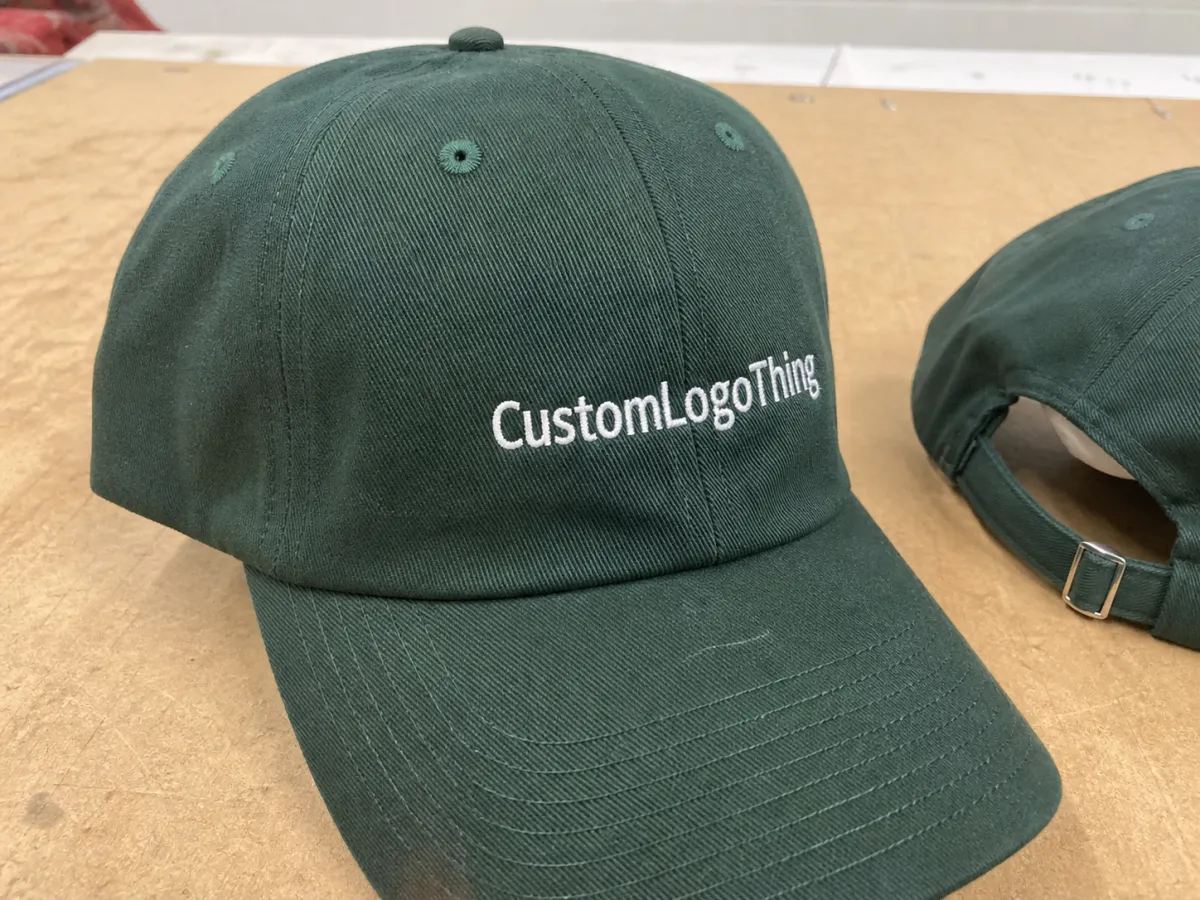
A material sample is not just a courtesy item. It is the fastest way to confirm whether the cap feels right, whether the logo sits cleanly on a curved front panel, and whether the closure, visor, and crown finish match the intended market. If the cap is for a supplement brand, a retail drop, or a bundled promo kit, the sample also helps protect the perceived value of the rest of the package.
Two caps can carry the same artwork and still look very different. One may feel structured and retail-ready, while the other sags, wrinkles, or reads like a giveaway piece. That difference usually appears in the sample long before it appears in production.
The sample also answers the question that photos cannot: how the cap wears. Crown depth, front-panel stiffness, seam finish, and closure placement all affect comfort and fit. A flat render can show placement, but only a sewn sample shows behavior.
A cap that looks correct in a mockup can still wear badly in real life. Approval should happen on a head, not only on a screen.
How the production sample process works
The process should be straightforward: artwork review, cap style selection, color matching, digitizing, sample construction, and final approval. If the supplier skips steps or bundles them into one vague sample fee, you lose visibility on cost and revision risk.
From artwork to sewn sample
Start with the logo file. Clean vector art is best, especially if the design includes small text or fine outlines. A digitizer may need to simplify details so the stitches hold properly on the cap. The key is to see those adjustments before bulk production starts.
Next, confirm the cap profile, panel count, fabric, thread colors, closure type, and any special decoration such as 3D puff embroidery or a woven patch. A flat proof confirms placement. A sewn sample confirms whether the design actually works on the product.
What each proof can and cannot confirm
| Proof type | What it confirms | Typical value | Main limit |
|---|---|---|---|
| Material swatch | Fabric hand, weave, color tone, approximate weight | Fast and low cost | No embroidery or structure test |
| Photo proof | Layout, rough placement, visual direction | Useful for quick review | Does not show tension, depth, or wear fit |
| Preproduction sewn sample | Fabric, stitch behavior, crown shape, closure, comfort | Best approval tool before bulk order | Takes longer and costs more |
Review the sample with a written checklist. Check crown shape, stitch pull, embroidery placement, sweatband comfort, closure alignment, and how the cap sits on different head sizes. Specific notes save time. “Make it cleaner” is too vague to be useful.
Materials, structure, and stitch choices
Fabric choice changes both the look and the wear. Cotton twill feels familiar and takes embroidery well. Brushed cotton feels softer. Polyester usually holds shape better and gives more repeatable results. Nylon blends feel lighter and more technical. Recycled blends can fit a sustainability story, but yarn quality still matters more than the label alone.
Fabric weight also affects the outcome. Many structured caps sit somewhere around 260 to 320 gsm in shell fabric, though the ideal range depends on the design and market position. Lighter fabrics feel more casual and breathable. Heavier fabrics look more substantial but can run warmer. The sample is where that trade-off becomes real.
Structure changes the silhouette
Structured caps use reinforcement in the front panel, often buckram or fusible backing, so the logo has a firmer base. Unstructured caps are softer and more relaxed, but embroidery can look less stable. Five-panel caps usually give a flatter front for simpler art. Six-panel caps are the classic shape and often look more natural for retail. Mid-profile caps add presence, while low-profile caps sit closer to the head and can feel modern or cramped depending on the wearer.
Panel count matters more than many buyers expect. A centered logo may look clean on a five-panel cap and slightly interrupted on a six-panel cap because the seam changes the visual field. The same is true for a curved visor, which can subtly change the read of the artwork.
Stitching is not just decoration
Thread color matters, but stitch behavior matters more. Stitch count changes density, underlay affects stability, and thread sheen changes how expensive the cap looks under light. Too much density can cause puckering. Too little can make the logo look unfinished. Both failures are easy to spot in hand.
3D puff embroidery works well for bold logos with enough open space, but it is a poor fit for tiny text or fine detail. Those designs often look better as flat embroidery or a patch. A patch can also be the better choice when artwork is too complex for clean stitching on a curved crown.
Small components also affect the final result: sweatband quality, eyelets, seam tape, visor inserts, and closure hardware. A soft sweatband may feel fine in a sample but twist or fray in wear. A plastic snap can suit a lower-cost cap, while a metal buckle or fabric strap may fit a more retail-oriented product.
If the order needs careful shipping, ask how the sample is packed. A simple corrugated mailer with kraft paper may be enough for one sample, but premium kits often need shape retention to avoid crown crush or visor bend in transit.
Quality checks that catch hidden problems
A sample review should be an inspection, not an admiration session. The point is to catch reasons the bulk order could fail later. A short checklist works better than a long, vague discussion.
- Check embroidery edges for fraying, tunneling, or loose threads.
- Run a finger across the front panel to feel for puckering under the logo.
- Inspect the visor for stiffness, symmetry, and clean stitching.
- Open and close the fastening hardware several times.
- Flip the cap inside out and inspect seam finishing and sweatband attachment.
- Try the cap on at least two head shapes if the order serves a broad audience.
Fit testing matters. A cap can look excellent on one wearer and feel wrong on another. Check for pressure behind the ears, excess crown height, and a closure that lands too tight or too loose. Those issues do not show up in a photo proof.
Packaging should be part of the inspection too. If the sample arrives crushed or distorted, you are not seeing a true representation of the product. For larger orders, ask whether the supplier uses inserts, tissue, or other shape protection so the sample reflects production quality rather than transit damage.
Cost, pricing, MOQ, and quote basics
Sample pricing usually covers setup, digitizing, materials, labor, and shipping. Some suppliers credit the sample fee back on the bulk order, and some do not. Ask before comparing quotes. A simple sample may land around $35 to $75 before shipping, while a more custom sewn sample with specialty fabric or multiple revision rounds can run about $90 to $180 or more.
MOQ and unit cost are different questions. A factory may make one sample but still require 300, 500, or 1,000 pieces for production. Unit cost drops with volume, but not evenly. A simple one-color logo on a standard six-panel cap scales better than a multi-color design with custom closure, woven label, and special packaging.
| Cost driver | Usually adds | Why it matters |
|---|---|---|
| Digitizing | $10-$40 per logo, sometimes included | Converts artwork into stitch instructions |
| Specialty fabric | Varies by source and weight | Changes hand feel, durability, and finish |
| Dense embroidery | Higher labor and machine time | Raises production time and can distort the crown |
| Extra revision rounds | Usually billed after the first or second round | Can be avoided with precise feedback |
| Custom trims | Woven labels, custom closures, specialty sweatbands | Improves finish but pushes cost up quickly |
A line-item quote is better than a single lump sum because it shows what is included and what triggers a surcharge. Ask whether shipping, digitizing, and one revision are included, and whether the sample fee is refundable on the bulk order. The cheapest quote is not always the lowest total cost if it leads to rework.
Timeline, lead time, and turnaround expectations
Do not confuse a fast proof with a fast production schedule. A straightforward sample can sometimes be ready in 7 to 12 business days after proof approval if the fabric is standard and the logo is simple. Add specialty materials, 3D puff, multiple colors, or a custom closure, and the window often stretches to 12 to 18 business days. Shipping is separate.
Delays usually come from artwork changes, thread matching, sourcing, holiday backlog, and slow approvals. The factory can only move as fast as the slowest sign-off. It also helps to know when the clock starts. Some vendors count from deposit, others from digital proof approval, and others from final artwork and a signed spec sheet. Get that in writing.
For time-sensitive launches, build in a buffer for internal review. If you want to compare more than one sample style before approving production, plan backward from the launch date instead of forward from the supplier promise.
Sample packaging should protect the cap in transit. If the supplier is serious, they should be able to explain how the sample is protected, what carton size they use, and whether FSC certified or recycled paper options are available when those claims matter to the project.
Common sample request mistakes
The biggest mistake is approving from photos alone. A photo shows color and placement, but not texture, crown height, stitch tension, or how the front panel behaves when worn. If the supplier pushes photo-only approval for an embroidered cap, treat that as a risk.
Another common error is testing only one head. A cap can fit one person well and look wrong on another. If the audience is mixed, test more than one wearer. Watch for pressure points, crown height issues, and a closure that lands too loosely or too tightly.
“It fit the sample board” is not useful feedback. Boards do not have foreheads.
Interior comfort is easy to overlook. Sweatband feel, seam roughness, and closure quality matter because they decide whether people actually wear the cap. A rough inside finish can undo a good exterior.
Revision control is another trap. Without a written limit, every small change becomes a new round. State how many revisions are included, what counts as a revision, and whether changes to fabric or structure require a new sample. Keep notes specific:
- Move the logo 4 mm higher on the front panel.
- Reduce stitch density on the outline.
- Switch the closure from plastic to metal.
- Use a darker thread for the shadow detail.
Specific feedback reduces delay and prevents well-meant changes from creating new problems.
What to lock before approval
Before approving production, lock the artwork, fabric, cap profile, decoration placement, and final quote. If any of those are still moving, the order is not ready. It is simply unfinished.
For larger or time-sensitive orders, request one clean photo set, one physical comparison piece if the design is complex, and a written approval record. Save the approved spec sheet, thread codes, stitch counts, and sample photos together so reorders match the approved version.
If the sample passes fit, finish, cost, and timing, move forward. If it fails on one major point, fix that point first. Chasing unrelated changes after a decent sample is how clean orders become messy.
Used correctly, the supplement Embroidered Baseball Caps material sample guide helps buyers approve the right cap the first time and avoid expensive surprises once production starts.
How much do supplement embroidered baseball cap samples usually cost?
Most pricing depends on setup work, embroidery complexity, materials, and shipping. A simple sample can land around $35 to $75 before shipping, while more custom samples often run $90 to $180 or more. Some suppliers credit the sample fee back on the bulk order, so ask before comparing quotes.
What should I compare in an embroidered baseball cap material sample?
Check the crown shape, fabric feel, visor stiffness, and how the embroidery sits on the curved panel. Test the closure, sweatband comfort, and inside seam finish because those details affect wearability quickly. Compare the sample against your brand standard, not only against the factory photo.
How long is the turnaround for a cap material sample?
Simple samples can move in about 7 to 12 business days after proof approval, while complex embroidery or special fabrics often push that to 12 to 18 business days. Shipping time and revision time usually stretch the schedule the most. Ask when the clock starts so you know whether the lead time begins after deposit or after approval.
Can I change the design after seeing the sample?
Yes, but each change can affect pricing, production time, and the final MOQ if the order shifts materially. Keep revisions focused on the problems the sample actually revealed, not random design tweaks. Update the written spec sheet before you approve anything final.
What is the smartest next step after sample approval?
Lock the final quote, the approved artwork, and the exact material spec in writing. Save the sample photos, thread colors, and stitch details so reorders match the approved version. Confirm the production start date and shipping plan before you release the bulk order.


