Choosing a supplement Printed Poly Mailers material sample guide sounds straightforward until the first sample lands on the table and the details stop matching the proof. The artwork may be clean, but the film can feel too soft, the seal can wrinkle at the corners, or the print can scuff after one pass through packing and shipping. That gap between visual approval and physical performance is where a lot of expensive packaging errors begin.
For supplement brands, a mailer does more than hold a bottle or pouch. It has to protect the contents, present the brand clearly, survive carrier handling, and look consistent with the rest of the pack system. A good supplement Printed Poly Mailers material sample guide helps buyers compare film structure, closure reliability, print quality, and transit durability before a bulk order is locked in. That matters whether the mailer is the primary shipper or one layer in a broader setup that includes cartons, kraft inserts, or other branded packaging. If you are comparing options through Custom Packaging Products or narrowing formats on Custom Poly Mailers, sample review is the point where a spec stops being theoretical.
A sample can look polished on a desk and still fail in a warehouse: repeated folding, stacked cartons, label abrasion, and humidity do not care how neat the proof looked.
What this guide reveals
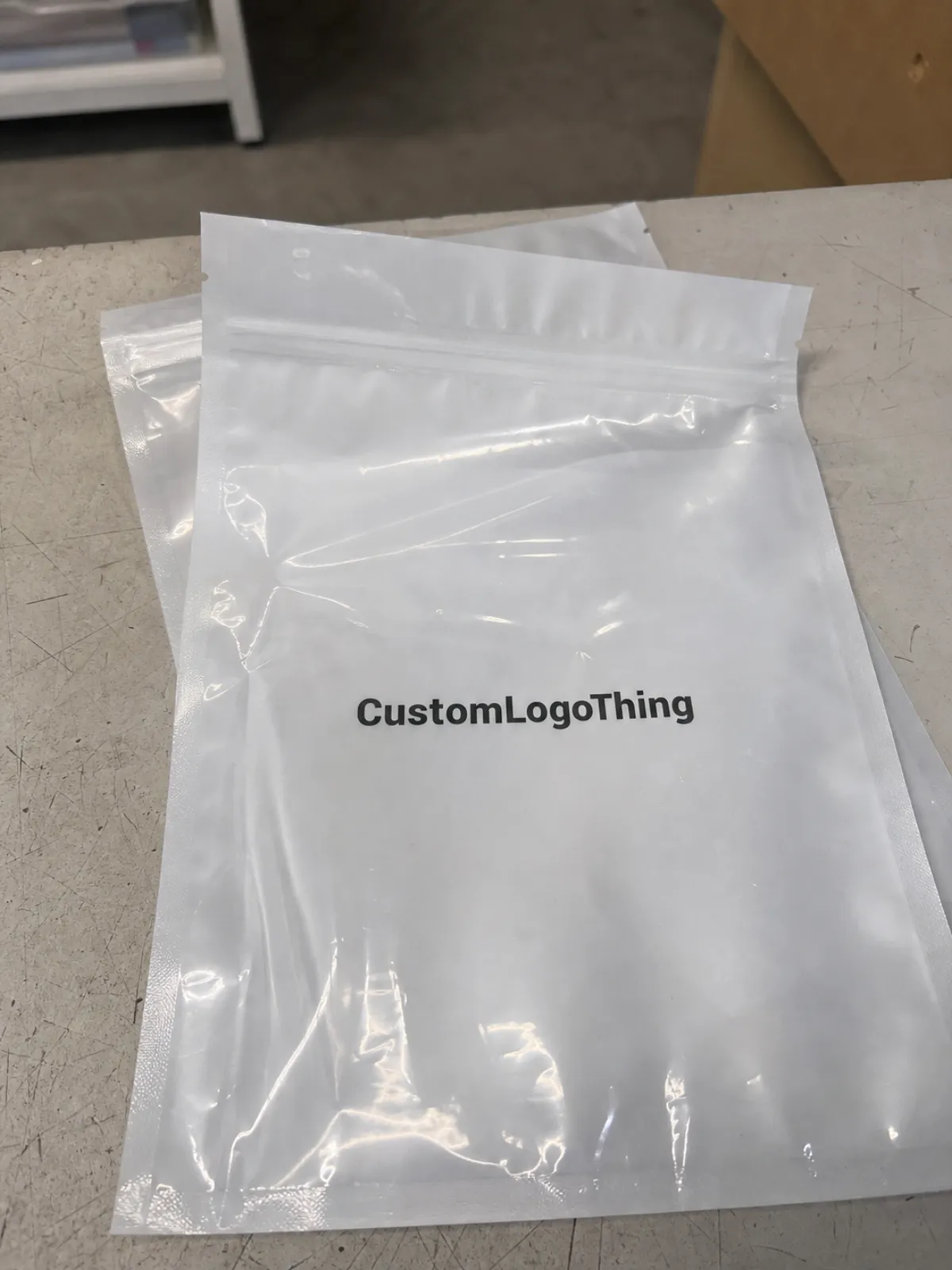
The real value of a supplement Printed Poly Mailers material sample guide is that it exposes what a render cannot. A mailer may look premium in a digital mockup and still scuff, tear, or seal poorly once it enters production. That is not only a design issue. It is a material issue, a printing issue, and a handling issue all at once.
Sample review reduces guesswork by showing how the film feels in hand, how the ink sits on the substrate, and how the closure behaves after the bag is filled and folded. Buyers can see whether the finish reads as clean and controlled or whether it feels too glossy, too flimsy, or too close to a generic shipping bag with a logo on it. That kind of judgment is hard to make from a quote sheet.
The practical questions are usually simple. Does the material support the product weight? Does the branding still look crisp after bends and handling? Does the closure hold without repeated resealing? Does the package feel aligned with the supplement line, or does it feel like a leftover shipping format dressed up with print? The answers can prevent a reprint, a complaint cycle, or a warehouse delay.
For moisture-sensitive capsules, powders, and sachets, the sample also gives clues about protection. Most supplement mailers do not need the barrier level of a true foil pouch, but they do need enough resistance to puncture, humidity, and rough transit to keep returns low. The sample will not replace formal testing, yet it will show whether the structure is directionally right before production starts.
Material, thickness, and barrier performance
Most custom poly mailers use LDPE or a co-extruded film. LDPE gives a soft hand and useful flexibility. Co-extruded structures can improve puncture resistance and let converters balance inner strength with outer print quality. The right choice depends on product weight, shipping path, and how much abuse the outer mailer is likely to absorb. A 2.5 mil film that works for light apparel is not automatically enough for a supplement pack that includes inserts or a secondary carton.
Thickness matters, but only as part of the larger structure. A 3 mil mailer can still fail if the seal line is weak or the film stretches too easily at the corners. A slightly thinner film can outperform a thicker one if the structure has better puncture resistance and a stronger closure. Buyers often focus on mil count because it is easy to compare. Better to ask how thickness interacts with dart impact, tensile strength, and seal integrity. If a supplier can reference a test method such as ASTM D882 for tensile properties or ASTM D1709 for impact resistance, that tells you more than a generic durability claim.
Opacity and barrier behavior matter more than many buyers expect. A mailer that shows too much interior shape can undermine the premium feel. One that lets dirt marks or moisture haze show through can look tired before it reaches the customer. Hot docks, long sortation routes, and rough carrier handling all increase the odds of scuffing or deformation. The better sample review mimics that reality: fill the bag with the actual product weight, add inserts, fold it the way the warehouse will fold it, then shake it, stack it, and inspect the seams.
Use a plain comparison framework during sampling:
| Material option | Typical feel | Common use case | Sample signal to watch | Indicative price impact |
|---|---|---|---|---|
| LDPE, 2.5-3 mil | Soft, flexible | Light to moderate contents | Edge stretch and seal consistency | Lowest baseline |
| Co-extruded film, 3-4 mil | Stiffer, more structured | Higher abrasion or weight | Puncture resistance and crease recovery | Usually 8%-18% higher |
| Recycled-content film | Varies by blend | Brands emphasizing recycled materials | Print clarity and seal behavior | Often a modest premium |
| Higher-opacity film | More opaque, less translucent | Premium branding and privacy | Ink contrast and hiding power | Depends on ink coverage |
Sample checks do not need lab equipment. Stretch the open end and watch for permanent deformation. Inspect the seal under bright light. Load the bag with a full pack and see whether corners press into the side walls. Compare how each sample handles an insert card, a compliance leaflet, and a shipping label. If the mailer tears where the label edge rubs, that is a warning sign, not a cosmetic quirk.
For brands that care about sustainability signaling, the material choice can also fit into a larger packaging story. Recycled-content films, FSC certified paper inserts, and fewer mixed-material components can all reduce complexity in the pack. None of that automatically makes the mailer better, and biodegradable packaging is not a universal fix. Still, buyers increasingly want a package that supports the brand story without sacrificing performance. Standards and guidance from groups such as ISTA and FSC can help frame those tradeoffs.
Print finish, branding, and shelf appeal
Print quality can make a mailer feel polished or cheap in a single glance. On dark films, fine linework and small type need enough contrast to stay readable after folding and handling. On lighter films, color consistency matters because weak ink density can make a logo look washed out. If the artwork includes QR codes, batch identifiers, or barcodes, test those at actual scan distance, not just on the proof file.
Print method affects the result more than many buyers expect. Flexographic printing is common for higher-volume work and can deliver good consistency, but it depends on correct plate setup and clean artwork. Digital print is useful for shorter runs or frequent artwork changes, though its economics and finish behavior differ. A sample should show whether the chosen method preserves logo edges, type sharpness, and background solids without banding. A buyer should not approve a mailer just because the logo is visible; the real question is whether the whole panel feels intentional.
Finish changes perception quickly. Matte usually reads as controlled and modern. Gloss makes the package brighter and more reflective. Soft-touch can signal a premium position, but it may show scuffs differently and add cost. If the mailer will move through a warehouse and then ship direct to consumer, test the finish after simulated handling. Some surfaces hide scratches well. Others show wear after a few folds and a label peel.
A practical brand review should check four things:
- Panel alignment: artwork should sit correctly even after the bag is folded or sealed.
- Front-to-back balance: the outside should carry the message without making the back panel feel random.
- Label compatibility: shipping labels should stick cleanly and not lift at the corners.
- Readability: small text and codes should remain legible under warehouse lighting.
There is a reason some supplement brands pair a printed poly mailer with kraft paper inserts or a rigid shipper sleeve. The outer mailer creates the first impression, but it is also the layer most likely to be handled by machines and rough sorting. If the brand wants a more elevated unboxing experience, the mailer has to work with the rest of the pack system rather than compete with it. Sample review turns the exercise into a system check, not just an art check.
Cost, pricing, MOQ, and quote drivers
Price is shaped by five core variables: film structure, print coverage, number of colors, finish, and volume. If a job needs plates, setup charges, or a special coating, those costs should be visible in the quote. A simple one-color mailer at 5,000 units can price very differently from a four-color full-bleed job with matte lamination and recycled-content film. Buyers who compare only unit price often miss the full landed cost.
For realistic planning, a custom printed supplement mailer might land around $0.18-$0.28 per unit at 5,000 pieces for a straightforward print spec, then move higher with heavier film, more coverage, or specialty finish. Smaller orders often pay more per piece because setup costs get spread across fewer units. That is why MOQ matters. A 10,000-piece run can sometimes cost less per unit than a 2,000-piece run, even if the buyer is carrying extra inventory. The right answer depends on turnover, storage space, and how often the design changes.
Sample pricing should be read carefully too. Some suppliers charge for physical samples and credit the fee back if the project moves into production. Others include sample production but bill freight separately. Ask for a line-by-line quote that shows sample cost, print setup, freight, optional proofs, and any customization charges. A low headline price does not mean much if the freight or revision fees are hidden elsewhere.
The table below is a quick way to compare quote drivers before approval:
| Quote driver | How it affects price | Typical buyer question | What to verify on the sample |
|---|---|---|---|
| Film thickness | Thicker usually costs more | Do we need extra puncture resistance? | Feel, stretch, and seal strength |
| Print coverage | More ink coverage usually raises cost | Do we need full bleed or partial print? | Color density and scuff visibility |
| Color count | More colors can add setup cost | Can we simplify the art? | Logo sharpness and brand consistency |
| Finish | Special coatings can raise unit cost | Is matte worth the premium? | Scratch resistance and appearance |
| MOQ | Higher volume often lowers unit cost | What is our true annual usage? | Inventory fit and reorder timing |
Pricing should be evaluated alongside the rest of the packaging system, not in isolation. If the brand already uses custom cartons, inserts, or a recycled fiber shipper elsewhere in the line, the mailer may not need to do all the visual work. A slightly simpler mailer can still support a premium unboxing path if the other packaging pieces are carrying part of the message. The smart buyer looks at total pack cost, not only the outer bag.
Process and turnaround from request to approved sample
The sample process usually follows a familiar chain: request specs, confirm artwork, review proof, produce the sample, ship it, then approve or revise. The steps sound simple. They rarely are. Missing dielines, unclear Pantone targets, and late compliance edits are common reasons timelines slip. If the bag includes regulated claims, ingredient statements, or lot coding, those details should be locked before production starts.
Digital proofing is not the same thing as physical sample production. A proof might return in a day or two, while a printed sample can take a week or more depending on the supplier's schedule and the complexity of the job. Add freight and the total stretches further. For planning purposes, many buyers should expect 12-15 business days from proof approval for a physical sample, though that can move faster or slower based on material availability, setup work, and transit distance. Rush samples are possible, but they still need careful review.
The most efficient sequence usually looks like this:
- Send the intended size, film target, print method, and quantity estimate.
- Confirm artwork files and call out any compliance text that must stay fixed.
- Approve the digital proof and the color direction.
- Review the physical sample under real packing conditions.
- Request revisions only if the sample fails a functional or visual test.
- Lock the final spec sheet before mass production.
That last step matters more than many buyers think. Without a final spec sheet, the approved sample can drift away from the production run. One batch may match the sample, and the next may not. Good sourcing teams keep the approved sample, the final artwork, and the signed spec together so everyone is working from the same reference.
Packaging teams that manage multiple formats should think of this as a system decision, not a mailer-only decision. The same brand may be balancing custom poly mailers, inserts, cartons, and even a recycled fiber shipper elsewhere in the line. The sample review should make sure the outer mailer matches the visual and functional standard of the broader package family.
Common mistakes that make sample reviews misleading
The most common mistake is comparing unlike samples and treating the result as a fair test. A 2.5 mil bag with one closure style is not equivalent to a 4 mil bag with a different seal, even if the printed art looks similar. Thickness, closure, and size all change the result. If a buyer changes three variables at once, the feedback becomes muddy.
Another mistake is judging appearance alone. A sample can look excellent under office light and still fail after packing with actual supplements, inserts, and labels. Put the real product in it. Then ship it through the same route the customer will experience if possible. If the brand expects the package to sit near heat or humidity, simulate that too. A simple humidity check can reveal curling, weak adhesive response, or label lift that was invisible on the desk.
Rushed approvals create another problem. The sample may seem fine because the team is trying to meet a launch date, but the first production run exposes a seal issue or a readability problem. That risk increases when the design uses heavy ink coverage, tight barcode placement, or a finish that hides defects only part of the time. Supplement packaging is unforgiving in that way. The outer wrap signals cleanliness and control; weak execution shows fast.
Finally, some teams forget to test the package after fold, stack, and handling. A mailer that holds shape in a photo can crease badly once folded for packing. A closure that looks strong may fail after one extra reopen. A sample review should imitate the actual motion of the warehouse, because that is where the package earns or loses trust.
How to score samples and lock in the final spec
A simple scorecard keeps the decision grounded. Rate each sample on feel, seal strength, print clarity, moisture protection, and landed cost. A five-point scale is enough. The goal is not to turn packaging into fake math. The goal is to make sure the team can explain why one sample won without drifting into vague praise like "this one feels nicer." Nice is not a spec.
Once the top sample is selected, keep three items together: the approved physical sample, the signed artwork file, and the final spec sheet. That bundle becomes the production reference. If the run later ships with a different film feel, a duller print, or a weaker seal, the buyer has a clear standard to point to. That is much easier than trying to reconstruct decisions from memory.
Strong teams also write down the tradeoffs they accepted. Maybe the chosen sample had slightly less opacity but better pricing. Maybe the finish was not as soft-touch as the team first wanted, but it held up better under scuff testing. Maybe recycled-content film raised cost, but the brand wanted that signal and accepted the premium. Document the reason, not just the choice. The reason matters on the next reorder.
If one issue still feels unresolved, ask for a revised sample rather than guessing. A small correction now is cheaper than reworking production later. That is the real purpose of a supplement Printed Poly Mailers material sample guide: test, compare, document, then order. Nothing flashy. Just fewer surprises.
For supplement brands, the finish line is simple. The mailer should protect the contents, carry the logo cleanly, and ship at the right cost. A disciplined sample process turns a vague packaging choice into a repeatable production decision, and that usually shows up later in fewer damaged shipments, fewer reprints, and a cleaner first impression from the first order onward.
What should a supplement printed poly mailers material sample guide include?
It should cover film type, thickness, print method, seal strength, finish, pricing, and turnaround. It should also explain how to inspect samples using your actual supplement products and shipping labels. A useful guide ends with a clear approval checklist so the final order matches the tested sample.
How do I compare supplement printed poly mailer samples fairly?
Compare the same size, same thickness, same closure, and same print coverage before drawing conclusions. Test each sample with the same product weight, inserts, and packing routine. A scorecard helps appearance, durability, and cost get judged against the same standard.
What drives the price of supplement printed poly mailers samples?
Price usually changes with material structure, color count, finish, order volume, and setup requirements. Shipping, sample fees, and rush production can also move the total higher. A lower unit cost often appears when MOQ is higher, so compare the full quote instead of one line item.
How long does the sample process usually take?
Digital proofing is often faster than physical sample production, so separate those steps when planning. Artwork changes, custom colors, and freight distance can add time. Ask for a realistic timeline that includes proof approval, sample making, and delivery.
What should I test before approving a final poly mailer order?
Test seal strength, puncture resistance, print readability, and how the mailer holds up after packing. Check whether the finish hides scuffs and whether labels stick cleanly. If the supplement is sensitive to moisture or heat, simulate storage and transit conditions before approving.


