Chocolate Printed Poly Mailers Unit Cost Review & Quote
If you are comparing a Chocolate Printed Poly Mailers Unit Cost Review against plain stock mailers, do not stop at the bag price. A printed mailer can cut packing time, reduce the need for extra carton fill, and still deliver a more polished first impression than an unbranded pouch, which is why so many bulk buyers judge it by landed cost rather than the factory quote alone.
That matters because the real savings often show up on the packing line. A mailer that is already branded, sized correctly, and easy to seal can move orders faster, lower labor per shipment, and avoid the stop-and-start rhythm that comes with labels, inserts, or oversized bags. For apparel, subscription shipments, and food-adjacent retail, the dark chocolate color also hides scuffs, tape shadows, and handling marks better than a lighter film.
For buyers who want a clear commercial starting point, explore Custom Poly Mailers alongside the broader range of Custom Packaging Products. The best choice is usually the one that balances presentation, durability, and throughput instead of chasing the lowest printed price on paper.
Buyer reality: a mailer that saves 3 to 5 seconds per pack-out can be more valuable than a slightly cheaper unprinted bag, especially once monthly volume climbs.
Chocolate tones also work well for darker logo systems, neutral luxury branding, and labels that need a warm, grounded background. They do not shout for attention. They sit quietly, and that can be exactly what a retail brand needs when the product itself should stay in front.
Film, Ink, and Finish Choices That Change the Brand Read
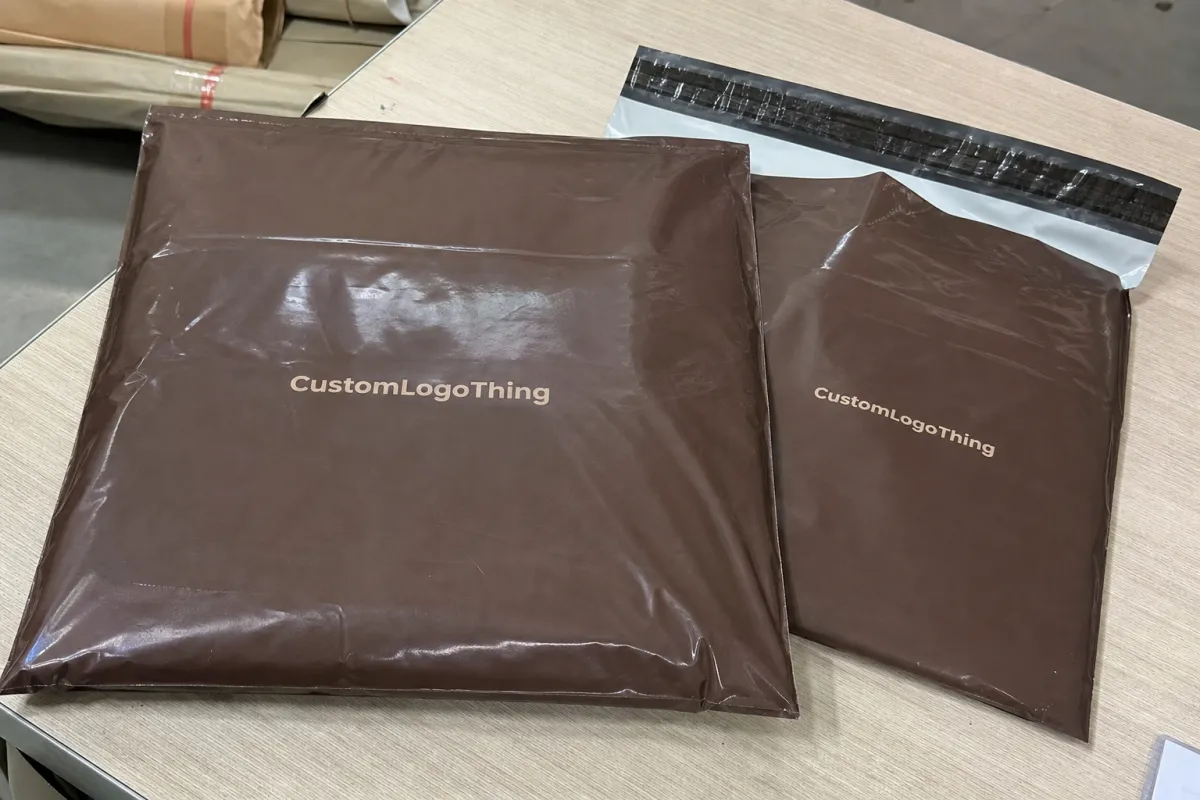
The base film decides a lot more than people expect. Virgin LDPE usually gives the cleanest feel, the most consistent seal behavior, and the best print holdout, which matters if your logo uses fine edges or small type. Recycled-content blends can lower material cost and support sustainability goals, but the surface sometimes shows a little more variation, so buyers should ask for a sample before they approve a full run. Coextruded structures are common for mailers because they pair puncture resistance with good seal integrity across the length of the bag.
Ink system and print method shape the final look just as much as the film. Flexographic printing is a familiar choice for most custom mailers because it handles repeat production well and keeps color fairly stable from run to run. Gravure-style workflows can deliver very rich coverage and crisp solids, though the setup can carry more tooling fees, which is why they are usually discussed with larger orders. On a chocolate background, strong contrast matters more than many buyers expect, especially if the artwork includes thin lines or reversed text.
Finish changes the brand read too. A matte surface feels understated and often photographs well because it reduces glare. Gloss can sharpen the color contrast and make artwork feel more vivid, while soft-touch finishes, where available, bring a smoother hand feel that fits premium apparel or beauty shipments. The key is to match the finish to the product positioning, not to assume one treatment is always better.
There are also practical artwork limits that should be discussed before proofing. Large solid areas can print beautifully, but they also expose minor shade shifts more clearly. Reverse-print readability should be checked on the actual chocolate film, not just on a white proof file. Edge bleed, overprint tolerance, and the number of colors all affect appearance and cost. For a deeper reference on packaging terminology and material selection, the resources at packaging.org are useful when a buyer wants a common technical language before collecting quotes.
Size, Gauge, Closure, and Load Specs Buyers Should Lock In
Start with the product, not the carton. That is the most common mistake in mailer ordering. The bag should fit the shipped item with enough tolerance for easy insertion, but not so much extra space that you are paying for unused film and higher freight. For folded apparel, a slim accessory, or lightweight subscription goods, the difference between a clean fit and an oversized fit can change both packing speed and shipping cost.
Gauge, or micron thickness, is the next decision that affects performance. A 2.5 to 3 mil mailer is often enough for soft goods, tees, and non-sharp items. Move into the 3 to 4 mil range if the contents have corners, zippers, hardware, or higher puncture risk. Thicker film adds protection, but it also adds weight, so the right answer depends on the item, the shipping lane, and how much abuse the parcel is likely to see in transit.
Closure style matters just as much. A self-seal adhesive strip keeps packing simple and fast. A tamper-evident strip is better if the buyer wants obvious opening evidence, and twin-seal layouts can support returns or reuse in some programs. None of these options is universally right. They solve different operational problems.
Quick ordering checklist
- Confirm shipped product dimensions, not master carton size.
- Set the film thickness based on puncture risk and shipping distance.
- Decide whether you need a tear strip, a return seal, or both.
- Reserve print-safe zones so the logo does not run into the seal or flap.
- Ask for gusset detail if the product is bulky or uneven.
For load testing, buyers in e-commerce and retail distribution often ask suppliers how the bag behaves under drop and vibration conditions aligned with ISTA procedures. That does not mean every mailer needs formal certification, but it does mean the supplier should understand how the package will travel once it leaves the dock. ASTM-style material checks, including film and seal performance, are also useful reference points during approval.
Chocolate Printed Poly Mailers Unit Cost Review: Pricing and MOQ
This is the section most buyers care about, and for good reason. The chocolate Printed Poly Mailers unit cost review usually comes down to a handful of drivers: resin cost, bag size, film thickness, print coverage, number of colors, adhesive style, and whether the order needs custom cartons or special packing. If one quote looks far cheaper than the others, there is usually a reason buried in one of those variables.
MOQ is tied to setup economics. The factory has to prepare artwork, print plates or cylinders, register the colors, and run test material before production is stable. Those setup charges do not disappear just because the order is smaller. They get spread across fewer bags, which is why a low MOQ can still produce a higher cost per piece. That is not a trick. It is simple math.
Buyers should compare quotes on equal terms. Same size. Same gauge. Same print coverage. Same finish. Same freight terms. Same approval standard. If one vendor is quoting a 2.5 mil mailer and another is quoting 3 mil, or if one includes shipping and the other does not, the comparison is not clean enough to support a real purchase decision.
| Run Size | Typical Cost Per Piece | What Usually Drives the Price | Best Fit |
|---|---|---|---|
| 5,000 pieces | $0.16-$0.32 | Setup charges, plate work, smaller spread of fixed costs | Testing a new design or SKU |
| 10,000 pieces | $0.11-$0.22 | Better material efficiency and lower setup impact per bag | Early-stage bulk pricing |
| 25,000 pieces | $0.08-$0.16 | Higher run efficiency, less conversion waste per unit | Established programs with repeat demand |
The exact number depends on the artwork and spec, but the pricing pattern is stable: larger runs usually improve bulk pricing, while larger print areas, specialty finishes, and extra color changes push the quote upward. If the supplier mentions tooling fees, ask what they cover. Some tooling is one-time. Some setup charges recur if the artwork changes or if the print method changes.
A practical rule helps here: the best quote is not always the cheapest headline number. It is the quote that balances unit cost, usable quality, and realistic lead time. A bag that arrives late or needs rework is expensive, even if the factory price looked attractive.
Proofing, Production Steps, and Lead Time After Approval
Production usually follows a clear sequence. The buyer sends artwork and specs. The supplier prepares a proof. Plates or cylinders are made if the design requires them. The factory runs the print job, checks color and registration, cures or dries the ink, applies finishing, and then packs the finished mailers for shipment. None of that is exotic, but each step can add time if the file is incomplete or the approvals are slow.
From a packaging buyer's point of view, the biggest schedule risks are usually predictable. Artwork corrections eat time. Color matching can take another round if the brand wants a very specific Pantone tone. If the film gauge is not in stock, the factory may need to source material before the run starts. A late change to dimensions after proof approval is especially expensive because it can force the whole setup to be redone.
For a first custom order, a flexible lead time is often safer than a hard promise. Many factories can ship in roughly 12 to 18 business days after proof approval if the material is ready and the artwork is clean, while repeat runs may be a little faster. That said, the schedule depends on the factory load, the number of print colors, and the complexity of the finish. Buyers should treat any lead-time claim as conditional until the proof is signed.
Three actions keep the schedule moving:
- Approve proofs quickly and consolidate feedback into one response.
- Send Pantone targets, logo files, and dimensions in one complete package.
- Assign one decision-maker so the factory is not waiting on internal consensus.
If the mailers are tied to a launch or a seasonal program, build in buffer time for transit and receiving. Even a well-run order can face a delay if freight capacity shifts or if the destination requires extra receiving checks. That is normal, not a sign that the job is failing.
What a Reliable Packaging Supplier Checks Before Reordering at Scale
Repeatability matters more than most people admit. A strong supplier keeps the approved spec on file, protects color records, and knows which plate, cylinder, or print settings were used on the last accepted run. That lowers the chance that a reorder arrives with a darker chocolate shade, a shifted logo, or a size variance that forces the buyer to rework pack-out.
Quality control should include more than a quick visual check. Seal strength needs to be consistent, especially on self-seal closures that are opened and closed under load. Print registration should hold across the full run, not only on the first few sheets or bags. Bag width, film clarity, slit quality, and shipping carton count all deserve inspection when the goods arrive.
A reliable supplier also understands operational realities. Forecast support matters when a buyer is trying to phase in a new SKU without overbuying inventory. Split shipments can help when warehouse space is tight. Controlled roll-outs are useful when the brand wants to test one product line before placing a full multi-SKU order. Those are practical services, not marketing language.
The point is simple: a good vendor reduces surprises. That is the real value. Not hype. Not vague claims. Just fewer errors, steadier quality, and a reorder that behaves like the last one.
For buyers who care about material sourcing claims or recycled-content documentation, it helps to keep sustainability language precise and supportable. If a supplier makes environmental claims, ask what the basis is, what the substrate contains, and what the documents actually verify. That kind of discipline protects both the brand and the buyer.
How to Gather Specs, Request Samples, and Place the First Order
The cleanest way to request a quote is to send one complete spec sheet. Include the product dimensions, target quantity, logo files, preferred film thickness, closure type, print colors, and delivery location. If you already know the artwork style, mention whether the design uses full coverage, a small logo mark, or a large reverse-print panel. That helps the supplier price the job correctly the first time.
Before approving the full run, ask for a pre-production proof or a sample review. A sample is the fastest way to check whether the chocolate background reads the way you expect, whether the logo feels sharp enough, and whether the finish suits the product line. It can also confirm seal behavior and size fit, which are easier to judge in hand than on a screen.
For budgeting, compare two numbers every time:
- Per-bag price: the factory unit price at the quoted quantity.
- True landed cost: product cost, freight, waste allowance, and packing labor combined.
That second figure is the one that matters to operations. A slightly higher unit price can still win if the bag packs faster, ships more efficiently, and avoids rework. The buyer who only chases the cheapest bag usually pays for it somewhere else.
Need a faster path? Start with the size, then the print method, then the MOQ, then the lead time. That order keeps the conversation practical and stops the quote from drifting into vague branding talk. A good supplier will answer in the same language: measurable specs, realistic timelines, and clear cost breakpoints.
If you are ready to request a quote, send the files, confirm the quantity break, and ask for a sample before release. That is the simplest way to turn a Chocolate Printed Poly Mailers unit cost review into a purchasing decision that supports margin, presentation, and day-to-day packing speed.
How do you estimate chocolate printed poly mailers unit cost?
Start with bag size, film thickness, and print coverage because those three inputs move the number fastest. Then add setup charges for artwork, plates, cylinders, or color changes, and divide the fixed cost across the planned quantity to see the true per-bag impact. A clean quote should also separate product cost, freight, and any packing extras.
What MOQ is normal for custom chocolate poly mailers?
MOQ usually depends on the print method and setup expense, so a simple one-color run can be lower than a full-coverage multicolor job. Smaller orders are possible, but the unit cost often rises because the fixed setup work is spread across fewer bags. If you need multiple sizes, ask whether artwork or production timing can be shared.
What should I ask for in a chocolate printed mailer quote?
Request the exact size, gauge, closure type, print method, number of colors, and quantity break points. Ask for lead time, proofing steps, and whether the quote includes freight or only factory pricing. If you plan to reorder, ask the supplier to keep the spec on file for consistent future production.
Can I get samples before approving the full order?
Yes, and it is the best way to verify the chocolate tone, logo clarity, and material feel before you commit. A sample can also help confirm seal performance, size fit, and whether the finish matches your brand expectations. For exact print accuracy, ask whether the sample is a stock sample, an unprinted reference, or a pre-production proof.
How long does production usually take after artwork approval?
Lead time depends on whether the artwork is finalized, how many colors are printed, and whether the factory has the needed film in stock. First orders usually take longer than repeat runs because proofing and setup have to be completed before production begins. Fast approvals and clear file specs help keep the schedule moving without avoidable delays.


