Buyer Fit Snapshot
| Best fit | Sustainable Shipping Cartons With Logo projects where brand print, material claims, artwork control, MOQ, and repeat-order consistency need to be specified before quoting. |
|---|---|
| Quote inputs | Share finished size, material target, print colors, finish, packing count, annual reorder estimate, ship-to region, and any compliance wording. |
| Proofing check | Approve dieline scale, logo placement, barcode or warning zones, color tolerance, closure strength, and carton packing before bulk production. |
| Main risk | Vague material claims, crowded artwork, missing packing details, or unclear freight terms can make a low unit price expensive after revisions. |
Fast answer: Sustainable Shipping Cartons With Logo: What Matters should be specified like a repeatable production item. The safest quote records material, print method, finish, artwork proof, packing count, and reorder notes in one written spec.
Production checks before approval
Compare the actual filled-product size with the drawing, then confirm tolerance on folds, seals, hang holes, label areas, and retail display edges. Reserve space for logos, QR codes, warning copy, and material claims before decorative graphics fill the panel.
Quote comparison points
Review material grade, print process, finish, sampling route, tooling charges, carton quantity, and freight assumptions side by side. A quote is only useful when the supplier can repeat the same color, closure quality, and packing count on the next order.
Sustainable Shipping Cartons with logo only make sense when they do three jobs at once: protect the product, keep freight under control, and still look intentional. That sounds obvious, but a lot of packaging gets judged on the wrong thing. A plain brown box is not automatically the greener choice. A printed carton is not automatically wasteful. The real answer lives in the details: board grade, box size, print coverage, and how much empty space you pay to move around.
I have seen teams spend two weeks arguing over logo placement and about five minutes checking the box dimensions. Guess which part caused the damage claim. Packaging is funny like that. The flashy part gets attention, and the structural part quietly decides whether the order survives the trip. If you want sustainable shipping cartons with logo to earn their keep, they have to work in the warehouse, on the carrier route, and in the customer’s hands.
What Sustainable Shipping Cartons With Logo Really Mean
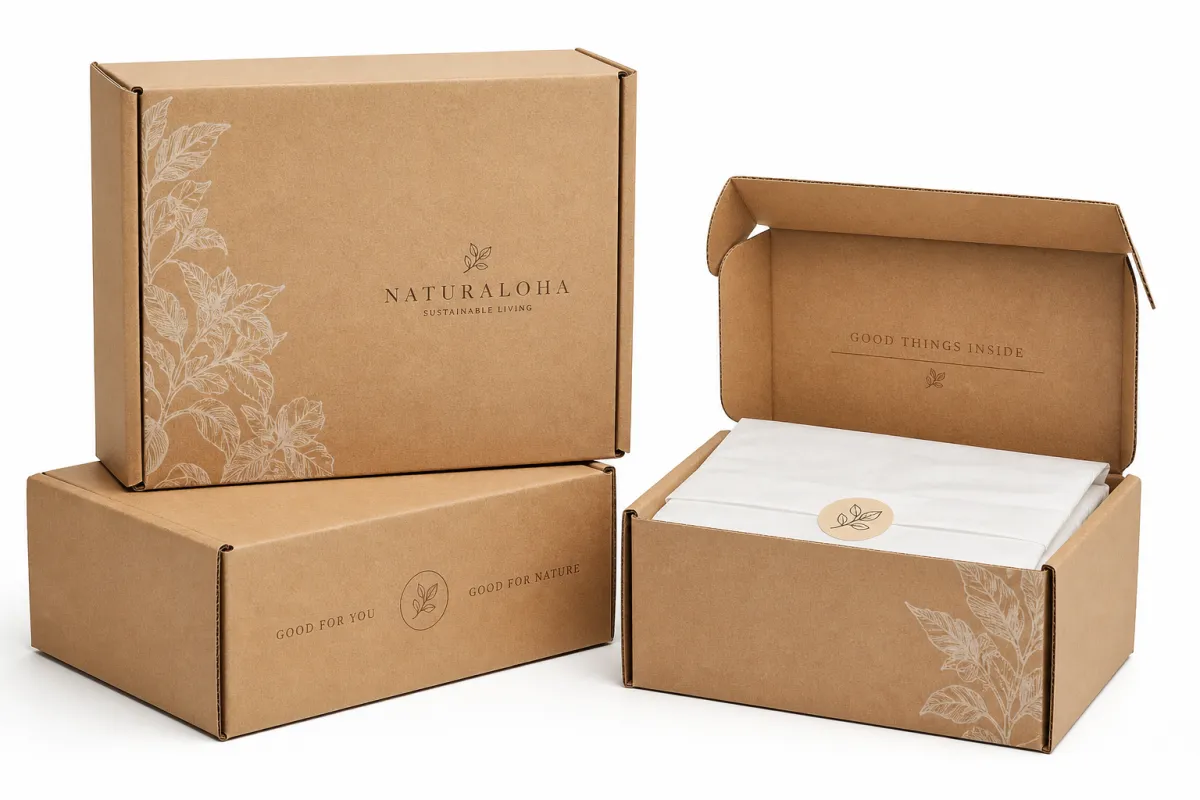
“Eco-friendly box” sounds nice. It also sounds vague, which is usually a warning sign. Buyers should be more specific about sustainable shipping cartons with logo. In practical terms, the phrase usually means corrugated cartons made from recycled content or responsibly sourced fiber, printed with a brand mark, and used for ecommerce shipping, retail replenishment, or direct-to-consumer fulfillment. The carton still has to handle the boring stuff: stacking, carrier abuse, and product protection without a mountain of filler.
The logo is the part people notice first, but the logo is not the point. The value comes from using sustainable shipping cartons with logo in a way that cuts waste elsewhere. A right-sized carton lowers dimensional weight. A cleaner structure reduces void fill. A simple one-color mark gives the customer a brand cue without turning the package into a billboard. If the box still lands in curbside recycling in your target market, that is a better outcome than a fancy coating that looks premium for ten seconds and then becomes a nuisance.
Brands choose sustainable shipping cartons with logo because packaging does more than hold a product. It signals how the operation runs. It also affects damage rates, return rates, and the amount of shipping materials used across the chain. Too large, and the carrier bills you for dead air. Too weak, and the product arrives damaged, which means replacement cost, more freight, and more waste. That is not a sustainability win. That is just expensive clutter with a nice logo on top.
Plain brown is not a moral badge. A well-sized, recycled corrugated carton with a restrained logo often beats an oversized unprinted box that ships air and needs three layers of filler.
That is why the smartest sustainable shipping cartons with logo are usually plain in the best way: corrugated board, minimal ink, efficient fit, and a logo placed where it is visible after packing tape, not buried under a shipping label. For many brands, this also keeps the carton aligned with the rest of the packaging system, including custom shipping boxes, inserts, and related shipping materials. If you are comparing formats, Custom Packaging Products can help you think beyond a one-off box and toward a repeatable system.
Sustainability is not one feature. It is a stack of choices: materials, process, size, transport efficiency, and end-of-life reality. Buyers who only chase recycled content often miss the bigger savings. Buyers who only stare at print aesthetics forget package protection. The best sustainable shipping cartons with logo usually land in the middle, with a boring-but-effective structure and a brand treatment that does its job without shouting.
And yes, boring is fine. Boring is often what ships well.
How Sustainable Shipping Cartons With Logo Are Made
Most sustainable shipping cartons with logo begin with corrugated board, and the board choice matters more than people like to admit. Recycled-content corrugated is the default for a lot of ecommerce packaging because it balances cost, strength, and recyclability. Virgin kraft board still earns a place when the product is heavy, the stack load is high, or the carton needs extra burst resistance. If procurement needs a formal sourcing claim, FSC- or PEFC-certified board gives them a paper trail that is easy to explain.
Print method changes both the look and the footprint of sustainable shipping cartons with logo. Flexographic printing is common for larger runs because the setup cost gets spread across more units and the process stays efficient. Digital printing works better for short runs, fast changes, and brands that do not want to wait around for plate setup. In most cases, one or two colors are enough. A restrained mark usually looks cleaner than a box trying to act like a cereal aisle.
Structure is where a lot of brands win or lose. A carton that is right-sized for the product reduces void fill, lowers freight cube, and cuts the chance of product movement in transit. That can matter more than a minor change in board content. If you are shipping through a third-party warehouse or building a high-volume order fulfillment process, the carton has to pack quickly, stack well, and survive whatever mood the carrier is in. That is package protection, not decoration.
From the factory side, the process is pretty straightforward. Paper fiber gets turned into liner and medium, the board is formed into sheets, then die-cut, scored, printed, and folded into the final carton style. The moment that usually trips people up is not production. It is approval. A carton can look great on a screen and still fail once the tape line, label placement, and folding direction show up in the real world. That is why I always push for a sample that has been handled by actual people, not just admired by a brand team.
| Board / Print Option | Typical Use | Strength and Recyclability | Practical Tradeoff |
|---|---|---|---|
| Recycled-content corrugated with one-color logo | Most ecommerce shipping and transit packaging | Good balance of strength and curbside recyclability | Usually the cleanest mix of cost, branding, and sustainability |
| Virgin kraft corrugated with minimal print | Heavier products, higher stack loads | Stronger fiber, dependable performance | Costs more and is not always necessary |
| FSC-certified board with digital print | Brands needing documented sourcing claims | Solid environmental story if the rest of the package is sensible | Certification helps only if the design is still efficient |
| Heavy laminate or coated finish | Specialty presentations or moisture-sensitive cases | Can protect graphics, but may complicate recycling | Use it only when it solves a real problem, not because it looks polished |
Finishes deserve a skeptical eye. Heavy lamination, plastic coatings, metallic effects, and mixed-material add-ons can improve appearance, but they can also make recycling less straightforward. That does not mean “never.” It means “prove why.” Most sustainable shipping cartons with logo do not need extra coatings. If the box is going through dry storage and standard parcel handling, the simpler version is usually the better version. For brands shipping flatter items, a different format such as Custom Poly Mailers may be the better tool for the job, but only if the product truly suits a mailer instead of a carton.
One standard worth keeping on the table is ISTA testing. The ISTA framework is not packaging theater. It helps you think about vibration, drop, compression, and actual transit stress instead of assuming the carton will behave out of gratitude for your brand. That is a lovely fantasy. It is also not how carriers work.
Here is a simple example: a well-fitted recycled carton with a one-color logo can outperform a fancier box that ships air, needs more filler, and costs more in dimensional weight. That is the part many teams miss. The carton is not just a printed object. It is part of the logistics system. Sustainable shipping cartons with logo should make that system better, not prettier at the expense of everything else.
Cost, Pricing, and What Changes the Quote
Pricing for sustainable shipping cartons with logo depends on a few predictable variables, and none of them are mysterious if you have bought packaging before. Board grade comes first. Box size comes second. Print coverage, number of colors, order volume, and whether you need custom tooling all change the quote. A standard recycled carton with a simple logo is usually much closer to stock-box pricing than new buyers expect. Add a special insert, unusual dimensions, or full-coverage graphics, and the number climbs fast.
For practical buying, think in ranges instead of fantasy bargains. Small to medium custom cartons with one-color branding can often sit in a modest band at mid-volume, while larger or heavily printed versions can jump meaningfully once the size grows or the order drops below efficient production quantities. At 5,000 units, a simplified carton often prices better than a 500-unit run because setup is spread over more boxes. If a supplier gives you a suspiciously low unit price, check whether the quote leaves out plates, tooling, freight, or samples. Packaging quotes love hiding in the margins like that.
Here is the annoying truth: the cheapest unit price is not always the cheapest package. In many cases, sustainable shipping cartons with logo save money through better fit, less void fill, and lower damage rates. A box that cuts 20 percent of filler and avoids one carrier surcharge can beat a slightly cheaper board grade pretty quickly. That is especially true in ecommerce shipping, where dimensional weight punishes oversized cartons and every extra inch can change the bill.
There is a second layer to pricing that buyers sometimes miss: labor. A carton that folds cleanly, stacks neatly, and packs fast can save money every single day. A box with a fussy closure or a weird insert can slow the line, and that cost never shows up on the first quote. It just quietly shows up in payroll, overtime, and somebody in the warehouse muttering under their breath.
- Board grade: stronger fiber and better crush resistance usually cost more.
- Print method: digital is often friendlier for short runs; flexo rewards volume.
- Logo coverage: one or two colors stay leaner than full-panel art.
- Order size: more units lower the per-box cost, but raise storage needs.
- Tooling and samples: custom dies, plates, and prototype rounds add setup spend.
There are hidden costs too, and they do not show up in a neat quote line. Sample rounds, freight, warehouse storage, extra tape, and reorders caused by underspec’d cartons can add up fast. If the carton crushes in transit, the replacement bill is usually worse than spending a little more on a stronger board from the start. That is why sustainable shipping cartons with logo should be priced against failure risk, not just unit price. Nobody enjoys buying the same box twice because the first one folded like a lawn chair.
For brands with multiple package types, compare the full shipping system rather than one SKU in isolation. A carton may cost more than a mailer, but it may also protect fragile goods better and reduce returns. A higher-spec carton may be a better fit than a generic shipping box if the product needs serious protection. If you are building out a full packaging stack, Custom Shipping Boxes can give you another benchmark for board grades, sizing, and print options before you commit.
My rule of thumb is simple: if a design change saves freight cube, filler, and damage, it is usually worth more than a tiny board downgrade. If the design change only makes the carton look prettier, I would question it. That is not negativity. That is paying attention to margins.
Step-by-Step: Ordering Sustainable Shipping Cartons With Logo
The cleanest way to order sustainable shipping cartons with logo is to treat the project like a packaging spec, not a design mood board. Start with the product. Measure the item carefully. Add only the protection space you need. Decide whether the carton has to survive parcel handling, pallet stacking, or both. Then write down the compression and drop expectations before you argue about artwork. That order matters.
Next, build the dieline. The dieline tells you internal dimensions, fold style, closure method, and whether you need inserts, partitions, or tear-strip features. If the product shifts during transit, the carton design is incomplete. If the box looks great but requires three extra motions on the packing line, the warehouse will hate you by Friday. Good sustainable shipping cartons with logo should be efficient for the person packing the order, not just the person approving the PDF.
I usually tell teams to think through the package from the inside out. Product first. Cushioning second. Carton third. Branding last. That might sound backwards to a marketing team, but it keeps the order honest. Once you know what the product needs, the logo can be placed where it makes sense instead of where somebody in a conference room thinks it will look cute.
- Define the product: weight, dimensions, fragility, and any temperature or moisture concerns.
- Set performance targets: drop, crush, vibration, and stacking needs.
- Choose board and size: match the carton to transit packaging reality.
- Choose branding: logo size, placement, and ink count.
- Request proof: verify fit, color, and print clarity before production.
- Approve the spec: confirm freight terms, lead time, and any compliance text.
Branding is the part many teams overcomplicate. A sharp logo placement on the top flap or the panel customers actually see after opening often does more than a full-wrap graphic. If the logo gets covered by shipping labels, tape, or a return slip, you are paying for decoration nobody notices. That is an expensive habit. The best sustainable shipping cartons with logo usually use a clear mark, one strong color, and enough white space to make the carton look intentional.
Before you approve anything, ask for prototypes or samples. Check fit with the real product, not a theoretical sample block. Check stacking strength if the carton goes onto pallets. Check how the print looks once it is folded and taped. And check whether the carton still feels recyclable after the customer tears it open. Sustainable packaging claims do not survive much scrutiny if the box falls apart in the hands of the end user.
If you are comparing multiple package systems, this is also the right moment to separate what belongs in a carton from what belongs in another format. A bottle, for example, may need inserts and a corrugated shipper. A flat apparel item may not. Some product families will do better with a mailer. The point is not to force every SKU into the same box. The point is to keep the whole system efficient, from shipping materials to final disposal.
Process, Timeline, and What Slows Orders Down
The path for sustainable shipping cartons with logo usually follows the same sequence: brief, quote, dieline, artwork setup, proof, sample, production, packing, and shipping. That looks tidy on paper. In practice, a missing dimension or a late design change can add days or weeks. A bad proof approval can do the same. The process is straightforward; the interruptions are what get expensive.
Timing varies by method and volume. Digital short runs can move quickly after artwork is approved and the dieline is locked. Flexo production, larger orders, and custom tooling usually take longer because setup is heavier and sample approval matters more. If the carton uses a specialty board or a nonstandard size, allow extra time for material sourcing. Smart buyers do not ask, “How fast can you make it?” They ask, “What needs to be true for this to stay on schedule?” That is a better question.
Here are the usual slowdown points for sustainable shipping cartons with logo:
- Incomplete product measurements or missing fit allowances
- Artwork changes after proofing
- Waiting on internal brand approval loops
- Switching board specs after the quote is already issued
- Late requests for extra compliance text or recycling language
Save time by locking the dimensions first. Reuse an existing logo file whenever possible. Keep the first version simple instead of trying to solve every future scenario on day one. Teams often make the box more complicated because they want one carton to fit four product lines, two retail campaigns, and a seasonal promotion. That is how lead times stretch and costs drift. If the order is urgent, simplicity is your friend. Nobody wants to explain to operations why a “quick” packaging change turned into a three-week delay.
Planning ahead matters even more if your orders follow seasonal peaks. Material availability can tighten. Production queues can lengthen. Freight can get strange. If you know your ecommerce shipping volume rises in certain months, order earlier than feels necessary. It is boring advice, but boring advice is what keeps sustainable shipping cartons with logo from becoming a last-minute scramble.
For brands comparing suppliers, ask for the exact lead-time split: proof approval, sample turnaround, production time, and transit time. That tells you where a delay actually lives. It also helps you compare suppliers honestly instead of pretending every quote means the same thing. A seven-day quote with limited proofing is not the same as a twelve-day quote with a better sample process. Pretending otherwise is how people end up frustrated.
Common Mistakes With Sustainable Shipping Cartons With Logo
The fastest way to ruin sustainable shipping cartons with logo is to make them too big. Oversized cartons increase void fill, raise dimensional weight, and make the package more vulnerable to crushing and internal movement. A box that is “safe” because it is huge is usually not safe at all. It just burns more shipping materials to cover a design mistake.
Another common mistake is overprinting. Full-panel graphics, dense ink coverage, and heavy coatings can make a carton look premium, but they also add cost and can complicate recycling. That does not mean a branded box should be boring. It means the branding should solve a communication problem, not create a processing problem. If you need color, keep it targeted. If you need a finish, make sure that finish is doing actual work.
Weak sustainability claims are a bigger problem than many teams realize. Buyers should ask what the board is made from, whether it is certified, and whether the print system matches the claim. A carton is not magically sustainable because someone wrote “eco” on the spec sheet. Real credibility comes from verified fiber sourcing, sensible design, and a package that still performs in transit. If the carton fails in the field, the sustainability story takes a hit whether you like it or not.
Another issue is pretending package protection and sustainability are separate goals. They are not. A fragile product in a weak carton creates breakage, replacement shipments, and angry customers. That is waste. The better move is to balance board grade, structure, and print so the carton survives the route. That matters even more if the carton is part of a larger system with inserts, labels, or secondary shipping boxes.
The most expensive carton is the one that looks responsible on paper and then fails in transit. That failure shows up as returns, complaints, and more packaging going out the door.
Finally, do not ignore the customer’s unboxing path. A logo that disappears under tape, a label, or filler might as well not exist. If the design team worked hard on the brand mark and the warehouse covers it with logistics stickers, the carton is wasting ink. Good sustainable shipping cartons with logo are visible at the right moments: on the shelf, on the dock, and in the customer’s hands. Not hidden under a sticker farm.
For Brands That Ship a mix of product sizes, standardizing carton families can help. One or two carton sizes per product group often beat a messy collection of bespoke boxes. Fewer SKUs simplify order fulfillment, improve warehouse picking, and reduce the chance that the wrong carton gets used under pressure. Small operational gains like that usually do more for sustainability than a dramatic-sounding material claim ever will.
There is also the issue of testing. Corrugated performance is not guesswork. If the product is valuable or fragile, ask for drop or compression validation tied to a realistic transit profile. That could mean internal testing or reference to common methods used in the industry. If the carton is meant to move through rough parcel networks, you want evidence, not optimism. Optimism is not a test method.
One more mistake deserves a callout: designing for the photo instead of the route. A carton that looks nice in a render can still be a pain to tape, a pain to stack, or a pain to recycle. Packaging has to live in the real world, not inside a brand deck. That is a basic standard, but people still forget it all the time.
Expert Tips and Next Steps for Sustainable Shipping Cartons With Logo
If you want sustainable shipping cartons with logo to pay off, keep the design lean. One strong logo placement usually beats three weak ones. One clear color usually beats a noisy palette. One carton size per product family usually beats a box zoo that nobody in operations can remember. Simple is not dull here. Simple is profitable.
Ask suppliers for proof, not vibes. Request the board spec, certification details, print method, minimum order quantity, and sample options. If a supplier claims sustainability but cannot tell you exactly what the carton is made from, that is not a good sign. If you want a sourcing claim, ask for FSC documentation. If you want to understand transit risk, ask how the carton performs against relevant test criteria. The EPA recycling guidance and certification bodies like FSC are useful anchors, but the package still has to function in your actual shipping environment.
Compare total landed cost, not just the invoice line. Include freight, storage, defect risk, filler savings, and the labor time saved by a cleaner carton. A slightly pricier carton can be cheaper overall if it cuts packing time or reduces damage. That is especially true for ecommerce shipping, where volume magnifies every small mistake. If the carton speeds up pack-out by even a few seconds per order, that adds up fast across a month of order fulfillment.
One practical way to improve sustainable shipping cartons with logo is to test one change at a time. Change the board grade, not the logo size. Then change the logo size, not the box dimensions. Then change the box size, not the print method. That way you can see what actually moved the cost or the damage rate. If you change everything at once, you learn nothing except that the team likes creating random variables.
Buyers also do well to think about adjacent packaging categories. A carton may be the right choice for bulky or fragile items, while a mailer works better for flat goods. If a product line shifts across seasons, the package format should shift with it. That is where practical packaging systems matter more than aesthetic consistency. The goal is not to force every order into the same shipping shell. The goal is to Choose the Right shipping materials for the job.
I would also keep a short internal checklist for every reorder. Has the product changed? Has the carrier mix changed? Did the warehouse change tape or label placement? Did return rates move? Packaging drift sneaks up on teams because it looks small from the outside. Then a carton that worked perfectly last quarter starts failing for reasons nobody bothered to document. Annoying, but fixable.
Here is the short version: select the lightest structure that still protects the product, keep the branding focused, and verify that the carton still recycles in your target market. Then test the result in the real supply chain. Sustainable shipping cartons with logo work best when they are treated as part of a logistics system, not as a decorative add-on. If you are ready to move, shortlist two specs, request samples, and make sure the final choice passes both transit reality and recycling reality. That is the whole point.
Are sustainable shipping cartons with logo more expensive than plain boxes?
Usually a little, but not by much if you keep the size standard and limit the print to one or two colors. The biggest jumps come from custom structures, heavy coverage, and low-volume orders. In many cases, sustainable shipping cartons with logo save part of that cost back through better fit, less filler, and lower freight waste.
What materials are best for sustainable shipping cartons with logo?
Recycled-content corrugated is the default choice for most shipping use cases. FSC- or PEFC-certified board helps when you need a documented sourcing claim. Pick the board grade based on product weight, stack strength, and transit risk, not just on the green label. Sustainable shipping cartons with logo should be selected for performance first and story second.
Can I print a full-color logo and still keep the carton sustainable?
Yes, but full coverage usually raises ink usage and can complicate recycling if coatings or laminates enter the mix. A simpler logo treatment is often the better tradeoff for cost and sustainability. If color matters, keep it tight to the brand area and avoid extras unless they solve a real packaging problem. That is especially true with sustainable shipping cartons with logo.
How long does it take to produce sustainable shipping cartons with logo?
Short digital runs can move quickly once artwork is approved and the dieline is locked. Custom sizes, tooling, and larger flexo runs usually take longer because setup and sampling add steps. Delays usually come from artwork changes, missing specs, or waiting on approvals. Plan early, and sustainable shipping cartons with logo become much easier to schedule.
What should I ask a supplier before ordering sustainable shipping cartons with logo?
Ask for the board spec, certification details, print method, recyclable status in your target markets, and sample options. Confirm lead time, freight terms, minimum order quantity, and what happens if the carton needs a revision. If the answers are vague, keep looking. Good sustainable shipping cartons with logo come with clear specs, not hand-wavy claims.


