Clear Garment Bags Low MOQ Custom Order for Retail
If you need Clear Garment Bags low moq custom order options, the real question is how to protect the garment without overbuying packaging that does not fit the job. Clear film gives quick identification in stockrooms, on packing lines, and on retail racks, so teams spend less time opening bags and checking items.
For small buyers, the useful spec is usually the simplest one that still fits the garment: correct size, enough thickness for handling, and a closure that matches the workflow. A cheap bag that is too small, too thin, or difficult to close costs more in labor and replacements than it saves on the quote.
"A garment bag earns its place by protecting the item, identifying it quickly, and presenting it cleanly."
Why Clear Garment Bags Low MOQ Custom Order Fits Small Buyers
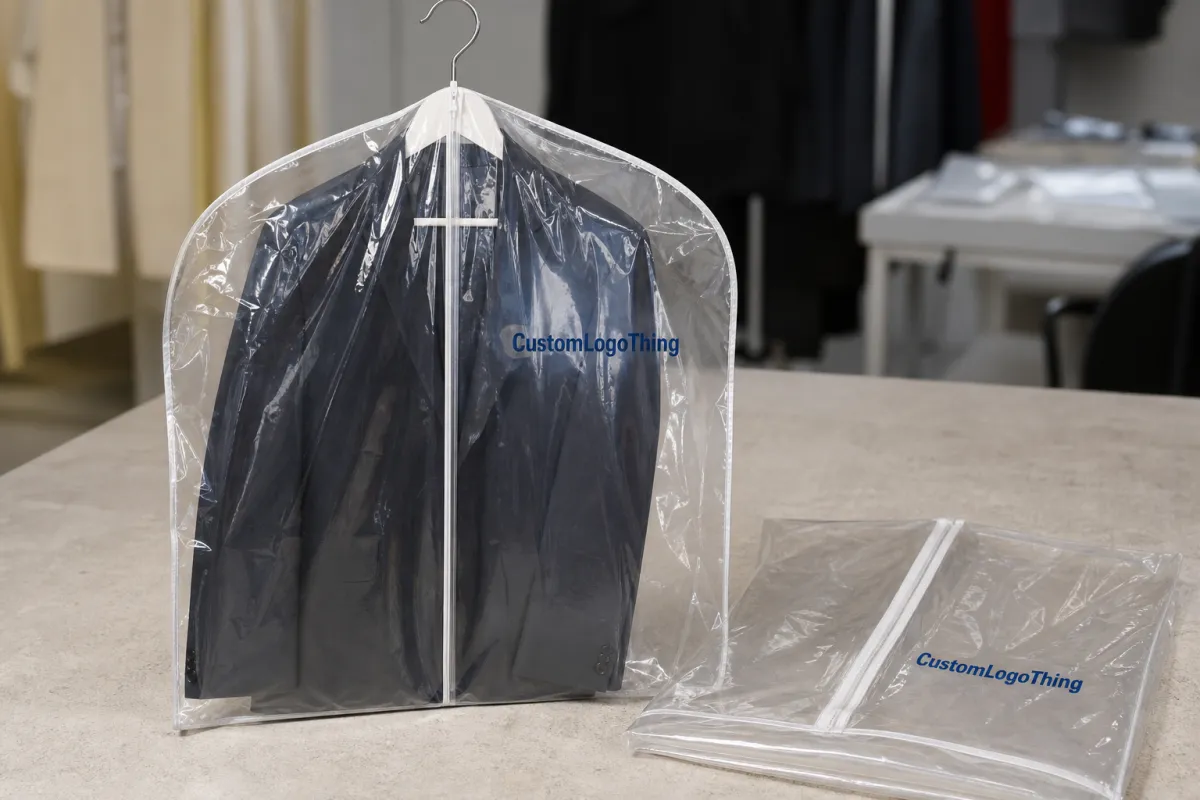
For capsule drops, bridal programs, seasonal uniforms, and test runs, Low-MOQ Custom Ordering is often the most practical choice. You can match the bag to the actual garment instead of forcing the product into a generic sleeve that was never designed for it.
Visibility is part of the value. Retail teams can sort faster, warehouse staff can verify SKUs without reopening the bag, and buyers get a cleaner presentation on the rack. That is useful in both shipping and display, and it reduces handling errors.
Low minimums also reduce inventory risk. Many custom clear garment bag programs start around 500 to 1,000 pieces per size, but the floor depends on material, print method, and construction. A plain flat sleeve is usually easier to run at lower quantities than a gusseted or zippered version.
For repeat programs, the main advantage is consistency. Once the spec is stable, reordering becomes routine instead of a new round of decision-making. That matters more than promotion language because it saves time, avoids version drift, and keeps the packout predictable.
Bag Styles That Match Different Garment Types
Start with the garment, not the quote. A shirt, suit, dress, and coat behave differently in transit, so the bag structure should reflect the product weight and shape.
Flat bags work well for folded shirts and narrow items. Side-gusset and bottom-gusset bags add room for volume, which helps dresses, coats, and garments with padded shoulders or fuller sleeves. Extra depth can prevent the front panel from stretching too tightly across the product.
Closures change the use case. Hang-top styles suit retail display, open-top sleeves help fast packing, adhesive flaps work well in warehousing, and zippers add reuse value but also add cost and setup. Perforated tear-off features can be helpful when the bag must open quickly without tools.
Here is a simple comparison that helps avoid common mismatches:
| Bag Style | Typical MOQ | Typical Unit Cost | Best Use | Notes |
|---|---|---|---|---|
| Flat clear bag | 500-1,000 pcs | $0.14-$0.24 | Shirts, folded basics | Lowest material use, fastest to spec |
| Side-gusset bag | 800-1,500 pcs | $0.18-$0.30 | Dresses, light coats | Better room for volume and sleeves |
| Bottom-gusset bag | 800-1,500 pcs | $0.19-$0.32 | Thicker folded garments | Helps prevent over-compression |
| Zipper or adhesive flap | 1,000+ pcs | $0.22-$0.42 | Premium retail, reuse | More functional, more setup |
If a line has multiple SKUs, keeping one bag family across the range usually improves packing accuracy. Fewer structures mean fewer mistakes during fulfillment and fewer problems when it is time to reorder. For broader sourcing, see our Custom Packaging Products and Wholesale Programs.
Dimensions, Thickness, and Closure Specs That Prevent Waste
Measure the garment in its packed state, not just by hanger size. A bag that is too short looks careless, and one that is too wide wastes film and raises the unit price without adding value.
Film thickness should match both garment weight and handling conditions. Lightweight shirts often work with LDPE or CPP in the 30-40 micron range. Dresses, suits, and coats usually need 50-80 microns, especially if the bag will move through distribution or be reused.
Gusset depth matters more than many buyers expect. Sleeves, padded shoulders, and layered fabrics need room to sit naturally. If the gusset is too shallow, the bag pinches the garment and creates a compressed look that can read as low quality even when the print is clean.
Decide early whether you need a hanger hole, vent holes, a tear notch, a resealable flap, or a zipper. Each feature changes tooling, labor, or both. A sample or pre-production proof is the best way to catch fit problems before the full run starts.
For buyers who want to compare quality, useful checks include seam strength, seal consistency, print rub resistance, and carton pack count verification. ASTM D882 can help when comparing film data, and ISTA transit testing is useful for understanding how the packed item performs in shipping. For general packaging and waste guidance, the EPA overview at epa.gov/recycle is a useful reference point.
Low MOQ Pricing: What Changes Unit Cost
MOQ is only part of the decision. Unit cost is what determines whether the program stays workable. Smaller runs usually cost more per bag because setup, labor, and waste are spread across fewer pieces.
The main price drivers are size, thickness, closure style, and print coverage. A plain clear sleeve with a small logo is much less expensive than a zipper bag, a multi-size program, or a full-surface print. More colors mean more setup, and more structure means more handling.
The easiest way to keep pricing under control is to simplify the spec. Use standard dimensions when possible, keep print to one color unless you need more, and place the logo where it helps identification instead of occupying the whole viewing window.
Ask for pricing that separates bag cost, print cost, packing cost, and freight. Bundled pricing can hide the real cost driver. If two quotes are far apart, compare the spec line by line: film thickness, closure type, carton count, and print area. A different spec is not a better price; it is a different product.
These are working ranges for Clear Garment Bags low moq custom order projects at small and mid-sized quantities:
| Order Size | Plain Bag Range | Printed Bag Range | Best Outcome |
|---|---|---|---|
| 500 pcs | $0.22-$0.38 | $0.28-$0.48 | Test run, limited drop |
| 1,000 pcs | $0.16-$0.29 | $0.20-$0.38 | Balanced MOQ and price |
| 5,000 pcs | $0.11-$0.20 | $0.14-$0.26 | Best unit cost for repeat use |
Those numbers are guides, not promises. A thicker zipper, wider print area, or special packing method will push the price up. A simple spec with standard dimensions usually keeps the order more economical.
Production Timeline: Sample, Approval, and Ship
A clean production schedule starts with one spec sheet, one artwork file, and one decision on size. The faster those are locked, the faster the order moves.
The usual flow is straightforward: confirm dimensions and material, approve artwork, make a sample or pre-production proof, run the order, inspect the result, then pack and ship. Simple clear bags move faster than multi-step custom builds.
Typical lead times depend on structure and quantity. A basic printed clear bag can often move in about 12-15 business days after proof approval. More complex builds, larger quantities, or special closures may need 18-25 business days. Freight adds its own timeline, especially when the order crosses borders or lands near a busy season.
If the launch date matters, say it early. A supplier can plan around a deadline only if the deadline is shared before production starts.
For brands that use branded packaging across multiple categories, the garment bag should follow the same timing discipline as the rest of the line. If custom printed boxes ship on a fixed calendar, the bag spec should be equally stable. Stable specs make reorders easier and prevent version drift.
Before release, ask for checks on seal strength, clarity, edge trimming, print alignment, and carton compression. A bag that looks fine in a photo can still fail if the seal opens too easily or the film clouds under load.
For a general reference on transport testing and distribution handling, the ISTA standards library is a useful starting point.
Print and Branding Options That Keep the Bag Clean
Branding should support the garment, not cover it. Clear packaging still needs breathing room, so a small logo, a size mark, and a discreet SKU panel usually do more good than a full graphic treatment that blocks the product front.
One-color printing is often the smartest starting point. It keeps the package clean and usually controls cost better than multi-color art. More colors can work, but only if they solve a real problem.
Placement matters as much as artwork. Keep the logo away from the hanger hole, clear of the barcode area, and out of the main viewing window. Large, readable text is better than tiny detail on clear film.
Useful details for retail packaging usually include size, SKU, care note, reorder code, and sometimes a product family name. More copy tends to create noise rather than value.
If you want consistency across garment bags, tags, and inserts, keep the same logo rules across the line. Clean packaging design usually wins because it respects the product and makes the item easier to identify.
Why Our Custom Order Process Works for Low-MOQ Buyers
A good supplier should make smaller runs easier, not act as if they are a special case. Low-MOQ buyers still need control over dimensions, thickness, print, and packing.
The process stays practical: quote the spec, confirm the artwork, review the construction details, then pack the order in a way that fits the quantity instead of forcing a one-size export carton plan. For smaller buyers, that can reduce freight waste and improve carton efficiency.
For brands with multiple SKUs, consistency is the real value. Once the bag spec is locked, reordering should be uneventful: same dimensions, same film, same seal, same carton count. That kind of repetition protects quality better than polished sales language.
Quality control should also be visible in the details: stable film, clean sealing, legible print, and dimensions that actually fit the garment. A bag that photographs well but performs badly still becomes a complaint.
If your program needs support through FAQ, Custom Packaging Products, or a larger Wholesale Programs structure, the best way to keep things consistent is to hold the spec sheet steady. The more it changes, the harder it is to preserve the same result from one run to the next.
What to Send for a Fast Quote and Smoother Reorder
Send the garment type, folded size, bag style, target thickness, closure preference, print area, and expected quantity by size. That is the baseline. Without those details, the quote is guesswork.
Also include destination, deadline, and whether the order is for retail, warehouse, or e-commerce use. Those details affect the recommendation because a bag for boutique display is not always the best bag for a fulfillment center.
If you need clear garment Bags Low MOQ Custom Order support, the fastest path is one accurate spec and one artwork file rather than a vague request. One clear reference saves more back-and-forth than a long email chain.
For the next reorder, save the approved spec sheet, artwork version, carton pack count, and any sample notes. Then the next run starts from the right file instead of from memory.
The goal is straightforward: fewer surprises, tighter pricing, and a bag that fits the product the first time.
Can I order clear garment bags in low quantities for a test run?
Yes. Low-MOQ custom runs are common for new launches, seasonal programs, and small retail batches. If you want better pricing, keep the spec simple: standard size, one print color, and a closure style that does not require extra tooling.
What MOQ is typical for custom clear garment bags?
Many custom runs begin around 500 to 1,000 pieces per size, but the real threshold depends on film thickness, print method, and structure. Smaller orders can be done, but the per-piece price usually rises.
Which thickness should I choose for custom garment bags?
Light shirts and folded basics often work with thinner film, while dresses, suits, and coats need heavier material for better support. If the bag will move through distribution or be reused, thicker film is usually the safer choice.
How long does a custom clear garment bag order usually take?
A typical schedule includes proof approval, production, quality checks, and shipping, so the full timeline depends on how quickly the specs are locked. Simple orders move faster than printed or multi-size programs.
What should I send to get an accurate garment bag quote?
Send dimensions, quantity, thickness, closure type, print details, destination, and deadline so the supplier can price the order correctly. If you already have a sample or reference bag, include that too.
If you are buying clear garment bags low moq custom order for retail, the best move is to start with a spec that fits the garment. Keep the bag useful, keep the print controlled, and keep the MOQ aligned with actual demand.

