Tamper Evident Bags for bakeries unit cost is not mainly a pricing question. It is a control question. A bakery bag can look tidy on a shelf and still leave buyers guessing whether the contents were opened, swapped, or reclosed during transit. Once that uncertainty enters the order, the bag stops being a simple package and starts acting as a trust signal.
That is why experienced buyers do not compare tamper-evident formats against plain plastic on price alone. They compare the full cost of a damaged order: remake labor, ingredient waste, refund pressure, and the softer but very real Cost of Customer doubt. A few cents saved on the bag often disappears the first time a delivery goes sideways.
Why bakery operators pay for tamper evidence, not just plastic
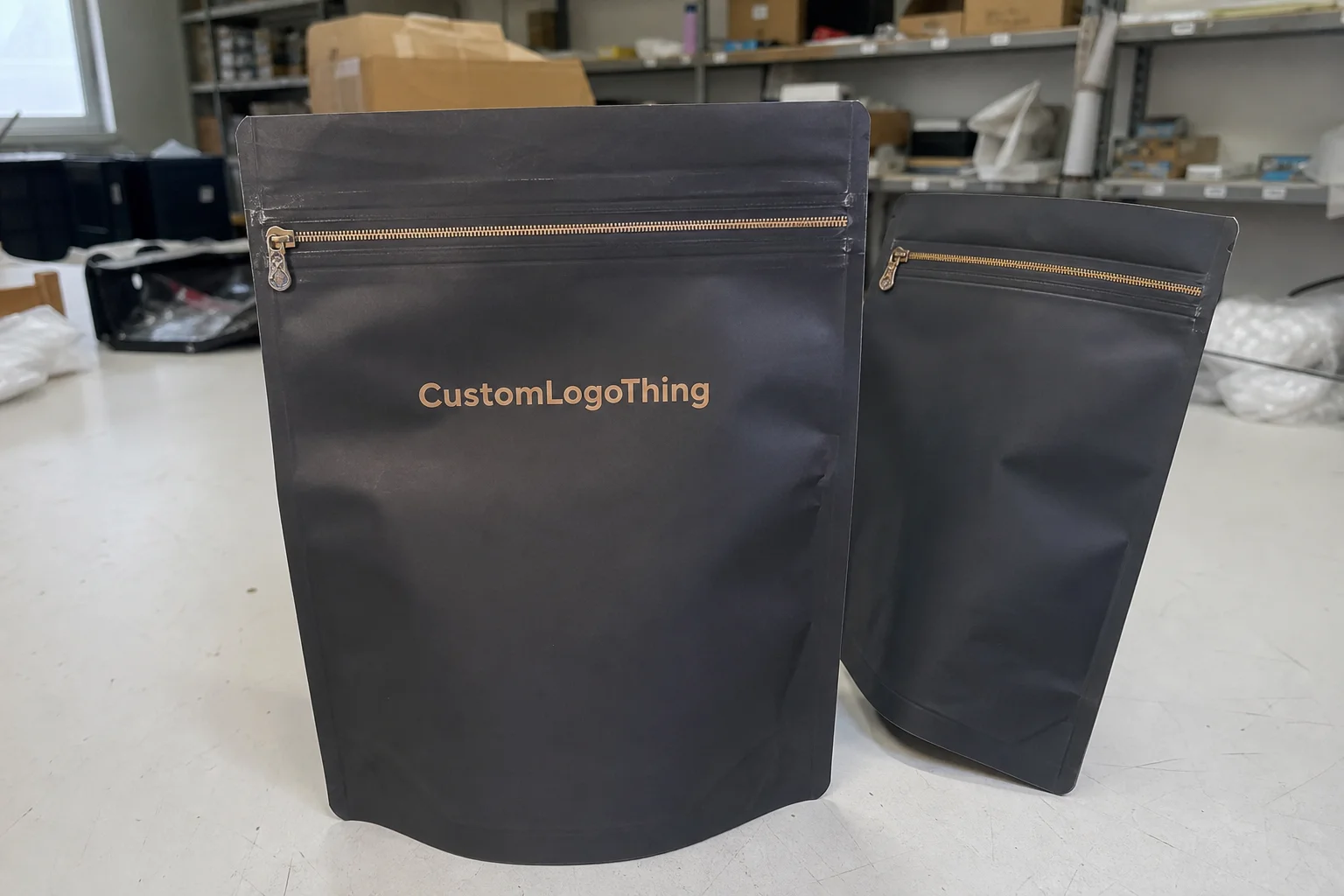
Bakery operators feel the need for tamper evidence most sharply in handoff-heavy channels. Delivery apps, catering drops, self-serve cases, and grab-and-go counters all reduce the amount of staff oversight between packing and purchase. In those environments, the package has to communicate one thing quickly: this has not been opened since it was sealed.
That message matters for more than security theater. Premium cookies, brownies, decorated pastries, and sliced desserts are often sold on appearance. If a bag looks easy to open and reseal, the product inside feels less controlled, even when nothing has gone wrong. Buyers are paying for a visible barrier, but they are also paying for fewer questions at the counter and fewer disputes after delivery.
Visible tamper evidence does not make a pastry better. It makes doubt harder to sell.
The other reason operators keep buying these bags is operational consistency. A closure that works only when handled carefully is not a good closure. Staff pack faster than product teams expect, especially during peak production windows, and any feature that slows the line gets skipped. The best bakery bag is usually the one that closes the same way every time, with no special instruction and no extra judgment required from the packer.
That is where the value starts to become measurable. A plain bag may cost less at purchase, but one disputed order can wipe out the savings from dozens of units. Add the labor of rework and the loss is no longer theoretical. In practice, tamper evidence is often bought as an insurance layer, not an aesthetic upgrade.
Product details that matter in bakery use
Bakery packaging sits between food handling and retail presentation, which means the wrong spec is obvious almost immediately. Common formats include self-seal pouches, adhesive-flap bags, tear-open pouches, and zip-style designs with a tamper-evident feature built into the closure. Each format handles a different bakery scenario. The right one depends on moisture, product shape, and how often the package will be touched before it reaches the customer.
Cookies and brownies usually do well in clear pouches because the product itself is part of the sale. Individual pastries need more headroom, especially if frosting or toppings could be compressed. Bread loaves and sliced cakes often need a taller bag with enough structure to protect the top edge without flattening it. Mixed assortments are trickier; they benefit from a film that keeps its shape and does not sag in a tote or delivery box.
Clarity matters more than many buyers expect. A clear film, legible warning text, and branding placed outside the product view all help customers verify what they are buying without opening the pack. Heavy artwork can make the bag look polished, but too much coverage can obscure the item and reduce the point of using a transparent package in the first place. For many bakeries, the sweet spot is a bag that photographs cleanly for online ordering and still makes unauthorized opening obvious at a glance.
Food behavior changes the spec more than a catalog does. Grease can weaken adhesives if the seal area is contaminated. Warm product can trap moisture and soften some closures. Refrigerated items create condensation, which affects clarity and, in some films, adhesion. None of these issues makes tamper evidence impractical, but they do make it impossible to choose by appearance alone. A good supplier asks what is going inside the bag before naming a price.
One practical rule saves time: test the bag with the real product, not just an empty sample. An empty pouch can look ideal and still fail once filled. A loaded bag shows whether the closure lies flat, whether printed warnings remain readable, and whether the film tolerates the weight and surface texture of the baked item.
Specifications buyers should compare before requesting samples
The fastest way to avoid a weak quote is to compare the right specifications before you ask for samples. Start with dimensions. Bag width, gusset depth, and usable length determine whether the product fits naturally or gets forced into shape. Then move to film thickness, seal strength, adhesive type, tear-strip placement, and printable area. A bag that is too short compresses the product. A bag that is too wide adds material cost without adding value.
Thickness deserves special attention. Thinner films usually lower unit cost, but they can feel flimsy and puncture more easily on a busy line. Heavier gauges cost more and often improve puncture resistance, shelf appearance, and perceived quality. For many bakery uses, a clear 2.0 to 3.0 mil structure is common, although the best choice depends on product weight, closure style, and how often the package will be handled after sealing.
Compliance should be checked before artwork is approved. Food-contact documentation needs to be ready for review. If barcodes or batch codes are required, say so up front. If the bags will be shipped in cartons exposed to parcel handling, ask whether the supplier tests to standards published by groups such as ISTA. If sustainability claims matter to the brand, confirm whether paper cartons, inserts, or labels are certified separately rather than assuming every component carries the same claim.
Buyers usually make better decisions when they test a short list against actual working conditions:
- Confirm dimensions with the real product inside the bag, not just on a spec sheet.
- Check whether the closure works with gloved hands and during peak production speed.
- Verify that warning text and branding remain legible after filling.
- Test grease resistance and moisture behavior under normal storage conditions.
- Confirm that any barcode scans cleanly after filling and sealing.
Sample testing should be blunt. Open one bag and see whether the tear path is clean. Fill another and drop it into a tote. Leave a third in a chilled case for a few hours. That is more useful than a polished proof because it shows how the bag performs under the conditions that actually matter.
Tamper evident bags for bakeries unit cost: what drives price and MOQ
The phrase tamper evident Bags for Bakeries unit cost sounds narrow, but the pricing logic behind it is not. Four variables do most of the work: size, film gauge, print coverage, and closure style. After that come order volume, packaging configuration, and whether the job needs custom artwork or a standard warning layout. If a quote feels vague, one of those inputs is probably still undefined.
Plain stock bags sit at the lowest end of the range. Add a custom logo and the price moves up, because the supplier has to handle print setup, artwork prep, and sometimes tooling. Add a special seal, tear strip, or zipper-style feature and the unit cost rises again because the bag uses more material or more processing time. None of that is hidden if the quote is written well. It only feels hidden when buyers compare unlike products as though they were the same item.
Scale changes the math. A 2,000-piece order and a 10,000-piece order rarely sit on the same cost curve. Larger runs spread setup charges and tooling across more units, which lowers cost per piece. That is the real reason MOQ exists: it gives the production run enough volume to justify prep work and machine time. Custom printed bags usually need a higher minimum than plain clear stock bags, and specialty closure styles can push that higher still.
For buyers, the better question is not “What is the cheapest bag?” It is “What is the right spec at the volume I actually reorder?” A bag that looks cheap at 1,000 pieces can become expensive if the bakery uses 4,000 a month and keeps scrambling for replenishment. The most useful quote is the one that shows stable bulk pricing, realistic lead time, and a clear break point for volume discounts.
| Option | Typical MOQ | Indicative unit cost | Best fit | Main tradeoff |
|---|---|---|---|---|
| Plain stock clear tamper bag | 500 to 1,000 | $0.08 to $0.14 | Fast-moving cookies, brownies, simple grab-and-go items | Least branding impact |
| Custom logo adhesive-flap bag | 1,500 to 3,000 | $0.12 to $0.22 | Retail bakery programs, catering handoffs, premium packaging | Higher setup charges |
| Printed tamper evident pouch with tear strip | 3,000 to 5,000 | $0.18 to $0.32 | Branded delivery orders, mixed assortments, higher-value items | Greater prepress and closure complexity |
| Heavy-gauge custom bag with warning print and barcode | 5,000+ | $0.24 to $0.40 | High-volume programs, retail chains, controlled handoff environments | More inventory commitment |
Those numbers are directional, not universal. Final pricing depends on dimensions, material blend, print coverage, and how the supplier structures the run. A tight quote should show all of that plainly. If it does not, you are not comparing unit cost. You are comparing guesswork.
There is also a hidden cost that does not appear on the order line. A weak bag can fail in delivery, trigger a refund, or damage brand perception in a way that is hard to measure but easy to feel. In that sense, the cheapest bag is rarely the cheapest outcome. That is the real economics behind bakery tamper-evident packaging.
Process and turnaround: from quote to production approval
The buying process should be straightforward enough that a bakery manager can follow it without chasing multiple emails. It usually begins with a quote request, then moves to dimensions, closure style, product weight, printing requirements, and expected monthly usage. After that comes artwork review, proof approval, sample validation if needed, and production release. Each step is simple on paper. Delays usually show up when the brief is incomplete.
Exact specs save time. If the dimensions are approximate, the supplier has to ask whether the bag needs to fit frosting peaks, gussets, or a tray insert. If the print area is vague, the proof may need several revisions. If the closure is described only as “tamper proof,” the team still has to determine whether that means an adhesive flap, tear strip, zipper, or another format. Every one of those clarifications adds time.
Typical lead times vary, but a practical planning range for many custom jobs is 12 to 15 business days from proof approval. Specialty closures, heavier print coverage, or unusual dimensions can extend that timeline. Sampling adds more time if the project needs physical testing before release. Shipping sits on top of production, so the real schedule should be read as a full cycle, not as separate disconnected pieces.
These details are worth confirming before approval:
- Production lead time after proof approval.
- Sample or preproduction lead time if physical testing is required.
- Shipping estimate by service level.
- Rush availability, if any.
- Whether artwork revisions are included or billed separately.
Short, specific briefs move faster. They also reduce the chance of receiving a bag that is technically correct but operationally awkward, with the wrong print placement, the wrong warning copy, or a closure that slows the packing team during peak hours.
Next steps for ordering the right bakery bags
Before requesting pricing, gather three basics: bag size, product type, and expected monthly volume. If you already know whether you need printed branding, warning text, or barcode space, include that too. Those details are enough to produce a serious quote instead of a placeholder estimate.
Request a sample pack or proof when the product is high-value or handled in more than one step. A bag that looks acceptable in a sample photo may behave differently once it is filled with a glazed pastry, moved into a chilled display, and handed over in a delivery tote. The test should reflect the real path, not an ideal one.
Compare quotes only when the specifications are identical. A lower line item is meaningless if the film is thinner, the closure is weaker, or the print area is smaller. Check whether the quote includes artwork setup, shipping, and any sample or testing charges. Then compare MOQ against your actual reorder rhythm, not the highest forecast on your spreadsheet.
If you are assessing tamper evident Bags for Bakeries Unit cost, send the product list, target dimensions, and monthly volume together. That is the fastest way to get a useful quote and the only way to know whether the unit cost, MOQ, and bulk pricing fit the bakery you are actually running.
What affects tamper evident bag unit cost for bakeries the most?
Bag size, film thickness, print coverage, and closure type usually drive the biggest swings. Higher order volumes lower cost per piece because setup charges and tooling are spread across more units. Custom branding and special warning text typically cost more than stock bags.
What MOQ should I expect for custom bakery tamper evident bags?
MOQ varies by structure and print method, but custom options usually start above stock inventory quantities. Simple clear bags often have lower minimums than fully printed or specialty-seal versions. The most accurate answer comes from sharing dimensions and usage needs up front.
Are tamper evident bags safe for cookies, pastries, and bread?
Yes, if the film type and bag size match the product weight, moisture level, and handling conditions. Greasy or delicate items may need a different closure style than dry baked goods. Samples are the fastest way to confirm fit and appearance before a larger order.
How do I compare quotes without overpaying for bakery packaging?
Compare only when dimensions, material, closure, and print details are identical. Check whether the quote includes artwork setup, shipping, and any sample or testing charges. A lower quote is not a better deal if the bag fails in delivery or creates customer complaints.
What is the fastest way to get a quote for tamper evident bakery bags?
Send the product type, bag dimensions, estimated monthly volume, and whether you need printed branding. Include any requirements for food-contact documentation, barcodes, or warning text. The more specific the brief, the faster the pricing and lead time estimate.


