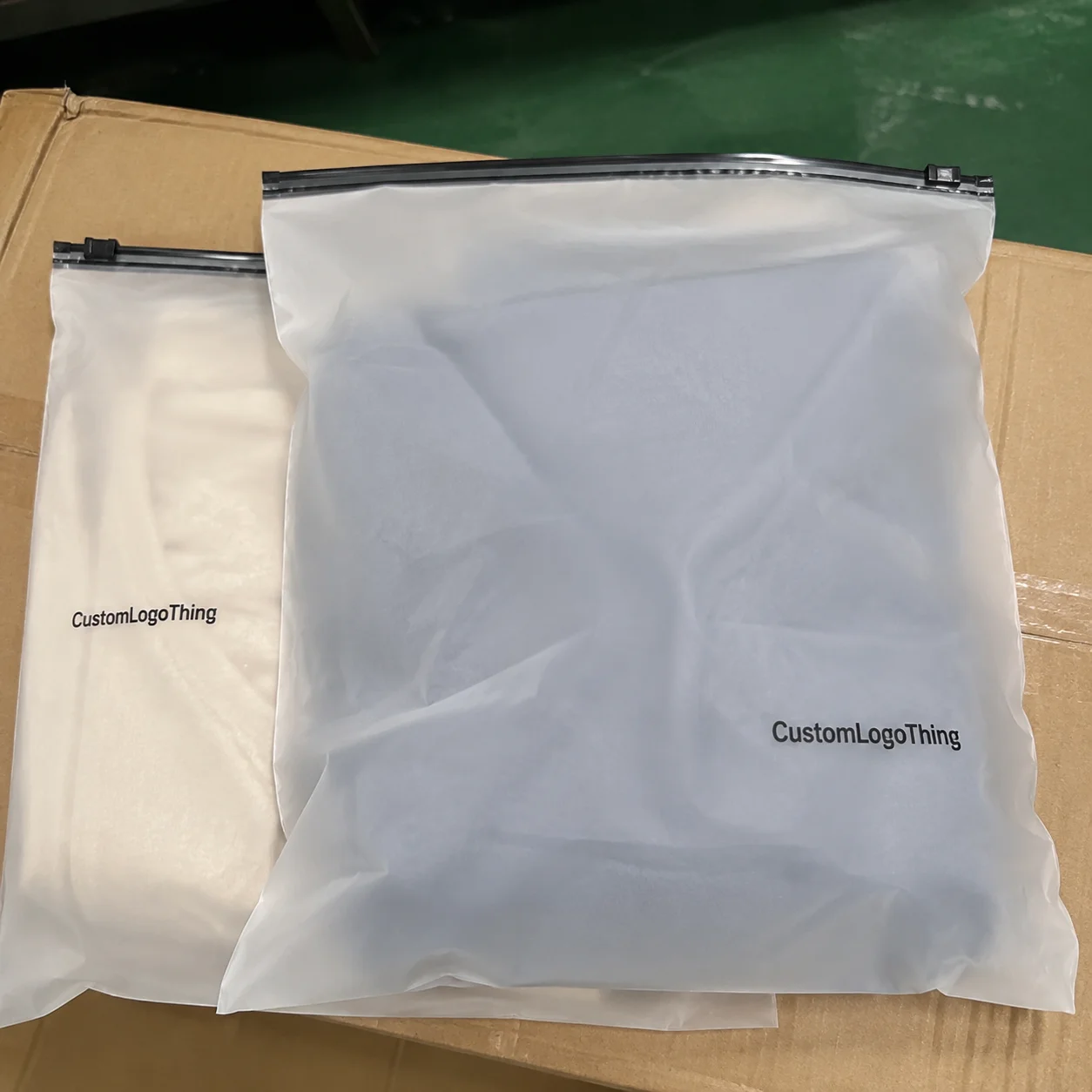
Zip Lock Bags for bakeries wholesale pricing is usually the first serious question buyers ask after they have already had one packaging problem. A cookie box that opened in transit, a bag that felt thin in the hand, a product that tasted fine but looked tired on the shelf. Packaging has a habit of becoming visible only after it fails. Before that, it is easy to underestimate.
A reclosable bag does more than hold a baked item. It changes how the product moves through the pack room, how it survives handling, how it presents on a shelf, and how long it keeps the customer from transferring it into something else at home. That last point sounds small. It is not. If the bag closes properly, the customer reads the product as usable, not disposable.
"The weakest package usually defines the customer’s memory of the product."
Why Bakeries Switch to Zip Lock Bags for Faster, Fresher Packout
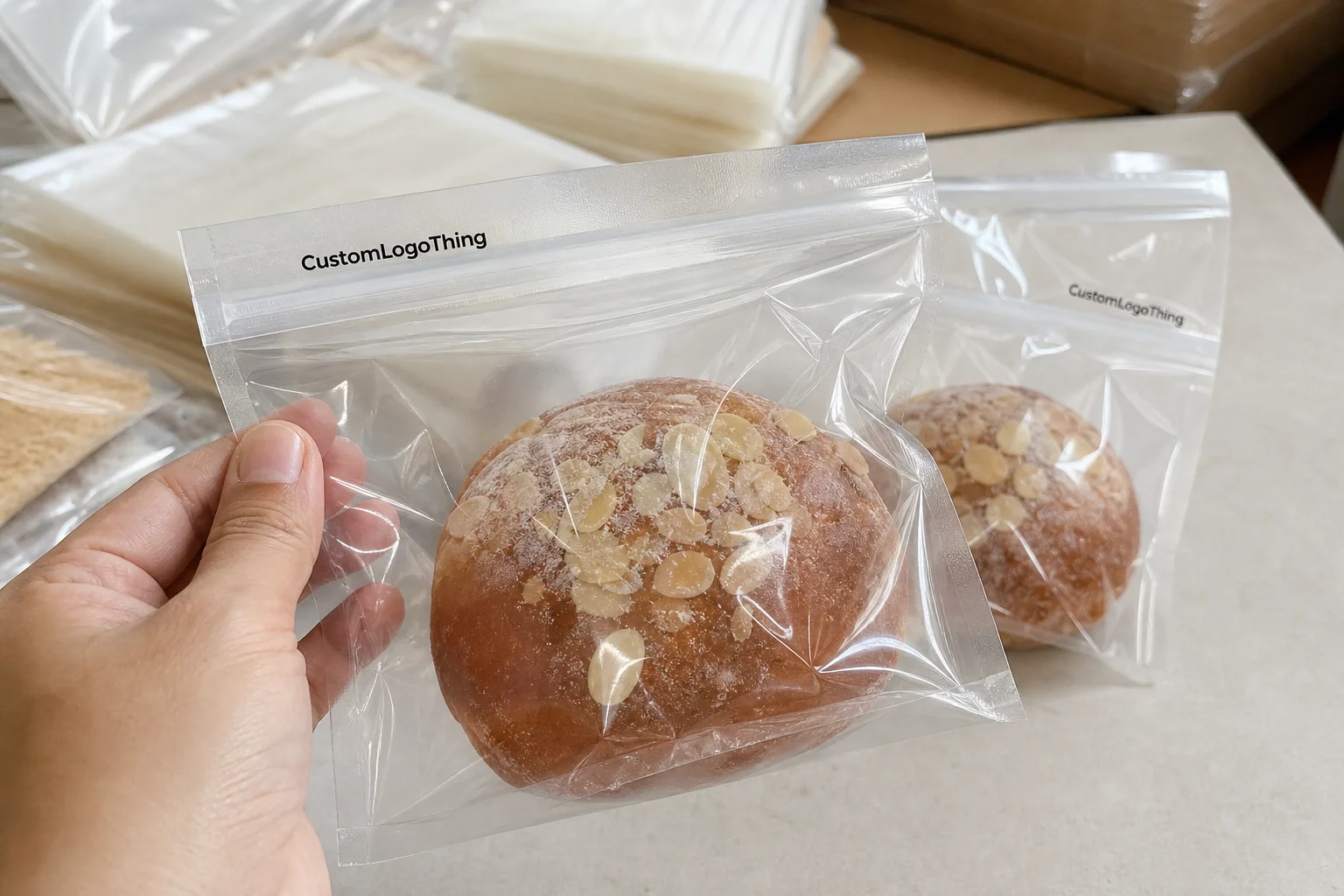
For many bakery lines, speed and freshness are tied together. Once the product cools, packaging starts the clock. A practical bag format helps the line move without turning every pack into a small manual operation. That matters for cookies, brownies, granola, bagels, pastries, and other items that are sold in batches rather than as single rigid units.
There is also a basic visual reason. A clear zipper bag lets the product do the selling. If the item has good crumb structure, attractive color, or a recognizable shape, hiding it behind opaque packaging makes no sense. Retail buyers notice that immediately. So do customers. A good closure plus clean film is often enough to make a product feel more complete than a decorated but awkward pack.
Bakery teams tend to choose zippered formats for a few repeatable reasons:
- Less product damage during packing, transport, and shelf handling.
- Cleaner merchandising because crumbs stay inside the pack instead of spreading across trays.
- Better perceived freshness since customers can reseal the bag after opening.
- Lower waste when the pack can be reused instead of discarded after one serving.
That reseal function is not a luxury feature for most buyers. It is part of the product experience. A bag that opens and closes cleanly reduces friction for the customer and reduces complaints for the bakery. It also helps when inventory sits on the shelf longer than planned. Goods that are still technically fine can look off if the package feels flimsy or the closure looks uncertain.
In practice, bakeries often switch to zipper packs because the whole workflow gets easier. Hand packers like bags that stay open long enough to fill, then close without wrestling. Store staff like a package that stays tidy in display. Operators like fewer damaged units and fewer returns tied to stale texture or broken packaging. The bag is doing several jobs at once. If it fails at one, the others become irrelevant.
Bag Formats and Closure Options for Bakery Products
The right format depends on the product, not on the bag catalog. A thin cookie stack does not need the same structure as a bag of granola. A brownie pack does not behave like a loaf bag. This sounds obvious until people order by visual preference alone and then wonder why the pack line slows down.
Flat zipper bags are efficient for light, compact items. Gusseted styles add room for depth and reduce the chance of awkward bulging at the seal. Stand-up pouches work well for shelf presence and are common when the package needs to face the customer upright. Slider zipper pouches are easier for some buyers to open, though they usually cost more and add complexity to the build.
- Standard zipper bag: useful for cookies, bars, snack mixes, and small pastries.
- Slider zipper pouch: better for premium retail packs or heavier fills that need easier open-close use.
- Stand-up pouch: practical for granola, biscotti, bagels, and products that benefit from upright display.
- Flat bag: efficient for compact items and high-speed packing lines.
- Gusseted bag: helpful when the bakery item has depth, irregular shape, or needs more headroom for sealing.
Clear film is the default for a reason. It keeps the product visible, and in bakery packaging visibility usually supports sales. Frosted or tinted film can still work, especially when you want to reduce visual clutter or hide uneven surfaces, but it should be a deliberate choice. Hiding a product that already looks strong is usually a bad trade.
A few small features are worth paying attention to because they affect both use and labor:
- Tear notch for a cleaner first open.
- Hang hole for peg displays or secondary merchandising.
- Writable panel for date coding, flavor notes, or lot numbers.
- Matte or gloss finish depending on how the brand is displayed and how print contrast needs to read.
Pack-out workflow matters as much as bag style. Some bakeries fill pre-made zipper bags directly. Others heat seal first and use the zipper as a secondary closure. A third group prefers a wider-mouth pouch to speed up manual filling. The best choice is the one that fits the production line you actually have, not the one that looks nicest in a mockup.
Material Specs That Affect Freshness, Seal Strength, and Shelf Appeal
Material spec drives more of the end result than most buyers expect. A bag that is too light can feel cheap, crease badly, or fail under abrasion. A bag that is too heavy can raise cost without solving any real problem. The right structure depends on product weight, oil content, shelf life target, and transport conditions.
For bakery work, common builds include PE mono film, PET/PE laminations, and multilayer pouch structures. The differences are practical, not academic. PE is usually the simpler, lower-cost option for dry, lightweight items. PET/PE gives better stiffness and print quality. Multilayer structures are used when the product needs more puncture resistance or better barrier performance.
A useful rule of thumb for common bakery packaging runs:
- PE mono film: often 60-80 microns for light, dry items and shorter shelf runs.
- PET/PE lamination: often 80-110 microns for better stiffness, print appearance, and handling.
- Multilayer pouch structures: often 100-140 microns for heavier, oily, or transport-sensitive products.
Thickness changes more than appearance. It affects puncture resistance, seal durability, and how the bag performs in a shipping carton or retail crate. A thicker pouch usually tolerates abrasion better and feels more substantial in hand. That said, overbuilding is common. Some buyers specify a heavier film because thicker sounds safer, then discover they have simply paid for excess material. A shortbread cookie does not need industrial armor.
For chilled bakery items or goods exposed to condensation, anti-fog treatment can matter. For products with strong aromas, odor control and barrier performance matter more than appearance. If the product needs to stay crisp, the closure and seal area deserve the same attention as the film itself. A nice-looking pouch with a weak seal still loses the sale later, just more quietly.
Food-contact compliance should be checked for the market being served. Ask for a clear statement on resin structure, ink system, and any testing tied to migration or contact safety. For general packaging references and material education, Packaging.org technical resources are useful when you want to compare supplier language against industry basics rather than guess.
Print decisions matter too. White ink underlay can improve logo brightness on clear film, but it may reduce product visibility if used too aggressively. Heavy ink coverage can make a bag look premium, though it can also make the product feel hidden. The best bakery pack usually balances brand space with enough transparency that the baked item remains part of the appeal.
Zip Lock Bags for Bakeries Wholesale Pricing Breakdown
Zip lock Bags for Bakeries wholesale pricing depends on more than size. Buyers often start with dimensions and end up surprised that a smaller pouch costs more than a larger one. That happens when the smaller bag has heavier film, a better zipper, more print coverage, or a more complex format. The quote follows the spec, not the guess.
The pricing ranges below are practical wholesale expectations for bakery orders. They are not fixed rates, and they should be treated as reference points rather than promises.
| Bag Type | Typical MOQ | Typical Unit Cost | Best Use |
|---|---|---|---|
| Stock clear zipper bag | 500-1,000 pcs | $0.05-$0.12 | Fast-moving cookies, bars, and dry snack items |
| Custom printed flat pouch | 3,000-5,000 pcs | $0.14-$0.28 | Branded brownies, cookies, and single-serve bakery packs |
| Stand-up zipper pouch | 5,000-10,000 pcs | $0.18-$0.36 | Granola, mix products, and shelf-facing retail items |
| Slider zipper laminated pouch | 5,000+ pcs | $0.22-$0.42 | Heavier fills, premium bakery lines, and customer-friendly reseal |
The strongest pricing lever is usually volume, but only after the spec is stable. If a buyer changes dimensions, zipper style, finish, or color count every round, the expected savings disappear quickly. Simplicity helps the quote more than people like to admit. A disciplined structure is easier to produce, easier to inspect, and easier to reorder.
There are also setup costs to keep in view. Printing plates, cylinders, or other tooling can add anywhere from roughly $150 to $800 depending on method and color count. Sample production may carry a small charge if physical proofing is required. Freight is another variable that can distort the final landed cost fast. Air shipment can be efficient for urgent jobs, but it can also erase the price advantage of a good quote. Ocean freight is slower, but it usually makes more sense for repeat orders that can be forecast properly.
The better way to compare quotes is landed cost, not base price. Landed cost includes the bag, setup, freight, inspection, and the hidden cost of defects or poor performance. A cheap bag that leaks seal integrity or damages product quality is not cheap. It is merely underpriced at the beginning and expensive later.
If you are comparing packaging options through our Wholesale Programs, keep the spec identical across quotes. Otherwise, the numbers are not competing with one another. They are describing different products.
Production Steps, Lead Time, and Reorder Timeline
Packaging orders move faster when the buyer sends complete information. The process is straightforward, but the details matter. Most delays are not caused by production. They are caused by unclear specs, incomplete artwork, or late approvals.
- Quote and spec review: confirm dimensions, closure style, material structure, print method, and quantity.
- Artwork proof: check logo placement, copy, barcode space, and dieline accuracy.
- Sample approval: verify fit, closure feel, seal quality, and shelf appearance.
- Production: run the approved spec with stable settings so consistency does not drift.
- Inspection and packing: check zipper function, seal integrity, alignment, and clarity.
- Shipment: choose the freight method that fits the budget and schedule.
Where do orders usually slow down? Artwork revisions are a major one. So is a missing dieline or an unclear zipper specification. Buyers sometimes ask for a quote before they know whether the pouch needs to stand, hang, or lay flat. That makes it harder to price correctly and nearly always extends the back-and-forth.
Lead time depends on the format. Stock items can often move in 5-10 business days if inventory is available and the request is straightforward. Custom printed runs are more commonly 12-20 business days after proof approval, with longer timelines for more complex structures, special finishes, or color matching work. Transit time sits on top of that. A buyer who needs the bags for a launch date should plan backward from the delivery window, not from the production start date.
For bakery goods that go through parcel networks or retail distribution, transport testing is worth the extra step. Packaging can look fine on a table and still fail after vibration, compression, and repeated handling. If the bag needs to survive that route, ask for a transit test plan aligned with ISTA methods. Weak seals often show up in the field before they show up in a photo.
Repeat orders are usually where the process gets easier. Once the spec is locked, proofs are shorter, production is more predictable, and reorder timing can be planned around usage rather than panic. That stability is one of the strongest reasons to keep the packaging spec repeatable instead of redesigning it every season.
Why Bakery Wholesale Buyers Choose Our Packaging Program
Wholesale bakery buyers usually want the same three outcomes: the bags arrive consistent, the lead time holds, and the packaging does not drift from one reorder to the next. That is the practical benchmark. A beautiful mockup does not matter much if the zipper feels different on the second run.
Our Wholesale Programs are built around those conditions. The goal is to match size to product weight, choose material that fits the shelf-life target, and avoid unnecessary features that raise cost without improving performance. In bakery packaging, excess complexity usually creates more problems than it solves.
That requires honest conversations about MOQ, price breaks, and production limits. If the product needs heavier film, a stronger zipper, or a different print structure to hold up in use, it is better to deal with that before the order is approved. Patching a bad spec after production starts is expensive, and it rarely produces a cleaner result.
Quality control is where the difference shows up. Seal integrity, zipper action, print alignment, and film clarity all matter because they affect how the customer experiences the product. A zipper that snags makes the pack feel unreliable. A weak seal shortens freshness. Misaligned print makes the brand look careless. These are small things in isolation. Together, they define whether the packaging looks considered or improvised.
For buyers with recurring needs, predictability is the real value. A packaging program should make the order easier to repeat, not more complicated to explain each time. That is why a custom wholesale packaging options page can be useful. It gives the team one place to align on what is feasible and what is not, which is usually where the time savings come from.
Bakery packaging does not need to be flashy. It needs to work. A bag that packs cleanly, protects the product, displays well, and reorders without drama is often the best packaging in the room. Buyers keep coming back to that because it solves the right problem. Not the loudest one, the right one.
Next Steps to Order Zip Lock Bags for Bakery Wholesale Use
A clean quote on bakery zipper packaging starts with complete information. The more exact the brief, the less time gets wasted on assumptions. Product dimensions, filled weight, closure preference, print artwork, monthly quantity, and display method all affect the final cost. Leave them out and the quote becomes approximate in all the wrong ways.
It usually helps to ask for two or three sample formats before the order is locked. One might be better for shelf appearance, another for pack speed, and a third for closure feel. Those differences are easy to miss in a digital proof and obvious once the samples are in hand. A bag that looks refined online can still be awkward in the pack room.
Stock and custom are different buying paths. Stock bags make sense when speed matters, branding is simple, and the pack size is stable enough to match what is already available. Custom printed bags make more sense when the product is repetitive, the brand needs stronger shelf recognition, and the order volume supports setup costs. If the purchase is one-off, keep it uncomplicated. If it repeats, build the spec around the repeat.
- Confirm the product size using the filled dimensions, not only the baked item name.
- Choose the closure based on how the customer will open and reuse the bag.
- Lock the artwork before proofing turns into revision churn.
- Set the monthly volume so MOQ and pricing tiers can be compared properly.
- Plan the first run with enough time for proofing, production, and freight.
For buyers comparing zip lock Bags for Bakeries wholesale pricing, the shortest path is the cleanest one: define the spec, approve the proof, lock the MOQ, and schedule the first production run. That is usually what gets the price into a useful range without adding unnecessary back-and-forth.
What size zip lock bags work best for bakeries with wholesale packaging needs?
Match the bag to the filled product size and leave enough headroom for sealing and presentation. Flat bags work well for cookies and bars, while gusseted or stand-up styles are better for loaves, granola, and other items that need more depth or shelf presence.
How does zip lock bags for bakeries wholesale pricing change by quantity?
Unit cost usually drops as quantity rises because setup and production costs are spread across more bags. Printing, film thickness, closure type, and finish often affect the price more than size alone, so the full spec matters as much as the order count.
What is the typical MOQ for custom bakery zip lock bags?
MOQ depends on whether the bag is stock or custom printed, along with the number of colors and special features. Stock-style orders can start lower, while fully custom runs usually require a larger minimum to keep the unit cost realistic.
How long does production usually take for bakery zip lock bags?
Lead time depends on proof approval, sample sign-off, and whether the order is stock or custom. Straightforward repeat orders move faster than first-time runs with new artwork, special finishes, or a new closure format.
Can these bags handle greasy or fragile bakery items?
Yes, but the film structure and seal strength need to match the product. Heavier or oily items usually need stronger material, a better closure choice, and more careful spec control than light dry goods.