Buyer Fit Snapshot
| Best fit | Pastel Color Box Branding Sell projects where brand print, material claims, artwork control, MOQ, and repeat-order consistency need to be specified before quoting. |
|---|---|
| Quote inputs | Share finished size, material target, print colors, finish, packing count, annual reorder estimate, ship-to region, and any compliance wording. |
| Proofing check | Approve dieline scale, logo placement, barcode or warning zones, color tolerance, closure strength, and carton packing before bulk production. |
| Main risk | Vague material claims, crowded artwork, missing packing details, or unclear freight terms can make a low unit price expensive after revisions. |
Fast answer: Pastel Color Box Branding Sell: Board, Finish, Dieline, and Unit Cost should be specified like a repeatable production item. The safest quote records material, print method, finish, artwork proof, packing count, and reorder notes in one written spec.
Production checks before approval
Compare the actual filled-product size with the drawing, then confirm tolerance on folds, seals, hang holes, label areas, and retail display edges. Reserve space for logos, QR codes, warning copy, and material claims before decorative graphics fill the panel.
Quote comparison points
Review material grade, print process, finish, sampling route, tooling charges, carton quantity, and freight assumptions side by side. A quote is only useful when the supplier can repeat the same color, closure quality, and packing count on the next order.
Tips for Pastel Color Box Branding That Actually Sell
tips for pastel color box branding sound simple until the first proof lands on the table and the blush you approved on screen comes back looking tired, chalky, or just a little off. That mismatch is where a lot of packaging plans start to wobble. A pastel palette can read elegant, calm, and premium. It can also read flimsy, underlit, and forgettable if the board, finish, and print control are not doing their jobs. The color is rarely the only problem. Stock choice, contrast, structure, and how the box frames the product decide whether the package feels intentional or accidental.
Skincare, candles, gifts, stationery, baby products, and confectionery all benefit from pastel when the palette is disciplined. It signals softness and care without shouting. That is why tips for pastel color box branding matter so much. Pastel is not a shortcut. It is a system with tighter rules than most brands expect, and the box exposes every weak decision before the product is even opened.
This piece looks at tips for pastel color box branding from the buyer side: how the process works, what pricing tends to look like, how long production usually takes, and what to fix before placing an order. Practical advice beats vague design language here. Packaging budgets tend to agree.
What Are the Best Tips for Pastel Color Box Branding?
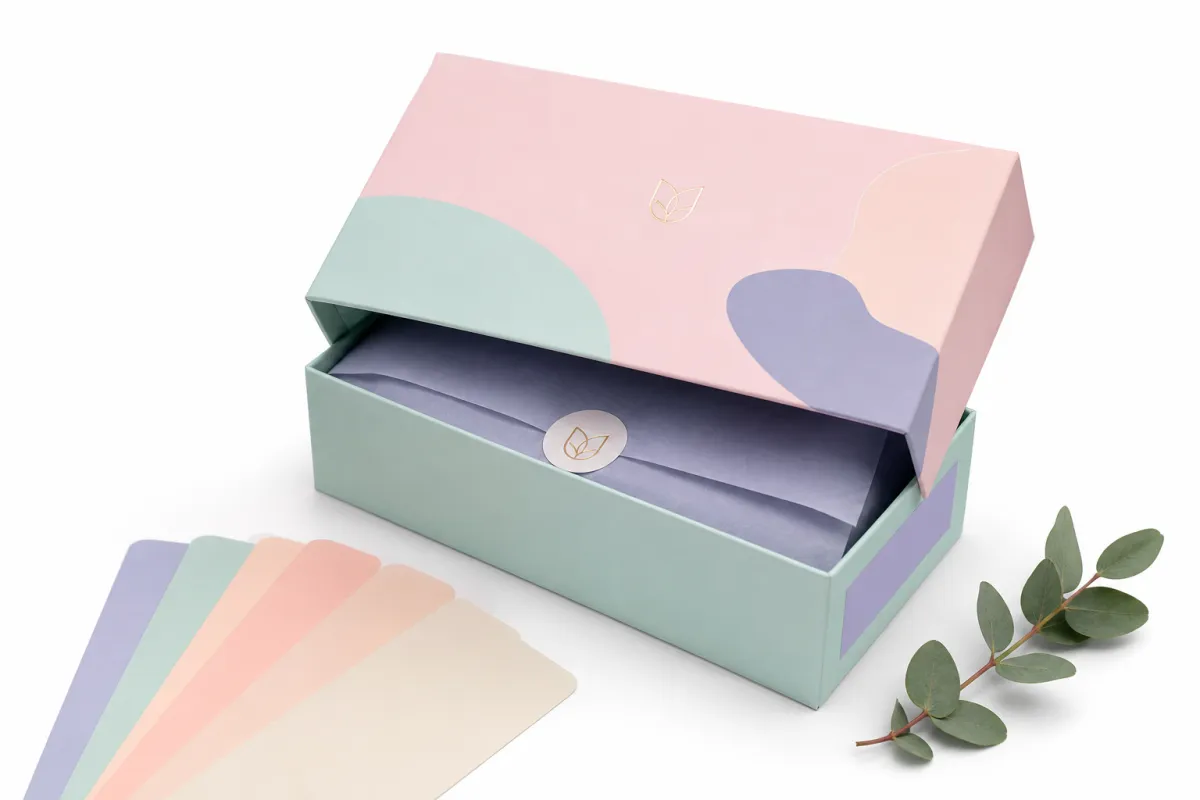
tips for pastel color box branding begin with a blunt point: soft color does not automatically equal good packaging. A pale box can look refined or flat depending on everything around it. Put the same blush tone on weak board and it can feel drained. Put it on dense stock with crisp print and the same shade suddenly looks deliberate, even expensive. I have seen that flip happen in a single proof review, and it is a reminder that packaging is a material system, not just a color choice.
Pastel color box branding is the combination of color palette, typography, structure, finish, and unboxing experience that shapes the product before the lid comes off. The box matters, not just the artwork file. A sleeve, a tuck-end carton, a rigid setup box, or a mailer all change how the pastel reads. The emotional effect shifts with the structure. That is why tips for pastel color box branding are really about the system, not a single pretty swatch.
Brands keep using this style because pastel suggests care, softness, and control. Those cues work well for skincare, candles, gift sets, stationery, baby products, and confectionery. They also fit smaller luxury goods where customer perception matters as much as shelf visibility. A powder blue face cream box feels calmer than a neon carton. A butter yellow candle box feels warmer than a black one. Before the customer reads a word, the category has already done part of the selling.
The mistake is assuming pastel means dull or cheap. It means controlled. The palette needs enough contrast to keep the logo legible. The board needs enough structure to avoid sagging. The finish needs enough restraint to prevent a plastic-looking surface. Those are the real tips for pastel color box branding that protect the brand from itself.
Pastel packaging gets judged twice: once on a screen, once in the hand. Those tests do not behave the same way. A color that looks gentle on a monitor can go chalky under warm retail light. A box that photographs beautifully can still feel thin if the stock is too light. Smart tips for pastel color box branding account for both tests at once.
Pastel boxes usually fail for ordinary reasons: weak contrast, flimsy board, and sloppy proofing. Not because pastel is the wrong idea.
For a broader look at how packaging decisions shape sales, the Case Studies page is worth a visit because it shows how different box structures and print treatments alter the final brand identity. Evidence like that beats guesswork every time.
How Pastel Color Box Branding Works
tips for pastel color box branding work because low-saturation color changes the mood of the package. Pastels soften the visual temperature, which helps a brand feel gentle, polished, or giftable. Softness alone still falls short. Hierarchy, spacing, and structure keep the box from fading into the background. Without those, the package looks washed out, and washed out is not the same thing as refined.
The brand message usually comes from the full system. Typography does a surprising amount of heavy lifting. A clean serif in 10-point type can feel more premium than a loud script in gold foil. White space matters too. Give the logo room and the package starts breathing. Crowd the panel with claims, icons, and decorative details and the whole thing turns noisy. Good tips for pastel color box branding sound less like decoration advice and more like layout discipline.
Different pastel families produce different reactions. Mint tends to read fresh and hygienic. Blush leans romantic or caring. Powder blue feels calm and clean. Butter yellow comes across cheerful and friendly. Lavender works for beauty or wellness, but it can slip into syrupy territory fast if the contrast is weak. No single shade wins across every category. The right choice depends on product mood, audience age, and whether the brand wants playful, premium, or somewhere in between.
Print method changes the result too. Digital printing handles short runs and quick changes, though pastel tones can drift depending on the device and the stock. Offset printing usually gives tighter color control across larger runs, which matters when brand consistency cannot wobble. Specialty processes like screen printing or foil stamping can lift perceived value, but only if they support the palette instead of fighting it. A heavy metallic finish over a soft box can feel elegant or overdone. There is not much middle ground.
Unboxing design is part of the brand, not a bonus feature. A white interior gives the reveal a crisp edge. A deeper coordinating pastel inside adds depth and makes the package feel staged with intention. Inserts matter too. A die-cut insert in matching board keeps the product from rattling and makes the arrangement look planned rather than improvised. That improves the unboxing experience, which then improves customer perception and sharing.
Teams that want harder criteria should check material sourcing and transit testing early. FSC-certified paper can support sustainability claims when the sourcing is documented. Transit testing often follows ISTA test methods to see whether packaging survives handling, vibration, and drops. A good-looking box that arrives crushed has already failed the brand. I wish that were rare. It is not.
Good tips for pastel color box branding also account for how the palette behaves on gloss, matte, soft-touch, and uncoated board. Matte usually calms the tone and makes the color feel more mature. Soft-touch adds a tactile layer, though too much of it on a small box can collect fingerprints. Uncoated stock gives a natural, muted effect, but the print can sink into the fibers and mute the color more than expected.
Pastel Color Box Branding Costs, Pricing, and MOQs
tips for pastel color box branding become more useful once the budget enters the conversation. There is no single cost for pastel packaging because pricing comes from several choices at once: stock, box style, size, print coverage, finish, insert type, and order quantity. The shortest version is simple. Ask the factory to do more, and the unit price climbs. That is not mystery, just manufacturing.
For simple folding cartons at quantities around 5,000 units, a realistic range often sits around $0.22-$0.55 per unit, depending on size, board thickness, and print complexity. Add matte lamination and another $0.03-$0.08 may appear. Soft-touch coating can add $0.05-$0.12. Foil stamping, embossing, or debossing usually adds more, especially when the coverage is large or the die is custom. Those small upgrades can look minor in a mockup and show up very clearly on the invoice.
Rigid boxes live in a different price bracket. A small rigid setup box often lands somewhere around $1.20-$3.50 per unit at moderate quantities, sometimes higher if the wrap paper, insert, or finishing is more complex. The number can sound steep until you compare it with perceived value. A rigid pastel box can make a gift set, skincare launch, or jewelry line feel more premium than a standard carton. That is why many brands reserve rigid boxes for flagship products and use folding cartons for line extensions.
MOQ tradeoffs matter too. A lower minimum order quantity cuts inventory risk, which helps with launches and seasonal collections. The tradeoff is that setup costs spread across fewer pieces, so per-box pricing rises. Order 1,000 units instead of 5,000 and the piece price may jump before finish upgrades even enter the picture. That is normal. The factory still has to prepare plates, dies, proofing, and press time.
The most useful tips for pastel color box branding for a limited budget follow a predictable order: spend on stock and print accuracy first, then add one signature finish. Not three. One. If the paper weight, color match, and structure are right, a single foil logo or a restrained emboss can carry the premium signal. Stack every effect at once and the box begins to look overworked. Buyers notice that quickly.
| Box Type | Typical Unit Cost at 5,000 pcs | Best Use | Brand Signal |
|---|---|---|---|
| Folding carton | $0.22-$0.55 | Skincare, stationery, confectionery | Clean, efficient, retail-friendly |
| Sleeve + tray | $0.55-$1.10 | Gift sets, candles, premium samples | Layered, thoughtful, tactile |
| Mailer box | $0.65-$1.20 | E-commerce, subscription boxes | Protected, branded, practical |
| Rigid setup box | $1.20-$3.50 | Luxury beauty, jewelry, special releases | High value, giftable, stable |
The table is a working range, not a promise. A small cosmetic carton with minimal ink coverage will not cost the same as a large specialty box with foil, an insert, and soft-touch coating. Even so, it keeps budgeting sane before quote requests start flying around.
If pastel packaging needs extra SKU labeling, batch information, or promotional tags, keep that work off the main panel. A separate component from Custom Labels & Tags can keep the box cleaner and make seasonal changes easier without reprinting the entire package.
The best tips for pastel color box branding on a budget usually follow this order: Choose the Right structure, lock the stock, test one finish, then decide whether a special insert is worth the cost. That sequence protects brand consistency and avoids the common trap of spending the budget on flourishes that barely change perception.
Pastel Color Box Branding Process and Timeline
tips for pastel color box branding become much easier to use once the workflow is clear. Packaging does not appear because someone liked a mockup. The process usually runs through brief, dieline, color selection, proofing, sampling, revision, production, and shipping. Miss a step and the final result tends to advertise the mistake.
The typical sequence starts with the concept and brand brief. That is where the target mood, audience, dimensions, product weight, and shelf environment get defined. Next comes the dieline, either built from scratch or confirmed from a supplied template. Artwork follows, with logo placement, type hierarchy, barcode, legal text, and any graphics that support the visual branding. After the file is ready, the team reviews a digital proof. If color accuracy matters, a physical sample follows. That sample is where a lot of tips for pastel color box branding either hold up or collapse.
Timeline estimates are usually more honest than the optimistic guesses people make during kickoff calls. A simple carton project can move from proof approval to delivery in roughly 12-20 business days if materials are in stock and revisions stay tight. Sampling often adds 5-10 business days. Custom Rigid Boxes can stretch the schedule to 3-6 weeks or more depending on insert complexity and finish. If the project needs imported paper or a custom die, extra time should already be built in. Color approval alone can swallow several days if multiple stakeholders keep asking for “slightly warmer” or “a touch softer” without giving a real reference.
Delays show up in predictable places. Color approval comes first. Artwork revision usually follows. Sample feedback lands third, often after someone sees the box under real lighting and decides the pastel is too pale or the type is too thin. That is not a design mystery. It is a planning problem. Good tips for pastel color box branding assume that physical proofing will catch problems a PDF never can.
Speed improves when the artwork gets locked early, revision loops stay short, and proofs are approved in the same environment where the packaging will be used. A box judged under office LEDs is not being judged honestly if it will live under warm retail lighting or next to a daylight photo setup. That difference matters more than most teams admit.
Pastel branding also benefits from a clean launch calendar. If the box is tied to a product reveal, leave room for at least one sample adjustment. Rushing the schedule is one of the fastest ways to flatten pastel color box branding because the team starts choosing “close enough” over “right.” Close enough is how elegant packaging turns generic.
For buyers who want a more formal quality check, transit testing and material specification documents should sit on the same timeline as artwork approval. That matters especially for e-commerce boxes, gift sets, and subscription packaging that need to survive more than one bump before reaching the customer. Use industry resources at Packaging.org as a starting point for broader packaging guidance, then compare that with the supplier's sample and test plan. Practical beats theoretical every time.
Step-by-Step Guide to Better Pastel Box Branding
tips for pastel color box branding work best when the job is broken into steps instead of treated like a mood board exercise. Start with the brand promise. Is the product elegant, playful, soothing, giftable, minimalist, or premium beauty? That single decision shapes palette, typography, finish, and even the box structure. A pastel box for a luxury facial serum should not feel like a pastel box for children's stationery. The similarity ends at the color family.
Step two is choosing one anchor pastel and one supporting shade. Do not build the whole box from five nearly identical soft tones unless the goal is foggy. A strong anchor color gives the package a focal point. The supporting shade can live in borders, interior printing, icons, or inserts. White, black, and metallic accents then create the contrast that keeps the box legible. That is one of the most reliable tips for pastel color box branding because it protects readability while keeping the mood soft.
Step three is choosing the structure before the graphics are finalized. A sleeve gives you one kind of visual field. A tuck-end carton gives you another. A rigid box gives you more surface area and more physical presence, which changes how the design breathes. The box format affects how much text fits, where the logo sits, and whether the inside lid can carry a message or product story. Finalizing artwork too early can force a design into a shape it never belonged in. That is how clean ideas get bent out of shape.
Step four is building hierarchy. A pastel box still needs a clear focal point. The product name should be readable at shelf distance and in photos. Supporting copy should be smaller, not invisible. If the customer has to hunt for the brand name, the box is failing at recognition. Use type size, spacing, and placement to guide the eye instead of piling on ornaments. A tidy composition does more for brand consistency than three decorative icons ever will.
Step five is testing prototypes early. Compare the sample against your palette in daylight and under the lighting where the box will sit. Hold it next to the product if possible. Check whether the pastel shade makes the product look cleaner, richer, or more expensive. Inspect edges, folds, corners, and any areas where ink density changes. If the box is intended for shipping, shake it, stack it, and look for abrasion at the seams. That is not dramatic. That is the difference between packaging and a pile of pretty cardboard.
A few practical moves help here:
- Use one dominant pastel, not a rainbow of soft colors.
- Choose paper stock with enough stiffness for the box size and fill weight.
- Keep the logo large enough to read from 3-5 feet on shelf displays.
- Limit finishing to one signature effect so the palette stays calm.
- Match the inside print or insert color to the outside so the reveal feels deliberate.
Those are simple tips for pastel color box branding, and simple is often where strong packaging starts. The goal is not to prove how many effects a design file can hold. The goal is to make the box look like it belongs to the product and the audience.
If you want a grounded reference for how packaging choices support a launch, compare your prototype against actual market examples in Case Studies. Seeing how another brand solved structure, finish, and hierarchy is often more useful than another round of abstract feedback.
Common Mistakes in Pastel Color Box Branding
tips for pastel color box branding are partly about avoiding the mistakes that make soft packaging look weak. The first mistake is using too many pale shades at once. That turns the box into visual soup. Instead of a clear brand statement, you get a blurred surface with no focal point. Restraint matters here.
The second mistake is weak typography. Pastel backgrounds make thin, small, or low-contrast type harder to read. If the font is too delicate, the message disappears. That matters even more on small cartons where the viewer has only a second or two to understand what the product is. One of the best tips for pastel color box branding is to treat legibility as a design feature, not a technical afterthought.
The third mistake is ignoring substrate color. Paper and board are not neutral in the way mockups often pretend. A creamy uncoated stock warms the pastel. A bright white coated stock cools it. Recycled board can mute the color further because the fibers influence how the ink sits. If the actual board is never tested, the result is a guess with better software.
The fourth mistake is choosing finishes that fight the palette. High-gloss coating can make a pastel box feel louder than intended. Heavy foil everywhere creates a mismatch between the soft color and the shiny decoration. One small foil accent can work. A full metallic parade usually does not. The box starts to feel noisy, which is the opposite of what pastel branding is supposed to do.
The fifth mistake is forgetting durability. A beautiful pastel box that arrives scuffed has already lost part of its value. Corner wear, rubbing at the folds, and dented panels are common on thinner cartons and poorly packed shipments. If the product moves through multiple warehouses or ships direct to consumers, test the packaging for abrasion and compression before approving the final run. Clean cartons are part of the visual branding, not a separate issue.
Here is the reality check:
- Soft color does not hide bad print.
- Cheap board does not become luxury because the palette is blush.
- Big claims on a tiny carton make the layout feel crowded.
- Glare can ruin a subtle shade.
- Shipping damage changes customer perception faster than any design review.
That list sounds strict because it is. It also saves money. Most weak pastel packaging problems are preventable with a better sample review and more discipline. Good tips for pastel color box branding are less about inspiration and more about avoiding predictable mistakes.
If the box needs three finishes to feel premium, the structure and color system are probably not doing enough work.
Expert Tips and Next Steps for Pastel Color Box Branding
tips for pastel color box branding sharpen once the project is treated like a packaging decision, not a mood-board exercise. Use one strong pastel as the hero and keep the rest of the system restrained. That one choice protects the brand identity and makes the box look deliberate. Restraint is not boring. It is what lets soft color look expensive.
Ask for physical swatches and a pre-production proof. Monitor color is unreliable, and paper never forgives vague approvals. I have seen teams sign off on “soft pink” and then act surprised when the actual carton carries more peach than blush. That is not a mystery. It is what happens when people approve a PDF under bad lighting. One of the most practical tips for pastel color box branding is to make physical proofing non-negotiable.
If the budget is tight, protect print quality and box structure first. Simplify finishes before cutting corners on the core brand look. A strong board, accurate color, and a properly sized logo do more for the package than a pile of decorative effects. If the box has to sell the product, it has to look trustworthy first.
From a production angle, three things done well beat eight things done halfway. Good board. Accurate color. Clean hierarchy. Those choices support brand consistency across the line and make future SKUs easier to roll out. Once the base is stable, seasonal color swaps, insert changes, or custom labels become easier to add without rebuilding the whole visual branding system.
Here is a launch checklist that works in real projects:
- Approve the palette on a physical sample.
- Confirm the stock weight and finish before artwork lock.
- Check logo contrast at shelf distance.
- Review the box in daylight and indoor light.
- Compare the sample to the product itself, not just the mockup.
- Test transit performance if the box will ship directly to customers.
- Lock the timeline with room for one correction round.
If you follow that sequence, tips for pastel color box branding become less theoretical and more useful. You are not just chasing a pleasant color. You are building packaging that supports customer perception, protects the product, and gives the brand a repeatable system.
For sustainability-minded projects, ask the supplier about FSC-certified board and which parts of the structure can be simplified without weakening the unboxing experience. Many brands waste money on decorative complexity when a cleaner structure would look better and ship better. If you want another benchmark for packaging durability and transit expectations, the testing references at ISTA are worth reviewing.
Do the same with launch math. Compare quotes side by side, note the finish cost per piece, and look at the effect on the total budget rather than chasing a tiny unit-price difference. The cheapest box is not always the smartest buy. The best value is usually the one that keeps the pastel look intact, ships safely, and makes the product feel worth the shelf price.
Bottom line: choose one calm color direction, prove it on real stock, and keep the rest of the system tight. If the box reads clearly at arm's length, holds up in transit, and still looks good under the actual store lights, you are doing tips for pastel color box branding the right way.
Frequently Asked Questions
What is the best pastel shade for box branding?
Pick the shade that matches the product mood first, not the trend. Soft blush, mint, powder blue, and butter yellow all behave differently depending on the category and audience. Test the shade on actual packaging stock before committing, because the same color can look warmer, duller, or lighter on paper. That is one of the most overlooked tips for pastel color box branding, and it is usually the one that saves the most money.
How much does pastel box branding usually cost?
Cost depends on box style, material, print method, finish, size, and order quantity. Folding cartons are usually more affordable, while rigid boxes and specialty finishes cost more. The fastest way to control pricing is to choose one standout detail instead of stacking several premium effects. That keeps tips for pastel color box branding grounded in actual budgets instead of wishful thinking.
How long does pastel color box branding take from design to delivery?
Most projects take longer than people expect because color proofing and sample approval add real time. Timeline depends on revision rounds, material availability, and production complexity. Build backward from your launch date and leave room for at least one sample adjustment. If the schedule is tight, keep the artwork simple and approve the proof quickly. That is one of the most practical tips for pastel color box branding for launch planning.
Which finishes work best for pastel packaging boxes?
Matte lamination and soft-touch coatings usually suit pastel palettes best because they keep the look smooth and refined. Foil or embossing can work well if used sparingly as an accent, not as the main event. Avoid heavy gloss unless the brand deliberately wants a brighter, more playful look. Let the color breathe. That is one of the cleaner tips for pastel color box branding because it protects the palette instead of fighting it.
What products benefit most from pastel color box branding?
Skincare, candles, gifts, baby items, jewelry, stationery, and confectionery often benefit because pastel cues softness and care. Products meant to feel calm, premium, or giftable usually gain the most from this style. If the category needs trust and gentle visual appeal, pastel packaging is usually a smart fit. Use tips for pastel color box branding to match the color system to the customer mood, not just the shelf trend.
Pastel packaging works when the details stay disciplined. Keep the structure solid, the contrast readable, the finish restrained, and the sampling honest. Do that, and tips for pastel color box branding will help you build boxes that look calm, sell clearly, and support the product instead of distracting from it. If you only change one thing on your next run, make it the proofing step - because that is where most pastel problems show up first.

