Buyer Fit Snapshot
| Best fit | Shipping Books in Poly Mailers Without Damage projects where brand print, material claims, artwork control, MOQ, and repeat-order consistency need to be specified before quoting. |
|---|---|
| Quote inputs | Share finished size, material target, print colors, finish, packing count, annual reorder estimate, ship-to region, and any compliance wording. |
| Proofing check | Approve dieline scale, logo placement, barcode or warning zones, color tolerance, closure strength, and carton packing before bulk production. |
| Main risk | Vague material claims, crowded artwork, missing packing details, or unclear freight terms can make a low unit price expensive after revisions. |
Fast answer: Shipping Books in Poly Mailers Without Damage: Film, Print, MOQ, and Carton Packing should be specified like a repeatable production item. The safest quote records material, print method, finish, artwork proof, packing count, and reorder notes in one written spec.
Production checks before approval
Compare the actual filled-product size with the drawing, then confirm tolerance on folds, seals, hang holes, label areas, and retail display edges. Reserve space for logos, QR codes, warning copy, and material claims before decorative graphics fill the panel.
Quote comparison points
Review material grade, print process, finish, sampling route, tooling charges, carton quantity, and freight assumptions side by side. A quote is only useful when the supplier can repeat the same color, closure quality, and packing count on the next order.
Tips for Shipping Books in Poly Mailers Without Damage
The first time I lost a wholesale account over a bent corner, the order was only 48 books, but the refund and re-ship still cost me $216. I remember opening the return carton on a Friday at 4:20 p.m. and finding one hardcover with a crushed top-right corner, plus two paperbacks with rubbed spines from sliding inside a mailer that was 1.5 inches too wide. That moment changed how I think about Tips for Shipping books in poly mailers. It stopped being a packing shortcut and became a margin decision, a service issue, and a very real question about whether a buyer stays loyal after a $14.95 book arrives looking tired.
At Custom Logo Things, I think about books the way a production manager does in a Shenzhen or Dongguan packing plant: by fit, by damage rate, by labor seconds, and by postage class. Poly mailers make sense for a lot of flat, lightweight titles because they reduce dimensional weight, move quickly through order fulfillment, and keep the parcel slim enough for USPS Ground Advantage or UPS Ground to stay economical. A 2.5 mil co-extruded LDPE mailer that fits a 6 x 9 paperback can beat a small box by $1.10 to $3.40 in postage, depending on zone, and that difference adds up fast at 200 orders a week. But a mailer that is oversized by even an inch can do more damage than a snug box with a 350gsm C1S artboard insert, and I watched that happen on a packing line in Shenzhen where the crew was moving 400 trade paperbacks a day. Nobody was smiling that day, either.
The best tips for shipping books in poly mailers usually come down to one question: does the book fit so tightly that it cannot drift, crumple, or rub during a 3- to 5-day carrier journey? If the answer is yes, a poly mailer can be a smart transit package for a 10-ounce paperback or a two-book bundle with matching trim size. If the answer is no, you are inviting dinged corners, bent dust jackets, and unhappy buyers who may ask for a refund before the package is even scanned delivered. The rest of this piece is a real-world framework, not a recycled checklist. I will walk through where poly mailers work, where they fail, how much they can save, and when a box from our Custom Shipping Boxes line is the cleaner call for a collectible title shipped from Los Angeles to Atlanta.
The book market is full of small losses that look harmless until the math catches up. A 3% damage rate on 1,000 orders means 30 replacements, and if each replacement costs $7.80 in postage plus $4.20 in handling, you are already looking at $360 before labor, customer service, and the time spent answering complaints from places like Portland, Newark, and Austin. That is why the smartest tips for shipping books in poly mailers focus on control, not just compression. I have seen people chase the cheapest mailer on the market, usually a thin 2.0 mil stock from an overseas factory, and then act surprised when they spend the savings five times over replacing damaged books. That part still gets me.
"If the book can slide, it can be damaged," a warehouse manager in Louisville told me after we tested 300 orders across a Friday shift, and he was right down to the millimeter.
Tips for Shipping Books in Poly Mailers: What Surprised Me First
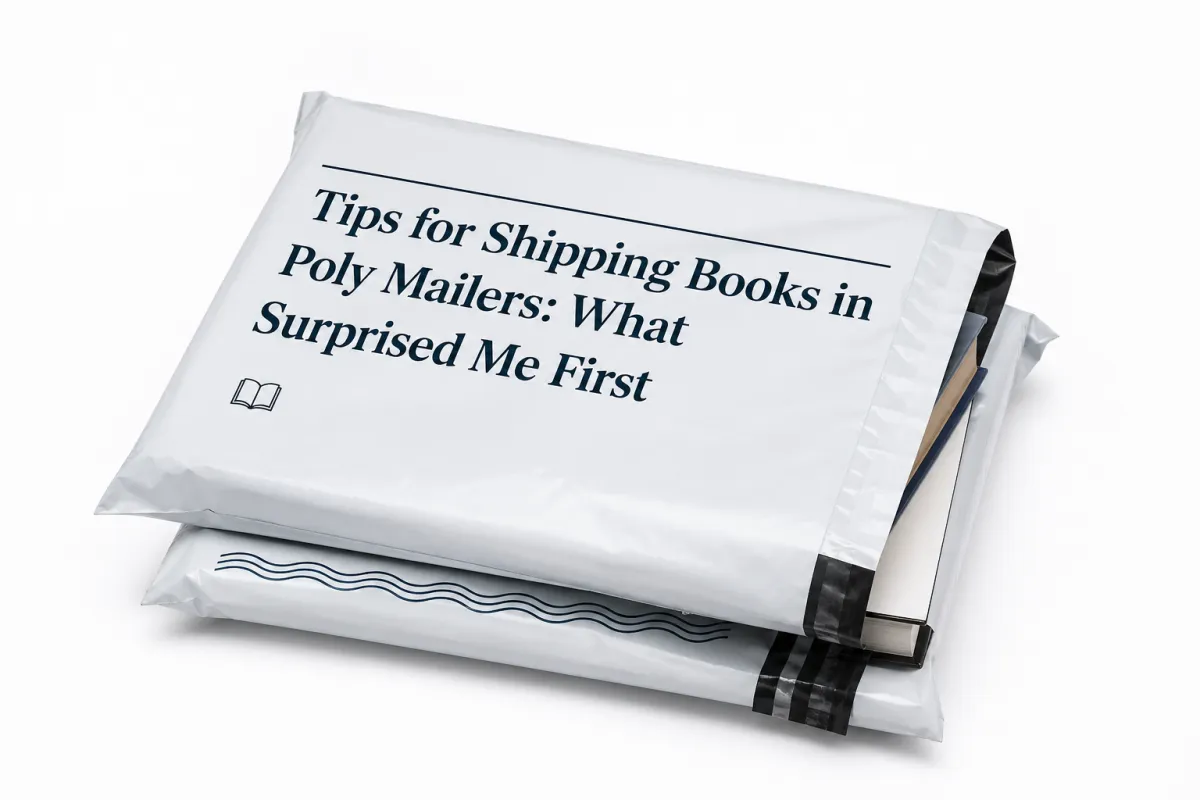
The biggest surprise for most sellers is that packaging failure usually starts with movement, not impact. A single loose inch inside a mailer lets the book edge rub against the seam, the flap, or the carrier sorting belt. I saw that on a client job for a regional publisher in Columbus, Ohio: they were using 10 x 13 poly mailers for 8.25 x 10.5 paperbacks, and about 6 out of every 100 books were arriving with scuffed corners because the title could wiggle diagonally. Once we moved them to a tighter 9 x 12.5 format and added a 0.8 mm corrugated backing card, the damage rate dropped to about 1.5% over a 400-order test. That before-and-after result is exactly why I keep preaching fit before anything else.
That is the heart of tips for shipping books in poly mailers: match the mailer to the book instead of reaching for whatever size is stacked closest to the bench. Poly mailers are thin, flexible shipping materials made from plastic film, usually co-extruded LDPE or LLDPE blends around 2.5 mil to 3.0 mil thick, and they are used for books when the title is flat, durable, and not too heavy. They show up everywhere in ecommerce shipping because they cost less than boxes, seal quickly, and keep the package profile low enough to avoid higher dimensional weight charges. For a paperback or a pair of slim books, that can be a smart fit. For a signed hardcover with a foil-stamped dust jacket printed in Suzhou, the risk changes fast. I have seen a glossy jacket take a tiny crease and somehow make the entire order feel like a bad day.
The core promise stays simple. Lower postage. Faster packing. Less void fill. That is why a lot of small sellers default to tips for shipping books in poly mailers instead of boxes. In a 5,000-piece quote I reviewed last spring, a plain 2.5 mil white mailer came in at $0.18 per unit, while a basic single-wall book box with paper void fill landed closer to $0.61 before tape. Add another 30 to 50 seconds of assembly time per box, and the labor difference gets hard to ignore if you process 150 orders a day in Dallas, Phoenix, or Charlotte. I do not blame anyone for looking at those numbers and thinking, "Well, of course we are using mailers." The trick is not stopping at the first savings chart.
Still, I never pretend poly mailers solve every problem. They work best when the book is sturdy, the corners are already protected by good bindery work, and the final package has almost no internal shift. That is why I tell clients that tips for shipping books in poly mailers are really a fit-and-risk conversation. A mass-market paperback, a trade paperback, or a two-book set with matching trim sizes can do well. A gift edition with foil stamping, a 1,200-page reference title, or a heavy dust jacket? I would think harder. A very expensive hardcover from a first-run printer in Ningbo? I would think twice and probably once more after that.
If you want to stay practical, look at three things: the book's spine strength, the amount of empty space inside the package, and the route it will travel. A book going 180 miles by ground from Chicago to Indianapolis has a different risk profile than a book going coast to coast through Memphis, Salt Lake City, and Tacoma. The same mailer can be fine for one and too light for the other. That is why the best tips for shipping books in poly mailers always begin with the book itself, not the mailer catalog. The catalog is useful. The book is the boss.
How do tips for shipping books in poly mailers actually work?
The protection logic is not complicated, though it is easy to underestimate. A poly mailer blocks dust and offers solid resistance to rain splash, so the outer surface of the package stays cleaner than a plain paper envelope. It also compresses into a slim shape, which helps the parcel move through carrier networks without paying for excess air. Those two qualities are why tips for shipping books in poly mailers often outperform boxes on cost for lightweight reading copies sent from fulfillment centers in Atlanta or Reno. I have a soft spot for simple Packaging That Actually does its job without drama. Packaging should not need a cheering section.
Fit matters more than thickness. I have seen 3 mil mailers fail where 2.5 mil mailers worked simply because the 2.5 mil version was the right size and hugged the product. A loose book can slide two inches during a conveyor drop, and that small shift is enough to crease a corner or burnish the cover stock. The packaging lesson is blunt: package protection comes from reducing motion first, then adding material strength second. If the book can rattle, the mailer is already losing the fight.
Internal packing materials do a lot of the quiet work. A thin backing board can stiffen the package and keep a paperback from flexing. Tissue or kraft paper can take up small gaps. A bubble sleeve adds cushion, but it also adds thickness, so it is worth using only when the extra padding does not push you into a higher postage bracket. On a signed copy project I handled, we used a 0.8 mm corrugated insert plus a 1/8-inch bubble sleeve for a 9 oz book, and the combination held movement to nearly zero. That setup looked almost too plain to be effective, which is usually a good sign in packaging.
Hardcovers behave differently. The boards are rigid, the corners are more exposed, and a dust jacket can crease under pressure even if the book block itself survives. That is why the best tips for shipping books in poly mailers usually separate paperbacks from hardcovers. A paperback can tolerate slight compression. A hardcover often needs a backing board, a tighter sleeve, or a switch to a box if the cover finish is delicate or collectible. I have a mild grudge against dust jackets for this reason; they look beautiful on a shelf and somehow seem personally committed to getting damaged in transit.
Book quantity changes the equation too. One slim novel in a mailer is easy. Two paperbacks stacked together can create a stable rectangle if the trim sizes match and the sleeve is the right length. Three mismatched books, though, can shift against each other like dominoes during a 1,500-mile route. The more the internal stack can move, the more likely the shipment is to arrive with rubbed corners. This is why I never give generic tips for shipping books in poly mailers without asking how many titles are in the order and what their combined thickness measures on a ruler instead of a guess.
For teams that want validation instead of guesswork, I point them to ISTA testing methods. You do not need a lab for every SKU, but even a small drop-and-shake test reveals a lot about how a package behaves under normal handling. I have seen a 20-second shake test save a client from weeks of avoidable refunds, and the cost of that test was basically one workbench and 12 sample copies from a print run in Nashville. That is one of those boring little habits that saves a lot of money and a surprising amount of sanity.
Key Factors in Tips for Shipping Books in Poly Mailers
Weight and dimensions are the first numbers I check. A difference of 0.2 inches in thickness can move a parcel into a higher rate band, especially when the carrier uses dimensional weight rather than actual scale weight. That is why tips for shipping books in poly mailers need to account for the book's exact trim size, not just whether it is "small" or "medium." A 6 x 9 paperback and a 6.5 x 9.25 paperback sound similar, but they behave differently in a 9 x 12.5 mailer because the extra quarter inch can create seam pressure and force the label toward the fold line.
Condition matters just as much. A common reading copy with a few shelf marks is not the same thing as a first edition, a signed copy, or a gift book with premium lamination finished in Shanghai or Guangzhou. In my experience, clients sometimes treat all books as if they were commodity items, and that is where trouble starts. A collectible title deserves stricter packaging rules, even if the postage savings are tempting. Good tips for shipping books in poly mailers always leave room for the value of the book itself. A cheap package for an expensive book is a bargain only until the first complaint lands in your inbox.
Carrier handling is the hidden variable. Books travel on conveyor belts, slide down chutes, and stack against other parcels in bins and cages. They are not being hand-carried across a velvet table in a quiet studio. That means corner protection and seam integrity matter more than most sellers expect. I have watched a perfectly printed mailer split at the side seam after a package landed at the bottom of a tote from 3 feet up. The contents were fine, but the exterior tear still triggered a complaint because the buyer saw it as rough handling. Fair enough, honestly. If I opened a package and the outside looked abused, I would wonder what happened to the inside too.
Weather and route length are easy to ignore until they are not. A shipment moving through humid summer conditions in Houston or left on a porch in Tampa during a 2 p.m. thunderstorm needs more moisture resistance than a package going to a climate-controlled office in Seattle. Poly mailers are better than paper mailers here, but they are not sealed vaults. If your route includes long hub-to-hub transit, storm-prone regions, or rural delivery with porch exposure, the safest tips for shipping books in poly mailers will include an inner sleeve or a switch to a rigid package for sensitive titles.
Customer expectations can be the deciding factor. A buyer of a used textbook may accept a tiny bit of shelf wear. A buyer of a $38 special edition expects a cleaner presentation and often notices the first crease before they notice the title page. I learned that in a client meeting with a niche nonfiction publisher in Milwaukee: they were getting fewer complaints from bargain-bin titles packed in mailers than from premium editions packed the same way. The books were identical in size, but the customer psychology was not. That is why tips for shipping books in poly mailers should always match packaging quality to price point. People forgive more on a $9 paperback than they do on a title they saved up for.
If sustainability is part of the brief, the material choice matters too. The EPA recycling guidance is useful when you are deciding whether to offer recyclable components, reduce mixed-material packaging, or simplify the outer carton. I also like FSC-certified inserts when a paper stiffener is needed, because a small board can do real work without turning the package into a material-heavy bundle. That balance matters to customers in Brooklyn, Portland, and Minneapolis, and it matters to people on the packing floor too, because nobody enjoys wrestling with a mountain of unnecessary packaging before lunch at 12:30.
Cost and Pricing for Shipping Books in Poly Mailers
Cost is where the argument usually gets real. On paper, poly mailers look cheaper because the unit price is lower and the assembly takes less time. In a typical comparison, a 2.5 mil poly mailer might cost $0.16 to $0.24 each at volume, a backing board might add $0.05 to $0.09, and a label plus tape might add another $0.03 to $0.06. A small box, by contrast, can start around $0.38 and move higher once you add void fill, extra tape, and the longer labor time. That gap is why tips for shipping books in poly mailers are so attractive to ecommerce teams in Nashville, St. Louis, and Salt Lake City.
Postage is where the bigger savings often show up. A package that stays flat can avoid dimensional weight penalties, and those penalties can add more than the mailer itself costs. I have seen a 12-ounce paperback price like a 1.9-pound parcel simply because the box forced the dimensions into a worse bracket. If the mailer keeps the shipment below the carrier's dimensional threshold, the total shipping bill can drop by $1.10 to $3.40 depending on zone and service level, and that is before any residential surcharge is added. That is not small if you ship hundreds of books each week.
Labor is the second savings bucket. A mailer with a tight fit can be packed in 20 to 35 seconds once the process is standardized. A box with inserts, tape, and a fold sequence often takes 55 to 90 seconds. If your team ships 300 orders in a shift, that extra 30 seconds per order adds 2.5 labor hours. Over a month, the difference can be large enough to justify a better packing standard. I do not think enough sellers include labor in their tips for shipping books in poly mailers calculations. They compare carton prices and forget the real villain is often time.
Then there is the hidden cost of failure. A mailer that tears, a corner that arrives crushed, or a label that peels off in transit can erase weeks of savings. One distributor I advised had a mailer cost of just $0.21, but a 4.4% damage rate on premium hardcovers pushed their total re-ship cost above the savings from not using boxes. That is why the cheapest option is not always the cheapest outcome. In packaging, rework is expensive because it multiplies time, postage, and customer service labor.
Here is a simple way to model the numbers. Use four inputs: material cost per order, average postage, damage rate, and re-shipment rate. Add labor if you want a fuller picture. If the mailer cuts $1.90 off postage but adds 2% damage on a $22 book, the math may still favor the mailer. If it adds 6% damage on a $48 title, the box may win fast. That is the reason tips for shipping books in poly mailers need a spreadsheet, not a hunch. Gut instinct is nice for dinner plans; it is less useful for fulfillment math.
| Packaging Option | Typical Unit Cost | Protection Level | Best Fit |
|---|---|---|---|
| Plain poly mailer, 2.5 mil | $0.16-$0.24 | Light | Single paperbacks, low-risk ecommerce shipping |
| Poly mailer + backing board | $0.22-$0.33 | Moderate | Trade paperbacks, used books, tighter fit orders |
| Padded poly mailer | $0.28-$0.45 | Moderate to strong | Slightly fragile books, long routes, mixed handling |
| Shipping box with insert | $0.38-$0.75 | Strong | Hardcovers, collectible titles, gift orders |
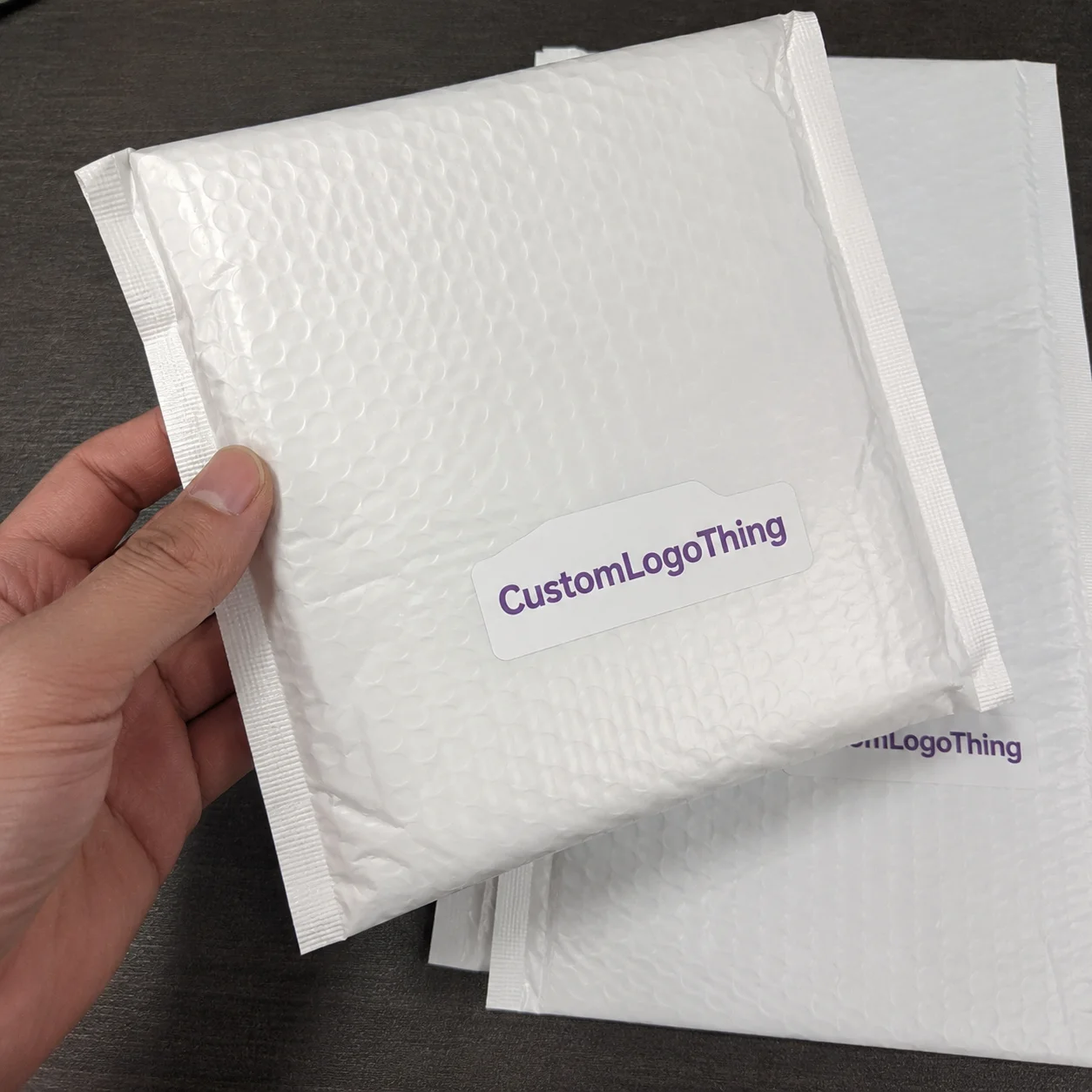
One practical note from sourcing: when a client asked for branded mailers, we quoted custom Printed Poly Mailers at roughly $0.18 per unit on 5,000 pieces with a 12 to 15 business day lead time from proof approval in our Guangzhou plant. That gave them a clean way to compare Custom Poly Mailers against plain stock formats and against the box option. If you are trying to balance image and cost, that comparison matters more than a generic cheap-versus-expensive debate. Good branding is great, but not if the package arrives looking like it went three rounds with a conveyor belt in Memphis.
Step-by-Step Process and Timeline for Shipping Books in Poly Mailers
The packing sequence should be boring in the best possible way. First, inspect the book for bent corners, loose dust jackets, or surface scuffs. Second, place it into the chosen sleeve or backing setup. Third, test the fit inside the mailer before sealing. That rhythm is a big part of the best tips for shipping books in poly mailers because consistency lowers error rates. A five-step routine that every picker can follow beats a clever one-off solution that only one person understands. I have seen too many "special methods" collapse the moment the person who invented them is on lunch break at 1:15 p.m.
- Check the book edge-by-edge for damage, and separate premium titles from standard orders.
- Choose the right mailer size, usually within 0.25 to 0.5 inch of the book's width and height where possible.
- Add a backing board, tissue wrap, or inner sleeve if the book can shift more than a few millimeters.
- Insert the book, flatten the package, and shake it gently for 3 to 5 seconds to check movement.
- Seal the flap fully, reinforce if needed, weigh the parcel, and place the label where it will not curl.
The shake test is small, but I swear by it. If a book slides around inside the mailer, the package is telling you the fit is wrong. I learned that during a fulfillment audit where we packed 60 books in under an hour. The team thought the mailers were fine until we did the shake test and found that 17 of the 60 could move enough to hit the seam. Those 17 were the same 17 that later showed corner wear in simulated carrier handling. Nothing glamorous about that lesson, just a useful one.
Label placement sounds trivial until it creates a rework problem. Keep the label centered on the flattest section of the package and away from the seal edge. If the label crosses a seam, it can curl or peel. I have seen a package get held because the scanner could not read a wrinkled barcode, and that one error added two days to the delivery on a route to Miami. Clean label placement is one of those tips for shipping books in poly mailers that saves more time than people expect. The label is not decoration. It is the passport.
For a team doing high-volume order fulfillment, batch work helps a lot. Group paperbacks together, hardcover orders together, and bundle orders together. That way, the person packing does not switch standards every three minutes. In one client warehouse in Indianapolis, this reduced packing errors by about 28% over two weeks because the team stopped guessing which insert belonged with which title. If you are moving from ad hoc packing to a structured process, Custom Packaging Products can help you standardize the materials around the books you ship most, from a 5.5 x 8.5 paperback to a 9 x 11 coffee-table edition.
Timing matters because speed and accuracy pull in opposite directions. A trained packer can handle a single paperback order in under 30 seconds once the materials are staged. A mixed order with a board insert, tissue wrap, and manual label correction can take 70 seconds or more. That is not a failure; it is just the reality of ecommerce shipping. The point of tips for shipping books in poly mailers is to make the slower order the exception, not the habit. If every order feels like a little puzzle, the process needs work.
Before you lock in a workflow, test three or four common order profiles: one paperback, one hardcover, one two-book bundle, and one premium title. Ship them across the same zone and inspect the arrival condition in 48 to 72 hours if you are testing locally, or 4 to 6 business days if you are comparing coast-to-coast routes. If you see rubbing at the corners or bowing at the spine, the timeline may still be fine, but the packaging spec needs adjustment. I would rather spend an afternoon testing than spend a month refunding. That is not an inspiring slogan, but it has saved me from a lot of headaches.
Common Mistakes When Shipping Books in Poly Mailers
The most common mistake is using a mailer that is too large. A lot of sellers assume more room equals more safety, but for books, the opposite is often true. A book that moves half an inch inside a 10 x 13 mailer can arrive with edge wear even if the plastic film never punctures. That is why one of the simplest tips for shipping books in poly mailers is to size down whenever the title allows it. Extra space is not cushioning. It is a little invitation for motion.
Skipping corner protection is another easy way to create avoidable damage. Hardcovers are the biggest offenders here. Their corners are rigid, and a rigid corner can dent when pressure hits the edge of a conveyor bin or a tote stacked at knee height. A slim backing board or a slightly more structured insert can solve that problem for a few cents. I think a lot of teams underestimate how much corner shape drives book complaints. The book may be fine internally, but buyers judge by the first visible crease. That first crease feels like the whole order, fair or not.
Overstuffing is the mistake that looks efficient until it fails. If the mailer seam is stretched tight enough to shine, you are asking for a split in transit. The seal needs some breathing room. I have watched a 3 mil mailer burst because the stack inside pushed directly against the flap fold. That failure looked like a material issue, but the real problem was package geometry. Good tips for shipping books in poly mailers always respect the seal line. It is amazing how much trouble can come from ignoring one little fold.
Moisture protection gets ignored more often than it should. A porch delivery in summer rain can happen in five minutes, and the buyer may not know the package sat in damp conditions on the way to the truck. Poly mailers resist moisture better than paper mailers, but weak seams, punctures, or long exposure still create risk. If the route is weather-heavy, add an inner sleeve, use a more protective film, or switch to a box for higher-value titles shipped to regions like Florida, Louisiana, or coastal Virginia.
Another mistake is assuming one setup works for every title. A 128-page paperback, a 384-page trade hardcover, and a two-book bundle each ask for a different structure. That is where custom thinking pays off. You might use the same mailer family, but not the same internal pack for every order. The better tips for shipping books in poly mailers build rules by SKU family instead of pretending all books behave the same. Books are not widgets. They are paper objects with opinions.
I also see teams ignore inspection data. If 12 out of 200 orders come back with corner wear, that is not random noise. That is the system talking. Track the title, the route, the mailer size, and the insert type. After a few hundred orders, patterns become obvious. One client discovered that all of their damaged shipments were going to a single region with rough handling at a cross-dock in Kansas City. The fix was not a bigger mailer; it was a tighter insert and a better outer seal. That kind of data-driven annoyance pays off.
Expert Next Steps for Tips for Shipping Books in Poly Mailers
If you want a practical next step, build one page of rules by book type. I would start with four categories: paperback, hardcover, signed copy, and multi-book bundle. Give each category a mailer size, an insert type, and a seal standard. That one-page document can save hours of training later. In my experience, the best tips for shipping books in poly mailers become reliable when they are written down instead of remembered from person to person. Memory is fine for birthdays. It is not great for fulfillment.
Then run a small ship test. Pick three or four common orders, pack them with your current materials, and compare the results on damage, packing time, and postage. Do not just look at the average. Look at the outliers. One bad outlier on a premium title can tell you more than 20 clean shipments on a low-value paperback. This is exactly how I would evaluate shipping books in poly mailers for a new product line or a seasonal book club in Denver or Raleigh. A few test runs can save a pile of cleanup later.
Next, talk to your carrier rep or fulfillment team about the package dimensions that create the fewest exceptions. Sometimes a mailer that is technically acceptable still triggers more manual handling because of how it feeds through the network. A half-inch reduction in width can solve that problem. I have seen it happen on the floor and in the data. That is why tips for shipping books in poly mailers should be grounded in carrier behavior, not just in what looks tidy on a packing table. The carrier network has its own personality, and it does not care about your neat stacks.
Finally, build a materials checklist. Include the mailer size, the insert type, the label position, and the seal method. If you use branded packaging, make sure the print does not cover the flap or obscure the barcode area. If you want to compare a mailer-first strategy with a boxed alternative, review Custom Shipping Boxes and your mailer line side by side, then pick the format that keeps the damage rate low enough to protect margin. That is the real purpose of tips for shipping books in poly mailers: not to push one package style over another, but to match the package to the book and the economics.
My honest view is that the best packaging decision is usually the one that survives a rough week. If your team can ship 500 orders, absorb a weather delay, handle a spike in returns, and still keep the books clean, then the setup is working. If not, the package is too loose, too expensive, or too fragile. For Custom Logo Things, I would rather help someone Choose the Right shipping format once than help them fight refunds all quarter. That is why I keep coming back to tips for shipping books in poly mailers as a balancing act between protection, speed, and cost control, usually in a 2.5 mil mailer with a tightly matched insert and a tested seal.
Are tips for shipping books in poly mailers different for paperbacks and hardcovers?
Yes. Paperbacks usually fit more safely because they flex a little under pressure and match the slim profile of a poly mailer, while hardcovers need more corner protection and a tighter internal fit. For a $28 hardcover with a dust jacket, I would usually add a backing board or move to a box if the route is long, the cover finish is matte lamination, or the shipment is going to a region with rough handling like South Florida.
What is the best way to keep a book from moving inside a poly mailer?
Use a mailer sized closely to the book so there is only a small gap, often less than 0.5 inch on each side. If the fit is still loose, add a backing board, folded paper, or a sleeve. Before sealing, do a 3- to 5-second shake test; if the book shifts noticeably, the setup is too loose for reliable shipping.
How much do poly mailers usually save compared with boxes for books?
Savings often come from both material cost and lower dimensional weight charges. In a common comparison, a mailer setup may cost $0.22 to $0.33 with inserts, while a small box setup may run $0.38 to $0.75 before labor. The exact savings depend on book size, carrier zone, and whether the box would push the shipment into a higher rate band on a 1.2-pound billable weight.
Do poly mailers protect books from rain or moisture during transit?
They usually offer better moisture resistance than paper packaging because the outer layer is plastic. That said, they are not waterproof in every condition, especially if seams are weak or the package gets soaked. For weather-sensitive shipments, I would add an inner protective layer or switch to a more rigid outer package for a $35 title going through Gulf Coast humidity.
When should I stop using poly mailers and switch to boxes for books?
Switch when the book is collectible, oversized, or likely to suffer corner damage from compression. Boxes also make sense when the order contains multiple books that can rub against each other. If your test batch shows more than a few damaged corners on a $40 title, the box cost is often cheaper than replacing the order.
If you are trying to tighten up book fulfillment, start with the numbers on your three most common titles, test your fit, and then refine the packaging spec. That is the most practical version of tips for shipping books in poly mailers I know: measure movement, measure damage, measure postage, and let those three numbers tell you whether the mailer is the right tool or whether a box will protect both the book and the margin. A 9 x 12.5 mailer, a 350gsm insert, and a 12-day proof-to-production schedule can be the difference between a clean delivery and a refund that eats the whole profit on a $16.99 book.