Buyer Fit Snapshot
| Best fit | holiday ecommerce packaging cost hacks work for packaging buyers comparing material specs, print proof, MOQ, unit cost, freight, and repeat-order risk where brand print, material, artwork control, and repeat-order consistency matter. |
|---|---|
| Quote inputs | Share finished size, material target, print colors, finish, packing count, annual reorder estimate, and delivery region. |
| Proofing check | Approve dieline scale, logo placement, barcode or warning zones, color tolerance, and any recyclable or compostable wording before bulk production. |
| Main risk | Vague material claims, crowded artwork, or missing packing details can create delays even when the unit price looks attractive. |
Fast answer: Holiday Ecommerce Packaging Cost Hacks Work: Cost, MOQ, Proof, and Reorder Checks should be specified like a repeatable production item. The safest quote includes material, print method, finish, artwork proof, carton packing, and reorder notes in one written spec.
What to confirm before approving the packaging proof
Check the product dimensions against the actual filled item, not only the sales mockup. Ask for tolerance on folds, seals, hang holes, label areas, and retail display edges. If the package carries a logo, QR code, warning copy, or legal claim, reserve that space before decorative graphics fill the panel.
How to compare quotes without losing quality
Compare board or film grade, print process, finish, sampling route, tooling charges, carton quantity, and freight assumptions side by side. A lower quote is only useful if the supplier can repeat the same color, closure quality, and packing count on the next order.
Top Holiday Ecommerce Packaging Cost Hacks That Work
A box that is even 1 inch too large can tip a parcel into a higher shipping tier, and that tiny mismatch can wipe out margin faster than a bad promo code. The real value of top holiday ecommerce packaging cost hacks is not a tiny freight discount and a self-congratulatory email; it is redesigning the parts of packaging that quietly inflate dimensional weight, void fill, and labor on nearly every order. Peak season makes those leaks louder. Gift sets, bundles, and promo kits usually take longer to pack and often need more components than a standard SKU flow, so every extra motion shows up in the budget. The smartest move is to remove waste without making the unboxing feel thin or forgettable. That balance matters because top holiday ecommerce packaging cost hacks only matter if they protect margin and still make the customer feel the order was built on purpose.
For online brands, packaging is not decoration. It is product protection, shipping math, and brand theater all at once. Miss one piece and the order costs more than it should. Get it right and the savings show up in unit cost, storage, packing speed, and fewer customer service headaches. That is a rare combination, which is why packaging deserves a real seat at the table instead of being handled as a last-minute art file.
I have seen teams treat packaging as a final step and then act surprised when the warehouse bill tells a different story. A structure that looks fine in a mockup can turn into a bottleneck once orders jump from 50 a day to 5,000. That is not a design issue alone. It is a fulfillment issue, a shipping issue, and a cash-flow issue rolled into one.
Why Top Holiday Ecommerce Packaging Cost Hacks Matter
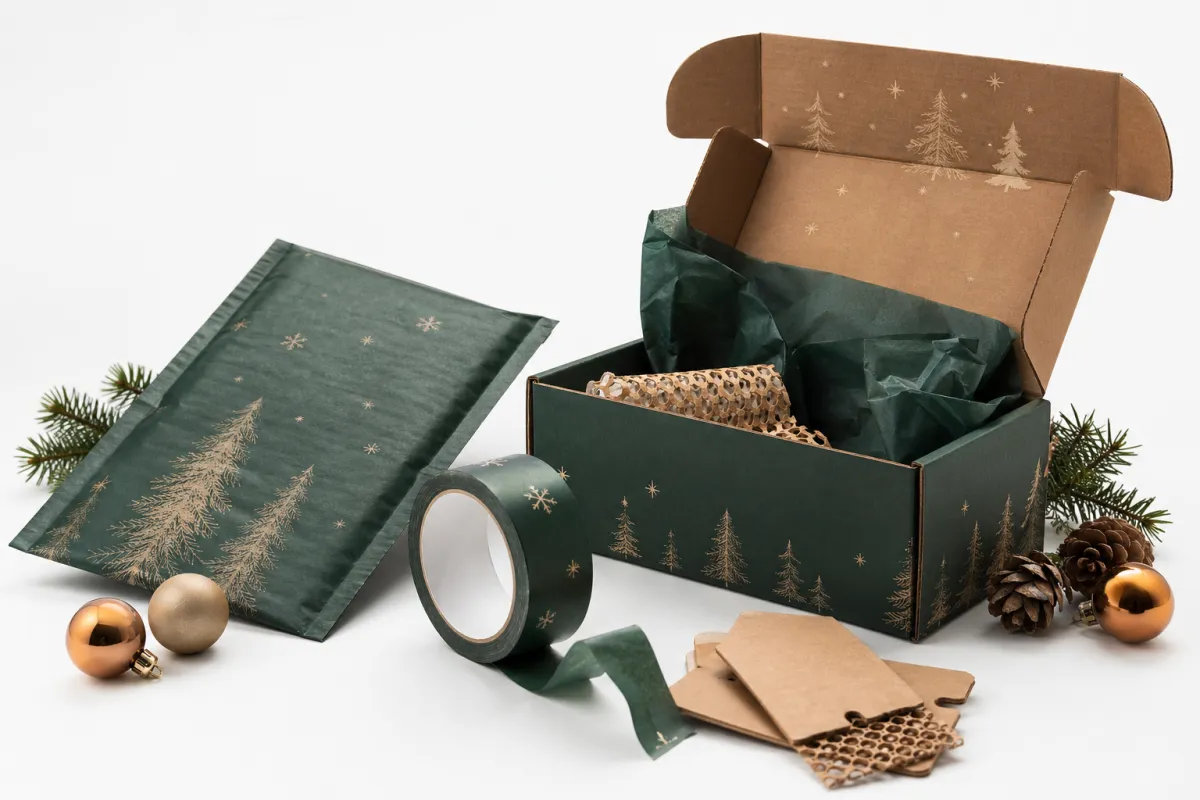
Holiday orders are where packaging waste gets loud. A bundle that fit in a compact mailer in October somehow becomes a bulky, overstuffed carton in November because someone added tissue, a coupon insert, a ribbon, a branded card, and three inches of air. That is how brands burn money without seeing it in real time. Top holiday ecommerce packaging cost hacks matter because the cost problem usually starts well before carrier pickup. It starts with box structure, material stack, and the number of movements the packer makes before the label gets applied.
From a packaging buyer’s point of view, three costs move together:
- Dimensional weight and carrier rating rules, which can push a parcel into the next bracket.
- Void fill, which adds material cost and labor at the packing bench.
- Pack-out time, which gets painful when orders jump from 50 a day to 500 a day.
That is why top holiday ecommerce packaging cost hacks are usually structural decisions, not purely aesthetic decisions. A tighter dieline can save more than switching ink colors. A flat-shipped mailer can save more than a fancy finish. A standardized insert can save more than a custom sleeve for every SKU. The savings are boring, methodical, and measurable. Honestly, that is where the money usually hides.
There is also a brand risk in going too bare-bones. Holiday shoppers still expect some sense of occasion. If the package looks like an anonymous warehouse carton, people notice. If it looks rushed, trust softens. That does not mean overbuilding. It means choosing a clean, properly sized structure and spending on the elements customers can actually see and remember. Good branded packaging does not need to be expensive. It needs to be deliberate.
Top holiday ecommerce packaging cost hacks get even stronger when quality is translated into numbers: if a packaging choice adds cost but does not improve protection, pack speed, or visible presentation, it does not belong in production.
Practical rule: if a packaging choice adds cost but does not improve protection, pack speed, or visible presentation, it probably belongs on the cutting room floor.
Brands that treat product packaging as a cosmetic afterthought often create the same costly chain reaction. They order oversized cartons because they feel safe. They add too many inserts because fit confidence is low. They print full coverage because it looks premium in the sample room, then wonder why margin vanished after the third revision and one reprint. The smarter route is to use top holiday ecommerce packaging cost hacks to reduce waste first, then add the minimum number of brand elements needed to preserve retail packaging quality.
If you need a starting point, audit your top three holiday SKUs and record exact outer dimensions, average void fill, and average packing time per unit. That one spreadsheet usually reveals the most expensive mistake right away. For many brands, the problem is not the box itself. It is the gap inside it, or the extra layer added “just to be safe.”
When teams stop treating packaging like art and start treating it like a shipping packaging strategy, they usually uncover a 10-20% gap between expected and actual cost in one pass. That is why this topic is not a nice-to-have; it is a margin-control discipline.
Product Details: Which Packaging Formats Save the Most
Not every format does the same job, and that is where a lot of holiday budgets get wasted. Top holiday ecommerce packaging cost hacks work best when the format matches the product instead of forcing one premium option across the entire line. Mailers, folding cartons, sleeves, tissue, stickers, and inserts each have a role. The trick is to choose the lowest-cost format that still protects the product and supports the brand.
Here is the practical breakdown.
| Format | Typical Use | Cost Profile | Best Advantage |
|---|---|---|---|
| Corrugated mailers | Subscription boxes, bundled gifts, light-to-medium products | Low to moderate | Ships flat, packs fast, good protection |
| Folding cartons | Cosmetics, candles, small electronics, gift sets | Low to moderate | Clean shelf look, efficient print area |
| Paper sleeves | Simple branding on stock boxes or rigid shells | Low | Fast upgrade to package branding without full custom cost |
| Branded tissue and stickers | Gift presentation and light retail packaging finishes | Very low | Visible branding without structural complexity |
| Custom inserts | Fragile items, multi-piece kits, premium sets | Moderate to high | Reduces damage and keeps components from shifting |
| Rigid boxes | High-margin gifts, luxury sets, limited releases | High | Strong presentation, but expensive if overused |
The cheapest unit price is not always the cheapest landed cost. That is the same mistake repeated every season. A plain kraft box may look like the bargain option, but if it needs extra void fill, takes longer to pack, and increases returns because the product shifts in transit, its landed cost can end up higher than a better-structured folding carton. Top holiday ecommerce packaging cost hacks are about total cost, not the first line on a quote.
Plain kraft works well when the brand wants a natural, understated look and the product is not especially fragile. White board can be better when print clarity matters and the design needs cleaner color reproduction. Rigid boxes are worth it only when the product margin can support them, or when the customer expects a giftable presentation that actually lifts repeat purchase. Hybrid pack-outs often give the best balance: a stock shipper, a printed sleeve, and one branded insert can look polished without turning the packaging budget into a bonfire.
For holiday ecommerce, the highest-value questions are still simple and practical: Can it ship flat? Does it nest efficiently in storage? Can a packer assemble it in under a minute? Does it hold the product without a pile of filler? If the answer is yes, you are already close to the right structure. If the answer is no, top holiday ecommerce packaging cost hacks should start with format changes, not just chasing a lower print price.
This is one of the clearest examples of packaging bill of materials thinking. If your bill of materials includes an extra ribbon, a decorative insert, and a padded layer that adds no practical value, trim those items before you touch art. That is one of the most common top holiday ecommerce packaging cost hacks that actually improves fulfillment efficiency.
In one seasonal program I reviewed, a brand moved from a custom rigid set to a stock mailer with a printed sleeve and a die-cut insert. The outer dimensions barely changed, but pack time dropped by almost a third and the return rate stayed flat. The product was not less premium. It was simply less overbuilt. That kind of swap is the sweet spot.
Specifications That Actually Lower Packaging Spend
Specs drive price more than most buyers want to admit. Board grade, flute choice, thickness, print coverage, insert complexity, and finish selection all influence unit cost. If your packaging spec is vague, the quote drifts upward because suppliers have to assume more material, more setup, and more risk. Top holiday ecommerce packaging cost hacks begin with tighter specs and fewer unnecessary variables.
Standardizing dimensions is one of the cleanest savings moves available. If three of your best-selling holiday items can fit into one outer size with only a small insert change, do that. It reduces dieline changes, shortens approval cycles, lowers tooling variation, and leaves less dead inventory after the season ends. Most brands do not need six custom sizes for six slightly different SKUs. They need one or two sensible families that cover the sales curve, plus a backup size for the outliers.
Decoration deserves the same discipline. Full-coverage print sounds exciting, but it is often a cost trap. A one-color print on kraft, a spot logo on white board, or a narrow branding panel can produce stronger package branding than a busy all-over design that chews up ink and slows production. In practice, restrained graphics often look more expensive because the packaging feels clean rather than crowded. That is one of the quieter top holiday ecommerce packaging cost hacks: let structure carry the design, not just artwork.
Material choice should follow the product, not ego. Recycled kraft and uncoated paperboard can keep costs down and give the packaging an honest, natural look. For some categories, that is perfect. For fragile products, though, sturdier board or a better flute can prevent damage costs that wipe out any savings from cheaper material. I would rather see a buyer spend an extra few cents on structure than save those cents and pay for returns, replacements, and complaints later. Cheap packaging that fails is not cheap. It is delayed expense with a prettier invoice.
According to the ISTA test methods, structural performance matters because transit conditions are not gentle, even when the shipment seems small. If your materials carry environmental claims, paperboard and paper components should be aligned with the standards you actually use, not just nice-sounding marketing copy. The FSC chain of custody matters when brands want responsible sourcing without muddying the message. Those details build trust, and trust is part of the sale.
Some of the most useful top holiday ecommerce packaging cost hacks are also the least glamorous:
- Limit print to one or two panels instead of full wrap coverage.
- Use fewer unique insert shapes and keep cavity designs simple.
- Choose finishes carefully; soft-touch and specialty coatings add cost quickly.
- Pick board thickness that protects the product without overspecifying the box.
If you are sourcing custom printed boxes, ask for a spec comparison. Have the supplier show you how the quote changes when board grade changes, print coverage changes, and insert count changes. The quote often tells a very different story once the details are separated. That is where real top holiday ecommerce packaging cost hacks live, not in the headline price.
Another technical lever is dimensional weight optimization. If changing one flap, sidewall, or internal insert lowers the outer measurement enough to stay in a lower carrier rating bracket, that single move can outrun several cosmetic enhancements combined.
Top Holiday Ecommerce Packaging Cost Hacks for Pricing and MOQ
MOQ is where holiday budgets either get disciplined or get sloppy. The unit price usually drops as quantity rises, but that does not mean the largest order is always the right order. Top holiday ecommerce packaging cost hacks are about knowing where the price step-down matters and where it only locks cash into inventory you may never move.
Here is the usual pattern. Very small runs carry the highest setup burden because prepress, tooling, and production changeovers are spread across fewer units. Once you move into a more efficient tier, the quote often drops in a way that truly matters. After that, savings flatten out. That is the point where a larger order can become a storage problem instead of a savings opportunity.
For many custom programs, the practical order tiers look something like this:
- 250-500 units: good for trials, but unit cost is usually highest.
- 500-1,000 units: often the first tier where pricing starts to make sense.
- 1,000-3,000 units: usually the sweet spot for many holiday SKUs.
- 3,000+ units: useful when turnover is proven and storage is planned.
That is not a universal rule. It depends on format, print method, and material. But it is a useful starting point when you compare quotes for top holiday ecommerce packaging cost hacks. The key question is not “What is the lowest unit price?” The key question is “What order size gives me the best landed cost without filling the warehouse with dead stock?”
Cost comparisons should include the boring extras every time, because that is where surprise spend hides: tooling, plates, freight, sampling, rework, storage, and rush charges. If you forget those, the lowest quote can become the most expensive order in the room. A good supplier should be willing to show total landed cost, not just production cost. That makes it much easier to compare blank, lightly printed, and fully custom options side by side.
Here is a realistic way to think about the branding ladder:
- Blank stock packaging: lowest setup, weakest package branding.
- Lightly printed stock packaging: modest cost, solid for fast holiday programs.
- Fully custom packaging: best visual control, but it needs volume and lead time.
That ladder is the backbone of top holiday ecommerce packaging cost hacks. You do not need to jump straight to the top rung. Sometimes a branded sleeve, a sticker seal, and a custom insert do the same job at a lower unit cost than a fully custom shell. That is especially true for seasonal packaging where the design only needs to work for a short run.
For buyers who want to explore options without overcommitting, Custom Packaging Products should be compared with a hybrid approach before signing off on full custom runs. The right answer is often a mix of stock and custom, not a monolithic packaging spec that looks impressive in a PDF and painful in accounting.
One more thing: ask for tiered pricing before you approve anything. If moving from 500 to 1,000 units saves 12 percent but doubles storage pressure, You Need to Know that before you say yes. If moving from 1,000 to 2,500 units saves only 4 percent, the extra cash may be better used on fulfillment speed, marketing, or customer support. That is how top holiday ecommerce packaging cost hacks protect margin instead of moving the problem to another line item.
And yes, sometimes the quote looks cleaner than the reality. I have watched a team approve a “better” unit price and then spend the savings on pallet storage and emergency air freight. That is a very expensive way to feel clever.
How Do Top Holiday Ecommerce Packaging Cost Hacks Prevent Rush Fees?
Holiday packaging gets expensive fast when the timeline is loose. A late proof can trigger a rush charge. A delayed sample can push production into a crowded window. A last-minute artwork change can force a reprint. Top holiday ecommerce packaging cost hacks work best when the schedule is treated like a production asset, not a loose note taped to the wall.
The clean order flow is usually straightforward:
- Brief and specs.
- Dieline or structural layout.
- Digital proof or hard sample.
- Approval.
- Production.
- Packing and freight.
Most delays happen because one of those steps gets compressed. Not because the factory is mysterious. Usually it is artwork revisions, late approvals, supplier congestion, or freight delays. That is it. No drama, just poor planning. If you want top holiday ecommerce packaging cost hacks to matter, build the calendar backward from the ship date and add a buffer week. A buffer week sounds quiet. It is also cheaper than paying to fix a mistake in a panic.
Lead time depends on complexity. Stock packaging can move faster because the structure already exists. Custom printed boxes need more time for proofing and production. Inserts add another layer, especially if they must be cut to protect a fragile product. Specialty finishes, embossing, foil, and unusual coatings also extend the timeline. Add overseas freight and the schedule gets longer again. If you need holiday packaging to arrive in time, do not assume the shortest timeline on a quote is the true timeline. That is how people get trapped into rush fees.
Top holiday ecommerce packaging cost hacks for process control are often simple and highly underrated:
- Approve a final dieline early and keep changes off the table unless they are critical.
- Limit revision rounds so artwork does not drift for days.
- Choose a sample path that matches the production method, not a prettier but misleading prototype.
- Lock your seasonal assortment before packaging is ordered, not after.
It also helps to think in terms of standards, not guesswork. If your packaging needs transit protection, ask about expectations tied to ISTA methods and use drop and compression test data to avoid underbuilt packs. If your materials claim recyclability or responsible sourcing, make sure those claims are backed by the actual material spec and supplier chain. The packaging lane is not impressed by optimistic language.
Honestly, most holiday rush fees are self-inflicted. The order could have been placed earlier. The proof could have been approved faster. The packaging could have been simplified. Top holiday ecommerce packaging cost hacks are not magic. They are a discipline of doing the unglamorous steps early enough that no one has to pay for speed at the last minute. That part is kinda boring, but it works.
Why Choose Us for Holiday Packaging That Protects Margin
Custom Logo Things is built for brands that want packaging to do its job without turning the budget into a punchline. The value is not just printing a logo on a box. It is helping reduce waste before production starts, where the real money is usually lost. Good top holiday ecommerce packaging cost hacks should begin with structural guidance, realistic MOQ advice, and a Packaging Design That fits the sales plan instead of fighting it.
From a buyer’s point of view, the best partner is the one who tells you when to keep it simple. That sounds obvious. A lot of vendors still push the most expensive spec possible because it looks good on a quote. Not helpful. What matters is matching the package to the product, the ship method, and the seasonal volume. If a hybrid solution delivers the right appearance at a lower unit cost, that is the better decision. If a low-coverage print and a strong insert protect the product just as well as a premium rigid box, why pay for the extra structure?
That is why the strongest holiday programs usually mix options:
- Hybrid stock-custom builds for fast-moving gift bundles.
- Low-coverage branding for clean, controlled print spend.
- Seasonal sleeves for campaigns that do not justify a full box change.
- Bundle-ready pack-outs for multiple items shipped in one order.
For many brands, consistency matters more than flash. Color accuracy, clean die cuts, reliable sizing, and packaging that arrives ready to ship all reduce friction. A box that arrives slightly off-size can slow the whole line. A print run that varies too much can create a quality problem no one planned for. The cost of inconsistency often gets ignored because it shows up in labor and complaints, not just on a materials invoice. That is why top holiday ecommerce packaging cost hacks and good execution belong in the same conversation.
There is also a sourcing angle that gets overlooked. If your packaging is made with paper-based components, ask about responsible sourcing and whether the materials support your sustainability claims. If the product is giftable, ask how the outside can stay clean while the inside still feels special. If the SKU is fragile, ask whether a custom insert solves the problem better than adding more filler. These are basic packaging questions, but they are the questions that separate a decent order from a costly one.
Brands looking for a practical starting point can review Custom Packaging Products and compare standard options before stepping into a fully custom project. That comparison keeps the conversation grounded. It also prevents the classic mistake of ordering a premium build for a product that only needs a smarter structure.
If you want the short version: the right packaging partner should help you spend less on avoidable waste, not just more on decoration. That is the difference between a supplier and a real packaging resource.
Next Steps for Top Holiday Ecommerce Packaging Cost Hacks
The fastest way to save money is to stop guessing. Start with your top three holiday SKUs and pull the actual numbers: current box size, current materials, current pack-out steps, current damage rate, and current unit cost. That one audit tells you where top holiday ecommerce packaging cost hacks will pay off fastest. Usually, the largest win is not in the fanciest design tweak. It is in the Packaging Choice That saves shipping space, lowers labor, or cuts one layer of unnecessary material.
Then make two decisions. First, choose one primary packaging format to standardize across the season. Second, choose one backup format for gift sets, oversized bundles, or fragile items. That keeps the line flexible without multiplying SKUs for no good reason. Fewer packaging variations means fewer mistakes, simpler forecasting, and less leftover inventory after the holidays.
When you request quotes, be specific. Ask for exact dimensions, quantity tiers, print specs, finish choices, and your target ship date. If you do not do that, the comparison becomes decorative and risky. A real quote should let you compare landed cost, not just production cost, and it should make the tradeoff between MOQ and unit price obvious. That is where top holiday ecommerce packaging cost hacks stop being a theory and become a purchasing decision.
Here is the short checklist I would use:
- Audit the top three seasonal SKUs.
- Measure the current shipper and the true pack-out time.
- Remove one unnecessary material layer before adding anything new.
- Ask for tiered pricing and sample the best-fit structure.
- Approve the proof fast and reserve production early.
- Order a small overage for replacements and last-minute changes.
One last point: holiday packaging is not the place to improvise. The brands that win usually lock structure early, keep decoration disciplined, and spend money where the customer notices. That is how top holiday ecommerce packaging cost hacks protect margin without wrecking presentation. Lock the production slot, keep the spec tight, and leave room for replacements before the shipping lane gets crowded.
That is the real play with top holiday ecommerce packaging cost hacks: order smart, pack faster, ship in the right size, and avoid paying for panic. Start with the dimensions, then the materials, then the timeline. In that order. Everything else is a distraction.
What are the best holiday ecommerce packaging cost hacks for small brands?
Standardize one or two box sizes so you buy in volume and avoid paying for a custom setup on every SKU. Use simple print coverage and branded stickers or sleeves instead of full-coverage decoration when margins are tight. Cut void fill and oversized cartons first, since those usually waste more money than the packaging material itself. For smaller teams, the best top holiday ecommerce packaging cost hacks are the ones that reduce labor as much as materials.
How do I lower holiday ecommerce packaging costs without looking cheap?
Keep the outside clean and deliberate, then spend where the customer notices structure and protection most. Use better board or paper only on the visible surfaces, not everywhere just because it looks premium in the sample room. Choose one strong branded element and let the rest of the pack-out stay simple. That is a better use of top holiday ecommerce packaging cost hacks than piling on features nobody asked for.
What MOQ should I expect for holiday ecommerce packaging?
Many custom programs price best once you move into the 500 to 1,000 unit range, depending on format and print method. Lower MOQs are available, but the unit price usually climbs quickly because setup costs get spread across fewer pieces. Always ask for tiered pricing before committing so you can see whether a slightly larger order actually saves enough to matter. That is one of the most practical top holiday ecommerce packaging cost hacks because it keeps cash from getting trapped in the wrong tier.
Which materials are most cost-effective for holiday ecommerce packaging?
E-flute mailers, paperboard sleeves, kraft tissue, and simple corrugated shippers usually give the best balance of cost and presentation. Rigid boxes and specialty finishes cost more, so reserve them for products with enough margin to support the upgrade. Match the material to the fragility and price point of the product instead of defaulting to the fanciest option. That is the backbone of top holiday ecommerce packaging cost hacks that actually survive finance review.
How far ahead should I order holiday ecommerce packaging to avoid rush fees?
Start quoting 8 to 12 weeks ahead for custom packaging so there is room for proofing, revisions, and production. Add extra time for inserts, special finishes, overseas freight, or any packaging that needs structural testing. Keep at least one buffer week for delays, because last-minute changes are where rush fees start eating your savings. If you want the cleanest result, treat top holiday ecommerce packaging cost hacks as a planning process, not a last-minute scramble.

