Toy PVC Garment Bags Bulk Order Planning for Buyers
Toy PVC Garment Bags Bulk Order planning gets messy when the spec sheet is vague. One side expects a simple clear bag; the other side discovers missing dimensions, unclear print placement, and a carton plan that creates extra labor at receiving.
"A clear bag does not hide mistakes. It shows them."
Why Clear Packaging Sells Faster on Toy Garments
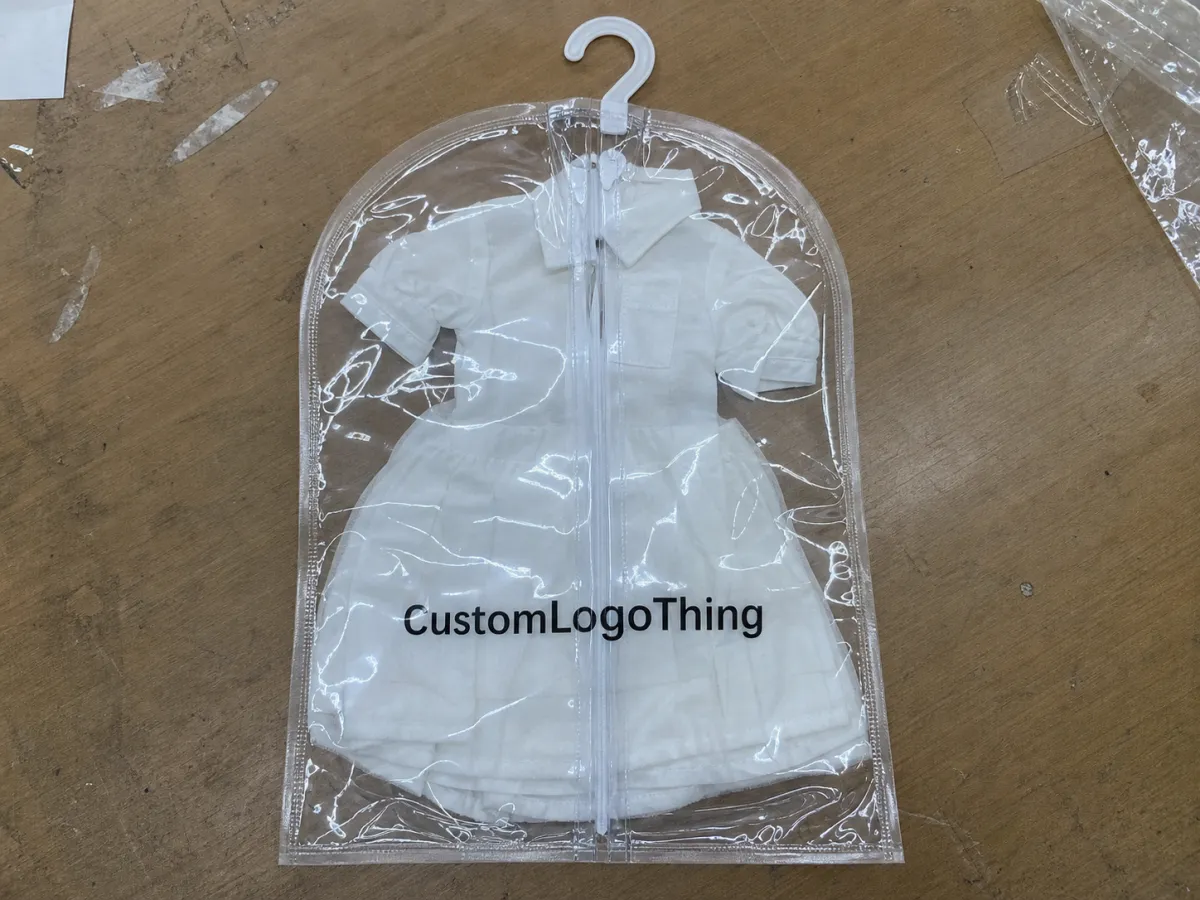
On a crowded peg wall, the bag is often the first thing people judge. If the zipper line is crooked, the film looks cloudy, or the seal is uneven, the product feels cheaper before anyone touches the garment. That is the practical side of packaging: it is part of the sale, not just a wrapper.
Clear PVC works because it lets buyers see the fabric, color, size tag, and folding quality without opening the pack. Warehouse teams benefit too. A quick visual check is faster than breaking seals and repacking product later, which reduces handling time and avoidable damage. For retail, e-commerce, or mixed warehouse storage, that visibility saves real labor.
The mistake many teams make is adding plastic because someone asked for "premium packaging." Premium is not the same as useful. The real job is cleaner presentation, easier QC, and less repacking. If the product will move through distribution, a bag has to support operations as well as shelf appeal.
Clear bags also help with SKU-heavy lines. When colorways, sizes, or seasonal variants change often, packaging that allows instant identification reduces mix-ups. That matters in fulfillment centers where the same style may ship in different counts or with different inserts. A good bag does not solve every problem, but it removes one source of friction.
PVC Build Choices That Change the Product Feel
Face finish affects both presentation and handling. Clear PVC gives the highest visibility and the easiest product check. Frosted film softens glare, hides scuffs better, and makes wrinkles less obvious. Printed faces are for branding, care details, or a more controlled look across a line of SKUs.
| Bag Face | Best Use | Typical Cost Impact | Tradeoff |
|---|---|---|---|
| Clear | Retail visibility, size checks, simple toy apparel | Lowest | Shows fingerprints and fold marks more easily |
| Frosted | Cleaner presentation, softer glare, better scuff control | Moderate increase | Reduces direct product visibility |
| Printed | Branding, care info, seasonal campaigns | Highest | More setup, more lead time, higher MOQ pressure |
Structure matters just as much. A decent zipper, a reinforced hanger hole, and clean welded seams change how the bag survives warehouse handling. Bottom gussets help bulkier folded items sit square instead of bowing out. Handle cutouts are useful only when the pack is meant to be carried or displayed in a specific way. Tear strips are worth adding only if the opening experience matters in retail.
Small options can create hidden complexity. Vents help with pressure changes in shipping lanes. Recycled-content requests may fit a documented brand policy, but only if the supplier can support the claim. Carton packing matters too: if receiving teams have to count, restack, and relabel every box, the bag spec was not finished.
For toy garment runs, a clear or lightly frosted body, a straightforward zipper, and a reinforced hanger area usually give the best balance. Simple is not cheap-looking when the welds are straight and the film stays flat. Cheap-looking comes from bad execution.
Toy PVC Garment Bags Bulk Order Planning: Specs to Freeze Before You Request a Quote
To get an accurate quote, lock the measurements first. Measure the garment in its folded state and include width, height, depth, and any fold allowance the factory needs. A bag that is too tight puffs awkwardly; one that is too large wastes material and freight.
Thickness should follow use, not habit. Lightweight toy shirts and simple costume pieces may work in the 0.12-0.15 mm range if handling is gentle and cartons are packed well. Heavier layered items usually need 0.18-0.25 mm to stay crack-resistant in warehouse handling. If the bags will be opened, closed, and moved repeatedly, thicker film is safer, especially in colder storage where low-grade PVC can turn brittle.
Before you send an RFQ, freeze these items:
- Dimensions: finished bag width, height, depth, and fold allowance
- Material: clear, frosted, or printed PVC and target thickness
- Closure: zipper type, pull tab, or other opening method
- Hardware: hanger hole, reinforced seam, gusset, vents, tear strip
- Print: logo placement, color count, artwork file format, proof rules
- Carton pack: bags per carton, inner packs, master carton label format
- Approval flow: sample sign-off, color tolerance, and rework limits
Define the packing count per carton before the quote. If one supplier prices 100 bags per carton and another prices 50, the labor and freight comparison is already distorted. The same applies to labels. If the receiving team needs a SKU label, barcode, or lot code, say so now.
For print, keep the rule simple. More colors, more coverage, and more custom placement all raise setup and scrap. A single clean logo and a limited care-label area usually beats a busy graphic that no one reads. Keep text away from weld lines, where distortion can make it hard to scan or read.
Also define tolerances. A useful quote should state acceptable variance for length, width, thickness, and print position. Small variation is normal in PVC work, but uncontrolled variation makes reorders painful. If the first run fits and the second run pinches at the zipper, the spec was not really locked.
Pricing, MOQ, and Unit Cost Levers
Bulk pricing moves on a few predictable levers: size, thickness, print coverage, closure style, reinforcement, and carton packing. The quote is math with a sales layer on top. For a mid-size toy garment bag run, clear unprinted bags might land around $0.16-$0.24 per unit at 5,000 pieces. Frosted builds often sit around $0.18-$0.28. Printed bags with extra branding or hardware can move into the $0.24-$0.45 range, depending on size and spec complexity.
MOQ tradeoffs matter. Higher volume usually lowers unit cost, but only if the spec is frozen and repeat orders are realistic. If you are still testing fit, artwork, or sales velocity, a smaller first run is smarter even if the per-unit price is a bit higher. Paying slightly more per bag is cheaper than taking delivery on the wrong size.
| Build | Typical MOQ | Unit Cost at 5,000 pcs | Best For | Common Cost Trigger |
|---|---|---|---|---|
| Clear, unprinted | 1,000-3,000 | $0.16-$0.24 | Fast shelf visibility, simple SKUs | Large size or thicker film |
| Frosted, unprinted | 1,500-3,000 | $0.18-$0.28 | Cleaner look, fewer visible scuffs | Special finish or heavier gauge |
| Printed face | 3,000-5,000 | $0.24-$0.38 | Branding and care information | Multiple colors, larger print area |
| Reinforced or custom hardware | 5,000+ | $0.30-$0.45 | Heavier handling, premium presentation | Custom pulls, extra welding, special inserts |
Ask for tiered pricing at 1,000, 3,000, and 5,000 pieces. That shows the real cost curve. A quote without tiers is incomplete. If your order strategy includes multiple SKUs or repeat annual buys, the only useful comparison is the one that shows how the cost drops as the run gets larger.
Freight can erase a bargain quickly. A bag that is slightly smaller, lighter, or more efficiently packed may save more than a small material discount, especially on international shipments where carton density and stackability affect landed cost. Unit price matters; landed price matters more.
Production Steps and Lead Time for Bulk Orders
A clean bulk order usually moves in a simple chain: spec review, proof or sample, material booking, mass production, inspection, then carton count and dispatch. The order slows down when one of those steps is fuzzy. In toy PVC garment bag Bulk Order Planning, the most common delays are boring ones: missing measurements, artwork changes after proof, and approval lag.
- Quote and review: 1-3 business days if the spec sheet is complete
- Sample or mockup: often 3-7 business days for a physical sample
- Mass production: commonly 10-15 business days after proof approval
- Inspection and packing: 1-3 business days, depending on carton count
- Freight booking: separate from production, and usually the part people underestimate
For printed or highly customized bags, add time. Special hardware, new tooling, or a second approval round can easily add another week. Buyers who plan launch, warehouse intake, and retail replenishment around a fantasy timeline usually end up paying for express freight or missing the shelf window.
Inspection should not be a mystery either. Ask whether the supplier checks seam width, zipper consistency, print placement, and carton count against a written spec. If the bags will travel through rough handling, ask how the shipment is being validated. The ISTA testing framework is useful because it keeps packaging claims tied to real transit conditions instead of wishful thinking.
Climate matters more than some buyers expect. Warm, humid warehouses and cold transit lanes change how the film behaves. If product is stored in an unconditioned facility, check for stiffness, fogging, and seal quality after temperature swings. A sample that looks perfect on a desk can behave differently after a winter truck ride.
If the lead time sounds too short to be true, it usually is. Someone is skipping approval, inspection, or details. None of those are a bargain.
What Makes a Reliable Bulk Supplier
A reliable supplier proves control before the first large run. They should be able to discuss tolerances, seam strength, zipper consistency, and print alignment without dodging the question. If they cannot explain how they hold size within a sensible range, they are not reducing risk. They are moving it.
Consistency matters more than a one-time low quote. A supplier with repeatable QC, photo approval, and written spec sheets makes reorder work easier. The first run is only half the job; the reorder is where weak suppliers fall apart because they cannot match the original shade, thickness, or zipper feel.
Factories and middlemen do not behave the same way. A factory can usually answer material, sample, and packing questions directly. A middleman often has to pass everything through a third party and comes back with vague language instead of facts. That creates risk when the order needs a small correction.
From a buyer's point of view, it is better to hear "no" to a risky spec than to hear that every request is easy. If you want a faster first pass, send the measurements, quantity, logo copy, and packaging requirements together. The less the supplier has to guess, the less rework everyone absorbs.
Look for these signs of a supplier that can execute:
- Written spec sheets: clear enough for a reorder six months later
- Photo approval: sample images before mass production starts
- QC checkpoints: seam, zipper, print, and carton verification
- Repeatable output: the same feel and finish across multiple runs
- Direct answers: no dodging simple questions about thickness or packing
Also ask what happens when a defect is found. A serious supplier has a rework process, a reject threshold, and a way to separate acceptable cosmetic variation from real failure. If every answer sounds like "we check carefully," that is not a process.
Next Steps to Lock the Order Without Rework
Start with three things: product measurements, target quantity, and print or label copy. That alone cleans up most quote requests. Vague asks create vague pricing, and then the buyer spends a week trying to reverse-engineer what should have been clear in the first email.
Ask for one sample, one pricing tier at a realistic MOQ, and a written production schedule before approval. If the supplier cannot give you those without drama, the order is not ready. That does not mean the supplier is bad; it usually means the brief is still soft.
For new buyers, a first run of 500-1,000 units is often enough to confirm fit, artwork, and warehouse handling. If the spec is already locked and repeat ordering is likely, 2,000 or more can make the unit cost easier to defend. Build in a small buffer for QC pulls and shipping damage. Ordering exactly to sales count creates avoidable shortages.
The goal is straightforward: clean presentation, predictable cost, and a shipment that arrives ready to use. Send the spec sheet, not a request for the "best price." That is how you get a quote you can actually buy from.
FAQ
How many toy PVC garment bags should I order for a first run?
A practical first run is often 500 to 1,000 units if you are still checking fit, artwork, or packing flow. If the spec is already locked and repeat orders are likely, 2,000 or more usually makes the unit cost easier to justify. Build in a small buffer for QC pulls and warehouse damage so you are not ordering at the exact sales count.
What MOQ is normal for toy PVC garment bag bulk orders?
There is no single number that fits every build. MOQ changes with size, thickness, print coverage, closure type, and carton packing. Clear, unprinted bags usually start lower than printed bags with custom hardware or special finishing. Ask for tiered pricing at different MOQs so you can compare the real cost of smaller versus larger runs.
What thickness works best for toy garment packaging?
For lightweight toy garments, a thinner film can work if the bags are handled gently and stored flat. For heavier folded items, a thicker PVC option is safer because it resists cracking, stretching, and rough warehouse handling. Choose thickness based on use, not habit. The right spec is the one that survives your actual receiving and retail process.
How do artwork and zipper choices affect quote pricing?
More print coverage, more colors, and custom artwork placement all raise the quote because they add setup and production complexity. Standard zippers or simple closures keep cost lower than custom pulls, oversized hardware, or reinforced closure builds. If price is tight, keep the visible branding area focused and avoid extra print zones that do not add much value.
What should I send to get an accurate toy PVC garment bags quote?
Send dimensions, thickness target, quantity, closure type, print details, carton pack count, destination, and target delivery date. Include a sample image or reference bag if you want the supplier to match a specific look instead of guessing. The cleaner the spec, the faster the quote. Guessing costs time, and time is usually where bulk projects get annoying.

