Beauty Ribbon Handle Paper Bags: What Buyers Notice First
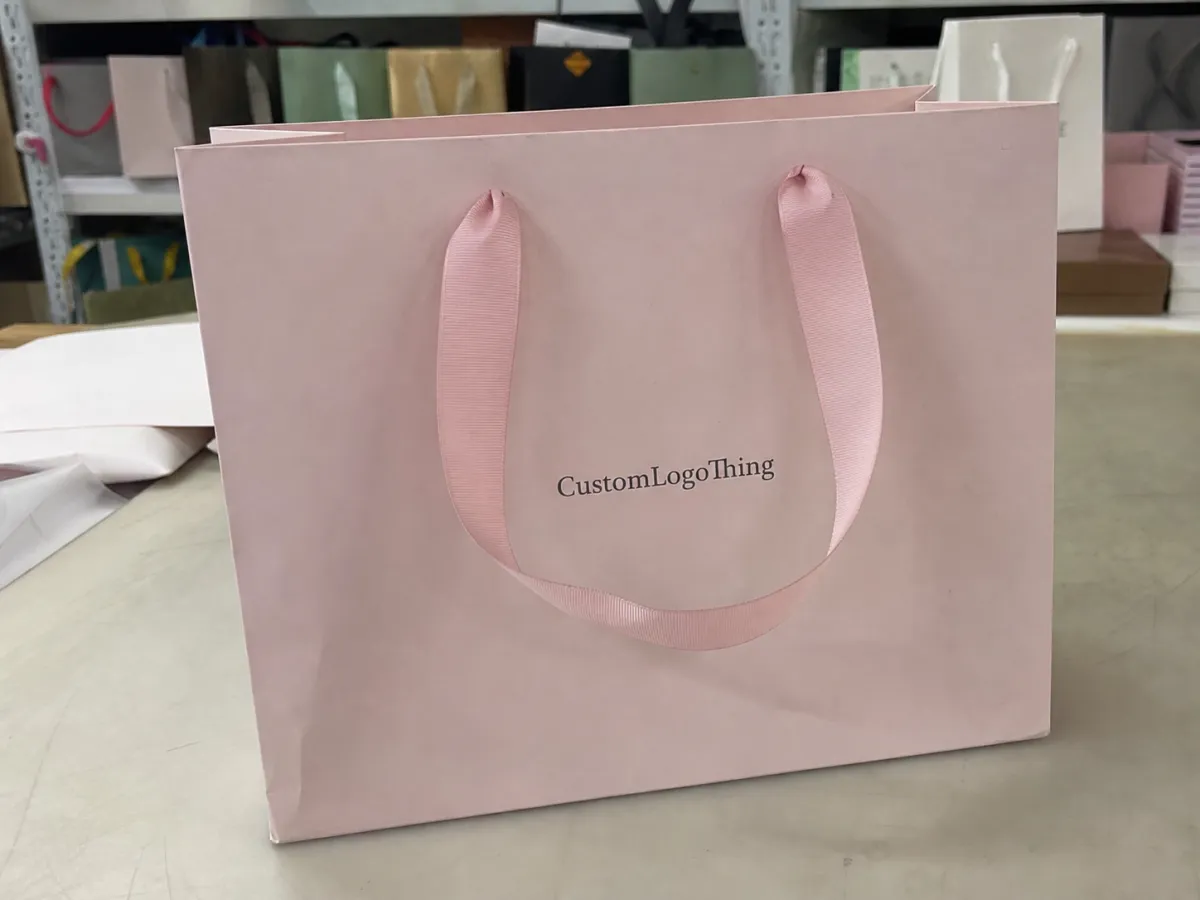
Beauty Ribbon Handle Paper Bags bulk order planning starts with a simple test: does the bag feel like part of the brand the moment someone touches it? If the answer is no, no amount of logo polish fixes it. A clean ribbon handle, the right paper stiffness, and a bag shape that stands upright do more for perceived value than most buyers expect.
That is especially true in cosmetics, skincare, salon retail, and gift sets. These bags are not just carriers. They sit on shelves, they show up in social posts, they get reused, and they often become the first physical proof that the brand pays attention to detail. A flimsy bag sends the wrong signal fast. A bag with a secure handle, crisp folds, and balanced print does the opposite.
The mistake I see most often is starting with decoration instead of use. Buyers ask for foil, soft-touch coating, or a bigger logo before they decide what the bag needs to carry. That order should be reversed. First decide the product weight, the fill pattern, and the shipping method. Then choose the finish that supports the experience without creating avoidable cost.
Strong ribbon-handle packaging does three jobs at once: it protects the product, it supports the shelf story, and it survives the walk from checkout to home.
The practical goal is consistency. A launch run should match the sample. A reorder should look like the first batch. Cartons should stack cleanly. Handles should sit evenly. The bag should hold up whether it is used for a single serum set or a heavier skincare bundle with inserts and tissue. If those basics are not clear before quoting, the order gets expensive in the wrong places.
Paper Stock, Ribbon Handles, and Print Options That Matter
The material stack drives both price and performance. Kraft paper gives a natural, understated look that suits clean-label beauty, wellness, and minimal packaging systems. Coated art paper delivers sharper print and stronger color depth, which matters if the brand uses delicate type, full-bleed color, or a precise Pantone match. Specialty papers add texture or visual weight, but they also raise the quote and can slow down sampling.
For most beauty runs, paper weight usually lands somewhere in the 157-250 gsm range for coated stocks, with kraft often moving a little heavier if the bag needs more structure. If the order carries a heavier set, a cardboard insert or reinforced base is more useful than simply adding more ink coverage. Thick paper alone does not solve handle pull or bottom sag.
Ribbon handle choice changes the bag more than people think. Satin ribbon feels soft and dressy. It works well for gift sets, holiday packaging, and premium cosmetics. Grosgrain ribbon has a more textured grip and tends to hold up better when bags are handled repeatedly. Woven tape or similar sturdy handle constructions are practical for heavier loads, though they can look less elevated unless the artwork and finish are tuned carefully.
Print should be decided early. CMYK is flexible for complex graphics, gradients, and photo-style art. Spot colors are safer if the brand depends on a strict signature shade. Foil stamping can sharpen a logo or border, but heavy foil on a crowded layout often looks louder than premium. Matte lamination, gloss lamination, and soft-touch coating all change the way the bag wears in use. Matte hides fingerprints better. Gloss lifts color intensity. Soft-touch feels expensive, then shows scuffs if the bag gets rough treatment.
Handle anchoring is a small detail that causes big trouble when it is done badly. Ribbon threaded through the wall needs clean reinforcement. Glue points need to stay flat. Knot placement should not distort the top edge. If the handles are mounted unevenly, the bag looks cheap even if the print is excellent. That kind of flaw is visible from across a room.
Before approving artwork, ask how the supplier manages color tolerance and registration. A strong beauty bag does not need impossible perfection, but it does need predictable results. Repeated color drift between sides, edge blur near folds, or toner rub on light stocks can turn a good proof into a weak production run.
| Option | Best For | Typical Look | Relative Cost |
|---|---|---|---|
| Kraft stock with satin ribbon | Natural beauty brands, clean-label skincare | Warm, understated, tactile | Moderate |
| Coated paper with grosgrain ribbon | Retail cosmetics, promotional kits | Sharper print, structured feel | Moderate to higher |
| Art paper with foil and lamination | Premium launches, gift sets, boutique retail | Brighter color, polished finish | Higher |
| Specialty stock with reinforced base | Seasonal campaigns, heavy bundled sets | Distinctive texture and presence | Highest |
If the bags will move through a warehouse or retail distribution chain, ask for basic transit testing. ISTA-style packing checks help reveal handle pull issues, carton compression problems, and scuffing before a full shipment goes out. For this kind of packaging, a failed test is cheaper than a failed launch.
Size, Gusset, Finish, and Load Specifications to Confirm
Before a quote means anything, the finished size has to be locked. That means width, height, gusset, handle length, and paper weight. These numbers control board usage, print layout, carton packing, and how the bag behaves once it is filled. A bag that is too narrow cramps the contents. A bag that is too tall wastes paper and looks awkward. A bag that is too shallow tips over in transit.
The product mix should drive the dimensions. Lipstick sets are small and light, so the bag can be tighter and more compact. Pump bottles, jar sets, and mixed skincare kits need more depth and a stronger base. Promotional bundles often need extra gusset space because the filler team may add samples, tissue, or inserts on the spot. There is no universal best size. There is only the size that fits the actual contents without forcing them in.
Finish changes the feel, but it also changes the risk profile. Soft-touch can elevate a premium bag, yet it may mark easily if the order travels through a crowded fulfillment system. Matte varnish is calmer and usually easier to live with. Embossing works well when the logo should be felt as much as seen. Foil can be sharp and elegant, but it should be used with restraint. Too much foil starts to look busy, and busy is not luxurious.
The load target should be written down in kilograms, even if the final spec is not heavy-duty. Beauty bags are often expected to carry 1-3 kg, sometimes more for bundled skincare. That range is enough to make handle anchoring and bottom support matter. If the buyer never states the load target, the supplier has to guess. Guessing is how overruns and complaints happen.
Here is a practical sample-check list before production is released:
- Pull the handle by hand and check whether the top edge distorts.
- Open the bag fully and confirm the gusset folds sit square.
- Rub a printed area lightly to see whether ink or coating marks.
- Set the bag upright on a flat surface and check balance.
- Pack the intended product set and verify there is no pinch at the opening.
- Check carton count and inner packing so the bags do not arrive warped.
That kind of check sounds basic because it is basic. And basic checks catch expensive mistakes. A clean spec sheet also helps repeat orders, because the next run can match the same size, handle length, and carton pack count without a fresh round of interpretation. If your team works across marketing, operations, and procurement, one clear spec sheet saves everyone time.
Pricing, MOQ, and Unit Cost Planning for Bulk Orders
Bulk pricing usually comes from five levers: paper grade, bag size, print coverage, handle material, and finishing. Add foil, embossing, lamination, or a reinforced base, and the cost moves quickly. A plain kraft bag with a ribbon handle can sit in a very different price band from a fully finished boutique bag with multiple print hits and soft-touch coating.
For planning, it helps to think in tiers rather than chasing a single number that sounds cheap. As a rough market guide, simple ribbon-Handle Paper Bags at scale may land in the lower unit-cost band, mid-grade bags with better print and a nicer handle land in the middle, and premium builds with specialty stock or heavy finishing sit at the top. Short runs can cost 1.5 to 2 times more per bag than a mid-volume order. That is normal. Setup costs do not shrink just because the quantity does.
MOQ is not arbitrary. It reflects setup time, material sourcing, waste allowance, and production efficiency. A 3,000-piece order and a 10,000-piece order rarely behave the same way in the factory. The larger run usually lowers the unit price, but only if the buyer can actually use the stock before the next refresh. Cheap bags become expensive when they sit in storage for a year.
The quote should separate the moving parts. That makes it easier to compare offers that look similar on the surface but differ on details. A low unit price is not much help if plates, proofs, carton packing, or freight are missing from the number.
- Design cost: artwork setup, dieline edits, color matching, sample coordination.
- Production cost: paper, handles, printing, finishing, assembly, quality checks.
- Delivery cost: carton packing, palletizing, freight, customs handling if needed.
Freight deserves special attention. These bags are light, but they are bulky. That means shipping can feel out of proportion to the product itself. Buyers sometimes focus on the print cost and ignore the fact that carton volume may drive a large part of the landed price. The final number should include the whole path, not just the factory floor.
For brands with sustainability claims, ask for paperwork before the order is placed. FSC certification matters only if the chain-of-custody documents are available and correct. Recycled content can also be useful, but the claim has to match the actual material and the print system. Green language without proof does not help a packaging review.
One more practical point: avoid over-specifying a bag just to make it feel premium. Extra layers, extra foil, and extra coating all add cost. In beauty packaging, perceived value often comes from proportion, color control, and handle quality more than from piling on finishes. A clean design done well usually beats a busy design with expensive extras.
Process, Timeline, and Production Steps for Bulk Orders
The production path is straightforward on paper. Inquiry, quote, artwork check, sampling, approval, production, packing, shipment. In real life, every handoff can slow things down. Clean files move quickly. Half-finished artwork and unclear dimensions do not.
Most delays happen in the same places. Artwork that is not press-ready holds up proofing. Pantone confusion stalls color approval. Late changes to handle style or bag size force the factory to revisit material use and sometimes tooling. Once a proof is signed off, further changes should be rare. If the schedule is tight, changes after approval usually cost more than buyers expect.
Lead time depends on quantity and finish. A simple bag with standard paper, one or two print colors, and a common ribbon type can move fairly quickly once the proof is approved. Add foil, embossing, soft-touch coating, or a custom structure, and the timeline stretches. Sampling can take several business days, and mass production often runs two to four weeks after final approval, sometimes longer in peak season. That range is realistic. Anything faster should be checked carefully, not celebrated blindly.
A useful rule: the more premium the bag, the more you should insist on a physical sample. A render cannot tell you whether the ribbon feels limp, whether the paper curls, or whether the print sits the way the brand expects. A sample also exposes annoying but common issues like uneven handle length, dark edges near folds, and glue marks on the inside top flap.
Here is the order of operations that keeps mistakes under control:
- Confirm size, board weight, handle type, and print method.
- Approve the artwork and color references.
- Review a sample or pre-production proof for premium or color-sensitive bags.
- Lock packing details, carton count, and destination requirements.
- Schedule production with a buffer for transit and receiving.
Reorders are where good documentation pays off. Keep the approved dieline, finish notes, ribbon specification, and carton pack count together. If the supplier has clean records, the next run is easier to repeat and easier to price. If the files are scattered, every reorder turns into a small reconstruction project.
How Custom Logo Things Supports Repeatable Beauty Packaging Runs
Custom Logo Things is useful for buyers who care about repeatability, not just the first shipment. In beauty packaging, the second run matters as much as the first. If the colors shift, the handles change length, or the carton pack count drifts, the packaging starts to feel inconsistent. That inconsistency shows up fast in retail and even faster in launches.
The main value is process discipline. Clear quoting. Organized proofing. File history that keeps dielines, color notes, and finish details in one place. That sounds dull because it is dull. It also prevents avoidable errors. A good packaging partner should be able to explain why a quote changed, what the sample is proving, and where the risk sits before the order is released.
Pre-production samples are especially useful for ribbon-handle bags. A sample lets the buyer check handle feel, paper stiffness, print registration, glue lines, and surface finish in hand. For a premium skincare set or a holiday gift bag, that check is worth the time. Adjusting ribbon width or color tone during sampling is a lot easier than reworking a finished batch.
What buyers usually want is simple: accurate pricing, realistic timing, and traceable production. If the quote is high, they want to know what drove it. If the schedule is tight, they want the pressure point called out early. If a file needs correction, they want the issue explained in plain language. That is not special service. That is the minimum required to keep packaging from becoming a guessing game.
Beauty packaging also has a visual standard that is easy to underestimate. A bag can look fine on a screen and still fail in use if the stock curls, the print lands slightly off, or the handle hardware looks uneven. A partner that understands those failure points can steer the order toward practical decisions instead of expensive cosmetic ones.
What To Confirm Before Release
Before sending a beauty Ribbon Handle Paper Bags bulk order planning request, lock the finished size, gusset, paper stock, handle style, print method, and target quantity. Those six items usually determine the rest of the quote. Add the delivery destination, carton pack count, and whether the bags need to survive warehouse handling or store-level pickup. That gives the supplier enough information to price the order honestly.
If the bag uses strict brand colors, request a sample or proof. If the bag carries heavier skincare or bundled sets, ask for a load target and a handle-anchoring check. If the order is tied to a launch date, give a real buffer for sampling and production, not the date you wish you had. Packaging schedules have a habit of punishing optimism.
For volume decisions, ask for pricing across several tiers, not one number. A 3,000-piece run may make sense for a short campaign. A 10,000-piece run may lower the unit price enough to justify a deeper inventory buffer. The right answer depends on sell-through, storage, and reorder timing, not on the cheapest line in a spreadsheet.
The bag should never be treated as filler around the product. In beauty, it is part of the product story. Good ribbon-Handle Paper Bags keep the look premium, the handling reliable, and the schedule manageable. That is the job. Nothing more dramatic is needed.
How many beauty ribbon handle paper bags should I order for a first bulk run?
Start with the quantity that covers launch demand, store replenishment, and a small safety buffer. If the bags will be used across multiple channels, compare MOQ tiers before you decide. A slightly larger run can reduce unit cost, but only if the stock will move on schedule.
What affects the price of beauty ribbon handle paper bags in bulk?
The main drivers are paper stock, bag size, print coverage, handle material, and finishing such as foil or lamination. Setup items like artwork prep, proofs, and tooling also matter. Freight can be a surprise because these bags are bulky even when they are not heavy.
Which specs work best for retail beauty packaging with ribbon handles?
Choose a paper weight that supports the product load and keeps the bag upright. Match the gusset to the actual fill pattern, not a generic shopping bag format. Pick a ribbon style that feels secure in the hand and fits the brand tone without fraying or twisting.
How long does production usually take after artwork approval?
Simple builds can move faster once the proof is approved, while premium finishes add time. A practical planning window is several business days for sampling and roughly two to four weeks for production, depending on quantity and season. Rush orders are possible sometimes, but they need clean files and a stable spec.
Can I reorder the same beauty ribbon handle paper bags later?
Yes, repeat orders are easier when the supplier keeps the approved dieline, color notes, and finish details on file. Ask whether the original materials are still available and confirm the reorder quantity early. The fewer variables you change, the more repeatable the next batch will be.

