Toy Retailer Kraft Paper Bags Unit Cost: Buyer's Guide
Toy retail packaging looks simple until the bag has to work at the counter. The actual cost is shaped by size, paper weight, handle style, print coverage, and order quantity. A low quote can still become expensive if the bag is too small for boxed toys, too light for bundled gifts, or too custom for the retailer's volume. The useful question is not whether kraft paper looks clean; it is whether the bag fits the product, carries comfortably, and can be reordered without redesign.
Toy assortments change often. One week may call for accessories and collectibles, while the next requires plush toys, board games, or seasonal bundles. That variation is why a single bag spec can create waste if it tries to cover every use. Retailers usually get better value by matching the bag to the main product family and the way the store actually packs purchases.
Material claims also need a careful look. Kraft paper can support a lower-impact packaging program when the stock, inks, adhesives, and handles are chosen well. If you want recycled content, FSC certified paper, or post-consumer waste claims, the full build should be checked rather than assumed. For reference, the FSC site is useful for certification language, and ISTA is helpful when you want a framework for shipment and transit performance.
Why the wrong bag spec raises cost on toy orders
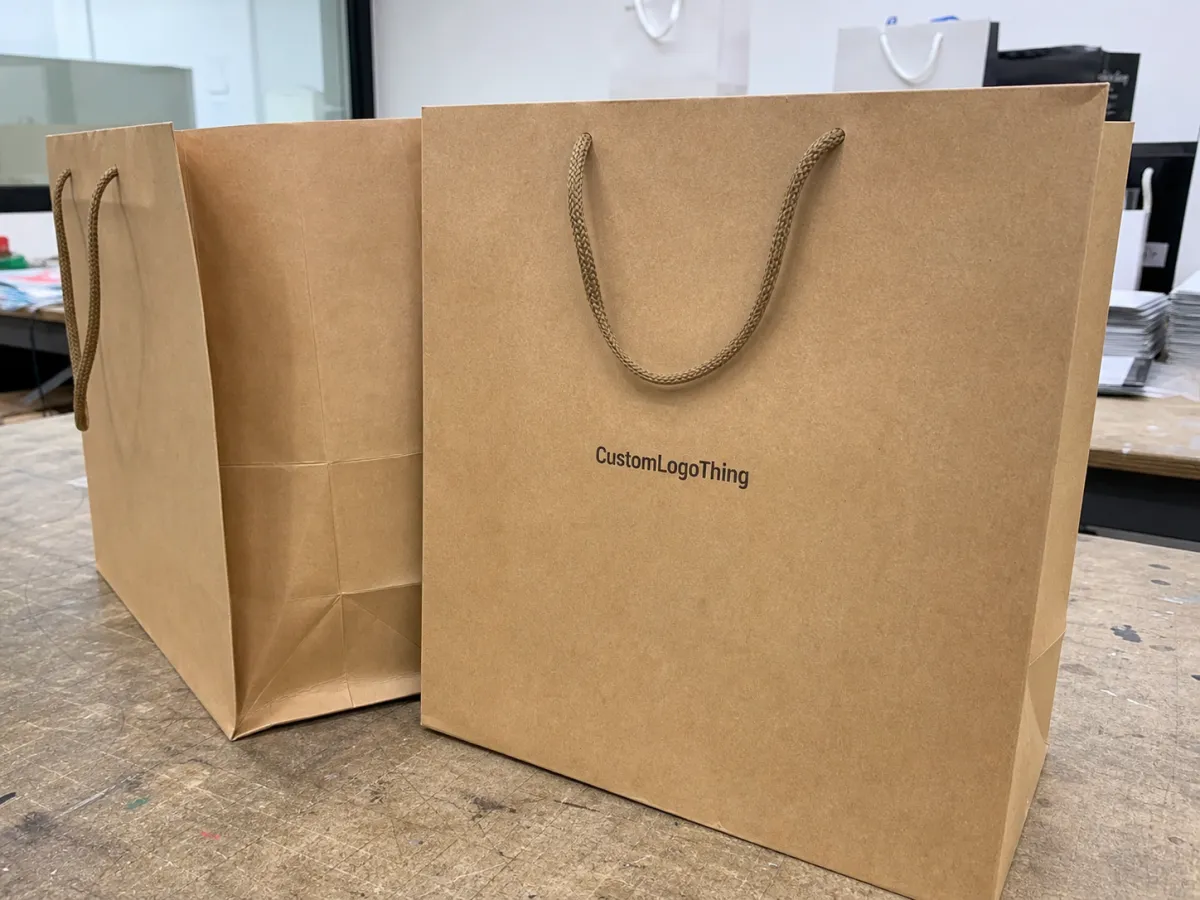
The bag itself is usually not the expensive line item. Cost rises when the spec forces a larger size, stronger handle, thicker paper, or a custom structure that does not match the product mix. Toy retail exposes those issues quickly because the products vary so much. A small accessory, a boxed game, and a plush item each need different clearance, support, and carry strength.
The best way to control cost is to size the bag for the packed item, not the bare toy. That means measuring the finished box, wrap, or bundle the shopper actually leaves with. If the bag is built around the shelf item instead of the packed item, retailers often overbuy paper, slow down checkout, or end up with bags that are awkward to load.
Checkout speed matters too. A bag that stands upright, opens easily, and closes cleanly at the top saves labor during busy periods. If staff have to fight the bag or double-bag purchases, the hidden cost often outweighs any small savings on unit price. For toy stores, the right spec is the one that reduces handling time and protects the product without making the order more complicated than it needs to be.
Size the bag for the packed item, not the shelf display. That avoids most hidden cost in retail paper bag programs.
Bag styles that work for retail counters and gift bundles
Handled Kraft Paper Bags are the standard choice for toy counters because they are easy to pack and familiar to shoppers. Flat-bottom bags work well for gift assembly and small add-on purchases. Reinforced retail bags make more sense when the store expects boxed games, heavier bundles, or repeated carryout during a promotion.
Small formats fit blind-box items, stickers, accessories, and other light purchases. Medium sizes work for plush toys, craft kits, and many gift items. Larger bags are better for boxed games or bundled orders, especially during holidays when staff need to move quickly and keep presentation tidy.
A stable gusset and square base are practical advantages, not cosmetic ones. Bags that sit upright reduce fumbling and speed up packing at the counter. That can matter more than a slightly lower unit price on a flatter, less stable bag. If the wrong style slows the team down, it raises the real cost of the program.
Print should support the retail use case, not fight it. On kraft paper, one-color logos, restrained spot-color layouts, and short seasonal marks are usually the easiest to keep under control. Heavy coverage, large solid blocks, and complex multi-color artwork can push setup and press costs higher without improving performance. For most toy retailers, a clear logo and a simple seasonal message are enough.
Storage is another reason these bags work well in retail. They ship flat, so stockroom space stays manageable and seasonal inventory is easier to stage. That matters for multi-store programs, weekend promotions, and holiday resets, where a compact flat pack is much easier to control than bulky packaging.
Paper weight, handles, and sizing for heavier toy packs
Paper weight affects stiffness, tear resistance, and how well the bag keeps its shape once loaded. A light bag may work for accessories, but boxed games or bundled gifts need more structure at the gusset and top edge. If the paper is too light, the bag can look fine in a sample but collapse when filled.
Sizing is usually a question of width, gusset, and height. Width and gusset determine whether the packed item fits without forcing the side walls outward. Height matters when the product is tall, but too much extra height creates slack and movement inside the bag. The best spec leaves enough room for easy loading and enough support to keep the contents upright.
Handle style changes both comfort and durability. Twisted paper handles are common because they are economical and hold up well in most retail settings. Flat handles can feel simpler and are often fine for lighter bags. Reinforced tops make sense when the contents are heavier or the bag will be carried repeatedly during a promotion. For heavier toy packs, stronger handles are part of the base spec, not an upgrade.
A buyer should confirm five things before requesting pricing:
- Finished product dimensions, including any carton, sleeve, or wrap.
- Approximate packed weight, not just the toy weight.
- Print area and whether the logo goes on one panel or both.
- Handle preference: twisted, flat, or reinforced.
- Primary use case: checkout, gift packaging, or seasonal promotion.
That level of detail helps a supplier quote the right structure the first time. It also avoids overbuilding the bag just to feel safe. A tighter spec usually means less wasted paper, fewer handling issues, and a cleaner checkout experience.
Toy retailer kraft paper bags unit cost: what changes the quote
Toy retailer Kraft Paper Bags unit cost is driven by a few core variables. Size is the first. Larger bags use more paper and often need stronger handles or additional reinforcement. Paper grade is next. Heavier stock usually carries better and feels more premium, but it raises the base price. Print coverage then adds cost, especially when the artwork uses multiple colors or large solid areas.
Quantity has a direct effect on the per-bag price. Larger runs spread setup, cutting, and printing across more units, so the unit price usually drops. Smaller orders cost more per piece even when the artwork is simple. That does not make short runs wrong; it just means the pricing curve is steeper.
MOQ is another key point. Some suppliers have a lower entry point for standard printed bags and a higher threshold for custom sizes or reinforced structures. Sample MOQ and production MOQ may also differ. Buyers should ask about both before approving artwork, especially if the first order is for testing and the second is for rollout.
Illustrative ranges can help frame the discussion:
| Bag style | Typical toy use | Common spec | Example unit cost at 5,000 pcs | Cost driver to watch |
|---|---|---|---|---|
| Flat kraft bag | Accessories, small add-ons, lightweight impulse items | 70-90gsm, no handle, one-color logo | $0.11-$0.18 | Simple, but limited carry strength |
| Twisted-handle retail bag | Blind-box items, small plush, gift purchases | 80-100gsm, twisted paper handle, one- to two-color print | $0.19-$0.32 | Handle strength and print coverage |
| Reinforced kraft bag | Boxed games, bundled gifts, heavier seasonal packs | 100-120gsm, reinforced top, stronger base | $0.28-$0.48 | Extra paper and reinforcement steps |
| Premium printed bag | Launch kits, holiday promotions, branded gift presentation | 120gsm+, fuller coverage, specialty finish | $0.40-$0.75 | Artwork complexity and finish choice |
Those ranges show where the quote usually moves. A size change can affect pricing more than a small artwork change, and a move from one-color branding to heavy graphics can add expense without improving carry performance. Buyers should ask for both unit cost and landed cost, because freight, packing configuration, and setup charges can change the final comparison quickly.
For multi-location retailers, a repeatable spec is usually the best value. If the same bag can cover several product lines and seasons, the order can be combined instead of split into several small jobs. That often improves pricing and simplifies inventory planning at the same time.
Production process and timeline for custom retail bags
The production flow is straightforward: inquiry, specification review, artwork check, proof approval, production, inspection, packing, and shipment. Each step depends on clear input. Accurate dimensions, clean artwork files, and a confirmed print method prevent avoidable revisions and keep the schedule from slipping.
For a standard custom retail bag, lead times often run about 12-20 business days after proof approval, depending on print complexity and factory load. Heavier structures, specialty reinforcement, and larger runs can extend that window. Buyers planning for holidays or store openings should build in extra time for freight and final checks after production.
Inspection matters because the weak point is often not the print. It may be the handle bond, the bottom glue, the top fold, or the carton count. Buyers should ask how the supplier checks print registration, handle adhesion, base strength, and pack consistency. For heavier toy orders, those checks matter more than a polished mockup.
If bags are traveling with broader retail assortments, carton pack and stacking plan should be confirmed too. This is where ISTA guidance can help, since transport performance is part of the job. Reorders are usually faster because the spec and artwork already exist, so keeping a clean file history saves time on the next run.
How we keep reorders consistent across seasonal programs
Seasonal toy assortments change quickly, but the bag spec does not have to. Locking the dimensions, paper weight, and handle type keeps the packaging predictable from one season to the next. That consistency helps staff pack faster, keeps the checkout presentation uniform, and reduces the risk of using the wrong bag when the store is busy.
Consistent dimensions also make inventory easier to manage. If one bag is used for small bundles, another for boxed toys, and a third for premium gift packaging, teams can grab the right format without thinking twice. If the sizes are too close together, staff often choose the wrong one for convenience, which creates waste and weakens the presentation.
Artwork control matters for the same reason. Keep the dieline, logo placement, and color callouts in one record so repeat orders do not become rework jobs. That also makes it easier to refresh the campaign graphics without changing the physical bag. In most retail programs, that is the right balance: new look, same structure.
A locked spec also helps control cost. It avoids new tooling, shortens proofing, and reduces the chance that a routine reorder turns into a custom development project. Even small changes in size or handle style can move the price enough to matter across thousands of bags, so repeatability is one of the simplest ways to keep the budget stable.
What to send for an accurate quote and next steps
The fastest way to get a useful quote is to send the details that change the build. Include product size, approximate packed weight, target quantity, print colors, and handle preference. If the bag is meant for a specific toy family, share the packaged dimensions rather than the bare item. That usually improves the recommendation right away.
It also helps to state the use case clearly. A checkout bag, a gift bundle bag, and a seasonal promotion bag can look similar, but they do not behave the same in store. The clearer the use case, the less likely the supplier is to overspec the bag or quote a structure the retailer does not need.
For comparison shopping, ask for the following in one response:
- Unit cost by quantity break.
- MOQ for samples and production.
- Expected production timeline after proof approval.
- Shipping method and estimated freight.
- Any setup or tooling charges tied to artwork or size.
If the order is tied to a launch, holiday event, or multi-store rollout, request samples or a pre-production proof. That extra step helps confirm handle feel, print placement, and bag stability when loaded. A bag that looks fine on screen can still feel wrong if the gusset is narrow or the paper is too light.
Once the spec, artwork, quantity, and timeline are aligned, toy retailer kraft paper bags unit cost becomes a planning number instead of a moving target. Send the spec sheet and artwork together, and the quote will usually be faster, clearer, and closer to the final landed price.
What changes toy retailer kraft paper bags unit cost the most?
The biggest drivers are bag size, paper weight, handle style, print coverage, and total quantity ordered. Custom dimensions and heavier stock usually raise the quote, while larger production runs often lower the per-bag price. Freight and packing configuration can also affect the final landed cost, so compare complete quotes rather than factory price alone.
What MOQ should a toy store expect for custom kraft paper bags?
MOQ depends on the bag size, print method, and whether the order uses a standard or fully custom structure. Simple printed bags often have a lower entry point than reinforced retail bags with special handles or extra build steps. Ask for both sample MOQ and production MOQ so testing and rollout can be planned separately.
Which bag size works best for toy retail purchases?
The best size depends on the product class: small accessories need compact bags, while boxed games and plush items need wider gussets and more height. Retailers should size the bag to the packaged product, not the bare item, so the carry experience stays clean and stable. A spec based on the heaviest regular purchase usually avoids too many bag formats.
How long does production usually take for printed kraft paper bags?
Timeline depends on proof approval, print complexity, order size, and current factory load. Once the artwork and spec are confirmed, reorders are usually faster than first-time runs because the setup is already approved. If the bags are tied to a holiday or store launch, buyers should add buffer time for freight and quality checks.
Can repeat orders lower toy retailer kraft paper bags unit cost?
Yes, repeat orders can reduce cost when the spec stays the same and the artwork does not need to be reworked. Larger combined runs often improve pricing more than several small orders for separate stores or product lines. Keeping the same dimensions, handle type, and print setup also helps avoid new tooling or setup charges.

