If you are pricing toy retailer Kraft Paper Bags cost for a toy shop, pop-up, or seasonal promotion, start with the part most buyers overlook: paper is only one piece of the bill. Size, handle style, print coverage, and order quantity usually move the price more than the kraft stock itself. A plain bag can be economical; a well-sized bag that fits a puzzle box, plush toy, or gift bundle without strain is often the better purchase, even if the unit price is slightly higher.
Toy retail packaging has a quiet job. It needs to carry odd shapes, survive checkout handling, and make the purchase feel finished rather than improvised. A bag is not just a carry item; it is part of the sale. The wrong spec makes a store look careless. The right one feels ordinary in the best sense: sturdy, clean, and costed with some discipline.
For most retailers, the goal is not the lowest quote in isolation. It is the best spec for the mix you actually sell, with a realistic view of unit cost, MOQ, and landed cost. That is how you keep toy retailer Kraft Paper Bags cost under control without ending up with bags that are too small, too weak, or too expensive to justify.
Why toy retailers often overpay for paper bag basics
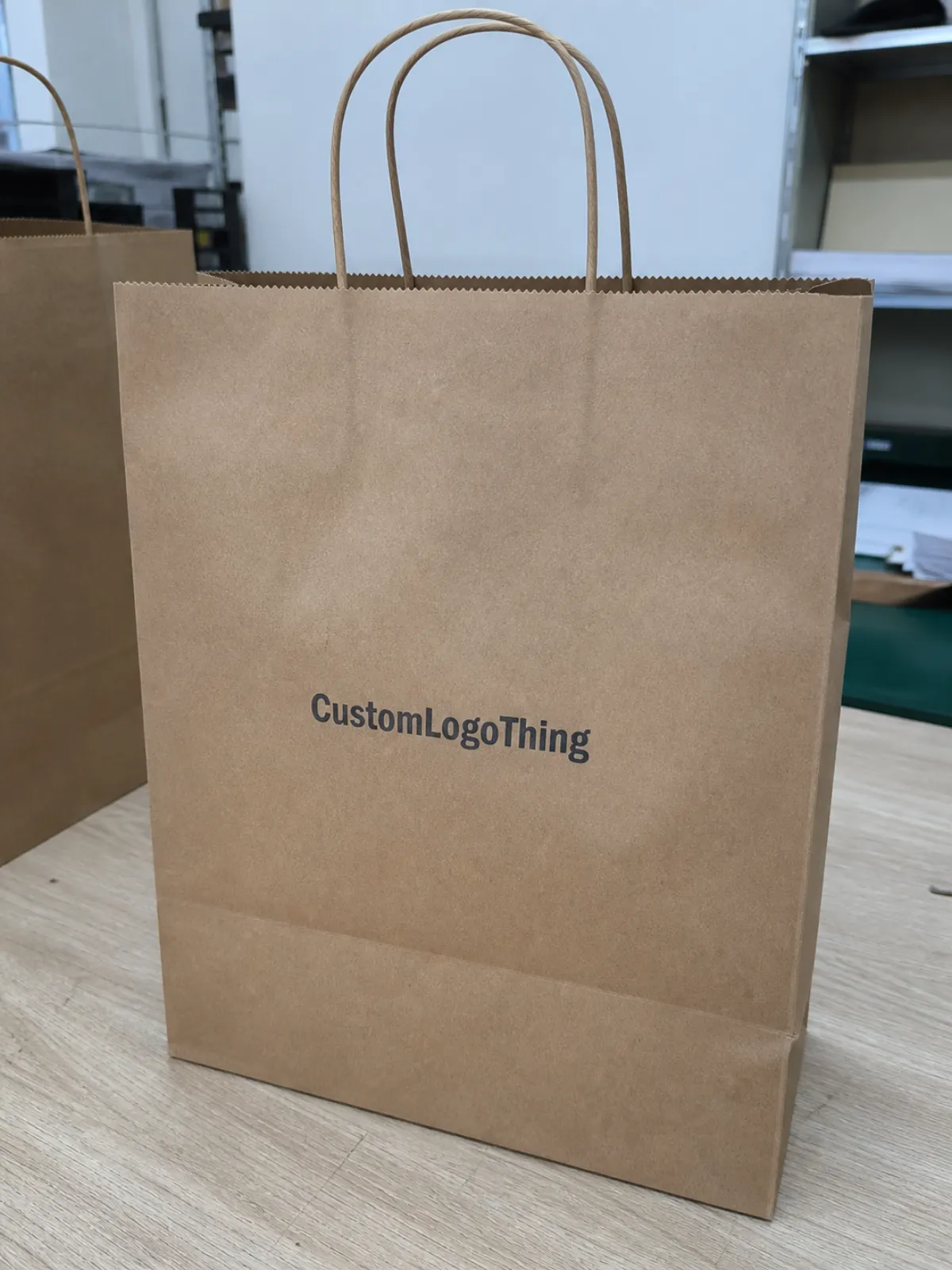
The first mistake is treating the bag like a generic commodity. Toy stores do not sell generic objects. A boxed game, a soft toy, and a mixed gift purchase behave differently in a bag, and the packaging has to accommodate the worst-case shape, not the neatest one. Yet buyers still request one default size and then wonder why the quote is either too high or too fragile.
The bigger trap is focusing on paper weight and ignoring everything around it. Kraft gram weight matters, but it is rarely the main cost driver. A slightly larger bag with the right gusset can be cheaper than a cramped bag that needs extra reinforcement or causes checkout friction. The reverse also happens: a heavy spec can look impressive on paper and waste money in production, carton space, and freight.
A toy retail example makes the point quickly. Suppose your store sells three common items: a boxed puzzle, a small plush, and a seasonal gift set that includes two or three pieces. If the bag is too tall, you pay for empty headroom. If it is too narrow, the product bulges and the bag looks cheap. If it is overbuilt, you pay for material you do not need. The right bag fits the sale, not just the SKU.
- Oversized bags waste paper and freight.
- Weak handles create complaints and returns at the counter.
- Heavy print coverage raises setup and unit cost fast.
- Wrong MOQ planning turns a decent quote into a poor one.
That is why I push buyers to treat Toy Retailer Kraft Paper Bags cost as a packaging decision, not a stationery expense. The cheapest line item is often just the one that forgot half the job.
What a toy-ready kraft bag needs to handle
Toy retail is not a single-use case. Small blind-box items need compact bags with a tidy profile. Medium boxed toys need more gusset room. Seasonal bundles need a wider mouth and a stronger base so the bag does not sag the moment a customer adds one more item. If your shoppers often buy more than one product, the bag should tolerate mixed weight without folding into a soft rectangle.
Construction details are where practical savings show up. Bottom reinforcement matters if you regularly sell boxed sets or heavier items. Gusset width matters if you want the bag to stand flat on the counter and pack without fighting the product. Handle style matters because some buyers want a cleaner retail look while others care only about carry strength. The bag has to match the store behavior, not a design render.
Paper grade deserves more specificity than it usually gets. Many printed kraft bags sit in the 120-200 gsm range, depending on size and use. Lighter items can work in the lower end of that range, while boxed games and mixed purchases often justify thicker stock or reinforcement at stress points. The point is not to chase the thickest sheet; it is to match the load.
Branding can still be restrained. A one-color logo, a seasonal mark, or a short store message can make the bag feel intentional without turning it into a print project. The bag goes home with the customer, so the print is walking advertising. That value is real, but only if the artwork is simple enough to reproduce cleanly.
For sustainability-minded buyers, recycled content and FSC certified stock are common requests. Some stores also ask for post-consumer waste percentages or biodegradable claims, but those terms only help if the material and paperwork actually support them. A supplier should be able to explain the difference between a recycled kraft spec, certified forest sourcing, and an environmental claim that sounds good but does not survive scrutiny.
A practical test helps more than a polished sample. If the bag must survive sharp corners from boxed toys, ask for a sample loaded with the heaviest product you plan to carry. One short test often reveals more than a stack of emails about durability.
Size, handle, and print specifications that matter
When a buyer asks for a quote without dimensions, handle style, or print details, the answer is usually a guess. Guesses cost money. To get a useful quote, confirm width, height, gusset, paper weight, handle type, print sides, and whether the bag needs a reinforced top or bottom. If those details are fuzzy, the supplier will either pad the price or spend time chasing questions that should have been answered at the start.
Handle choice affects both price and performance. Twisted paper handles are usually the practical middle ground for retail. Flat handles are often cheaper and suitable for lighter loads. Die-cut handles can look neat on smaller bags, though they may need reinforcement depending on the weight of the product. Rope handles feel more premium, but they add cost and are usually better reserved for higher-margin packaging or special campaigns. A luxury detail is still a cost.
Print complexity matters just as much. A one-color logo on kraft is straightforward. Spot colors add setup. Full-coverage graphics, dark ink floods, and special finishes like matte varnish or foil effect move the spec up quickly. Artwork quality also matters; a blurry file or a weak dieline can trigger proof corrections, rework, or a price change after the first review. That is not a manufacturing problem. It is a file-preparation problem.
Here is a practical comparison of common options:
| Bag option | Typical MOQ | Factory unit cost range | Best use case |
|---|---|---|---|
| Small kraft bag, twisted handles, 1-color print | 3,000-5,000 pcs | $0.18-$0.32 | Blind-box toys, gift cards, small accessories |
| Medium kraft bag, flat or twisted handles, 1-2 colors | 5,000 pcs | $0.24-$0.42 | Plush toys, small boxed games, seasonal purchases |
| Large kraft bag, reinforced base, heavier print coverage | 5,000-10,000 pcs | $0.35-$0.65 | Gift bundles, larger play sets, mixed orders |
| FSC certified kraft bag, upgraded handle, premium print | 5,000-10,000 pcs | $0.30-$0.70 | Stores with stronger sustainability and branding goals |
Those figures are factory-side ranges, not landed cost. Freight, carton count, and packing method can move the final number more than many buyers expect. If shipping discipline matters, ask how many bags fit per carton, how the bags nest, and whether the carton spec is built for retail distribution or just factory convenience. That detail influences damage rates and storage efficiency later on.
The cheapest-looking option is not always the cheapest order. If the size is wrong and you have to reorder in a rush, the price gap disappears quickly. Urgency is expensive; packaging teams learn that lesson once and then remember it.
Pricing, MOQ, and toy retailer kraft paper bags cost
The main pricing levers are not mysterious, just easy to underestimate. Size, paper thickness, print complexity, handle style, quantity, and packing method drive most of toy retailer Kraft Paper Bags cost. If you want the quickest savings, reduce ink coverage before negotiating over a detail that adds almost nothing to performance.
MOQ is the other variable that catches buyers off guard. Lower runs are possible, but setup costs have to be recovered somewhere. If you order too few bags, that cost gets spread across fewer units and the unit cost rises. If you order more, the per-piece price usually falls, but storage, cash flow, and freight start to matter. There is no single quantity that works for every retailer.
As a rough planning guide, small and simple bags often make sense at 3,000 to 5,000 pieces. Medium retail bags tend to price better at 5,000 to 10,000. Larger bags or highly printed designs may need more volume before the pricing becomes efficient. That is why requesting two or three quantity tiers is useful. It shows you the shape of the cost curve instead of letting the supplier hide it in a single number.
“The cheapest quote is often the one that leaves out the details you actually need. That is not savings. That is a future problem with a lower initial invoice.”
If you want a clean comparison, ask for the same items on every quote: unit price, setup charge, sample charge, carton packing details, freight estimate, and lead time. Then compare landed cost, not just the bag price. One supplier may be slightly higher on paper but lower once shipping and carton efficiency are included. That happens often enough to be a real buying pattern, not an exception.
For sustainability-focused projects, some stores will pay a modest premium for recycled materials, FSC certified stock, or a higher percentage of post-consumer waste. That premium is usually manageable if the print remains simple. It climbs faster when the bag also includes premium handles, heavy ink, or specialty finishing. Use those extras only where they support margin or brand position.
If transit performance is part of the discussion, the ISTA standards are a useful reference point for distribution testing. They do not set bag prices, but they help frame strength in a practical way. A bag that fails in storage or shipping is not a branding tool; it is a problem with a logo on it.
One buying rule cuts through most of the noise: if the quote looks unusually low, check what got removed. Handle strength, paper weight, print sides, or carton packing is usually where the compromise hides. Low quotes become expensive once the missing feature shows up in use.
Quote to delivery: process and lead time
A workable production flow is simple enough to explain in one line: inquiry, artwork check, proof approval, production, packing, shipping. The slow part is usually not the machine time. It is the back-and-forth before approval and the transit after production. Buyers often blame manufacturing when the real delay was a missing dieline, a revised logo, or a week spent waiting for someone to confirm an obvious detail.
For standard custom kraft bags, proofing may take a couple of business days if the artwork is ready. Production often runs around 12 to 20 business days after approval, depending on the spec and the production queue. Shipping adds its own clock. Air is faster and more expensive. Sea freight lowers the per-unit shipping cost and stretches the timeline. There is no workaround for that tradeoff.
What speeds things up is preparation. Clear dimensions, fixed quantity, final artwork, handle choice, and delivery destination are the basics. If you want a fast answer on toy retailer Kraft Paper Bags cost, give the supplier enough information to price the bag once, not three times.
Delays tend to appear in the same places:
- Artwork files that are not print-ready.
- Size changes after the quote is issued.
- Late approval on the proof.
- Switching paper weight or handle style midway through the order.
Those changes are not fatal, but they do reset the clock. If your bags are tied to a holiday launch or back-to-school window, plan backward from the store date, not the date you send the inquiry. Production calendars are not impressed by optimism.
Packaging efficiency also matters after the bags leave the factory. Ask about carton strength, pack count, and whether the bags can be nested tightly without creasing the handles. If you are moving bags through multiple touchpoints before store delivery, those details reduce crushed corners and unnecessary repacking. Ordinary packaging becomes smarter once the carton spec matches the real route.
If sustainability paperwork is part of your compliance process, request it at the same time as the quote. FSC certification details, recycled content claims, and supporting documents should appear before production starts, not after the bags are already in motion.
What a supplier should prove before you place the order
Glossy language is easy. Proof is better. The supplier should show they can make a bag that matches your needs, your budget, and your timeline. That means consistent print quality, clear communication, stable pricing during the order window, and a willingness to discuss tradeoffs without trying to sell the most expensive spec by default.
In toy retail, that matters because the bag sits between impulse buying and brand experience. If a supplier can help you choose a simpler handle, a better size, or a less expensive print layout without hurting the store impression, that is genuine value. It also lowers the odds of reprints, waste, and the kind of midweek problem that appears just after the schedule has already been set.
Before you place the order, look for three things:
- Sample support so you can test fit and feel.
- Dieline checks so artwork lands where it should.
- Plain-language guidance on paper weight, handle options, and MOQ.
That last point matters more than people admit. If the supplier can explain why a 120 gsm bag is enough for lighter toy items while a boxed set may need reinforcement or a thicker base, you are talking to someone who understands retail packaging rather than just a price list. That tends to save money over the life of the program.
Also ask how repeat orders are handled. Stable specs matter when you reorder by season. If the bag size, print file, and carton packing stay consistent, approval time drops and toy retailer kraft paper bags cost stops bouncing around every time you restock. Predictability has a value that usually shows up only after a few purchase cycles.
Finally, ask whether the supplier can align the bag with broader packaging goals. Maybe that means kraft paper with a clean logo. Maybe it means recycled materials and a carefully worded environmental claim. Maybe it means a stronger bag that reduces failure at checkout. None of that is dramatic. It is just competent buying.
What to send for an accurate bag quote
If you want a fast, accurate quote, send the basics first: bag dimensions, quantity, handle type, paper weight, print colors, delivery address, and the product weight range. That is the shortest path to a real answer on toy retailer kraft paper bags cost. Anything less asks the supplier to estimate your retail operation for you.
If the bag must fit a specific assortment, include a product photo or sample packaging. A bag that works for a soft plush may fail on a boxed game with square corners. If your store sells mixed baskets, mention that too. The bag should handle the hardest purchase you expect to hand out, not the easiest one.
For a clearer comparison, ask for three quote levels:
- Standard - practical spec, clean logo, no unnecessary extras.
- Upgraded - thicker stock, better handle, stronger presentation.
- High-volume - better unit cost through a larger run and tighter packing.
That structure makes the numbers easier to read. You can see whether a better bag actually changes the budget or only changes the mood. Sometimes the middle option is the sweet spot. Sometimes the simplest bag wins because it protects margin and still looks right at checkout. Buyers should feel free to reject features that do not move sales or reduce risk.
Before you lock anything in, confirm the final MOQ, lead time, and landed cost. Then check the proof again. It sounds basic because it is. Most packaging mistakes live in the basics: the wrong dimension, the wrong handle, the wrong paper, or a print file that looked fine on one monitor and vanished on another. If you want a clean answer on toy retailer kraft paper bags cost, give the supplier a complete spec and make them price the real job, not a sketch.
What changes toy retailer kraft paper bag pricing the most?
Size, paper thickness, print coverage, handle type, and order quantity usually move the price more than anything else. A simple one-color bag in a larger quantity often gives a better unit cost than a small, heavily printed run.
What MOQ should a toy store expect for custom kraft paper bags?
MOQ varies by size and print method, but smaller, simpler bags often start lower than large full-color bags. If you are comparing options, ask for multiple quantity tiers so you can see where the pricing becomes more efficient.
Which bag size works best for toy retailers?
The best size depends on what you sell most: small toys, boxed games, plush items, or mixed gift bundles. A good bag has enough gusset room for corners, odd shapes, and the occasional add-on purchase.
How long is the lead time for printed toy retailer kraft bags?
Lead time depends on proof approval speed, production schedule, and shipping method. Ready artwork and a fixed spec usually shorten the timeline more than anything else, which is why it pays to finalize details before asking for the quote.
What should I send to get a fast, accurate quote?
Send dimensions, quantity, handle type, paper weight, print details, and the delivery address. If the bag must fit a specific toy range, include a sample photo or product dimensions too.
If you want a clean buying decision, focus on the spec, not the noise. Once the size, handle, print, and quantity are fixed, toy retailer kraft paper bags cost becomes a straightforward calculation instead of a guessing game.

