Toy Trucker Caps Bulk Order Planning for Smart Buyers
Bulk cap orders usually do not fail because the item is complicated. They fail because the brief is thin. A buyer asks for "trucker caps" and expects the supplier to fill in the blanks, then wonders why the quote shifts after artwork, packaging, and color details are added. That gap is where delays, surprises, and avoidable cost creep in.
For a trade show giveaway, retail shelf, youth program, or staff uniform, the same cap can need very different construction choices. A foam-front promo cap with a quick embroidered mark is not the same job as a clean retail piece with a woven patch and hang tag. The order has to be planned around the end use, not the cap category alone.
That is the real work of toy trucker caps Bulk Order Planning: turning a casual product idea into a production brief with enough detail to be quoted, sampled, and delivered without guesswork.
Why Bulk Toy Trucker Caps Make Sense for Promotions and Retail
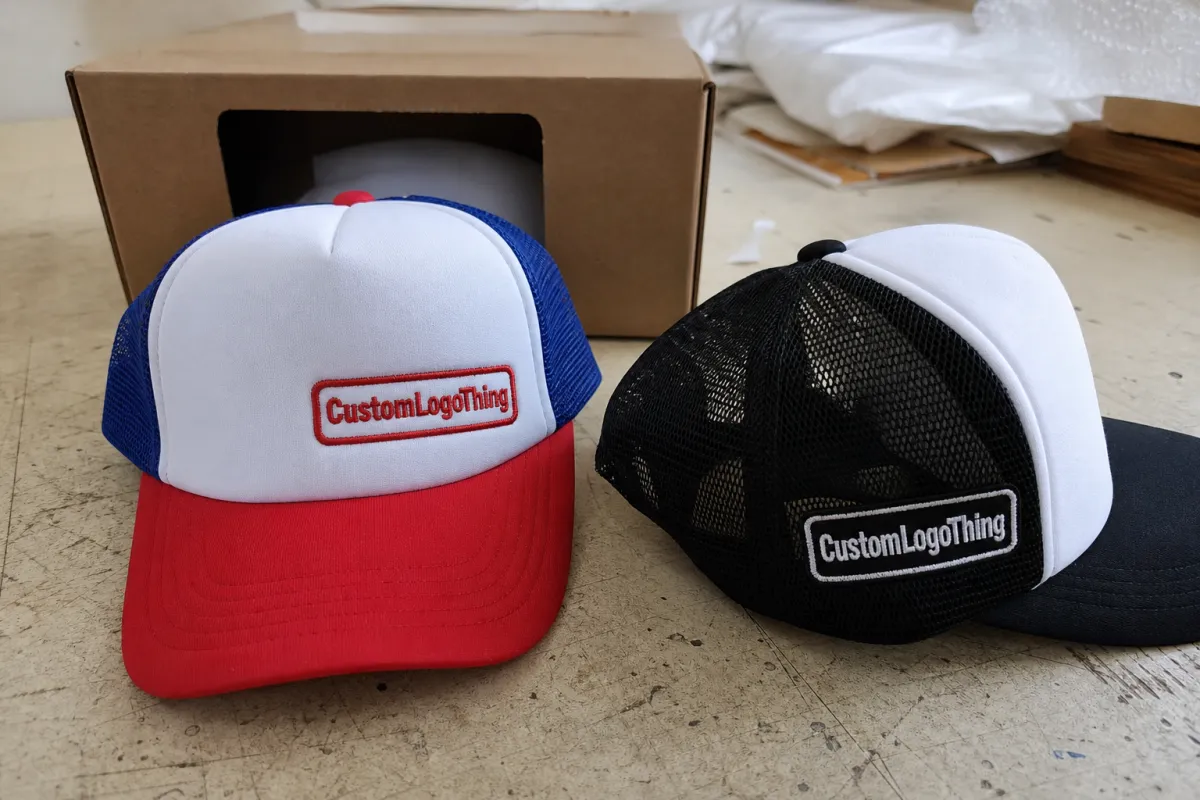
Trucker caps stay popular because they sit in a useful middle ground. They are casual enough for promotions, but structured enough to look intentional in retail. The foam-front versions take decoration well, and mesh-back versions keep the product light, inexpensive, and easy to ship. That combination is hard to beat when the budget matters.
For promotions, the draw is simple: high visibility at a manageable unit cost. A large front panel gives artwork room to breathe, which matters when a logo has to be readable from a few feet away. For retail, the same shape can be upgraded with better stitching, cleaner finishing, richer color matching, and more careful packaging. The style is the same; the execution is not.
Buyers often underestimate how much the use case changes the quote. A giveaway order might tolerate a looser fit range, a simpler decoration method, and polybag-only packing. Retail usually needs more consistent panel shaping, better alignment on the logo, and packaging that looks intentional on a shelf. Event staff may care most about comfort and repeat wear, which shifts attention toward sweatband material and closure strength. One style, three different priorities.
Material choice matters too. A common trucker build uses a foam or fabric front, polyester mesh back, a structured crown, and a plastic snap closure. Some versions use cotton or polyester twill on the front instead of foam, which changes both appearance and decoration performance. Foam fronts are usually cheaper and more promotional. Twill or brushed fabric fronts feel a little more finished, but they can add cost and change the hand feel.
That is why the first quote should never be the final decision. The number only makes sense after the buyer knows the cap's role, the acceptable finish level, and the date it must ship. Otherwise the order looks affordable until the details appear one by one.
A low price is not a win if the cap arrives with the wrong front material, a logo that is too small to read, or packaging that cannot support the channel you are selling into.
There is also a timing angle. The earlier the spec is locked, the more options the buyer has. Wait too long and the order narrows to whatever is already available in stock, which often means less control over mesh color, crown profile, and decoration method. Bulk planning is partly about saving money, but it is also about keeping control.
Front Panel, Mesh, and Decoration Options That Change the Look
Once the use case is clear, the next step is to break the cap into parts. Front panel, mesh, bill, closure, sweatband, and decoration are separate decisions. That sounds obvious, but buyers still bundle them together and miss the fact that each one changes the final look.
The front panel carries the brand story. Foam fronts are common in classic promo truckers because they are lightweight, economical, and simple to decorate. Fabric fronts, especially twill, produce a cleaner and slightly more premium appearance. A structured front keeps the cap upright on a display, while a softer front feels more relaxed on the head. Neither is inherently better. They just fit different selling situations.
Mesh color deserves more attention than it usually gets. White mesh makes the cap lighter and more visibly promotional. Black or dark mesh reduces contrast and can make the cap read more premium or more muted. Matching mesh to the front panel creates a cleaner one-color look, but it can also flatten the design if the logo needs contrast. If the cap is meant to stand out from a distance, contrast usually helps.
The bill changes the mood as well. Pre-curved bills are easier for casual wear and often feel more familiar to a broad audience. Flat bills skew a little more fashion-forward and can make the cap feel less generic. A buyer planning for youth retail might choose one direction. A company ordering staff caps for a summer event may want the other. The detail sounds small until the order is in hand.
Decoration is where a lot of weak briefs fall apart. Embroidery works well for simple marks, thicker lettering, and designs that do not need tiny detail. It adds texture and holds up well in wear, but the stitches can close in on small text. Woven patches preserve sharp edges and are usually the better choice when a logo has fine lines, multiple elements, or small copy. Printed patches and transfers can handle more color variation and can be practical for shorter runs, though the finish is usually flatter and less tactile.
Do not choose decoration based on what looks cheapest in isolation. A less expensive method can become expensive if it forces a redesign, a larger patch, or a second proof round. If a logo is too detailed for embroidery, forcing it through embroidery will not make it better. It will just make the sample harder to approve.
Panel counts and stitch quality also matter. A standard trucker style may use five or six panels, and the seam placement should be checked against the logo position. A patch placed too close to a seam can warp or lift at the edge. Thread count, stitch density, and edge finishing are worth asking about if the order is intended for resale. On promo jobs, the tolerance can be looser. On retail jobs, small flaws stand out fast.
Packaging is part of the product, not an afterthought. Polybags are common for bulk shipping. Retail jobs may need hang tags, size stickers, barcode labels, or insert cards. A card insert sounds cheap until someone has to add it by hand to several hundred units. That labor can erase the savings from a lower decoration price. If packaging has to do more than protect the cap in transit, get that decision made before sampling.
Sizing, Fit, and Spec Sheet Details Buyers Should Confirm
Fit is easy to ignore until the first complaint comes in. Most trucker caps are adjustable, but adjustable does not mean universal. The closure range, crown depth, and front height all affect who can wear the cap comfortably. Adult orders usually work within a broad snapback range. Youth orders need more care, because a cap that looks fine on paper may sit too high, too wide, or too shallow on smaller heads.
Ask for actual measurements. Crown height, brim length, front panel width, and back opening range are all useful. If the supplier only says "one size fits most," that is not enough for a serious order. The cap can still be acceptable, but the buyer should know what "most" means before production starts.
Color control deserves the same discipline. "Navy" or "red" is not a specification. If brand consistency matters, request Pantone references, fabric swatches, or a physical sample cap to match against. Mesh and front fabric can age differently in dye lots, so the front panel and back mesh should both be checked. A close match on one part and a drift on the other is a common source of disappointment.
The tech pack or spec sheet is the document that keeps the order honest. It should show the cap style, fabric type, mesh color, logo placement, decoration size, stitch count if available, and any notes about labels or packaging. If a woven patch sits centered above the bill, write the distance from the seam. If a side mark is needed, note the exact side and height. The fewer assumptions left for the factory, the fewer corrections later.
One practical rule helps here: if a change would irritate you at delivery, write it down now. That includes closure type, seam alignment, packaging format, and whether the inside sweatband should be plain or branded. Most production problems are not dramatic. They are just small details that were never stated clearly.
A vague spec sheet invites interpretation. Interpretation is useful in design meetings, not in production.
For sustainability-minded orders, ask about paper inserts, hang tags, and carton materials before assuming the default is acceptable. Recycled or FSC-certified paper can be used in some packaging setups without changing the cap itself. That is often a better place to improve the footprint than chasing a more complicated fabric claim that does not affect the actual job.
Pricing, MOQ, and Unit Cost Tradeoffs for Bulk Orders
Cap pricing moves in layers. Quantity is only one of them. Decoration method, number of colors, patch complexity, packaging, and the amount of hand labor required all change the number. If a quote looks unusually low, it usually means the supplier has stripped out some assumption that will come back later in the process.
The cleanest comparison is tiered pricing. Ask for common breakpoints such as 100, 300, 500, and 1,000 units. That shows how much the unit cost drops as the run becomes more efficient. It also makes the tradeoff visible between a test order and a true bulk order. If the price barely changes between 100 and 300, you are probably looking at a setup where labor and decoration cost dominate the bill.
| Option | Typical use | Approx. unit price at 500 pcs | Main tradeoff |
|---|---|---|---|
| Blank cap | Simple promos, internal use | $1.20-$1.80 | Lowest cost, no brand presence |
| Basic embroidery | Simple logos, team wear | $2.10-$3.40 | Durable and textured, but not ideal for tiny text |
| Woven patch | Retail, detailed marks | $2.40-$3.80 | Sharper detail, more setup work |
| Printed patch / transfer | Full-color art, shorter runs | $2.20-$3.60 | Good for color, usually flatter in finish |
| Retail pack-out | Hang tags, inserts, labels | +$0.10-$0.45 | More labor, stronger shelf presentation |
Those ranges are not promises. They are working estimates, and they shift with region, freight method, material grade, and whether the order is built from blank stock or fully custom components. A premium patch, for example, may push the price higher if the edge finish or backing requires extra steps. Likewise, a low-cost blank cap may not stay cheap once the requested color is not readily available.
MOQ should be read as a production threshold, not a penalty. Factories use it to keep setup efficient enough to offer a sane unit cost. If a supplier quotes 100 units and 300 units at nearly the same price, that usually means the setup and decoration are taking most of the cost. The buyer can use that information to decide whether to stay small or go straight to the more efficient tier.
Do not forget landed cost. Freight, duty, carton charges, sample fees, and any packaging upgrades belong in the real unit figure. A quote that looks strong before shipping can lose its appeal once cartons, labeling, and delivery location are added. The most useful number is not the factory price. It is the finished cost at your door.
For some buyers, the best savings come from simplifying the order instead of shrinking the quantity. Removing one patch color, using a standard closure, or dropping a special insert can save more than shaving a few dozen units off the run. That is where careful planning matters more than bargain hunting.
Process, Timeline, and Lead Time Before Production Starts
A good supplier can explain the process in plain language. Quote, artwork review, proof, approval, production, packing, and shipment should all be visible. If that sequence is vague, the order is already at risk. The buyer needs to know when the clock starts, what counts as approval, and what can still change without resetting the timeline.
Lead time is often misunderstood because different suppliers count from different moments. Some start the clock at payment. Others start it at proof approval. Those are not interchangeable, and the difference matters if the launch date is fixed. A buyer who does not clarify this can think the order is two weeks out when it is actually three or four.
A standard sample or digital proof often takes 3-7 business days. Production after approval may run 12-18 business days for a straightforward run, though more complex decoration, retail pack-out, or color matching can extend that. Freight then adds its own layer. Air can arrive quickly but costs more. Ocean is cheaper for volume, but it asks for patience and better forecasting. Rush production exists, but it compresses the margin for error and leaves less room for correction.
First orders usually need one round of adjustment. That is normal. A patch may need a scale change. Thread color may need to shift a shade. The crown may need a slightly different height once a real sample is seen in hand. The mistake is not needing a revision. The mistake is pretending revisions will not happen and booking the launch date too tightly.
Packaging can add time of its own. Polybagging is quick. Barcoding, insert cards, and carton labeling slow the work down. If a retailer requires distribution standards or specific pack-out rules, ask for that early. The factory should be able to tell you whether the shipment will be packed loose, inner-boxed, or set up for retail receiving. That is not an afterthought when the buyer has a warehouse appointment waiting on the other end.
The most useful schedule is a dated one. Ask for proof date, production start, estimated completion, and shipping method in writing. It does not need to be fancy. It needs to be specific enough that both sides can see where the order can slip.
What to Compare Before You Choose a Supplier
Price is only one input. The better comparison is how the supplier handles the rest of the job. Proof accuracy, response time, clarity on exceptions, and willingness to flag problems early are all more valuable than a tiny difference in unit cost. A cheap quote that hides risk is not actually cheap.
Look closely at sample policy. Are revisions included? Is there a fee for physical samples? Does a change to patch size count as a new sample? Those questions save money later. The same goes for change orders. If the cap style shifts after approval, the supplier should be able to say what happens to the timeline and price without rewriting the whole order.
Pay attention to how the vendor handles limitations. A strong supplier does not claim every decoration method is suitable for every cap. They explain which methods fit the artwork and which will create trouble. That kind of restraint is usually a sign of experience. Overpromising is easy. Producing something that looks right is harder.
QC should be discussed before production, not after. Ask how they inspect placement, thread tension, patch adhesion, color consistency, and closure function. For a bulk cap order, the critical checks are simple but real: logo centered, stitches clean, mesh not torn, snap closure working, and carton counts accurate. If the job is retail-facing, add label accuracy and packaging condition to the list. A cap can be perfect and still fail if the barcode is wrong.
It also helps to compare how honest the supplier is about limits. Some will do a lower MOQ but cannot support complicated decoration. Others can handle more advanced work, but only at larger volumes. A supplier who says "yes" to everything usually creates more work later than one who says "this method is better for your artwork" and explains why.
- Proof quality: Does the sample show placement, scale, and color clearly?
- Communication: Do they answer with numbers and limits, not vague reassurance?
- Policy clarity: Are sample fees, revisions, and change orders written down?
- QC detail: Do they inspect alignment, color, closure function, and packaging?
- Packing: Can they handle carton labels, inserts, and retail-ready wrap if needed?
If the supplier can handle those points cleanly, the order has a better chance of arriving as expected. If they dodge the basics, the quote is not the real issue. The real issue is the risk sitting behind it.
Next Steps to Lock Specs, Samples, and Delivery Dates
The fastest way to get a useful quote is to send a complete brief. Include the logo file, quantity target, cap color references, decoration method, delivery ZIP, and the date the order must land. If a spec sheet already exists, send that too. Every missing detail becomes a follow-up question, and every follow-up question slows the job.
Decide whether the order needs blank approval, a sample, or full production approval. Blank approval is fast, but it only checks the base cap. A sample takes longer and costs more, but it catches placement or color issues before the full run. Full production approval makes sense when the order is larger or when the cap will be seen by customers, not just used internally.
A useful brief usually answers five things before the supplier has to ask:
- What the caps are for.
- How many units are needed.
- Which cap build and decoration method are acceptable.
- What the deadline and delivery location are.
- What packaging or labeling is required.
From there, the order becomes easier to manage. The buyer can compare quotes on the same basis, the supplier can quote the right process, and the approval cycle gets shorter because fewer assumptions are left open. That is the practical advantage of tight toy trucker caps Bulk Order Planning: less ambiguity, fewer revisions, and a better chance the final shipment matches the brief.
If the order has a sustainability requirement, keep it modest and specific. Recycled paper inserts, simpler packaging, and fewer single-use extras are easy places to start. Those choices are usually more realistic than trying to redesign the whole cap around a claim that does not help the product perform. Practical beats performative.
The cleanest orders are rarely the most complicated ones. They are the ones where the buyer knows the use case, the supplier knows the constraints, and both sides agree on the finish before the first sample is made.
FAQs
How many units make sense for a first bulk order of trucker caps?
A pilot run often falls between 100 and 300 units. That range is big enough to test demand, but small enough to limit risk if the logo placement or color needs adjustment. If the cap is going into retail, ask for pricing at the next tier too, because the savings can be enough to justify a larger run.
What changes trucker cap bulk order pricing the most?
Decoration method, number of logo colors, and packaging usually move price the most. Fabric choice and custom components matter too, especially if the front panel or mesh color is not standard. Higher quantities reduce the unit cost, but only after setup and labor are spread across enough pieces.
How long does production usually take after artwork approval?
For a straightforward order, production often takes about 12-18 business days after proof approval. Sampling can take 3-7 business days before that, and freight adds its own time. If the deadline is fixed, ask exactly when the clock starts so there is no confusion.
Can I mix colors or sizes in one trucker cap bulk order?
Often yes, but the answer depends on what the supplier has in stock and how they batch production. Some vendors apply separate minimums for each color or size run. Mixed orders are easier when the base cap style and decoration stay consistent.
What should I send to get an accurate quote for trucker caps?
Send a vector logo, quantity target, cap color references, decoration preference, and delivery location. Add the deadline and any packaging or labeling requirements. A spec sheet is even better if you already have one, because it removes the guesswork that usually inflates quotes.

