Toy woven label beanies Bulk Order Planning for buyers
Toy woven label Beanies Bulk Order Planning usually succeeds or fails before a single knit is approved. The hat can be technically sound and still miss the brief if the label is too small to read, the cuff hides the brand mark, or the artwork gets simplified too late in the sample stage. The most reliable buyers do the opposite of what many first-time programs try: they lock the spec, then ask for pricing against that spec.
A woven label changes the buying equation in ways that are easy to miss on a mockup. It can carry identity with less visual clutter than print-heavy decoration, which often means cleaner artwork, fewer color changes, and easier reorders. It also gives the program a stable brand mark across replenishment runs, which matters more than the mood-board crowd usually admits. Seasonal drops, retail bundles, mascot tie-ins, and giveaway programs all benefit from something that can be repeated without looking improvised.
There is another reason woven labels keep showing up in serious programs: they are easier to control at scale. A printed patch can look sharper in a single sample, but a woven label often handles bulk production better because the thread structure is repeatable and the approval logic is simpler. That does not make it universally better. It does mean the right answer is often the one that survives 1,000 pieces, not the one that wins a design review in a conference room.
Toy woven label beanies bulk order planning starts with sell-through data
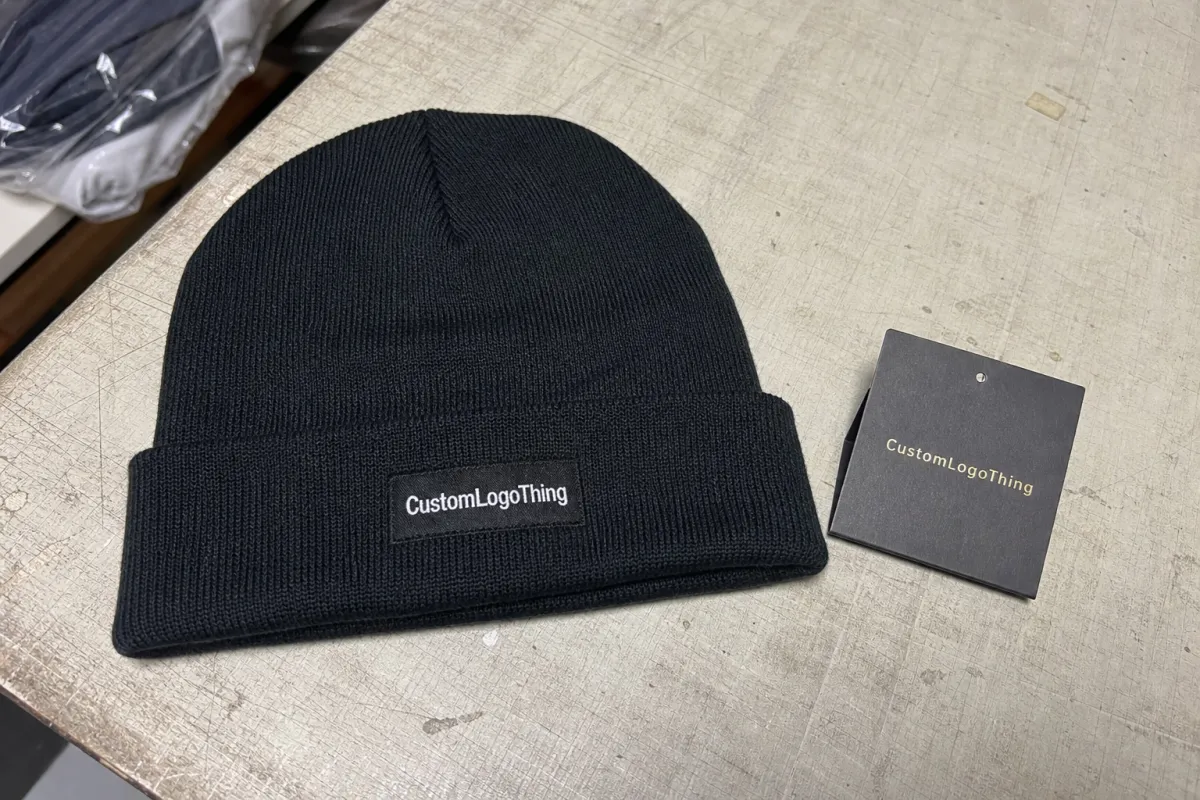
The best starting point is not a trend board. It is sell-through. If a 500-piece promotion cleared in six weeks, that tells you more than a glossy forecast built from social engagement and wishful thinking. Toy woven label beanies Bulk Order Planning should begin with the audience that will actually wear or receive the product: retail shoppers, event attendees, gift-with-purchase buyers, or collectors tied to a character, mascot, or plush program.
Those audiences buy differently. A retail promo beanie may tolerate a louder look and a shorter life cycle. Event merchandise needs quick recognition from 10 feet away. Seasonal gifts usually win on feel and presentation. Toy tie-in programs, by contrast, often care about a cleaner front panel and a label that reinforces identity without crowding the knit.
That is why one style can perform well in one channel and stumble in another. A knit cap for a fan store can carry more visual weight than one bundled with a child-facing product. The same artwork, the same colors, even the same nominal size, can read differently once the product is handled, folded, tagged, and boxed. Production work has a way of exposing assumptions that looked harmless on screen.
A woven label helps because it keeps the beanie visually calm while still carrying name, icon, or slogan. In practice, that matters. If the body knit already uses two or three yarn colors, adding a larger printed patch or oversized decoration can push the piece into higher setup cost and a slower approval cycle. A woven label often preserves margin better because the artwork is flatter, the thread count is easier to control, and the buyer can approve a more restrained look faster.
Buyer takeaway: define who the beanie is for before you define how it looks. Then set quantity around likely sell-through, not around the most optimistic forecast in the room. That is the difference between a reorderable program and a warehouse problem.
Product details buyers should lock before sampling
Before sampling starts, decide exactly what is being ordered. Toy-themed woven label beanies may sit in plush promotions, kids' retail bundles, collector drops, or branded giveaways, and each use case changes fit, finish, and pack-out. A beanie that feels right in a toy bundle may not need the same hand feel or retail structure as one sold on a shelf with a barcode and hang tag.
There are a few decisions that should be fixed early: cuffed or slouch silhouette, pom or no pom, knit gauge, yarn weight, label type, and label position. Front cuff placement is the easiest to read. Side placement can feel more fashion-led. A fold-over tab often works well for small brand marks, but only if the logo stays legible after the cuff folds and the garment stretches.
The woven label itself deserves more attention than most first-time buyers give it. Weaving rewards clarity, not complexity. Thin strokes, tiny type, and gradient-like artwork tend to lose definition in production. If the mockup relies on delicate lines, simplify it before the proof stage. A logo that looks perfect on a monitor can turn muddy once it is translated into thread blocks.
For toy-related artwork, confirm the logo hierarchy, any required wording, and whether the label needs a safety or care message. If the beanies are meant to ride along with children’s products, ask the compliance team whether additional labeling is needed for the destination market. A packaging buyer does not need to become a compliance lawyer, but they do need to know which details cannot be changed after approval.
One practical shortcut: send a one-page brief that shows the front, side, and back views, plus a single placement drawing. That is usually enough to keep the proofing round tight. If the woven label is a separate purchase, route the artwork through Custom Labels & Tags so the label spec and the garment spec do not drift apart.
Another useful discipline is to separate “nice to have” from “must match.” Buyers often say they need a faithful replica, then discover the retail deadline only leaves room for one or two correction rounds. Decide which details protect the brand, and which details merely make the art prettier. The factory can work with a lot. It cannot work with a moving target.
Specs that change fit, durability, and label appearance
The biggest spec drivers are easy to list, but they are rarely set cleanly. Beanie circumference, crown depth, cuff height, label width and height, stitch density, and thread colors all affect how the final piece reads in hand. A 45 x 18 mm label can feel balanced on a youth-style cuff. A larger 60 x 25 mm label may suit a deeper fold or a more fashion-led silhouette. The wrong ratio makes the branding look timid or oversized.
Fit matters because the label is not sitting on a flat sheet. It is sitting on stretch fabric that changes shape with wear and with folding. That is why buyers sometimes approve a sample on the table and then dislike it in packaging photos or on-body shots. If the cuff is narrow, the logo may need fewer details. If the knit is looser, the label can appear a little softer than expected. That is normal. It is also manageable if you plan for it.
Durability is usually better with woven labels than with printed tags, but only if the build is right. Low stitch counts, weak contrast, or oversized artwork can make the brand mark hard to read after handling. A label with 4-6 thread colors is common. More than that can add time and cost without improving visibility. In many cases, the buyer is better off reducing line complexity than trying to preserve every detail from the original artwork.
Material choice is part of the durability conversation too. Acrylic blends usually offer lower cost and quick drying, while wool-blend caps tend to feel warmer and more premium, but can raise the price and complicate color matching slightly. Polyester label yarns typically hold crisp detail well; softer yarns may improve hand feel but can blur fine elements. The best choice depends on the program, not the mood board.
Packaging details belong in the spec sheet as well. Folded versus unfolded, polybagged versus banded, carton count, barcode location, and retail-ready pack-out can change the quote more than people expect. A 50-unit carton is easier to handle for some retailers; a 100-unit master carton may be more efficient for freight. If the order ships in printed cartons or with paper belly bands, FSC-certified paper can help support traceability claims: FSC.
If the beanies are going into a toy bundle or another handling-heavy program, think about transit testing as well. Carton strength, drop resistance, and compression tolerance are not glamorous, but they keep the product presentable on arrival. For shipping validation, the methods at ISTA are more useful than guesswork.
One more detail buyers ignore too often: audience. A beanie aimed at a fan store and a beanie bundled with a child-facing product do not always need the same label language, pack-out, or compliance notes. Ask the supplier to confirm the spec sheet matches the intended channel before the sample is cut. That is a cheap check. Reworking a carton or label after approval is not.
Pricing, MOQ, and unit cost for bulk beanie orders
Pricing for toy woven label Beanies Bulk Order Planning depends on more than garment count. Yarn colors, knit complexity, label weave, size range, stitching details, and packaging method all push the number up or down. A simple one-color label on a standard cuffed beanie is one conversation. A multi-color knit with retail-ready packaging is another.
MOQ is not a fixed moral law. It is the point where setup, proofing, and production prep become reasonable to spread across a run. Lower quantities usually carry higher unit cost because the same approval work is divided across fewer pieces. Buyers often ask for the cheapest price first; the better question is how the quote changes at 300, 1,000, and 5,000 units. That comparison shows where the real efficiency starts.
| Order profile | Typical MOQ | Unit price range | Sample / proof cost | Best fit |
|---|---|---|---|---|
| Simple woven label beanie | 300-500 pcs | $5.40-$8.20 | $45-$80 | Small promos, first-time test runs |
| Standard retail program | 1,000 pcs | $3.85-$5.90 | $60-$110 | Seasonal gifts, gift-with-purchase, fan merchandise |
| Custom pack-out or higher weave complexity | 3,000 pcs+ | $3.10-$4.80 | $90-$150 | Retail drops, repeat programs, multi-SKU launches |
These numbers are not universal, and they should not be treated that way. They are useful because they make the quote legible. If a supplier gives you a single unit price without a quantity break, ask for tiered pricing, sample terms, and whether proof charges are credited back on production. Some factories apply the sample fee as a credit once the bulk order is placed. Others do not. That changes the total buy.
For clean comparison, ask for these inputs in the same message: target quantity, color count, label dimensions, placement, delivery location, packaging instructions, and whether this is a one-time drop or a replenishment program. If the buyer is already in a wholesale structure, the discussion is easier to manage through Wholesale Programs because repeat pricing, reorders, and carton standards can be handled from one spec set.
Rule of thumb: do not compare two quotes until you have matched the label size, packing method, and shipping terms. A quote that looks 12% cheaper can become more expensive the moment you add polybags, barcode stickers, or a more precise label proof.
Process and timeline: how bulk beanie orders move
Most bulk orders follow the same path: RFQ, artwork review, woven label proof, pre-production sample or mockup, bulk knit, in-line QC, final packing, and shipment. The process sounds simple. The failure points are usually basic too: incomplete art files, missing Pantone references, late approval on label placement, or a packaging change after the sample is already built.
Timing works best when sample time and production time are separated. A straightforward sample may take 5-8 business days. Production on a standard order often lands in the 12-20 business day range after sample approval, depending on complexity and queue load. Freight can add a few days for air or several weeks for ocean, and customs or warehouse receiving can add more. A promise date that ignores those steps is not a promise; it is a guess.
To protect a seasonal launch, work backward from the date the product must be in-store, not the date the PO is issued. If the launch depends on a holiday window or an event date, build in buffer time for one correction round and one transit surprise. That sounds conservative because it is conservative. Conservative planning is cheaper than emergency air freight.
The QC checks worth asking for are not exotic. They are practical. Confirm label alignment, measure cuff width against the approved sample, inspect color consistency across cartons, and check that the weave reads cleanly under standard lighting. If the beanies are going to be photographed for retail or e-commerce, ask for shipment photos that show front, back, folded, and packed views before release. A photo set can catch reversed carton counts or the wrong barcode panel in minutes.
If the cartons need to survive distance shipping, ask for shipment photos and carton labels before the goods leave the factory. Even a simple photo set can catch issues like reversed carton counts or the wrong barcode panel. Buyers who reorder regularly should ask for the same photo package every time. Consistency is not just about the product. It is also about the proof trail.
One overlooked advantage of structured planning is that it makes the next reorder faster. If the supplier has the approved sample, approved carton spec, and the last production notes, the next run can move with fewer questions. That is where toy woven label beanies bulk order planning becomes a repeatable buying system instead of a one-off scramble.
Why repeat buyers stay with one beanie supplier
Repeat buyers usually care less about a small one-time discount than about consistency. Knit gauge, label color, and placement need to match across reorders, especially when the beanies sit on the same shelf or arrive in the same seasonal campaign. A difference of just a few millimeters in label position can be visible under store lighting or in product photography. The product may still be usable, but it will not look like the same line.
A single supplier also reduces friction. One spec sheet. One approval path. One production history. That sounds dull, and it is exactly why it works. Buyers do not get paid to rediscover the same dimensions every quarter. They get paid to keep the program moving, protect margin, and avoid avoidable errors. A supplier who keeps notes on the prior run is often worth more than a cheaper quote from an unfamiliar source.
Factory-side controls matter here. Color matching, inline inspection, carton labeling, and photo QC before shipment all help keep repeat work aligned. If one batch uses a slightly darker thread shade, the difference may be invisible in a warehouse and obvious on a retail peg. If the woven label fold changes, the logo can shift just enough to feel off. That is the kind of variance that causes returns, complaints, or unnecessary re-approval.
Splitting orders across vendors usually creates more variation than buyers expect. One run may have a tighter knit. Another may use a slightly different label width. A third may package with a different carton count. None of those differences sounds dramatic on paper. Together, they make a line look inconsistent. That is why repeat programs reward discipline more than bargain hunting.
If your program is recurring, keep the supplier loop tight and the documentation boring. That includes artwork files, Pantone references, pack-out notes, and the last approved sample photo. The goal is not creativity for its own sake. The goal is repeatable output that still looks intentional.
Next steps before you request your beanie quote
Before you send an RFQ, confirm the audience, exact quantity, label artwork, preferred placement, packaging method, and ship date. Those six inputs do more to shape a clean quote than any sales pitch. If you are still deciding between two label positions or two pack-out styles, resolve that first. A quote built on moving targets is rarely useful.
Then compare three numbers side by side: unit cost, landed cost, and sample cost. Unit cost tells you what the product costs on paper. Landed cost tells you what it costs to receive it in your warehouse or fulfillment center. Sample cost tells you how much confidence the supplier is asking you to buy before production starts. The cheapest quote is not always the best total buy.
Prepare a one-page spec sheet and approve one sample path instead of changing the order midstream. That single habit saves time, protects margin, and keeps the schedule cleaner. It also gives the production team one reference point instead of three conflicting versions. For a buyer managing toy woven label beanies bulk order planning, that kind of discipline is usually the difference between a smooth reorder and a week of avoidable email traffic.
One useful habit is to write down the reason for every approval. If a sample passes because the label is centered and the contrast is strong, keep that note. If a sample is accepted with a slightly deeper cuff because the fold improves visibility, keep that too. Those small records help on the next run, when everyone has forgotten why the first approval worked.
Final check: lock the spec, request pricing with real quantity tiers, and move into purchase order review only after the label, fit, and pack-out are settled. That is how toy woven label beanies bulk order planning stays controlled from first sample to final shipment.
What MOQ should I expect for custom toy beanies with woven labels?
MOQ usually depends on knit complexity, label setup, and packaging requirements rather than one fixed number. Lower quantities can still work, but the unit cost is typically higher because setup is spread across fewer pieces. Ask for tiered pricing so you can compare a test run against a fuller bulk buy.
Can I approve a sample before placing a full woven label beanie order?
Yes, and in most cases you should. A pre-production sample is the safest way to confirm label size, placement, and color contrast. Check the sample on the folded cuff, under normal handling, and against your packaging mockup before you release the bulk order.
What artwork files do you need for toy woven label beanies?
Vector artwork is the best starting point because it keeps lines and type sharper in the weave. Include Pantone references or approved color swatches if brand matching matters across reorders. Placement notes and any wording limits should also be included so the label is built correctly the first time.
How does label placement affect cost and lead time?
A simple front-cuff placement is usually faster and less expensive than multiple label positions or a more complex fold layout. Each extra color check or placement revision adds time. If the schedule is tight, lock placement early and keep the approval chain short.
How long does a bulk beanie order usually take?
Timing depends on sample approval, production complexity, and freight method, so each phase should be planned separately. Simple orders move faster than multi-color or heavily customized runs. Build extra time into the schedule if the beanies are tied to a seasonal launch or a retail drop date.

