Trade Show Embroidered Beanies Quote: Buyer's Guide - A trade show embroidered beanies quote should answer three questions quickly: what will it cost, how soon can it ship, and exactly what is included.
That sounds basic until you start comparing bids. A beanie is not a disposable flyer or a pen that vanishes into a tote bag. It gets worn in cold convention halls, on the walk from the hotel, at outdoor lines, and sometimes long after the event ends. If the knit is comfortable and the logo is readable, the item keeps working for you in photos, meetings, and daily use. From a buyer's perspective, that repeated exposure is the real return.
The best quotes are not the cheapest-looking ones. They are the clearest ones. You want to see the blank hat cost, embroidery setup, digitizing if the art needs cleanup, freight, and any rush fee in separate lines. That makes comparison possible. Without that breakdown, two quotes can look similar while hiding very different product quality, decoration methods, or shipping assumptions.
Why a Trade Show Embroidered Beanies Quote Pays Off
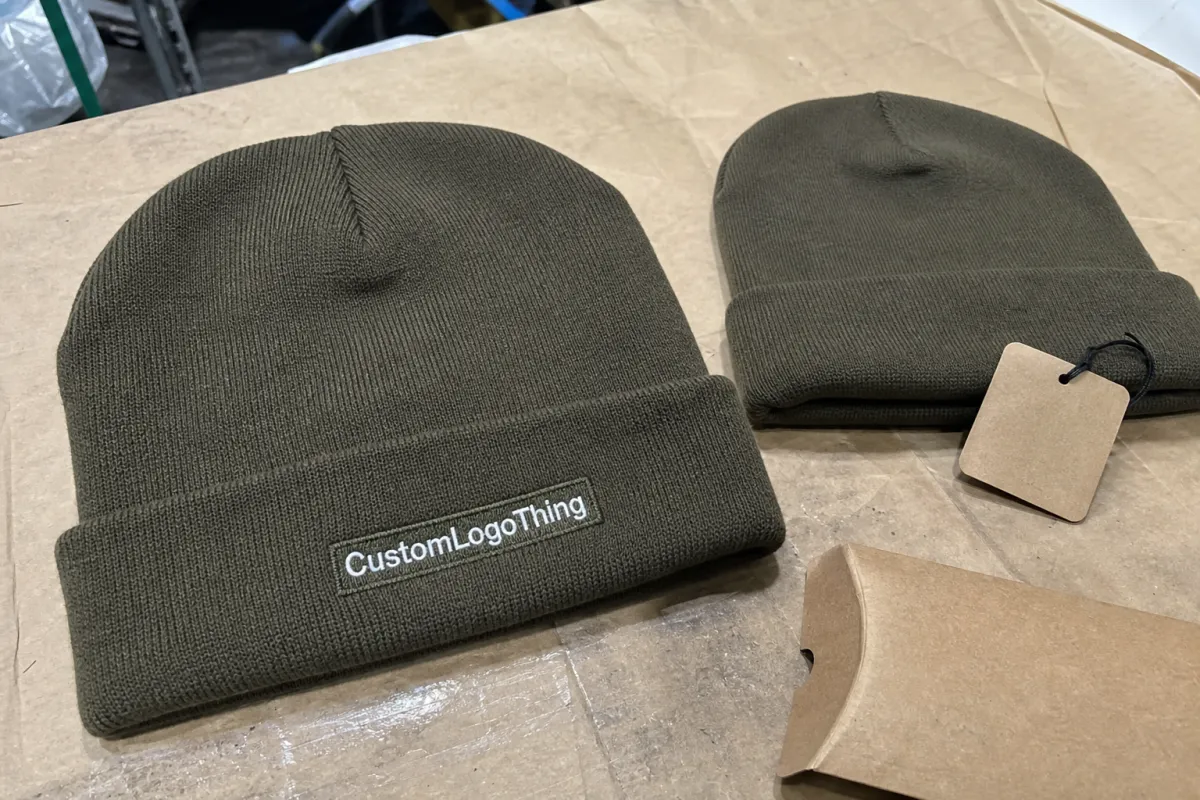
A Trade Show Embroidered beanies quote makes more sense than many other promo buys because the product has a real use case. People wear knit caps. They do not file them into a drawer and forget them. That changes the economics. A simple acrylic beanie with a clean logo can keep generating impressions after the booth is packed up, especially in winter markets, outdoor activations, and travel-heavy conferences.
Beanies also solve a common event problem: comfort without looking overly promotional. A loud graphic on a cheap item can get tossed. A well-made cuffed knit with a restrained mark tends to stay in rotation. That is why event buyers, brand teams, and field marketers often use them for staff apparel, attendee gifts, and premium kit inserts. The item works as clothing first and branding second, which is usually the right order.
The first quote request should not be vague. Quantity matters. So do audience, deadline, decoration location, and packaging. A staff uniform order may call for a heavier knit and a larger logo. A VIP gift might need a softer handfeel, individual polybags, or a more retail-looking finish. If the supplier does not know the end use, the quote may technically be accurate and still be useless.
There is also a practical budget reason to ask for full breakdowns. One supplier may quote a low unit price but charge more for setup or freight. Another may include decoration but quote a thinner blank. Buyers who compare only the headline number can end up picking the wrong job. The real question is not "what is the cheapest beanie?" It is "what is the best finished piece for this event, at this timeline, with no surprises?"
"The cleanest quote is the one that shows the blank, the decoration, the freight, and the rush cost without making you chase the details."
For trade shows, that clarity matters because orders tend to move on fixed deadlines. Shipping dates are not flexible just because production is busy. The closer the event gets, the more expensive mistakes become.
Beanie Styles That Change the Final Line Item
Not every knit cap prices the same way. The style changes how it is made, how it fits, how the logo sits, and how much labor the order requires. Cuffed acrylic beanies are usually the most cost-efficient place to start. The cuff gives you a stable decoration area and a straightforward fit for embroidery. That combination makes them a reliable default for trade show programs.
Slouch beanies cost a little more in many cases because the crown drape and extra fabric can complicate placement. They look more fashion-forward, but that style also makes logo visibility less predictable. A brand mark that sits beautifully on a cuffed knit may feel cramped on a slouch profile. Fleece-lined options usually cost more still, not because they are exotic, but because they add material and construction complexity.
Acrylic is the most common promotional knitwear yarn for a reason. It is predictable, light, and economical. Acrylic-wool blends sit in a more premium lane. They often have a better handfeel and a more retail-like finish, but they also raise the unit price. Recycled yarns are increasingly common, though the quote should make clear whether the recycled content affects dye lot, feel, or lead time. Those details matter more than the marketing language printed on the spec sheet.
Cuff placement is one of the easiest ways to control the final look. A folded cuff gives the embroidery a flatter surface and a more visible branding zone. Side-panel placement can look subtle, but it may require a smaller logo and more careful stitch planning. Top-of-crown decoration is possible on some styles, yet it often creates compromises because knit fabric stretches. Those compromises should be discussed before approval, not after the first sample arrives.
Optional features change the quote too. Woven patches, woven labels, pom-poms, branded tabs, and custom hang tags all add setup or labor. Some of them improve the product. Some only add cost. If the beanie is meant for a trade show handout, the safest test is simple: does the add-on make the item more wearable, more legible, or more likely to be kept? If the answer is no, skip it.
| Beanie Style | Typical Use | Approx. Unit Cost at 100-250 | Decoration Notes |
|---|---|---|---|
| Cuffed acrylic | General trade show giveaway, staff wear | $4.50-$7.50 | Stable logo zone, simplest embroidery setup |
| Slouch knit | Event kits, premium attendee gifts | $5.75-$9.25 | Logo often needs to be smaller and higher contrast |
| Fleece-lined | Outdoor teams, cold-weather programs | $6.50-$10.50 | Heavier material, more insulation, higher cost |
| Pom beanie | Retail-style promos, seasonal activations | $5.25-$9.75 | Pom can limit placement at the crown |
These numbers are useful for planning, not for final budgeting. Knits vary by gauge, yarn weight, stock color, stitch complexity, and packaging. A simple two-color logo on a standard blank will not price the same as a detailed multicolor mark on a premium cuff.
Logo Specs and Artwork Details to Confirm First
The quote is only as good as the artwork. Vector files - AI, EPS, and clean PDF files - are easiest to work with because they let the decoration team map the stitches accurately. A PNG or JPG can be fine for reference, but it usually creates extra cleanup work. If the logo includes tiny text, fine lines, gradients, or a detailed seal, expect simplification. Embroidery is built from thread density and stitch direction, not pixels. That distinction explains a lot of the back-and-forth buyers see during proofing.
Stitch count is one of the main cost drivers. A compact one-color logo is faster to digitize and sew than a layered mark with multiple thread colors and dense fills. Large solid shapes are generally safer than delicate artwork. A crisp emblem with readable lettering usually produces a stronger result than a complex illustration that loses detail when translated into thread.
Placement changes both price and appearance. Center cuff is the most common option because it offers a controlled decoration zone and dependable visibility. Left cuff often looks subtle and polished. Side-panel embroidery can work well, but the stretch of the knit can change the final shape of the logo. If the mark is meant to be seen from a distance, keep it bold and legible. If it is meant to feel fashion-oriented, be prepared to accept a smaller imprint area.
The blank color should be reviewed with the logo, not separately. Dark yarn can mute a low-contrast mark. Heathered or melange knits can visually soften a clean logo edge. A design that looks strong on a white mockup may look quieter on navy, charcoal, or forest green. Buyers who want fewer surprises should ask for the proof on the actual blank color whenever possible.
If the order needs numbered names, multiple sponsor logos, or location-specific versions, say so immediately. Every extra variation adds approval points and can extend the timeline. That is where many rush orders get squeezed: the art was not the problem, the number of decision-makers was.
Shipping and packaging should also be part of the artwork conversation. Some teams want individual bags for distribution. Others need bulk cartons to speed handout at the event. If your receiving plan includes hotels, convention centers, or third-party warehouses, the packing method matters almost as much as the embroidery itself. For teams that need a broader reference point on shipping standards, the ISTA resource library is useful. For buyers trying to meet packaging policies, FSC certification can help guide carton or insert choices.
Pricing, MOQ, and Unit Cost: What Moves the Number
A useful quote has three core lines: blank cost, decoration cost, and freight. If those are not separated, comparison becomes guesswork. One vendor may look inexpensive because setup is hidden. Another may look expensive because freight is built in while a competitor left it out. Buyers working on event budgets need the real total, not just a low headline number.
MOQ, or Minimum Order Quantity, pushes unit price in predictable ways. Lower quantities tend to cost more per piece because setup labor is spread across fewer beanies. Larger runs usually lower the unit cost, sometimes sharply. For many trade show programs, 100 to 250 pieces is a common entry point. At 500 units and above, the math often gets better, but that depends on style, logo complexity, and whether the order includes special packaging.
A few things commonly move the price upward:
- Higher stitch count from larger or more detailed logos
- More thread colors
- Premium yarns or heavier knits
- Rush production and expedited freight
- Individual bagging, inserts, or custom retail packaging
Freight deserves more attention than it usually gets. Convention-center delivery, hotel receiving, and split shipments can all add cost and risk. If one supplier is quoting to a warehouse and another is quoting direct to an event venue, the numbers are not comparable. Ask everyone to quote the same delivery address, the same packing plan, and the same ship window. That removes a lot of false savings.
Price also depends on whether the order is stocked or custom. Stock beanies in common colors are cheaper and faster. Custom knit programs, especially those with specific color matching, can increase lead time and introduce dye-lot variability. That is not a defect. It is simply how knitwear production works. If the event date is fixed, the safest budget is usually the one that leaves room for freight and proof revisions instead of assuming perfect conditions.
For teams tracking sustainability, ask whether packaging can be reduced, whether cartons can use recycled content, and whether excess inserts can be removed. The EPA has practical guidance on waste reduction at epa.gov. That will not change the embroidery, but it can affect how the final shipment fits procurement rules.
Process, Proofs, and Turnaround: From File to Freight
The best ordering process is the one you can explain in one sentence. Artwork review. Proof. Approval. Production. Quality check. Shipment. If the supplier cannot describe that sequence clearly, the order carries more risk than it should.
Most delays happen before sewing starts. Late logo edits, unclear placement direction, and slow sign-offs are the usual culprits. The machine is rarely the problem. The calendar is. If an event date is fixed, response time matters as much as product selection. A quick quote that sits waiting for approval is still a late order.
Turnaround depends on stock availability, logo complexity, number of decoration locations, and whether digitizing is needed. A simple cuffed beanie with a clean vector logo can move quickly when the blank color is in stock. More complex jobs take longer, especially if the art needs simplification or the order includes multiple color splits. Standard production windows are often measured in business days after proof approval, but a serious quote should state the actual window for that job instead of hiding behind a generic promise.
Rush production is possible in some cases, but only if the buyer is ready to move fast. That means final artwork in hand, a confirmed budget, and enough flexibility to accept expedited freight. If your event is close, ask about rush feasibility before approving the proof. Once the run starts, changes become expensive and limited.
Delivery planning matters too. Event shipments should be timed against dock hours, venue receiving rules, and holiday closures. A beanie order can be finished on time and still miss the booth if the receiver was not ready. Good buyers treat shipping as part of production, not as something to think about at the end.
Quality Control Details That Keep the Order Out of Trouble
A strong quote should also imply a serious QC process. That does not mean perfection. Knitwear has limits. It does mean consistent standards. Before shipment, the order should be checked for logo placement, stitch density, thread tension, color match, and blank consistency. On a trade show order, the beanies need to look right in a stack, on a head, and under event lighting. A product that photographs well in a studio can still fail in a crowded hall if the contrast is too low or the logo sits too high.
Thread tension is a small detail that matters a lot. Too loose, and the embroidery can look uneven. Too tight, and the knit may pucker. Backing choice matters as well, especially on softer or stretchier knits. The supplier should know whether the fabric needs a lighter stabilizer or a firmer one. If the logo has thin strokes or small lettering, ask how they will keep the art readable after stitching. That question usually separates experienced decorators from order-takers.
Color consistency is another practical issue. Batch-to-batch yarn variations happen, especially across larger orders or reordered programs. If a brand depends on a specific shade, ask how the blank will be sourced and whether dye-lot differences are expected. The answer may not eliminate risk, but it will tell you how serious the supplier is about matching the first approved sample.
Reorders should be easier than first orders. Once the beanie style, blank color, thread colors, and digitized file are approved, the next run should not require a complete rebuild. If a vendor cannot repeat a previous order without re-quoting every detail, the process is too loose. Event teams benefit from documentation: saved artwork, approved proofs, notes on placement, and the exact decoration specifications used the first time. That kind of recordkeeping saves time when seasonal programs return.
"A repeatable beanie order is built on saved specs, a clean proof, and a decoration setup that does not need to be rediscovered every season."
How to Request the Right Quote and Lock the Order In
The fastest way to get a useful price is to send a complete request. Include quantity, blank color, logo file, decoration location, due date, and ship-to ZIP code. If the order has multiple color splits, say that upfront. If the packing needs to be bulk packed or individually bagged, mention it immediately. Every missing detail increases the chance of a revised quote later, and revised quotes are where deadlines start slipping.
Ask for itemization. The answer should show the blank product, embroidery setup, freight, and any rush fee separately. If there is digitizing, request it as its own line. If there are packaging changes, keep those separate too. A single lump sum can be convenient, but it is hard to compare and even harder to challenge if something looks off.
Proof approval should happen before production begins, and the proof should show more than a logo floating on a generic cap. It should reflect the actual beanie color, approximate logo size, and thread direction. If the mark feels too small or the contrast seems weak, fix it then. After approval, adjustments are slower, costlier, and sometimes impossible without delaying shipment.
One detail gets overlooked constantly: who is signing off. Confirm the decision maker, billing contact, and receiving address before the order moves forward. A perfect quote can still fail if the ship-to information is wrong or the approval chain is unclear. For event buying, logistics is part of design.
That is the real advantage of a disciplined trade show embroidered beanies quote. It gives you enough detail to compare options honestly, enough clarity to avoid last-minute surprises, and enough production context to know whether the order can actually arrive on time.
FAQ
What details do you need for a trade show embroidered beanies quote?
Quantity, blank color, logo file, decoration location, and event deadline are the essentials. Add the ship-to ZIP code and note whether the order needs bulk packing, individual polybags, or special inserts. If you want price breaks, ask for tiered quotes at 100, 250, and 500 units so you can see the math clearly.
What is the typical MOQ for an embroidered beanie order?
MOQ depends on style and decoration complexity. Smaller runs are usually possible, but they often cost more per piece because setup is spread across fewer units. Simple cuffed styles usually support lower quantities better than specialty knits or orders with extra decoration steps.
How long does a trade show beanie order usually take?
Turnaround depends on artwork approval, stock availability, and decoration complexity. Clean vector art and in-stock blanks move faster. More detailed logos, extra color changes, or custom packaging usually add time. If your event date is tight, ask about rush production before you approve the proof.
Can I mix beanie colors in one embroidered quote?
Yes, but mixed colors can affect pricing if each color needs separate inventory handling. Ask whether the MOQ applies per color or across the full order. Send the color split up front so the quote reflects the real production plan instead of a best guess.
What artwork files work best for an embroidered beanie quote?
Vector files such as AI, EPS, or PDF are usually easiest to work from. Clean logos with bold shapes and readable text produce the most reliable stitch results. If you only have a PNG or JPG, expect the supplier to redraw or simplify it before proofing.
Can a trade show embroidered beanies quote include packaging changes?
Yes. Individual polybags, recycled cartons, printed inserts, and barcode labels can all be quoted separately. If packaging matters for the handout or for procurement rules, mention it before the proof stage so the total reflects the actual job.