trade show Five Panel Caps Unit cost is usually decided by more than the blank cap price. Setup, decoration, freight, and approval delays can change the total fast. A low quote can become expensive if the artwork needs extra corrections or the shipment has to move on a rush schedule.
Five-panel caps are popular for trade shows because the front panel gives logos a clean surface and the build is simple to produce. That makes them a practical option for booth staff, giveaways, and photo-friendly event wear. The real buying question is whether the cap meets the spec, lands on time, and stays within the full budget.
The main levers are easy to control: construction, decoration method, quantity, and lead time. If those are locked early, a buyer can compare quotes more accurately and avoid surprise charges later.
Why Five-Panel Caps Keep Event Budgets Lean
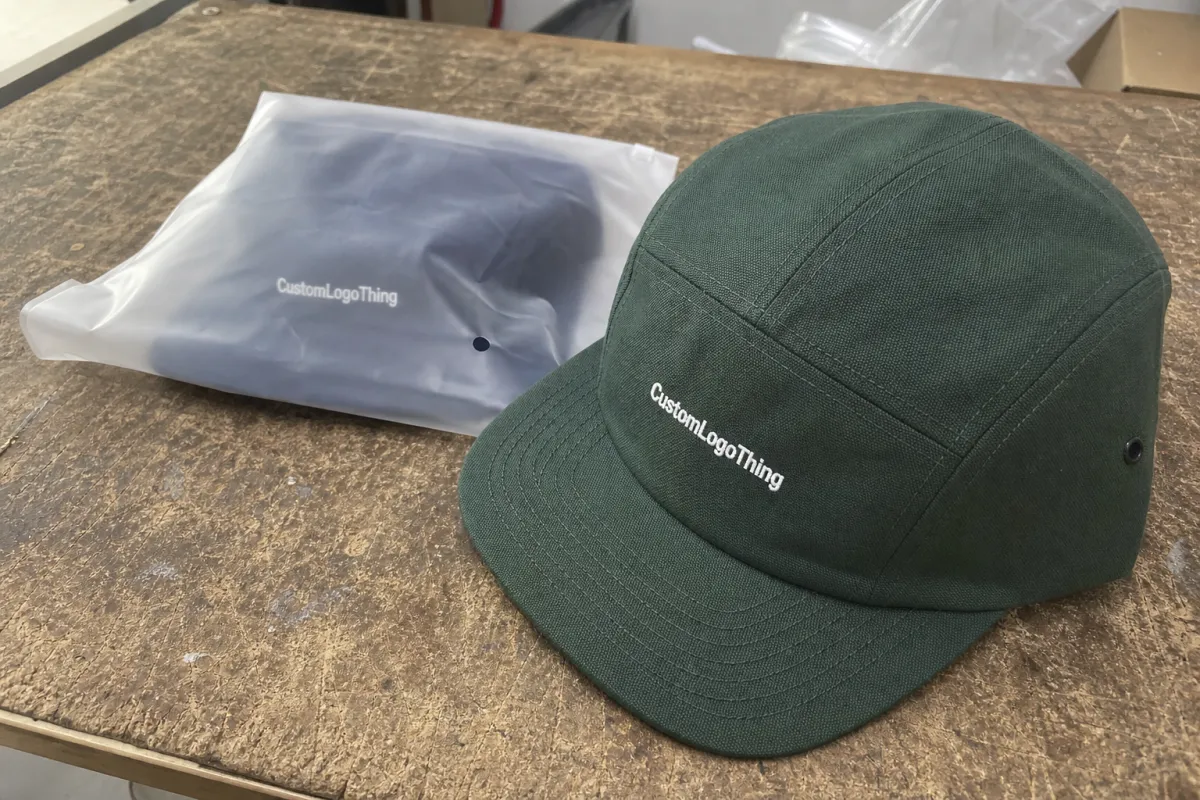
Five-panel caps are efficient because they have fewer visual breaks across the front panel. That gives the logo a cleaner read and often reduces decoration adjustments. A centered mark is easier to place, and the cap usually looks more uniform across a run.
That matters for trade show buyers because consistency affects both cost and appearance. A cap that is easier to decorate is less likely to need rework, and rework is where budget drift starts. On small orders, even minor corrections can move the per-piece cost more than expected.
Order size also changes the equation. Small runs carry more setup cost per unit, while larger runs lower the per-piece figure but increase the risk of leftovers. For event programs, the best price is often the one that matches the actual staffing and giveaway plan rather than the largest possible quantity.
For stock five-panel caps with simple branding, buyers often see better pricing once the order clears the smallest MOQ. Custom colors, premium decoration, or rush freight can erase those savings quickly, so the blank style alone should not be treated as the full cost story.
Choosing the Right Crown, Closure, and Brim Build
Construction choices affect comfort, presentation, and cost. A structured crown holds its shape and supports larger logos well. An unstructured crown feels softer and packs more easily, which can help when caps are shipping with other event materials or going into mailers.
Brim shape changes the look and use case. A pre-curved brim is the safer choice for staff who want a ready-to-wear cap with fewer fit complaints. A flat brim gives a sharper, more contemporary profile and can work better for staged photography or brand-forward giveaways.
Closure type matters for sizing and flexibility. Snapbacks are efficient when the wearers are mixed. Strapbacks can feel a little more refined. Fitted caps look clean, but they are only economical if sizing is already known, because the wrong size quickly turns into waste.
| Build choice | What it changes | Cost effect | Best use |
|---|---|---|---|
| Structured crown | Holds shape, supports logo placement | Usually slightly higher | Staff uniforms, polished booth wear |
| Unstructured crown | Softer hand feel, packs flatter | Often lower on materials | Mailers, travel kits, casual giveaways |
| Pre-curved brim | Ready-to-wear fit, familiar profile | Small shaping premium, if any | All-day booth staff wear |
| Flat brim | Cleaner modern silhouette | Usually neutral | Photo-focused programs |
| Snapback | One-size flexibility | Efficient for mixed groups | General event distribution |
For most trade show programs, a structured five-panel snapback with a pre-curved brim is the safest starting point. It balances fit, appearance, and quote stability. If the cap needs a more premium finish, a strapback or custom closure can make sense, but only if that upgrade changes how the cap will actually be worn.
Decoration Specs That Protect Branding and Consistency
Decoration has the biggest effect on how the cap is perceived and often the biggest chance of cost creep. Embroidery is durable and usually the easiest to quote. Woven patches are useful for detail and small type. Printed patches handle color variation efficiently. Puff embroidery adds depth but increases thread volume and production time. Heat-applied transfers are practical for short runs or detailed art, though they may not be the best choice for heavy wear.
Placement is just as important as method. Center-front decoration gives the strongest read and is usually best for trade show staff. Side placement works for secondary marks or sponsor branding. Rear placement can help if the cap will appear in crowd photos. Each additional location adds labor and alignment checks, so multiple placements should be justified by the program.
Artwork prep should be treated as part of production. Vector files speed setup. Pantone references reduce color disputes. Fine details should be checked at stitch size, not just on screen. A logo that looks sharp in a PDF can become muddy once it is sewn at a small scale.
The strongest quote is the one that survives proofing without hidden corrections.
Before production, ask for a digital proof. For more complex decoration, a sew-out or pre-production sample is worth the time. Check logo position, thread color, crown shape, and brim curve before approval. A small mistake caught at proof stage is much cheaper than a full batch that needs correction later.
Decoration also moves cost per piece in predictable ways. A one-color embroidered mark on a stock cap will usually cost less than a dense multi-color patch with border detail or a second placement. If the budget is tight, lock the decoration spec before comparing suppliers. Otherwise, the quotes may not be comparable at all.
Trade Show Five Panel Caps Unit Cost: What Drives It
trade show Five Panel Caps unit cost is driven by fixed charges and variable charges. Quantity is the biggest lever because setup work happens whether the order is 50 pieces or 500. Digitizing, machine setup, proof handling, and first-round inspection all have to be absorbed somewhere, and smaller runs absorb more of that overhead per cap.
Fabric choice also matters. Stock colors usually price more efficiently than custom-dyed shells. Cotton twill, brushed cotton, and polyester twill are common because they balance look and cost. Heavier material can improve structure, but it also adds expense and can change how the front panel holds the logo.
Decoration method changes the total quickly. Embroidery is usually the most predictable. Patches can add tooling or finishing work. Multiple placements increase labor. Even a small change in logo size can alter stitch count enough to move the quote, which is why two apparently similar orders can price very differently.
| Order profile | Typical landed unit cost | What usually drives it |
|---|---|---|
| 50-100 stock caps, simple embroidery | $4.00-$7.50 | Setup spread across fewer units, freight share is high |
| 100-300 stock caps, one-color embroidery | $2.75-$5.25 | Better absorption of setup, steady material sourcing |
| 300+ stock caps, patch or multi-placement | $3.50-$8.50 | Tooling, extra handling, more inspection time |
| Rush order with air freight | Often adds $0.40-$1.50 per cap | Expedited production, faster transit, tighter packing |
These ranges are directional, not a promise. Freight route, supplier location, and import charges can move the final number. Still, the pattern is consistent: the lowest blank price is not the best indicator of landed cost. A slightly higher base price can still win if it includes setup and shipping without surprises.
MOQ is another factor. A stock cap with simple embroidery may start around 50-100 units, while custom colorways or more complex decoration often need 100-300 units or more. Lower minimums are possible, but the unit price usually rises to cover the shorter run. Split shipments, late color changes, and rush freight are common ways a clean quote gets less efficient.
From Artwork Approval to Door Delivery: Production Steps and Lead Time
A reliable order follows a simple path: quote, artwork submission, digital proof, sample or pre-production approval, bulk production, inspection, packing, and shipment. Each stage has a decision point. If the file is incomplete or the color reference is vague, the schedule slows down.
Lead time is really two clocks: production and transit. A straightforward order may need 12-20 business days after approval before it is ready to ship. More detailed decoration, special materials, or a busy factory schedule can add time. Shipping then sits on top of that. Air freight is faster but costly. Ocean freight is cheaper for larger runs but slower.
Trade show teams should work backward from the in-hands date, not the event date. Packing, warehouse receiving, and distribution all take time. One missed proof checkpoint can turn a normal order into a rush order, and rush orders are where unit cost climbs fastest.
Packaging details can matter to procurement and receiving teams. Clear carton labels speed handling. Palletized shipping helps for larger orders. Individual polybags may be worth the cost if caps are being separated by team, location, or kit. If sustainability documentation is important, recycled inserts or FSC-certified paper stock can be added without changing the cap itself.
Production constraints are worth checking before approval. Dense embroidery can pucker on a soft crown. Patches need the right heat and pressure. Thin brim boards can change the final shape. These are small issues, but they are the difference between a clean delivery and a batch that needs hand inspection on arrival.
What Repeat Buyers Check Before They Reorder Caps
Repeat buyers usually care less about finding the cheapest number and more about keeping the second order aligned with the first. Color consistency, crown depth, and logo placement matter once the cap has already proven itself in the field. A small change that looks acceptable on paper can still be visible under booth lighting.
Good suppliers keep the important records: cap spec, thread colors, artwork files, and approved sample notes. That reduces back-and-forth on reorder and lowers the chance of a new interpretation of an old design. It also makes it easier to compare future pricing against the same baseline.
Service quality matters too. A clear quote that separates product price, decoration, setup, and freight is easier to trust. Packaging flexibility is another sign the supplier understands the order. Some teams need caps bagged individually, carton-labeled by department, or split between show site and warehouse.
A practical quality checklist usually includes these points:
- Digital proof approved before production
- Logo placement measured against the approved mockup
- Thread, patch, or print color recorded correctly
- Brim curve and crown depth checked on a finished sample
- Carton labels matched to the ship-to instructions
- Inspection completed before freight booking
This checklist is not cosmetic. A cap order with one small defect can still miss the event window if there is no buffer for correction. Repeat buyers look for suppliers who can reproduce the previous run without extra explanation.
How to Request a Quote That Gets a Fast, Accurate Reply
The fastest quotes come from complete specs. Send the cap style, quantity, decoration method, artwork file, preferred colors, delivery date, and shipping destination in one message. If the event date is fixed, include it. That gives the supplier a real deadline instead of a guess.
Ask for pricing at more than one quantity. A 100-piece, 250-piece, and 500-piece comparison shows where unit cost drops and where it flattens out. It also reveals whether setup charges are being buried in the base price. If the numbers barely move, the spec may contain a fixed cost that deserves a closer look.
Request one written quote that separates the blank cap, decoration, setup, and freight. If the order is still flexible, ask for two decoration options side by side, such as embroidery and patch work. The best value is not always the lowest decoration price; it is the option that meets the deadline and the design standard without extra revisions.
Buyer tip: if you are quoting trade show Five Panel Caps unit cost, keep the spec identical across every supplier. Same blank, same placement, same artwork size, same shipping path. If any of those change, the comparison stops being useful.
Once the quote is in hand, move quickly on approval. Confirm the final spec, approve the artwork, and leave enough time for one correction if needed. The most efficient cap orders are usually the ones with the fewest open questions.
What changes trade show five panel cap unit cost the most?
Quantity usually has the biggest effect because setup work gets spread across more pieces. Decoration complexity, color count, and rush freight can also raise the price quickly.
Are five-panel caps usually cheaper than six-panel caps?
Often they are, especially for centered logos and straightforward event use. Final price still depends on fabric, closure, decoration method, and order size.
What MOQ should I expect for custom trade show caps?
Simple stock orders can start around 50-100 units, while custom color or more complex decoration often needs 100-300 units or more. Lower minimums are possible, but the unit price usually rises to cover the shorter run.
How fast can five-panel caps be produced for a trade show?
A straightforward order may take 12-20 business days after artwork approval, then shipping time is added on top. Rush programs can move faster if the design is final and the supplier has stock available.
Which decoration method gives the best value?
Embroidery is usually the safest balance of appearance, durability, and cost. Patches can be better for detailed art or a more premium presentation.