Trade show foam trucker Hats Lead Time sounds straightforward until the event date stops being abstract and starts acting like a wall. The cap itself is a simple promotional item: foam front, mesh back, plastic snap, curved or semi-curved bill, and a logo that usually needs only one good decoration pass. Yet the schedule behind that cap is rarely simple. Artwork has to be approved, blanks have to be available, decoration has to be matched to the material, cartons have to be packed to the right count, and freight has to land where the booth team can actually receive it.
That is why buyers who only ask for a production time often get a number that does not protect the show floor. A supplier may quote a few business days for the factory side of the job, but a real in-hand date has to include proofing, setup, production, finishing, carton labeling, and transit. Miss one link in that chain and a “fast” order becomes a late order. Trade show orders punish vague planning more than almost any other promotional purchase.
There is also a practical reason this category deserves close attention. Foam Trucker Hats are usually bought in volume, often for giveaways with a fixed booth date and a narrow receiving window. That means the margin for error is thin. A two-day delay in proof approval is not the same as a two-day delay on a blank reorder; on a show item, those two days can decide whether the hats are on the table or still on a truck.
What Trade Show Foam Trucker Hats Lead Time Really Means
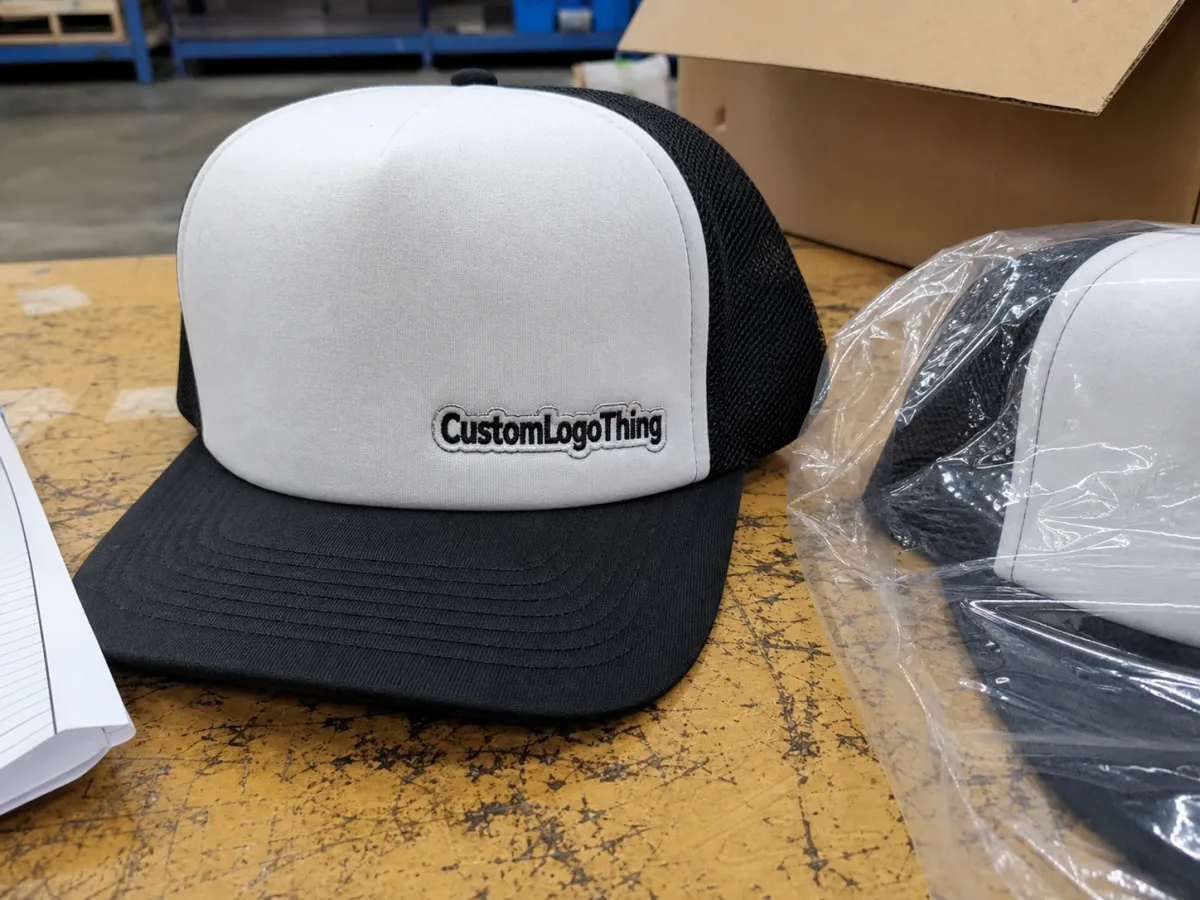
Lead time is the full path from final art approval to the moment the cartons are in the right hands. For this product, that path matters more than the cap style itself. Foam-front trucker hats are common, inexpensive relative to many embroidered apparel items, and often easy to wear at an event. The bottleneck is usually not the hat body. It is the decoration method, the timing of approvals, and the logistics around the event deadline.
A useful way to think about the order is to split it into three layers. First is the product layer: is the blank hat in stock in the right color and shape? Second is the decoration layer: screen print, embroidery, patch, transfer, or label each behave differently on foam. Third is the delivery layer: standard ground, expedited freight, or venue-specific shipping. Each layer can be quick on its own, but one slow layer can hold the others hostage.
Foam also changes the production conversation. It is not as forgiving as a fabric crown. Heat, pressure, needle density, and adhesive choices all matter. A method that looks fine on cotton or polyester may need adjustment on foam because the face panel can deform, show compression marks, or accept ink unevenly if the process is not controlled. That is why one supplier may say a decoration is easy while another flags it as a risk. Both may be right, depending on the exact build.
“The shortest schedule usually belongs to the order that starts with final artwork, a locked quantity, and a blank cap already sitting in stock.”
If you need a benchmark, think in terms of in-hand planning rather than factory-only planning. A basic run of decorated stock hats can move quickly, but only if the proof is approved immediately and freight is planned with the same care as the decoration. For trade shows, transit time is not a footnote. It is part of the product.
For packaging and transport context, the standards and guidance collected by ISTA are useful for understanding why carton integrity, compression, and handling conditions matter once an order leaves production. The broader packaging resource library at packaging.org is also helpful for buyers trying to compare pack-out choices and material handling expectations.
How Foam Trucker Hats Move from Blank Cap to Packed Carton
Everything starts with the blank. If the supplier already has the right foam trucker hat in the needed color, the schedule becomes easier immediately. If the cap has to be sourced, the order can sit before decoration even begins. Buyers often underestimate this piece because the hat looks standard. In practice, color availability, brim shape, mesh color, and foam front construction all affect whether the order can move now or later.
The next step is decoration, and this is where the material really starts to matter. Screen printing is usually the fastest path for simple artwork, especially one-color or two-color logos that have clear edges and enough size to print cleanly on the foam front. It can be a strong choice when the brand mark is bold and the run is large enough to absorb setup costs. Embroidery gives a more dimensional finish, but it introduces digitizing, stitch path decisions, and more attention to foam compression. Patches, labels, and transfers each carry their own setup and attachment steps, which can add time even when the artwork itself is simple.
There is no universal “best” method. A one-color print might be the fastest and cheapest route for a large promotion, while a woven patch may be the better call for a more premium look or a logo that cannot print cleanly at small size. Buyers do better when they choose decoration based on both appearance and schedule. A beautiful decoration that misses the show date is not a good decoration.
After imprinting, the hats move through curing or finishing, then inspection. This stage is easy to gloss over and hard to replace. On foam fronts, a fast visual check is not enough. The print should sit centered and flat, the edges should be crisp, the foam should not be distorted, and the mesh back should be free from snags or loose threads. If the hats are embroidered or patched, stitching tension, patch alignment, and consistency across the lot matter just as much as logo placement. Good quality control does not lengthen the project as much as rework does.
Then comes packing. Bulk cartons are generally faster and cheaper than individual polybags or retail-style inserts. If the order needs polybagging, barcoded stickers, retail headers, or kitting into mixed sets, the labor rises and the timeline stretches. Trade show orders often sound simple until the receiving instructions show up. Maybe the booth team wants cartons separated by style, or the venue requires precise labels, or the distributor dock wants a specific pallet count. Small pack-out decisions can create real time consequences.
Once packed, the shipment moves into freight. Standard ground can work well if the event city is close enough and the receiving window is generous. Expedited freight can save an order that started late, but it adds cost fast. Venue delivery is its own category because convention centers, hotels, and exposition halls often have specific appointment requirements, dock access rules, or name-on-label instructions. A box that leaves the plant on time is not automatically on time for the show.
For buyers comparing decoration methods, this practical breakdown helps separate speed from finish quality:
| Decoration method | Typical handling | Lead time impact | Best fit |
|---|---|---|---|
| Screen print | Simple setup, one or two locations | Often the fastest for clean art | Bold logos and larger runs |
| Embroidery | Digitizing plus stitch setup | Moderate, depending on stitch count | Premium texture and visible depth |
| Woven or PVC patch | Patch creation and attachment | Longer, because of extra build steps | Detailed logos and stronger perceived value |
| Label or transfer | Lower setup, careful placement | Often efficient for smaller runs | Quick promotional orders |
Timeline Benchmarks for Proofs, Production, and Freight
A realistic schedule starts with proofing, not production. If the artwork is still moving around, the job is not really underway. Buyers sometimes ask why a simple hat order needs several days before anything is made. The answer is usually proof control. A supplier cannot responsibly decorate foam fronts until the logo size, placement, color, and method are settled. That is not bureaucracy; it is the part that prevents a costly mistake across the whole batch.
For straightforward stock orders, a fair working estimate looks like this: proof review in 1 to 3 business days if artwork is clean, production in roughly 5 to 10 business days for simple decoration, and freight in another 2 to 7 business days depending on distance and delivery type. Those numbers are not promises. They are a starting point for planning. Custom patches, extra print colors, unusual pack-outs, or venue delivery can extend the schedule quickly.
The important point is that trade show Foam Trucker Hats lead time should be quoted as an in-hand timeline, not a shop-floor duration. A factory might finish the hats in a week, but if the event is across the country and the receiving rules are strict, the actual usable lead time is longer. On the buyer side, that distinction is worth real money. A missed receiving slot can mean rebooking freight, paying storage, or losing the giveaway entirely.
There is also a seasonal reality. Popular show months compress schedules across the entire supply chain. Blank inventory moves faster when demand is low and slower when multiple buyers are ordering the same kind of promotional headwear at once. If a supplier already has the blank cap in stock, the order can move much faster than if the hat has to be imported or color-matched. A rush request only helps if the components are already available and the proof is ready to approve.
The best planning assumption is simple: the more customized the order, the more fragile the calendar. A one-color screen print on a stocked foam trucker cap can move quickly. A molded patch, a color-sensitive logo, and individual polybagging can turn a short lead time into a real scheduling challenge. The cap may look basic; the order beneath it is not.
For buyers who care about carton efficiency and resource planning, EPA packaging guidance can be a useful reference when discussing pack-out volume, waste, and handling. It is not about promotional hats specifically, but it helps frame why packing choices affect both cost and transit behavior.
Cost, Pricing, and MOQ: What Changes Your Unit Cost
Unit cost on foam trucker hats is shaped by a few predictable variables, and quantity usually sits at the top of the list. The fixed cost of setup does not disappear just because the logo is small. Spread that setup across 100 hats and the unit price can look noticeably higher than the same decoration spread across 1,000 hats. That is a math issue, not a pricing trick.
As a rough working range, simple stock foam trucker hats with one-color decoration may land somewhere around the low single digits per unit on larger runs, while smaller quantities, more intricate decoration, or faster service can push the number materially higher. Add embroidery, a special patch, or customized packaging and the price rises again. The exact spread depends on the cap style, the blank source, and the handling requirements, but the pattern stays the same: more steps mean more cost.
MOQ matters because decoration equipment, setup time, and labor efficiency all have to make sense for the production floor. A very small order can still be done, but the per-hat cost usually climbs because the fixed costs have fewer units to absorb them. This is why first-time buyers sometimes see a dramatic jump between a low-volume order and a medium-volume one. The increase is not just about the product. It is about the economics of getting the line ready for that product.
Quotes should separate line items whenever possible. Hat cost should not be mixed invisibly with setup, freight, rush fees, and packaging. If everything is rolled into one number, it becomes much harder to compare suppliers fairly. Two quotes can look close on paper while hiding very different assumptions about decoration method, carton style, or shipping speed. A buyer comparing those numbers without a breakdown is not seeing the full picture.
Price also changes with the delivery promise. Standard ground shipping is one thing. Expedited delivery to a show site with appointment constraints is another. A rush order compresses the schedule and usually increases the cost. That is predictable, and it is why the cheapest unit price is rarely the right target for trade show orders. The better question is whether the total landed cost still fits the booth plan.
Here is a quick comparison of the most common pricing drivers:
| Cost driver | Why it changes price | Buyer takeaway |
|---|---|---|
| Quantity | Setup costs spread across more units | Larger runs usually lower unit cost |
| Decoration method | Different prep, labor, and inspection time | Simpler art often costs less |
| Packaging style | Bagging, inserts, and kitting add labor | Bulk packing is usually faster and cheaper |
| Freight speed | Expedited transit costs more than standard ground | Include shipping in the comparison |
| Rush handling | Priority scheduling compresses the production window | Use only when the art is locked |
The Main Factors That Stretch or Shrink Delivery Windows
Artwork complexity is one of the fastest ways to stretch the calendar. A simple logo with clean edges can often be approved and produced much faster than artwork with gradients, tiny lettering, or multiple imprint areas. The smaller the mark, the more sensitive it is to method limitations. A logo that looks sharp on a screen may need simplification before it can be printed clearly on foam. That can mean an extra proof round, and extra proof rounds cost time.
Material availability is the next big variable. Stock blanks move fast. Custom colors, special trims, or nonstandard panel combinations move slower because the order may have to wait for components. Buyers often focus on decoration speed and ignore the blank inventory question, but the blank is what determines whether the job can start. If the exact hat body is not available, the rest of the process sits still.
Packing requirements can quietly add days. Individual polybags, barcode labels, event-specific carton markings, and retail inserts all create extra touchpoints. Trade show shipments often need more careful carton labeling than a normal warehouse restock. The receiving team may want each box identified by style or count, or the venue may require special labels for dock staff. A simple bulk pack is usually faster, and faster often means safer for the schedule.
Destination rules matter more than many buyers expect. A warehouse address, a third-party distributor, and a convention center are three different shipping problems. Convention centers often have restricted receiving windows, dock reservations, and carrier requirements. Hotels may have their own handling fees. A cross-country shipment can still arrive early enough, but only if the delivery plan is built around the actual receiving process. The date on the carrier label is not the same thing as the date the booth team can open the cartons.
The finish details also matter. Foam trucker hats can look clean in a factory photo and still disappoint if the print placement drifts, the foam face has compression marks, or the mesh backs vary too much in tension or trim. Good buyers ask about quality-control checks because that is where consistency is won or lost. Typical checks include imprint placement, color match, stitch or print integrity, panel alignment, count verification, and carton labeling. If those checks are skipped, the order may still ship fast, but it risks arriving with avoidable defects.
In the packaging chain, less handling usually means fewer delays. That does not always mean lower quality. It means the build should be matched to the use case. A trade show giveaway does not need retail packaging unless the presentation is part of the brand story. The smartest schedule is often the one that uses the simplest pack-out that still meets the event need.
Common Ordering Mistakes That Create Unnecessary Delays
Late artwork approval is the most common and most preventable delay. A buyer sends a low-resolution logo, a non-vector file, or artwork with too many small details for the chosen decoration method. The proof goes back for cleanup. Then it comes back again for another tweak. Suddenly the order has lost several business days before production even starts. If the event date is fixed, those days are expensive.
Another mistake is comparing quotes that are built differently. One supplier may be quoting screen print on bulk-packed stock hats, while another is quoting embroidery with individual polybags and freight included. Those are not the same offer. Headline price alone can hide the real difference. Buyers need to compare decoration method, packaging, transit, and all one-time fees, or the cheapest quote may turn into the most expensive one once the missing pieces are added.
Relying on rush service to solve a poorly planned order is risky. Rush can help if the blank is available, the art is final, and the destination is clear. It cannot repair inventory shortages or venue receiving issues. If the delivery address is a trade show floor, the freight plan should be treated as part of the product spec. Otherwise the order can ship quickly and still arrive in the wrong window.
Changing the order after proof approval is another common schedule killer. A new quantity, different hat color, modified logo placement, or altered packaging can force parts of the job to restart. That affects both cost and delivery date. Buyers save time by finalizing five things early: quantity, logo, hat color, decoration method, and delivery location. A stable order is much faster to execute than a moving one.
A clean order is a faster order. In promotional production, the shortest schedule usually belongs to the buyer who has already made the hard decisions.
Expert Tips and Next Steps Before You Place the Order
Ask for four dates instead of one: proof date, production start, ready date, and ship date. That simple request tells you whether the supplier is planning from reality or guessing from a template. It also makes it easier to spot where the schedule could slip. If the proof date is already too close to your event, the rest of the timeline may be fragile no matter how good the decoration plan looks.
Lock the basics before you request the final quote. Final artwork, quantity, hat color, decoration method, imprint location, and destination ZIP or venue address are the minimum details that let a supplier build a useful schedule. If the order is going to a convention center, include the receiving instructions and the event date. If the order needs to arrive at a warehouse first, say so clearly. The more complete the request, the less likely the timeline is to wobble later.
Build a buffer. Carrier delays, weather, dock congestion, and venue appointment changes can all affect delivery even when production is clean. A few extra days of cushion are cheaper than a missed handout. That is especially true for show orders because the cost of being late is not just shipping; it can be lost booth traffic, wasted staffing, and a weaker first impression.
Buyers also benefit from asking a few practical questions before release: What are the acceptable art formats? Does the foam front require a particular print area? Will the decoration method work on the chosen colorway? Is the carton count fixed, and are the labels venue-ready? Those questions sound basic, but they are the same questions that prevent rework in a production environment.
One last point: trade show foam trucker hats are usually better planned as a logistics project than as a simple apparel order. That sounds unromantic, but it is the right mental model. The cap is small; the coordination behind it is not. The buyers who keep the order focused on proof, materials, packing, and freight usually end up with the calmest show-day outcome.
- Confirm the decoration method and artwork size.
- Approve the proof quickly and in writing.
- Verify carton count, pack style, and label requirements.
- Check the ship-to address, dock instructions, and event receiving rules.
- Release production only after the schedule matches the booth deadline.
Handled this way, trade show foam trucker hats lead time becomes a planning exercise instead of a gamble. The schedule stays visible, the decoration choice stays aligned with the budget, and the freight plan stays tied to the event calendar. That is the difference between a giveaway that supports the booth and a giveaway that creates stress.
How long is the usual trade show foam trucker hats lead time?
For a straightforward order with final artwork and in-stock blanks, the total window often falls somewhere around 7 to 17 business days before freight complications or venue rules. Simple screen-print jobs move faster than patch builds, embroidery-heavy designs, or special pack-outs. The real answer should always be an in-hand date, not just a production estimate.
What drives foam trucker hat pricing the most for trade shows?
Quantity is usually the biggest driver because setup cost spreads across the run. Decoration method, packaging, and freight speed can change the number quickly as well. A quote that separates product, setup, shipping, and rush charges is easier to compare honestly than a single blended total.
Can I rush trade show foam trucker hats without hurting quality?
Yes, if the artwork is final, the quantity is locked, and the blank hat is already available. Rush orders leave less room for revisions, so accuracy matters more than usual. The best rush jobs are the ones that remove uncertainty before production starts.
Which decoration method is fastest for foam trucker hats?
Usually the simplest method that fits the logo is fastest, especially a one-location screen print on an in-stock cap. Methods that require less setup and fewer handoffs generally move quicker than multi-step patch or embroidery builds. The right answer depends on the artwork, not just the preferred look.
What should I send first to get an accurate ship date?
Send final artwork, quantity, hat color, decoration method, imprint location, and the delivery ZIP or venue address. Include the event date and whether the order needs to ship by a certain day or arrive by a certain day. Those details let the supplier build a real schedule instead of a loose estimate.