A running cap for a trade show has to do more than carry a logo. It needs to survive long shifts, warm halls, rushed handoffs, and the kind of wear that starts looking unforgiving after the third hour on the floor. A Trade Show Running Caps material guide is really a buying framework: it helps a team judge heat, fit, decoration quality, and whether the cap will still feel worth wearing after the initial excitement wears off.
The best orders usually solve three problems at once. They keep staff comfortable, they present the brand cleanly, and they move through sampling and production without putting the event schedule at risk. Miss any one of those, and the cap shifts from useful promo item to box-filler.
That is why the smart questions are usually practical ones. Does the fabric breathe? Does the front panel hold embroidery without warping? Does the sweatband manage moisture, or just sit there and look technical? Buyers who ask those questions usually end up with better results than buyers who start with decoration alone.
What a Trade Show Running Caps Material Guide Needs Beyond Style
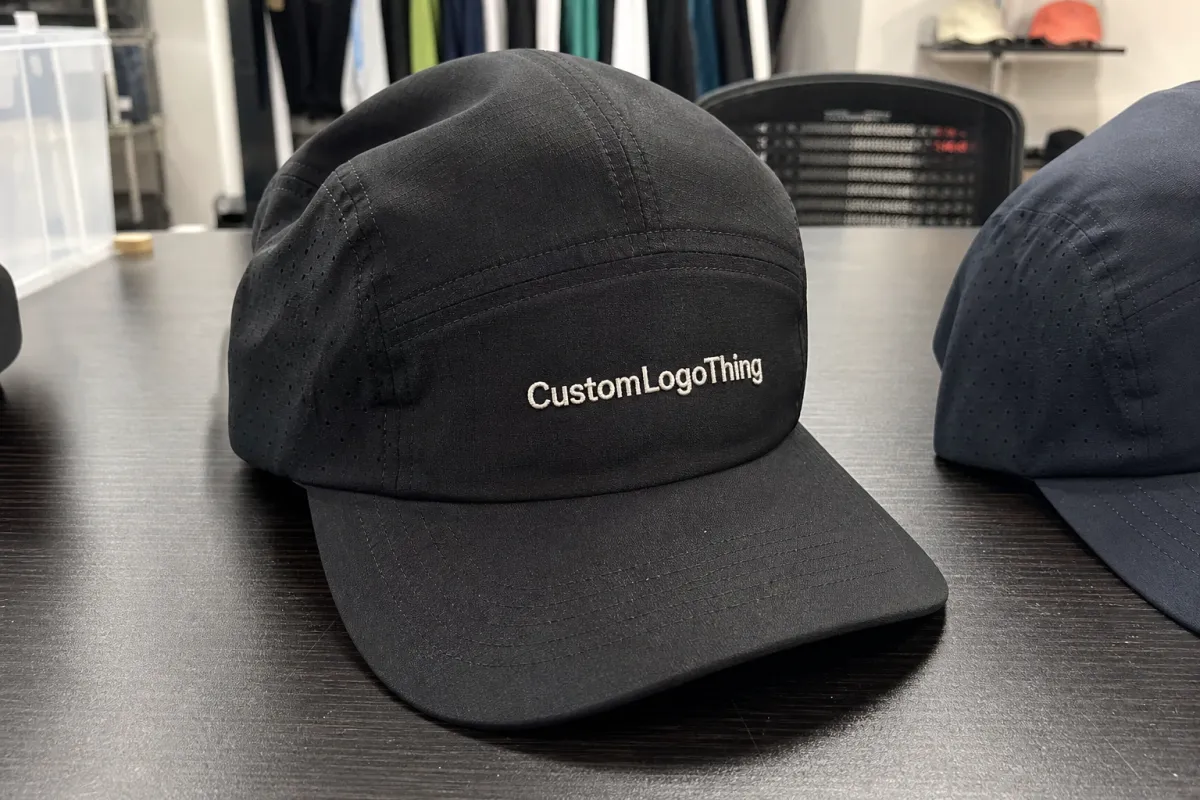
On a spec sheet, most running caps look easy to compare. They are light, branded, and meant to be worn. On the show floor, the picture changes. Strong lighting, crowded aisles, constant movement, and long wear expose weak materials quickly. A cap that feels fine in a sample box can turn warm, clingy, or stiff once the wearer starts moving through a full day of traffic.
That difference matters because trade show staff do not wear caps for a quick photo. They wear them while greeting visitors, carrying samples, and standing under lights for hours. The cap needs to behave like a small piece of performance gear, not just a promotional accessory.
In practice, buyers should judge four things first:
- Skin contact, especially around the forehead, temples, and rear closure.
- Airflow, since heat builds fast in crowded halls and outdoor activations.
- Decoration stability, because logos need to stay flat and readable.
- Handling durability, because caps are tried on, folded, packed, and repacked.
That is also where many projects get overcomplicated. A crowded logo layout can make a cap look busy before it even reaches the booth. A heavier fabric can make the cap feel premium in isolation, then uncomfortably warm after twenty minutes of wear. Buyers often get more value from a clean, well-built cap than from a design that tries to do too much.
Comfort still drives visibility. People keep wearing caps that feel good. Once they take one off, the brand impression is gone with it.
How Breathable Fabric Choices Affect Wear and Branding
The base fabric sets the tone for everything else. Breathability, texture, print clarity, embroidery behavior, and even the way the cap photographs all trace back to the material choice. For Trade Show Orders, the most common builds fall into four broad groups: polyester twill, performance mesh, microfiber, and stretch blends. Each has a different balance of airflow, structure, and finish.
Woven fronts create a cleaner branding surface
Polyester twill remains a dependable option because it holds shape well and takes embroidery or woven patches with good clarity. The surface is smooth, the front panel reads neatly from a distance, and the material usually looks more controlled than a loose athletic knit. That makes it useful for logos that need to appear tidy and legible across a crowded booth.
The trade-off is warmth. A denser woven front can trap more heat than a lighter, more open structure. In a venue where air circulation is weak, that difference becomes noticeable. Staff may not complain immediately, but they will feel it by midafternoon.
Mesh improves airflow, but changes the brand impression
Performance mesh solves part of the heat problem. Open structures allow air to move through the crown, and that matters for long shifts or outdoor setups. Mesh-backed caps can be especially effective for activation teams that move constantly and need a lighter feel.
The downside is visual. Very open mesh can make a cap read more casual or athletic, and it can reduce the crispness of fine embroidery. Many buyers land on a hybrid construction: a solid front for branding and mesh at the sides or back for cooling. That approach often gives the best balance between presentation and wearability.
Microfiber and blends feel softer, but need a closer look
Microfiber and stretch blends tend to feel soft right away. They can create a modern, activewear look that works well for wellness brands, fitness events, and technology booths that want a more current aesthetic. Some versions also dry faster than traditional woven fabrics, which helps during long days.
Still, these fabrics need careful checking. A slight sheen can look premium in controlled photos but too reflective under convention lighting. Stretch fabrics can also distort if the logo is too large or the stitch count is too dense. The cap may look excellent flat on a table and then change shape once worn. That is a production issue, not a design flaw, and it is easier to catch early than to fix late.
Moisture management deserves equal attention. A cap can use a quick-dry body fabric and still perform poorly if the internal band is thin or rough. The sweatband is the part that keeps touching skin, so it matters more than many buyers expect. A soft, absorbent band extends wear time and lowers the chance that the cap gets abandoned halfway through the day.
If a cap has to survive a full booth shift, the real test starts after hour six, not when the sample first comes out of the package.
Key Material Factors: Weight, Structure, Sweatbands, and Finish
Once the fabric family is set, the useful comparisons become more specific. Weight, structure, sweatband construction, brim behavior, and interior finishing all shape how the cap wears and how it looks after production. These are not cosmetic details. They influence shipping, comfort, and the final impression on the show floor.
Fabric weight is a good starting point. Lighter textiles feel cooler and pack down more easily, but they can wrinkle or collapse if the decoration is heavy. Firmer fabrics hold shape better and often support more detailed embroidery. For many technical caps, a range around 110-160 gsm works for softer performance fabrics, while woven builds that need more body often land closer to 160-220 gsm. Those are practical reference points, not fixed rules, but they help buyers spot a fabric that is too flimsy or too heavy for the job.
Structure affects both comfort and branding. A structured six-panel cap supports logos well because the front stays upright and gives stitching a stable surface. Unstructured caps feel looser and more casual, which can suit lifestyle campaigns or informal staff apparel. The problem is that an unstructured front is less forgiving if the artwork is large, dense, or placed too close to the seams.
Sweatbands are often the weakest part of a cheap cap. A better band usually uses brushed tricot, terry, or a soft performance lining. Those materials help absorb moisture and reduce abrasion at the forehead. On a long event day, that detail matters more than the hang tag, more than the box, and often more than the exterior fabric finish.
Brim stiffness and surface finish round out the evaluation. A visor insert that is too rigid can feel awkward during travel and packing, while one that is too soft may lose shape after a few wears. Matte finishes usually look more grounded and are easier to brand cleanly. Slight sheen can still work, but it needs to be checked under actual event lighting because reflective surfaces can make a cap look lower grade than it is.
Interior construction also deserves attention. Seam binding, stitch density, taping, and closure hardware all affect how the cap feels in hand and how it holds up in use. Buyers often overlook those details because they are hidden, yet hidden construction is what determines whether the cap still looks orderly after being folded into a tote bag and worn again the next day.
Cost and Pricing Drivers for Custom Performance Caps
Price should be read as a system, not a single number. Fabric quality, decoration method, order size, packaging, and freight all affect the final landed cost. A quote that looks low at the unit level can become expensive once setup fees, decoration charges, and shipping are added.
The ranges below are broad but realistic enough for early budget planning.
| Build option | Best use | Decoration behavior | Typical unit cost at 1,000 pcs | Typical unit cost at 5,000 pcs |
|---|---|---|---|---|
| Polyester twill with embroidery | Staff wear, straightforward branding | Very good for logos and small text | $2.10-$3.40 | $1.35-$2.10 |
| Performance mesh hybrid | Warm venues, long shifts, outdoor activations | Good for embroidery, patches, and limited print | $2.40-$3.80 | $1.55-$2.45 |
| Microfiber with wicking band | Soft feel, activewear look, comfort-first giveaway | Best for smaller logos and cleaner artwork | $2.70-$4.20 | $1.75-$2.90 |
| Fully custom stretch weave | Premium branding, custom fit, higher perceived value | Best with controlled embroidery or a woven patch | $3.50-$5.80 | $2.40-$4.10 |
Several factors move those numbers. Embroidery usually adds digitizing and stitch-programming work. Woven patches, silicone emblems, or custom labels add component cost and more inspection time. Complex art can increase labor because placement needs to stay consistent from piece to piece. Smaller orders almost always carry a higher unit cost because the setup burden is spread across fewer caps.
Packaging matters too. A cap packed in plain corrugated master cartons with simple kraft paper wraps is usually straightforward. Add printed inserts, retail-style sleeves, or special fold requirements, and the price rises. If the brand wants recycled materials or FSC certified paper components, that should be documented clearly at the quote stage rather than assumed later. Claims about recycled content, FSC certification, or biodegradable packaging are only useful if the supplier can back them up in writing.
Freight can distort the budget even faster than decoration. Rush shipping, split deliveries, or a missed production buffer can wipe out a narrow cost advantage. A clean quote should separate product cost, setup, packaging, and transport so the buyer can compare suppliers on true landed cost instead of base price alone.
For buyers who need a quick check on packaging and transit standards, ISTA is a useful reference for shipping test profiles, while FSC matters if paper components need verified sourcing. Neither one is decoration. Both help confirm whether a packaging claim has real substance.
Production Steps and Turnaround: From Sample to Shipment
Good production timing usually depends on how quickly the buyer can lock down the details. A typical order moves through concept review, fabric selection, artwork approval, sampling, bulk production, inspection, packing, and shipment. None of those stages are unusual, but each one can create delay if information is missing or inconsistent.
Artwork is the most common bottleneck. Vector files are easier to work with than low-resolution images, and color references need to be specific enough for the factory to reproduce them consistently. Pantone references help. So does a clear note about patch size, stitch density, and exact placement. A vague file often turns into a back-and-forth chain that burns days the team does not have.
Lead time depends on the build. In-stock blanks with embroidery can sometimes move in 7-12 business days after proof approval if the factory has capacity and the art is straightforward. Decorated stock styles with patches, labels, or extra finishing details often need 12-18 business days. A fully custom cap with special paneling, unique closures, or specialty trim usually needs 15-25 business days before freight, and that assumes decisions are made on schedule.
Sampling should be treated as a checkpoint, not a formality. If the sample shows a problem with logo scale, stitch density, crown height, or color balance, the fix should happen before bulk production starts. Correcting the issue once is much cheaper than approving a compromise and discovering it only after the full order is packed.
Shipping deserves equal discipline. A finished order is not useful if it arrives two days after the show opens. Buyers should ask how cartons are packed, whether the outer cases are strong enough for stacking, and whether inner wrapping is simple protection or Custom Retail Packaging. If there is a sustainability claim attached to the order, the packing format should support it. Recycled paper, FSC certified inserts, and minimal filler can all make sense, but only if the receiving team can still move product quickly at the event.
A useful rule of thumb is to keep a few business days between delivery and show open. That buffer absorbs the kind of problems that are common in real production: one late truck, one missed dock appointment, one customs delay, or one carton that needs to be rechecked before the team leaves for the venue.
Common Mistakes That Make Caps Feel Hot or Cheap
The first mistake is choosing by appearance alone. A glossy cap can look sharp in a render or showroom sample, but if the material traps heat or feels stiff, the wearer notices quickly. That mismatch is especially common in event settings, where the buyer sees the cap once and the staff wears it all day.
Over-decorating is another easy way to weaken the product. Large patches, dense embroidery, and competing graphics can stiffen the front panel and make the cap feel heavy. It may still photograph well on a table, but it starts to feel more like a prop than apparel. Clean branding tends to work better because it leaves the cap usable, not just visible.
Fit problems create the same outcome. A shallow crown, limited adjustability, or a closure that catches hair can make a cap sit awkwardly and get removed early. That hurts brand exposure more than a smaller logo ever would. In busy trade show conditions, comfort is part of visibility.
Ignoring the sweatband is a particularly common miss. A thin or scratchy inner band can undermine an otherwise good shell. The same applies to vague spec language. Words like “soft” or “premium” do not help a supplier build the right cap. A stronger brief names the fabric type, approximate weight, closure style, decoration method, and the feel the buyer is after.
The cap usually fails where the buyer assumed the decision was obvious: inside band, closure, or fabric behavior after a long day.
Sustainability claims need the same discipline. Recycled materials are not the same thing as post-consumer content, and neither automatically means the packaging is FSC certified. If those details matter to the brand story, they should be requested before approval, not after delivery.
Expert Tips and Next Steps for a Better Spec Sheet
The fastest way to improve a cap order is to turn the idea into a clear one-page spec sheet. Start with the wearer, the event duration, the climate, the quantity, the decoration method, the color target, and the delivery deadline. Those details solve most sourcing questions before they become problems.
Physical samples matter more than most digital approvals. Screens hide sheen, texture, and weight. A cap can look balanced on a monitor and still feel too shiny, too flat, or too warm in hand. If possible, compare samples under the same lighting the team will face at the event. That is where fabric color and finish usually reveal themselves honestly.
A good, better, best comparison can also help a team make faster decisions. The basic option may meet the budget, while the upgraded version may improve comfort enough to justify the extra spend. The goal is not to buy the most expensive cap. It is to match the material to the job it has to do.
Before final approval, confirm packing format, carton count, and the replacement policy. If the order ships in corrugated master cartons, ask how many units are packed per case and whether the cartons are labeled by color, size, or batch. If there is retail-style packing, check whether the paper components are kraft paper, recycled materials, or FSC certified stock. These are small details, but they help the receiving team move faster and reduce surprises on setup day.
A practical trade show running caps material guide ends up being a checklist for execution, not a style debate. Lock the spec, confirm the sample, and make the supplier spell out decoration, packing, and delivery terms in plain language. That is usually enough to keep the project moving without relying on assumptions.
What is the best fabric for trade show running caps?
Polyester performance blends are often the safest starting point because they balance breathability, durability, and decoration quality. If the cap will be worn for long shifts, look for moisture-wicking fabric and a sweatband that feels soft rather than scratchy. Mesh can improve airflow, but a fully open structure may reduce the polished look some brands want on the booth floor.
Should trade show running caps use mesh panels or solid fabric?
Mesh panels help most when the event is warm, crowded, or outdoors because they let heat escape faster. Solid fabric usually supports cleaner branding and a more refined appearance, especially for embroidered logos or patches. Many buyers choose a hybrid build so the front stays presentation-ready while the rear panels add ventilation.
How much do custom trade show running caps usually cost?
Unit cost depends on fabric, decoration method, order quantity, and any custom trims or closures. Smaller orders usually cost more per cap because setup and decoration labor are spread across fewer pieces. A clear quote should separate product cost, setup, packaging, and freight so the event team can compare options accurately.
What affects the turnaround on trade show running caps?
Artwork readiness, sample approval speed, fabric availability, and decoration method all affect timing. Rush orders are more likely to add cost and may limit fabric or trim choices. Shipping time also needs to be included, because production completion and delivery are not the same thing.
How many trade show running caps should I order?
Start with the number of staff who will wear them every day, then add a buffer for demos, replacements, and VIP giveaways. If caps will also be distributed to visitors, estimate traffic realistically and compare that number against your budget. Ask for MOQ and tiered pricing so you can see whether a slightly larger order reduces the unit cost enough to justify the increase.


