For a lot of buyers, the snapback Caps Minimum Order Quantity is not really about the cap blank itself; it is about how much setup the decoration requires, how steady the factory’s stock position is, and whether the order needs a clean first run before anyone commits to a larger program. If you are planning a launch, a team issue, or a promo kit, that distinction matters a lot, because a simple cap can look inexpensive on paper until embroidery, patch work, labeling, and packing are all folded into the quote.
That is why smart buyers ask better questions before they ask for a price. How many pieces per color? What kind of logo finish? Do you need retail-ready packaging or just bulk packed cartons? Those answers shape the real snapback caps Minimum Order Quantity, and they also shape your lead time, your approval process, and the chance of getting a second run that matches the first one closely.
From a packaging buyer’s point of view, the best quote is the one that tells the whole story plainly. You want to know the unit cost, but you also want to know the sample cost, the setup charge, the freight estimate, and any reorder break that may reward a larger run. That is the kind of detail that helps Custom Logo Things stay practical instead of guessy.
When MOQ Matters More Than Unit Price
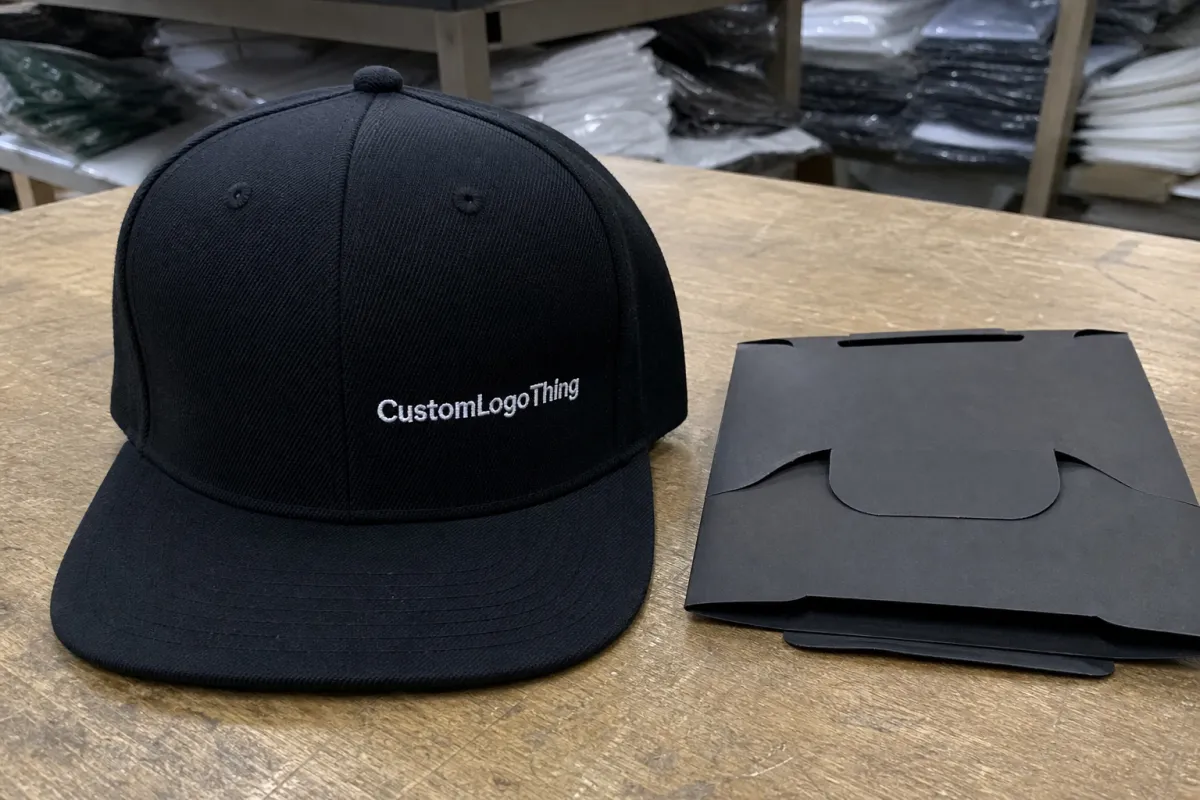
The cap blank is usually the easy part. Most snapback shells are built from familiar materials like cotton twill, brushed cotton, acrylic blends, polyester, or structured wool-like fabrics, and those blanks often exist in stock before any logo work begins. The real cost pressure usually comes from decoration setup, especially when a buyer wants a clean front-panel logo, a custom side hit, or a back label that needs to line up exactly across the run.
That is why the snapback Caps Minimum Order Quantity often looks higher than the blank itself would suggest. A factory may be willing to sew a blank cap in modest numbers, but once you add digitizing, stitch testing, patch cutting, thread matching, or custom labeling, the economics change. A 48-piece test order might be possible for a simple embroidered logo on an in-stock cap, while a more complex patch build can push the minimum closer to 100, 150, or even 300 pieces depending on how the line is set up.
For a launch, a small team order, or a retail trial, that still can make good sense. If the hat style is known, the fit is straightforward, and the artwork is not demanding, a lower run gives you a real-world check on structure, color, and comfort before you scale. A buyer who is testing audience response will often accept a higher per-unit price in exchange for lower inventory risk, which is usually the right trade when the product is new.
Good MOQ decisions are not just about buying fewer units. They are about buying the right first run, with enough structure to evaluate the hat honestly before you place the larger repeat order.
In practice, the best starting point is simple: decide whether this is a test, a one-time event order, or a repeatable program. That one answer tells the supplier whether to quote a lower entry quantity or a better tier for a larger run.
Cap Specs and Decoration Choices That Change the Build
A snapback is a fairly specific construction, and buyers get better quotes when they speak that language clearly. The crown profile can be high, mid, or low. The front panel may be structured with buckram or softer with less internal support. The brim can be flat or lightly curved. The closure is usually a plastic snap adjuster, though some buyers ask for a fabric strap or custom closure detail. Sweatband material matters too, because a comfort-focused order may call for a softer inner band or moisture-control fabric instead of the basic finish.
Decoration changes the build more than almost anything else. Embroidery is the most familiar choice, and it works well for clean logos, text, and strong brand marks. A standard front embroidery hit may need only a modest stitch count, but dense fills, fine gradients translated into thread, or multiple placements will raise setup time and can affect the minimum order. Woven patches give a tighter, flatter graphic look and often suit detailed logos better than stitching alone. PVC patches add a molded, dimensional feel, while printed labels or heat-applied marks work for smaller branding elements that do not need the same tactile depth.
Logo size and placement matter in a very practical way. A large front logo on a structured cap usually requires more digitizing and more careful tension control than a small side mark. A center-front embroidery on a high-profile snapback reads bold and retail-friendly, but the same art placed too low can distort the shape of the crown. Stitch density also affects hand feel; too much thread in one area can make the front panel stiff, while too little can make the logo look thin or washed out under store lighting.
Buyers should also care about consistency from piece to piece. A snapback that fits well on the sample but feels loose in production is a problem. So is a cap where the front panel collapses slightly because the structure was not matched to the decoration. The best orders balance appearance and wearability: enough front structure to keep the logo clean, enough softness to sit comfortably, and enough consistency that the logo lands in the same position across the entire batch.
For buyers who want to compare decoration paths quickly, this is usually how the decision shakes out:
- Embroidery: Best for durable, classic branding and moderate setup.
- Woven patch: Best for cleaner detail and flatter artwork edges.
- PVC patch: Best for a dimensional, sportier look with stronger shape.
- Printed label or heat transfer: Best for secondary marks or lower-detail branding.
For sourcing buyers who also need broader packaging and fulfillment support, the planning mindset is similar to what you see in a standard Wholesale Programs setup: lock the spec first, then quote the production path around that spec.
Specs to Confirm Before You Request a Quote
The cleaner your input, the cleaner the quote. A supplier cannot price one headline total correctly if the order is actually split into three cap colors, two logo versions, and different packaging requirements. The first thing to confirm is the quantity by color and by decoration version. A run of 600 caps may sound simple, but if it is divided into four colors and two placements, the real production mix is more complicated than the number on the purchase order suggests.
Artwork details matter just as much. Send the file in a usable format, preferably vector artwork such as AI, EPS, or PDF with editable paths. Include the exact placement size, Pantone references where color matching matters, and thread or patch color choices if you already know them. If the logo needs a small reduction for the cap front, say so. If the artwork has thin lines that could disappear in embroidery, that needs to be addressed before the quote is approved.
Packaging and labeling should be stated up front. A basic bulk pack is one thing; individual polybagging, size stickers, hang tags, barcode labels, or carton marks for retail distribution are another. Even a simple request like “12 pieces per inner poly, 48 per carton, master carton marked by color and size” can help prevent mistakes later. If your order includes paper inserts or retail cartons, FSC-certified materials may be worth requesting, and the FSC system is explained clearly at fsc.org.
Approval path is another part of the quote that should not be left vague. A clean process usually follows this sequence:
- Virtual proof for placement, size, and color direction.
- Sample or pre-production sample when the artwork or fit needs validation.
- Final signoff after any corrections.
- Production run with in-line checks.
- Packing, carton labeling, and shipment booking.
If you want fewer surprises, ask for the proof comments in writing and keep the same file version through approval. For quick reference questions, the FAQ page is often a useful first stop before you send a full spec sheet.
Snapback Caps Minimum Order Quantity, Pricing, and Quote Breaks
The easiest way to understand pricing is to separate the components. The blank cap has one cost, the decoration has another, and the order can also carry sampling, labeling, freight, and rush charges. The more custom the finish, the more the snapback caps minimum order quantity tends to rise, because the supplier needs enough units to spread setup labor across the run.
Here is a practical comparison buyers can use as a starting point. The exact numbers vary by factory and artwork, but the structure is usually very similar.
| Decoration style | Typical MOQ range | Usual price behavior | Best fit |
|---|---|---|---|
| Simple front embroidery | 48-100 pcs | Lower setup, better for small trials, higher unit price at low quantity | Clean logos, team wear, event caps |
| Woven patch | 100-300 pcs | Patch tooling adds cost, but detailed artwork prints well in thread form | Sharper branding, retail programs |
| PVC patch | 150-300 pcs | Mold setup and attachment labor raise the minimum | Sportier or premium promotional caps |
| Multi-location decoration | 200+ pcs | More placements increase sew time and quality checks | Brand programs that need front, side, and back marks |
As a rule, larger quantities lower the unit cost because the setup work gets spread out more efficiently. A 100-piece order may price high on a per-unit basis, while a 500-piece order with the same artwork often drops materially because digitizing, machine setup, and approval labor are already covered. That said, the cheapest unit price is not always the best buying decision if the order is only a test run.
Ask for a line-item quote whenever possible. You want to see sample cost, production unit cost, freight estimate, and reorder pricing listed separately. That format makes comparisons fairer and also shows you where the real cost drivers are. If the supplier only gives a single number, it is harder to tell whether a small change in logo finish, packaging, or shipping method would improve the economics.
For buyers who need a broader frame of reference on packaging and shipping expectations, standards groups such as ISTA are useful because they help define how products should survive the journey, not just how they look leaving the press.
Process, Timeline, and Lead Time From Approval to Delivery
A good order moves in a sequence that is easy to track. Quote first, then proof, then sample if needed, then production, then quality check, packing, and shipment. If any of those steps are rushed or skipped, the risk moves somewhere else in the process. In practice, the longest delay is often not production itself but the back-and-forth over artwork approval.
Lead time depends on four main things: blank availability, decoration method, revision speed, and packaging complexity. A simple in-stock embroidery run can often move in roughly 12-15 business days from proof approval if the line is open and there are no changes. A patch-heavy build, a custom label package, or an order waiting on special stock may extend beyond that, especially during busy production windows. It is better to ask for a realistic approval-to-ship estimate than to chase an unrealistically fast promise.
If you want the timeline to stay under control, send clean artwork the first time, limit revision rounds, and approve samples quickly. That sounds basic, but it is where many orders lose days. A buyer who is still debating logo size after the proof arrives will almost always push the delivery date out by more than the design change itself would suggest.
Written milestones help too. Ask the supplier to confirm the date for proof release, sample approval, production start, completion check, and shipping booking. That simple schedule gives your internal team something to work against and reduces the “we thought it was already in production” problem that happens more often than people admit.
For shipping-sensitive orders, it also helps to ask how the caps are packed for transit. A properly cartonized snapback run should protect the brim shape, prevent crushed crowns, and keep the carton weight manageable for handling. That is not just a logistics detail; it is part of what keeps the hat looking like the sample when it arrives.
Why Buyers Reorder Through Custom Logo Things
Repeat business usually comes down to clarity. Buyers return when the quote is understandable, the decoration stays consistent, and the production notes are documented well enough that the next run does not start from zero. Custom Logo Things is built around that kind of practical workflow: clear specs, realistic minimums, and repeatable finishes that make reordering easier.
Documentation matters more than many first-time buyers expect. If the cap style, panel structure, decoration size, thread colors, and packaging notes are all written down on the first order, the second order becomes much smoother. You are not trying to remember what happened last time; you are matching the last approved build. That reduces risk on color drift, placement drift, and packaging surprises.
Buyers also value a supplier who tells them what a build can and cannot do. A strong quote should say if the art is too detailed for embroidery, if the patch outline needs to be simplified, or if a small quantity will make the unit cost jump. Honest guidance is worth more than a glossy promise, especially on a product category where fit, stitch quality, and front-panel shape all need to work together.
That is also where a steady production process helps. Reliable quality checks, predictable communication, and sensible reorder breaks make it easier to plan seasonal programs, staff gifts, trade show kits, and retail drops. For buyers managing recurring promotions, the value is not just in the cap; it is in not having to rebuild the order every time.
If you are comparing wholesale approaches across categories, the same logic applies to the Wholesale Programs page: the cleaner the buying structure, the easier it is to keep pricing and production aligned from one run to the next.
Next Steps for a Clean Test Order and Faster Reorder
Start with the basics. Choose the cap style, count quantities by color, send the logo file, and pick the decoration method that best matches the artwork. If the shape, hand feel, or logo placement still needs real-world approval, a test order is usually the smartest move before scaling up. That is especially true for branded retail pieces where the fit has to feel right on a head, not just look correct on screen.
After that, ask for a written quote that spells out unit price, sample cost, freight, and lead time. A solid quote should also show whether the snapback caps minimum order quantity changes by color, patch type, or decoration location. Once you have that in writing, it is much easier to compare one build against another without guessing which line item is creating the difference.
For buyers who need help deciding whether to begin with a small run or move straight into a larger production batch, the safest path is usually to match the order size to the risk. A new artwork system, a new fit, or a new packaging requirement deserves a test. A proven style with a repeatable logo can often move straight to a better pricing tier.
That is the practical way to Buy Snapback Caps without overcommitting too soon. If you send the specs cleanly and ask the right questions up front, the snapback caps minimum order quantity becomes a planning tool instead of a roadblock, and the final order is much easier to approve, produce, and reorder with confidence.
What is the typical snapback caps minimum order quantity for embroidery?
It depends on stitch count, blank availability, and whether the logo is a simple front hit or a more detailed build. Simple embroidery can often start lower than patch-based decoration or multi-location artwork. Ask for tiered pricing so you can compare a smaller run against the next price break.
Can I mix cap colors in one snapback caps MOQ?
Sometimes, if the cap body and decoration stay the same, but the quote may still split by color or by setup count. Mixed colors can change the production plan when thread, patch, or packaging details differ from one version to the next. The cleanest approach is to ask for a per-color MOQ in writing before you approve the order.
Do patches change the snapback caps minimum order quantity?
Yes, sewn-on patches and specialty patch materials usually add setup work and can raise the minimum. A standard woven patch may be easier to run than molded PVC, thick embroidery, or multiple patch placements. The final MOQ depends on patch size, shape, and how the patch is attached to the cap.
How long is the lead time after proof approval?
Lead time depends on blank stock, decoration method, and whether the order includes custom labels or packaging. Simple in-stock runs usually move faster than builds that need extra sampling or special finishing. Ask for an approval-to-ship estimate so the schedule is based on your actual artwork and quantity.
What should I send to get an accurate quote?
Send the logo file, quantity by color, preferred cap style, and the decoration method you want to use. Include placement details, packaging requirements, and any brand color references that matter for approval. If you have a target budget or launch date, add that too so the quote can be matched to the right build.

