Trucker Caps Private Label Order: Why It Works
A trucker Caps Private Label order works because it sits in a useful middle ground: more branded than a blank cap, less risky than a fully custom fashion program. The silhouette is familiar, the size range is forgiving, and the product usually does not require the kind of fit engineering that complicates fitted headwear. That matters. Returns tied to size tend to be lower for adjustable caps, and lower return pressure changes the economics of the whole launch.
The category also gives buyers a practical way to test demand. A cap is visible from across a store, easy to photograph, and easy to understand in one glance. If the front panel carries the logo cleanly and the bill shape feels appropriate for the brand, the product can move in retail, at events, or through wholesale without needing much explanation. That speed of recognition is valuable. Some products need a paragraph; a cap needs a strong first read.
Private Label Headwear is often treated as a lower-complexity item, but the buyers who do well with it usually treat it like a controlled production program. They know which details affect perception, which ones affect cost, and which ones can quietly create delays. That is where a trucker Caps Private Label order becomes useful: it allows enough customization to feel owned by the brand while staying manageable on lead time and unit price.
The best use cases are consistent. Retail launches that need proof before a larger buy. Event merchandise that has to arrive on schedule and still look intentional. Brand extensions that want to enter headwear without carrying too much inventory risk. First runs that need to validate logo scale, color, and trim before the line expands. Those programs benefit from the same thing: a product with clear visual payoff and predictable production.
Buyer reality: if the cap reads well at a distance, holds its shape on shelf, and the logo lands where the eye expects it, small internal details matter less than most first-time buyers assume. If the crown collapses, the mesh looks cheap, or the decoration sits off-center, no amount of packaging can rescue it.
Build Choices That Shape Retail Appeal
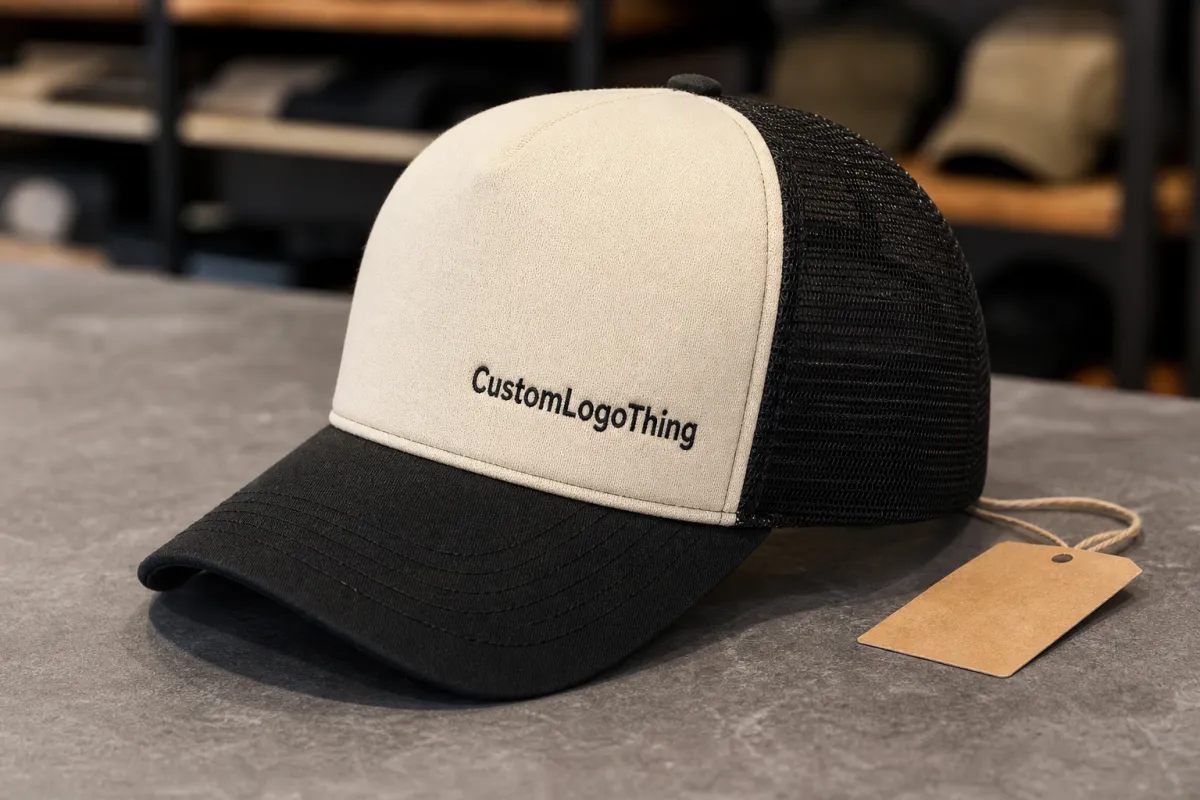
The front panel carries most of the visual weight. Foam-front truckers still dominate a lot of promotional work because they are lightweight, inexpensive, and easy to brand with a bold logo. They also read as casual. Structured cotton twill feels steadier and usually photographs better, which is why it often shows up in retail programs that need the cap to look more like apparel than giveaway stock. A low-profile crown can help a brand avoid the novelty look, while a taller crown creates more room for graphics and a louder shelf presence.
Mesh is not just ventilation. Mesh density changes the feel in hand and the overall impression of quality. Open mesh looks more traditional and lighter. Denser mesh can appear more substantial, though it may reduce the airy feel some buyers want in warmer-weather assortments. The bill matters too. A pre-curved visor feels familiar and easy to wear. A flatter bill feels more current and can suit streetwear or lifestyle positioning. The wrong bill shape can make an otherwise strong cap feel off-brand.
Decoration method should follow the product’s position, not just the supplier’s default. Embroidery remains the most common choice because it is durable and easy to understand. Patches are often better for brands that want texture or a more finished private label look. Woven patches handle detail well. Leather and rubber patches give the cap more contrast and can raise the perceived value without changing the base construction much. Printed labels have their place on interior branding, sweatbands, or inserts where the message matters but the cap itself should stay clean.
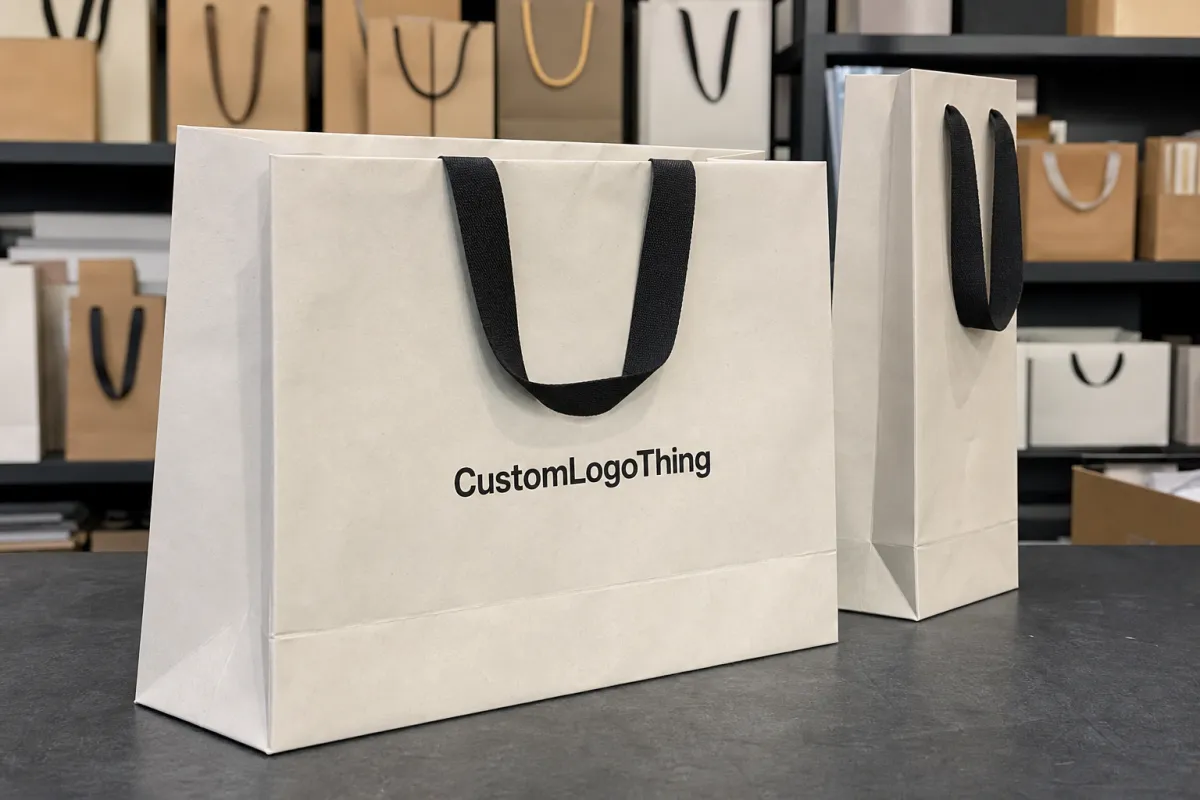
There is a practical hierarchy here. The more the cap relies on a premium retail read, the more likely you are to need a combination of front decoration, custom labels, and packaging. A plain embroidered front can sell well if the brand has enough recognition. A smaller or newer label usually needs a fuller treatment: custom inside labels, a better hangtag, and packaging that does not look like it was added as an afterthought. That is why a private label headwear program should be planned as one system, not three disconnected pieces.
Useful finishing details are often understated until they are missing:
- Inside labels for branding, fiber content, and compliance copy.
- Seam taping for a cleaner interior finish and better structure.
- Hangtags for story, SKU handling, and retail presentation.
- Barcode placement that preserves scanability without cluttering the cap.
- Polybag or carton packing that protects shape during transit and storage.
If the cap is part of a broader branded line, review Custom Labels & Tags early. A good cap can still feel incomplete if the trim and packaging do not match the price point. Buyers notice that mismatch faster than suppliers usually expect.
Specs to Lock Before You Request Samples
The cleanest sample process starts with decisions that should never be left vague. Panel count comes first. Five-panel and six-panel caps do not behave the same way, especially across the front panel and logo area. Crown height should be described in plain terms, not guessed from a reference photo. Visor shape should be stated clearly because it changes both wearability and shelf appearance. Closure type matters too: plastic snapback, strap, or another adjustment system will affect the cap’s final feel and target audience.
Artwork needs to be production-ready, not just visually polished. Vector files are the safest starting point. Pantone references are better than screen colors, which can drift by display. If the logo will be embroidered, ask for stitch limits, minimum line thickness, and any restrictions on tiny type before the sample is made. Thin strokes, gradients, and layered effects often look fine in design software and then fall apart in thread or patch construction. That is not a supplier failure; it is a production constraint that should be caught early.
Patch work deserves special attention. Size, edge shape, border style, backing type, and color count all change cost and accuracy. A woven patch can hold detail better than embroidery, but it still has limits. A leather patch gives a different finish entirely and may suit a premium program better than a standard merch run. If the decoration method changes the shape or thickness of the front panel, ask to see how that will affect structure before approval. The sample is there to confirm the real object, not to invite guesswork.
Packaging should be defined with the same care. Loose bulk packing may reduce handling cost, but it can also flatten the cap or scuff the finish. Individual polybags add material and labor, yet they help protect shape and keep product cleaner during transit. Insert cards can carry size, branding, or retail copy. Carton pack count affects freight efficiency and warehouse handling. If the order will move through a retailer or distributor, ask how the caps are packed, whether they are folded or shaped, and how much support is in the carton.
One approval owner saves more time than almost any other process decision. That person should control the final call on color variance, logo placement tolerance, label text, packaging wording, and any acceptable substitutions. If more than one person is signing off without a clear hierarchy, revision creep is almost guaranteed. A sample should validate the build. It should not reopen the brief.
Transit requirements also matter. If the order is headed into a broader distribution network, ask whether the cartons are tested against recognized shipping profiles such as ISTA standards. If paper inserts or tags need certified stock, verify chain-of-custody language at fsc.org. Those checks are easy to skip and annoying to fix later.
Pricing, MOQ, and Quote Variables That Move Unit Cost
Price on a trucker caps private label order usually moves for predictable reasons. Decoration is one of the biggest. A simple embroidery hit with limited thread colors is usually less expensive than a dense logo with multiple color changes. Patch construction can cost more if it requires custom shapes, layered materials, or stitched borders. Fabric choice, crown construction, label changes, and retail packaging all add cost in different ways. The final number often reflects how many separate production steps the cap requires.
MOQ matters because setup costs do not scale evenly. A smaller run can be useful for testing demand, but the unit price will usually sit higher because the same setup effort gets spread across fewer pieces. As quantity rises, pricing often improves, though not always dramatically. For many decorated caps, smaller test runs may land roughly in the $3.50 to $6.50 range per unit, while larger runs often move closer to $2.00 to $4.00. Premium patches, extra labels, or custom packaging can push the number higher. Those figures are directional, not universal. Destination, freight method, and decoration complexity can move them quickly.
Landed cost is the number that matters. Factory price alone can make a program look healthier than it is. Freight, duties, packaging inserts, carton charges, split shipments, and rush fees all belong in the same calculation. Air shipping can erode margin fast. So can a late label change that forces rework. Buyers sometimes focus on the cap cost and ignore the work around it, but the work is often what creates the budget swing.
The best quoting request compares like with like. Ask for the same cap in two or three quantity tiers and keep the variables identical. Do not change the construction, decoration, and packaging all at once. That makes the quote hard to read and hides the real break point. If you want to understand whether a larger buy improves margin enough to justify inventory risk, the tiers need to be clean. One supplier number is not enough.
| Build Option | Typical MOQ | Common Unit Range | Best Use | Main Tradeoff |
|---|---|---|---|---|
| Foam-front, embroidered | 100-300 units | $2.00-$4.25 | Promotions, events, fast test programs | Lightweight feel, less premium than patch builds |
| Structured twill with patch | 150-500 units | $3.50-$6.50 | Retail launches, brand merch, longer shelf life | Higher setup cost, more approval steps |
| Mixed decoration with custom labels | 300-1,000 units | $4.25-$8.00 | Private label programs that need stronger presentation | More moving parts and tighter QC needs |
A lower price is not automatically a better deal. A cap needs enough perceived value to survive your channel’s markup. If the product is going through Wholesale Programs, the build has to leave room for the distributor, the retailer, and the brand without collapsing margin at the end of the chain. Cheap can work. Cheap and underbuilt usually cannot.
Process, Timeline, and Production Steps From Proof to Ship
The production flow is usually more linear than people expect. Inquiry comes first. Then the supplier creates a digital mockup or proof. After that, there is usually a sample or pre-production version for approval. One revision round may follow if the artwork, color, or placement needs correction. Once approved, mass production begins, then packing, final inspection, and freight booking. A trucker caps private label order moves cleanly through that sequence when the buyer keeps the approval chain short and the brief complete from the start.
Timeline risk is usually easy to predict. Delayed artwork is common. Slow approvals are even more common. A factory may be ready, but the order still sits because nobody wants to sign off. Seasonal load can stretch lead times too, especially if the program includes multiple colorways or custom packaging. If labels, inserts, or carton quantities change after proof approval, that is not a minor edit. It often affects more than one workstation and can push the schedule back.
There are simple ways to save time without lowering standards. Final artwork should be ready before the mockup stage, not after it begins. One person should own the approval. Shipping method should be decided before production starts, because freight timing can change delivery more than a lot of first-time buyers expect. A cap that leaves the factory on time can still miss launch if air and sea were never clearly planned.
Simpler builds move faster. A single-color design with standard packing and one label set is usually easier to produce than a cap with several decoration layers, multiple colorways, custom inserts, and special retail bagging. Each added feature creates a checkpoint. That does not make the order bad. It just means the calendar has to reflect the real sequence of work, not an optimistic version of it.
Quality control should be built into the process, not added at the end as a hope. Ask for inspection of logo placement, thread tension, patch centering, label accuracy, panel symmetry, and mesh color consistency. The most common defects are not dramatic; they are small and cumulative. A logo placed a few millimeters high, a crown that shapes differently from the sample, or a mesh shade that drifts between lots can change how the cap reads in retail. A good sample catches that. A good inspection confirms it before shipment.
For buyers running multiple SKUs, the most efficient approach is usually the same: approve one core cap style, keep the decorative variation modest, and document the acceptable limits in writing. That keeps the order from turning into a moving target halfway through production.
What To Send Next to Launch the Program Cleanly
A useful quote request is specific enough that the supplier does not have to guess. Send target quantity by color, the decoration method you want, artwork files, packaging requirements, and the delivery deadline. Include the ship-to address or at least the destination region. If the caps are tied to a launch date, say so plainly. Hiding the deadline inside a long message slows everything down.
The cleanest approval process is simple: receive the mockup, compare it against the sample, allow one correction round if needed, and release production without continuing to redefine the project. That structure keeps a trucker caps private label order on schedule. More revisions mean more time, and more time creates more room for mistakes in labels, packing, or decoration placement. The point is not to rush. It is to avoid the kind of drift that turns a controllable order into a delayed one.
Strong supplier quotes usually include more than a price. Look for line-item pricing, a production calendar, decoration details, packaging notes, and a clear list of what is included and what is not. If the quote does not say whether polybags, cartons, labels, or inserts are part of the cost, ask before approval. Those assumptions can change the final margin faster than the cap price itself. Store the final scope with the quote and proof so there is a written record of the agreed build.
It also helps to compare the production window with the shipping window. Those are different. A cap can finish on time and still miss launch because freight was not booked correctly or the transit method was too slow for the calendar. For buyers coordinating a headwear rollout across channels, the cap should sit inside the broader merchandising schedule, not outside it. That keeps the supply chain aligned with actual selling dates instead of internal optimism.
Most of the work, in practice, is removing uncertainty. A clear spec, a realistic budget, and an approval process that does not invite endless revisions will usually do more for the result than a longer instruction sheet.
FAQ
What MOQ is typical for a trucker caps private label order?
MOQ depends on the construction, decoration method, and whether the order includes multiple colorways. Simpler embroidered caps often allow lower minimums than patch-heavy or fully custom builds. Ask for tiered pricing so you can see the breakpoint between a test quantity and a more efficient production run. That usually gives a clearer picture than a single quoted minimum.
How should I prepare artwork for a private label trucker cap order?
Send vector artwork whenever possible. Use Pantone references for color and specify the exact placement, logo size, and patch dimensions. If the design contains thin strokes or small type, ask the supplier to confirm legibility before approval. Designs that look clean on a screen can still fail in thread or patch format if the lines are too fine.
What affects turnaround time on a trucker hat private label run?
Approval speed matters more than most buyers expect. Delayed artwork, sample revisions, custom labels, and packaging changes all add time. Freight choice changes the calendar as well, especially if the caps need to arrive for a fixed launch or event. A simple build usually moves faster than a multi-step one.
Can I mix cap colors in one private label order without raising cost too much?
Yes, but each added colorway can add setup, sorting, and packing work. The base cap and decoration method should stay the same if you want to keep pricing under control. Ask for separate quotes for one colorway versus multiple colorways so the cost difference is visible instead of hidden in the total.
Should I approve a sample before placing the full trucker caps private label order?
Yes. A sample shows crown shape, mesh feel, logo placement, and color accuracy in a way that a mockup cannot. If timing is tight, request detailed proof photos and a written approval checklist, but do not skip validation entirely. On a first run, the sample is usually cheaper than fixing a full shipment later.
A well-planned trucker caps private label order is mostly a matter of disciplined choices: the right build, the right decoration, the right quantity tier, and a schedule that respects real production steps. The cap itself is simple. The difference between a clean run and an expensive one usually lives in the details around it.