The unstructured dad hats Unit Cost Breakdown rarely matches the first number a buyer expects. The blank cap may look like the main expense, but once embroidery, patch work, packaging, and freight enter the picture, the total moves fast. That matters for promo programs, retail launches, uniforms, and event giveaways because a small change in construction can turn a workable quote into a missed budget target.
Unstructured caps are also a different product problem than structured hats. The soft front panel changes how logos sit, how stitches pull, and how much stabilizing the factory needs to do to keep the crown clean. A simple mockup can hide a lot of reality. The landed cost only makes sense once the full build is clear.
For buyers, the useful question is not "What does the blank cost?" It is "What will each finished cap cost after setup, decoration, packing, and shipment?" That is the real unstructured dad hats Unit Cost Breakdown, and it is the number that decides whether the order works.
Why the Blank Cap Is Rarely the Real Cost Driver
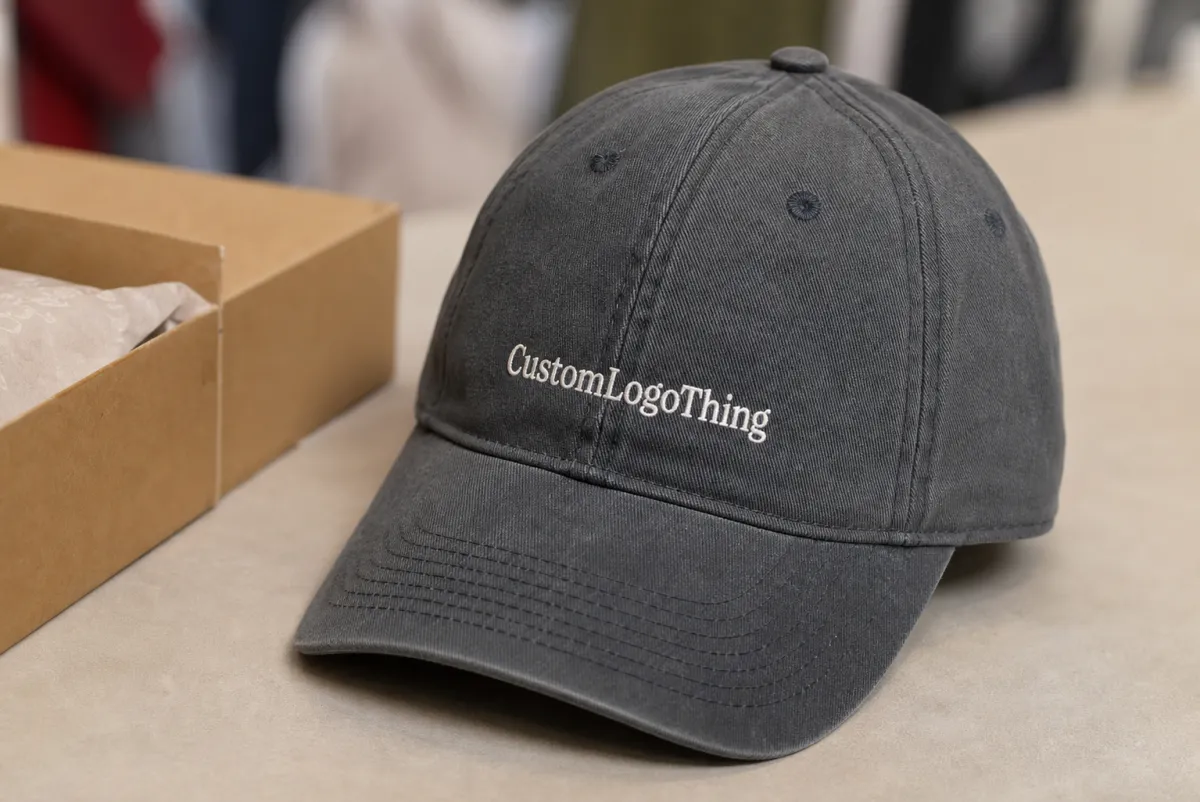
On decorated orders, the blank cap is only one part of a longer cost chain. The cap itself often takes a modest share of the final price, while digitizing, setup charges, decoration labor, packaging, and freight do the heavier lifting. On smaller runs, those fixed costs can represent a surprisingly large percentage of the total. On larger runs, they shrink per unit, but only if the spec stays stable.
That is why two orders with the same logo can price very differently. A 300-piece promo run has little room to absorb setup. A 5,000-piece retail run can spread those fees much more efficiently. Team uniforms usually sit between the two, with enough quantity to soften the setup burden but not enough to ignore it. The unstructured dad hats Unit Cost Breakdown changes because the use case changes.
There is also a decoration issue that buyers sometimes miss. A structured front panel can hold dense embroidery with less distortion. An unstructured crown may need lighter backing, a smaller stitch field, or a patch instead of direct stitching. That affects the look and the quote at the same time. A logo that appears inexpensive on a flat screen can become more expensive once it has to sit cleanly on a soft panel.
Freight can be just as decisive. A cap price that looks competitive on paper can lose once air shipping, customs handling, or split deliveries are added. For low quantities, logistics can outweigh the product discount. That is why the landed cost matters more than the factory price alone.
Choosing the Right Build for a Relaxed Dad Hat Order
A standard dad hat is usually unstructured, low crown, and paired with a curved or pre-curved brim. Most use an adjustable closure, often a self-fabric strap with a buckle, a metal slide, or a snap-style back depending on the price point. The silhouette is casual by design. That is the appeal.
Fabric choice changes both the feel and the economics. Cotton twill remains the most common option because it is familiar, durable enough for everyday wear, and easy to source at scale. Brushed cotton feels softer but can raise material cost. Pigment-dyed washes give the hat a more worn-in look, but shade consistency becomes harder to hold, so factories usually price in extra caution. Corduroy has a stronger fashion signal and often lands in merch drops or retail programs, though the slower handling and directional nap increase cost. Nylon can work for sportier builds, but it changes the texture and the way decoration sits on the front.
Decoration method is where pricing surprises start. Flat embroidery is still the most common choice because it is durable, readable, and comparatively efficient for simple art. Woven patches handle finer detail and can look cleaner on a soft crown. Leather patches raise the perceived value but add material cost and application labor. Printed logos may be economical in the right setup, though the cap surface, ink choice, and graphic coverage all matter. Mixed treatments, such as embroidery plus a side label, can improve presentation while pushing the unit price higher than many buyers expect.
Small finish choices matter too. Panel count changes sewing time. Sweatband style affects comfort and assembly. Closure hardware changes both look and durability. Even color matching can move the quote if the buyer wants the cap fabric, thread, and patch stock to match closely. The cleanest build is often the one that supports the brand without paying for detail that will not change the buyer's decision.
Typical tradeoff: a well-executed simple spec usually beats an overbuilt one. A single-color flat embroidery on cotton twill often looks more convincing than a layered patch package that adds cost, time, and a higher risk of revision.
Spec Sheet Essentials for Fabric, Stitching, and Decoration Limits
If the spec sheet is vague, the quote will be vague too. That usually becomes obvious only after the sample stage, which is the expensive place to discover missing details. For a reliable estimate, the supplier needs panel construction, crown height, brim shape, fabric weight or finish, closure type, eyelet count, sweatband style, and label placement. Leave out too much and the factory will assume standard construction. That may be fine for a rough quote. It is not fine for a purchase order.
Decoration limits deserve the same level of precision. Ask for the maximum embroidery area in millimeters, not just "front logo." If you want a patch, define the size, edge finish, backing, and placement. If the art has thin lines or small type, ask for a stitch-count estimate before approving the sample. Soft front panels can absorb part of the design, which means the art may need simplification to stay readable. That is not a flaw. It is a normal constraint of the product.
Packaging should be spelled out as clearly as the decoration. Bulk-packed caps cost less than retail-ready units. Polybags, hangtags, carton inserts, and printed carton marks each add time and handling. If the hats are headed for e-commerce, the pack-out has to survive transit. If they are going into a retail chain, the packaging needs to look cleaner and stay consistent across cartons. For shipping-focused programs, transit expectations and carton handling standards from organizations such as ISTA can help frame what a vendor should be prepared to test. For paper-based inserts or carton materials, FSC is often used as a reference for sourcing expectations.
A clean spec sheet does more than speed up quoting. It lets every vendor price the same product instead of three slightly different versions of it. That is the only fair way to compare the unstructured dad hats Unit Cost Breakdown across suppliers.
Use this checklist before asking for pricing:
- Construction: unstructured or lightly structured front, panel count, brim shape, and closure type.
- Fabric: cotton twill, brushed cotton, corduroy, nylon, pigment-dyed, or washed finish.
- Decoration: embroidery, woven patch, leather patch, print, label, or mixed treatment.
- Packaging: bulk pack, retail polybag, hangtag, carton label, and carton count.
- Delivery: destination zip, in-hands date, and whether freight is ocean or air.
Unstructured Dad Hats Unit Cost Breakdown: Pricing, MOQ, and Quotes
The practical way to read the price is simple: blank cap, decoration, setup, packaging, freight, duties. That order matters because it shows which part of the quote is fixed and which part can shift. On many runs, the blank cap is only a slice of the total. Decoration and logistics can equal or exceed the base product cost. That is exactly why the unstructured dad hats Unit Cost Breakdown should be treated as a stack, not a single number.
MOQ changes the math immediately. A 100-piece order carries more setup burden per cap than a 1,000-piece order. Digitizing and tooling fees do not scale evenly, so lower-volume buyers pay more per decorated cap. Once the order crosses into a higher quantity tier, the cost per piece usually drops because the fixed work is spread out more efficiently. That does not mean a large order is automatically cheap. It only means the setup pain is less visible.
The biggest drivers are usually predictable. Multiple logo placements add labor. Specialty patches add material and application time. Wash treatments and pigment dyeing introduce more variation because color lots are harder to keep uniform. Rush production is expensive because it often means overtime, priority material allocation, or expedited freight. Split shipments are rarely free because handling and transportation multiply. If the order needs front embroidery plus a side hit, the quote will move more than the mockup suggests.
Buyers also run into hidden line items that never appear in the first email. Sample charges may be credited later, or they may not. Digitizing may be included for one supplier and separate for another. Packaging inserts can be priced per piece or as a one-time setup. Even carton labels and inner bagging can matter on a large run. A quote is only comparable if those assumptions are identical.
| Order Type | Typical MOQ | Decoration | Indicative Unit Cost | Best For |
|---|---|---|---|---|
| Stock cap + flat embroidery | 100-300 | Simple 1-color logo | $4.25-$7.50 | Promo giveaways, internal events |
| Stock cap + woven patch | 200-500 | Medium-detail art | $5.50-$9.25 | Retail-inspired launches |
| Washed cap + multi-step decoration | 300-1,000 | Patch + embroidery or mixed finish | $7.00-$12.00 | Fashion, merch drops |
| Custom fabric or colorway | 1,000+ | Brand-specific build | $8.50-$15.00+ | Retail programs, replenishment |
These ranges are directional, not universal. A simple logo on a clean stock cap can stay near the low end. A dense patch, a premium wash, or custom color matching can push the number well beyond it. Freight changes the picture again. A 300-piece order moved by air can end up with a worse landed cost than a 1,000-piece order shipped more slowly, even if the factory quote looks lower. Comparing only the product price is how buyers get blindsided.
Ask every supplier three blunt questions: what is included, what is excluded, and what happens if the count lands slightly over or under? Those answers reveal whether the quote is carefully built or merely polished. Sample pricing matters too. Some suppliers credit the sample against bulk. Others treat it as a separate charge. If you do not ask, you can end up comparing numbers that were never built on the same assumptions.
Production Process, Lead Time, and Approval Milestones
The production sequence is usually straightforward: art review, technical confirmation, sample or pre-production approval, bulk production, quality control, and shipment. The problem is not the sequence. The problem is the delay between steps. Artwork revisions are a common slowdown. Missing logo files create another. Color choices made late in the process can hold the line. The earlier the spec is locked, the less likely the buyer is to pay for speed later.
Realistic timing depends on the decoration and the supplier's queue. Simple stock-cap orders can often move faster than mixed-material builds. A basic run may land in roughly 12 to 20 business days after approvals if the cap is in stock and the decoration is straightforward. Add custom washing, patch work, or seasonal congestion, and the schedule stretches. Air freight can solve a deadline problem, but it rarely solves the budget problem.
Rush orders make sense in a few cases: the event date is fixed, the retail calendar is locked, or the buyer missed the order window. Even then, the premium should be visible. Rush production usually means overtime labor, priority material access, or expedited shipping. There is no mystery in that. If a quote claims rush service with no cost increase, the assumptions deserve a second look.
Plan backward from the in-hands date. Subtract transit time first, then approval time, then sampling time. What remains is the actual production window. That is where many buyers discover that a good unit price is only good if the hats arrive in time to sell or distribute.
If the supplier cannot give you the latest approval date without changing the freight mode, the quote is not fixed yet.
That single check filters out a lot of weak estimates. The cheapest cap is the one that meets the date without emergency shipping.
Quality control should be part of the timeline, not an afterthought. For unstructured dad hats, the useful checks are practical: crown symmetry, stitch tension, logo placement, closure alignment, seam cleanliness, and color consistency across the run. Soft panels are more forgiving visually, but they can also hide shape drift until the hats are packed. A supplier that checks only the front logo and ignores the body of the cap is leaving risk on the table.
What Separates a Reliable Supplier From a Cheap Quote
A reliable supplier quotes quickly, asks the right questions, and documents the spec clearly. A cheap quote may look attractive in the first message, but it often hides assumptions that appear later as add-ons. The difference is usually not a dramatic factory story. It is process discipline.
Look for a supplier who can break the quote into the blank cap, decoration, setup, packaging, and freight. They should also be able to explain how the price changes if the MOQ moves. If they cannot do that, the unstructured dad hats unit cost breakdown is incomplete. Buyers do not need hype. They need a quote they can defend internally.
A good vendor also anticipates the failure points before production starts. They should ask whether the logo has fine detail, whether the crown needs to stay very soft, whether the packaging has to be retail-ready, and whether the delivery date can absorb a sample round. Those questions feel tedious until the first revision comes back wrong. Then they look practical.
Send the shortest complete request package:
- Vector logo file.
- Target quantity and backup quantity tier.
- Cap color, fabric preference, and closure style.
- Decoration method and placement.
- Packaging requirement and delivery zip code.
- Target in-hands date.
Then request a line-item quote, a mockup, and a sample if the design is new or the art is detailed. Compare landed cost, not only factory price. A supplier that quotes transparently may not always be the lowest on paper, but it is often the better buy once freight, timing, revision risk, and packaging are included. That is especially true for the unstructured dad hats unit cost breakdown, where small assumptions can move the final number more than the base cap price.
One last practical check: look at how the quote handles small deviations. If the factory is willing to show the cost difference between embroidery and patch work, or between bulk pack and retail pack, that is a strong signal. If every answer comes back as one blended number, the buyer has less control and less visibility. Clear pricing is not just cleaner. It is safer.
What changes unstructured dad hats unit cost the most?
Decoration method usually moves the price first, followed by stitch count, patch size, and any special fabric or wash treatment. MOQ matters because low-volume orders spread setup charges over fewer caps, which raises the cost per piece quickly. Freight, duties, and packaging can become a larger share of the total than buyers expect, especially on small runs.
What MOQ should I expect for custom unstructured dad hats?
Basic stock-color caps with simple embroidery often support lower MOQs than fully custom colorways or specialty patch builds. If you need custom fabric, custom dye, or multiple decoration positions, expect the MOQ to rise because the production setup is more involved. Ask for two quantity tiers so you can see how bulk pricing changes at the next break.
Which decoration method is cheapest for unstructured dad hats?
Basic flat embroidery is often the lowest-cost decorated option when the logo is simple and the stitch count stays controlled. Woven labels or small patches can be efficient for detailed art, but specialty materials or layered work can raise the price. The cheapest method is not always the best fit if the front panel is soft or the logo needs crisp detail at a larger size.
How long does production take after I approve the sample?
Many orders move into bulk production right after approval, but timing depends on material availability, decoration complexity, and the supplier's current queue. Plan separately for sampling, approval, production, and shipping instead of treating the job as one timeline. If the date is fixed, ask for the latest approval point you can accept without triggering rush charges or expedited freight.
What do I need to send for an accurate quote?
Send the vector logo, target quantity, cap color, preferred decoration method, and whether you want bulk packing or retail-ready packaging. Include the delivery destination and target in-hands date so the quote can reflect freight and schedule constraints. If you are comparing vendors, request the same spec sheet from each one so the quotes are truly apples-to-apples.

