Embroidered beanies Unit Cost Breakdown is where many bulk buyers lose visibility, because the blank hat price rarely tells the full story. A low-cost beanie can still end up expensive once digitizing, setup, stitch count, thread changes, and finishing are added. A cleaner logo, a simpler placement, or a smaller decoration zone can shift the final unit price more than a small change in fabric grade. That is why the quote should be read as one production package, not as a hat plus decoration tacked on afterward.
Beanies are also a difficult surface to price at a glance. Knit fabric stretches, ribs open and close, and embroidery has to stay legible on a moving surface. A logo that looks straightforward on a flat mockup may need more digitizing work once it is mapped onto a cuff or crown. Buyers who understand that point usually compare quotes more accurately, spot hidden fees sooner, and choose between direct stitch, patches, or smaller marks with less guesswork.
Why Small Design Changes Move Beanie Cost Faster Than Buyers Expect
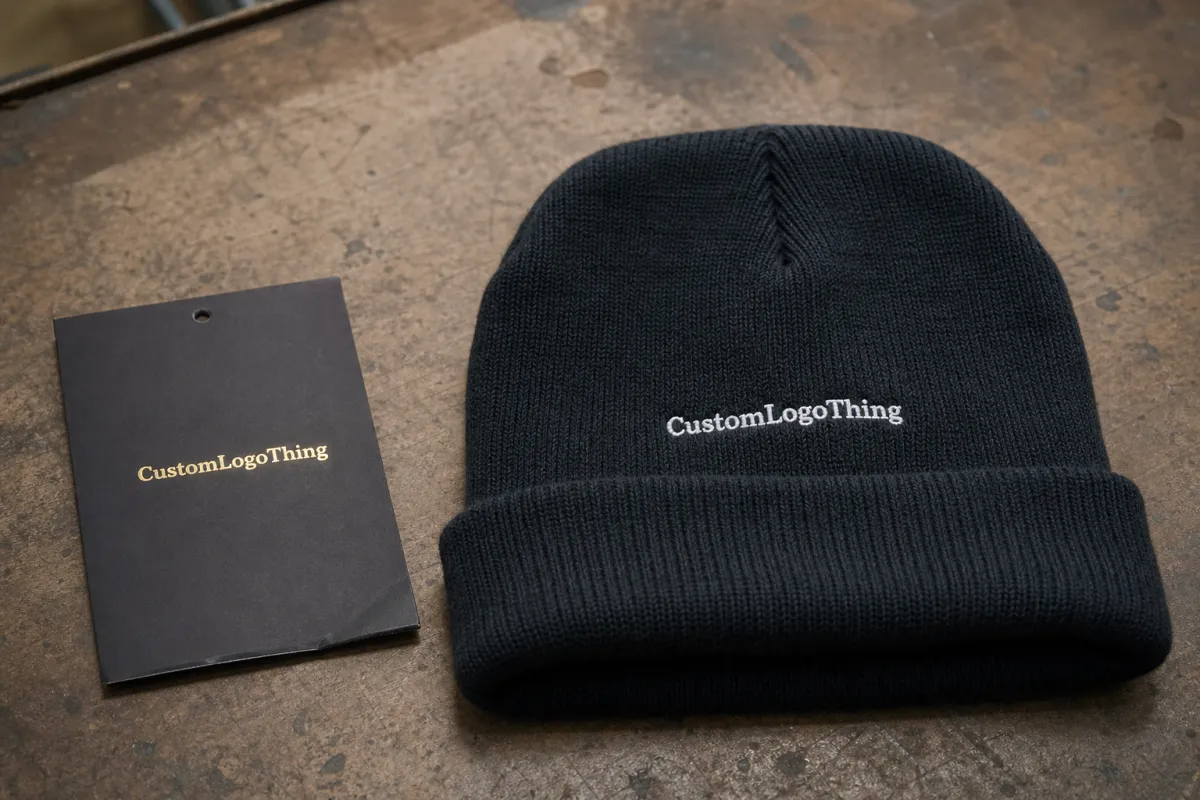
On embroidered beanies, pricing is driven less by the blank itself than by how hard the artwork is to place and stitch. Two beanies can look nearly identical on paper, yet one quote climbs because the logo is oversized, the stitch density is high, or the design uses several thread colors. That extra machine time matters. On a knit item, labor and setup often outweigh the difference between a standard and slightly upgraded blank.
A front cuff logo with one color and moderate stitch count is usually the most efficient option. Move the same mark to the crown, add a second location, or shrink the art until the details become delicate, and the machine slows down. The team spends more time digitizing, checking alignment, trimming thread, and reviewing the first pieces off the line. Those are real production minutes, and they show up in the unit price quickly.
Fabric upgrades do matter, but they are not always the biggest lever. A heavier acrylic knit, a softer yarn blend, or a tighter gauge can raise the base cost of the blank. Even so, a simple logo on that higher-quality beanie may still come in below a cheaper blank with complicated embroidery. Buyers often get the best result by thinking in terms of total production cost and wearability together, not by chasing the lowest blank price in isolation.
A simple, well-placed logo on a suitable beanie style usually costs less than a larger design that forces more machine time. On knitwear, that tradeoff is often the difference between a clean quote and a surprise.
Beanie Styles, Yarn Weights, and Logo Placement Options
Cuffed beanies are usually the easiest to decorate because the fold creates a stable, visible zone for embroidery. Cuffless styles can still work, but they require more careful placement and are less forgiving if the logo needs a firm base. Slouch beanies give a relaxed look, yet that drape can make repeatable placement harder across a full run. Rib-knit styles land in the middle: enough structure for decoration, enough softness for comfort.
Yarn weight and knit gauge influence both look and cost. A finer gauge, often around 7 to 12 depending on construction, tends to produce cleaner stitch definition because the surface is tighter. Thicker knits feel warmer and more substantial, but they can compress smaller details and make the embroidery sit slightly more raised. If the art needs to read from a few feet away, the knit surface matters as much as the thread color.
Common logo zones include the front cuff, front crown, side hit, and, in some cases, a patch location. The front cuff still gives the most dependable results for pricing and repeatability. Crown embroidery can look sharp, but the curvature and stretch make placement less predictable. Side hits work well for secondary branding or small identity marks. Patches can help when the artwork includes fine detail that would be expensive to stitch directly on knit fabric.
For lower quantities, simpler artwork usually creates the best value. A one-color logo, modest width, and single location keep setup low and reduce stitch count. That does not make the beanie plain. It just keeps the decoration in proportion to the fabric and the order size, which is where the quote becomes more honest.
One practical buyer observation: the embroidery file that looks best on a flat screen is not always the one that holds up on a soft knit cap. Small text, thin outlines, and tiny counters can disappear once the fabric flexes. A reliable supplier will usually flag that before production rather than after the sample comes back.
Embroidered Beanies Unit Cost Breakdown
The embroidered beanies Unit Cost Breakdown becomes easier to read once the quote is split into clear buckets: blank beanie cost, digitizing, embroidery setup, stitch count, thread changes, finishing, and freight. Some suppliers use broader labels such as tooling or prep fees, but embroidery does not involve a hard tool in the way a molded item would. What matters is the amount of file preparation, machine planning, and labor required to make the artwork production-ready.
| Order Size | Typical Cost per Piece | What Usually Drives It |
|---|---|---|
| 50-99 pieces | $8.00-$14.00 | Fixed charges are spread across fewer units, so setup and digitizing weigh heavily. |
| 100-249 pieces | $6.00-$9.50 | Setup costs are easier to absorb, especially on a standard front-cuff logo. |
| 250-499 pieces | $4.75-$7.25 | Bulk pricing improves and the run becomes more efficient for the machine team. |
| 500+ pieces | $3.75-$6.50 | Blank pricing and labor efficiency usually improve on simple, repeatable artwork. |
A typical line-by-line quote may include a blank beanie at $2.25-$5.50 depending on style and yarn quality, digitizing at $25-$75 for a one-time logo file, setup charges of $20-$60 per embroidery location, stitching labor of roughly $1.25-$3.50 per piece, and finishing at $0.25-$0.60 for trimming and inspection. Add a second location, thicker thread, or specialty yarn, and the price per piece moves up because the machine spends more time on each unit.
The part buyers often underestimate is how much fixed cost matters on smaller orders. If a 250-piece run uses a $3.20 blank, $45 digitizing, $35 setup, $1.95 stitching, and $0.30 finishing, the subtotal works out to roughly $5.68 per piece before freight. The same structure at 75 pieces looks very different because those fixed charges are spread across far fewer hats. That is the reason MOQ affects the embroidered Beanies Unit Cost Breakdown so sharply.
Here is another wrinkle: a lower blank price does not always produce the lowest landed cost. A cheaper beanie with a complicated logo can end up costing more than a slightly better blank with a cleaner stitch plan. The math changes again if the order needs multiple thread colors, extra proof rounds, or pack-out instructions that slow down production. A quote is only useful if it shows those items clearly.
Direct embroidery is not automatically the cheapest option either. A woven patch may reduce stitch count on the beanie itself, but it introduces patch production and application steps. Leather and felt patches carry their own material and finishing costs, and metallic thread can raise labor because the thread behaves differently on machine. The least expensive method is usually the one that matches the artwork to the fabric with the fewest forced corrections.
If the supplier cannot separate blank cost, setup, and embroidery labor, the quote is harder to trust. Clear line items make comparison possible instead of turning the decision into a guess.
How direct embroidery, patches, and special threads compare
| Decoration Option | Best For | Typical Cost Impact |
|---|---|---|
| Direct embroidery | Clean logos, strong linework, repeatable production | Usually the lowest at scale when stitch count stays moderate. |
| Woven patch | Detailed art, small text, sharper edges | Can add patch prep and application cost, but may lower stitch labor. |
| Leather or felt patch | Premium retail look, simple branding | Higher material and finishing cost, especially on small runs. |
| Metallic or specialty thread | Fashion-focused programs and accent logos | Raises labor and can slow production because the thread behaves differently. |
There is also a quality difference hidden inside the price. Dense stitching looks richer, but it can stiffen the front of the cap if the design is too large. Light stitching can preserve drape, though too little coverage may make the logo look thin or unfinished. A good quote should reflect that balance rather than pushing every order toward the same stitch density.
Production Process and Turnaround: From Proof to Shipment
Production usually starts with artwork review. The supplier checks file format, cleans up line weights, confirms stitch direction, and prepares a digital proof. If the logo needs adjustment, digitizing can take an extra day or two, sometimes longer if the design includes tiny lettering, tight outlines, or multiple layers. Once the proof is approved, the order can move to sampling or straight into bulk stitching, depending on how strict the buyer’s approval process is.
For stock beanies, a common turnaround is 12 to 15 business days after proof approval, though seasonal demand can stretch that window. Custom-knit programs or special-finish orders need more time. So do projects with unusual yarn, wash testing, or a pre-production sample. A physical sample is useful, but it adds a scheduling step because the team has to confirm placement and thread behavior before releasing the full run.
Freight changes the final delivery date even after production is complete. A buyer who wants domestic ground shipping, retail-ready folding, and carton-level inspection has a more predictable handoff than a program that needs split shipments or air freight. For packaging and transport expectations, the ISTA standards are a practical reference point, especially if the goods must survive longer distribution routes or tight retail receiving windows.
Carton prep matters more than many buyers expect. Beanies are soft, but crushed cartons still create avoidable headaches when the customer wants a clean presentation on arrival. Clear carton labels, consistent case counts, and clean polybagging reduce receiving issues. If the order includes hangtags or printed inserts, the paper components can be specified with recycled or certified stock, and the FSC system is a straightforward way to document that choice.
A useful rule in practice: the smoother the approval path, the fewer delays later. Orders that arrive with a vector logo, a confirmed placement, and a realistic quantity range generally move faster than projects that need a lot of back-and-forth over the artwork file. That is not a design preference; it is a production constraint.
What a Reliable Beanie Supplier Should Confirm Before Pricing Your Order
A serious supplier should confirm the beanie style, color, quantity, logo size, placement, and artwork format before sending a quote. That sounds basic, but it is the difference between a dependable estimate and a number that changes later. If the team knows whether the logo is one color or three, whether the art sits on the cuff or crown, and whether the client needs a woven patch or direct stitch, the quote becomes much more reliable.
Proofing quality is a strong trust signal. Buyers need to see exactly how the logo will sit on knit fabric, because a design that looks crisp on a screen can behave very differently once it is stitched onto a flexible surface. A good proof should show size, location, thread colors, and any limits created by the knit structure. That detail prevents surprise revisions after approval and helps the buyer judge whether the logo will still read well from a distance.
- Quality control: thread consistency, trim cleanup, placement accuracy, and stitched logo readability.
- Packing standards: carton count, fold method, bagging, and label clarity for receiving teams.
- Lead time clarity: artwork approval, sample timing, production window, and freight method.
- Revision policy: how many proof rounds are included before extra charges apply.
Freight clarity matters as much as decoration detail. A quote that looks competitive can change once shipping, rush fees, or additional proofing are added. Good buyers ask for the total landed estimate, not only the decoration line. That habit keeps the budget grounded and makes it easier to compare vendors without guessing what was left out.
There are a few warning signs worth watching. Vague references to a “standard beanie” without style details can hide differences in gauge, yarn weight, and finish. A quote that skips setup or digitizing until the end can also distort the comparison. If the supplier avoids giving stitch count guidance, the number may not reflect the real work required for the design.
Next Steps to Lock In an Accurate Quote and Faster Approval
If you want a fast and accurate quote, gather the logo file, target quantity, preferred beanie style, color count, decoration placement, and deadline before asking for pricing. Vector artwork in AI, EPS, or PDF format usually moves the digitizing stage faster. If you already know the budget range, share it. That gives the supplier room to recommend a cleaner spec mix instead of guessing at what should be cut.
Ask for tiered pricing across a few quantities. A single number rarely tells the whole story, especially when setup charges, MOQ, and bulk pricing interact. Comparing 100, 250, and 500 pieces often shows where one extra carton or a larger run makes the cost per piece materially better. It also reveals whether the design should stay as direct embroidery or move to a patch for better production efficiency.
Before approving the order, confirm whether digitizing, setup, and freight are separate line items. That one question prevents a lot of budget friction later. If the supplier is clear about proof timing, stitch count, packaging, and turnaround, the whole job usually moves more smoothly. None of that is glamorous, but it is what keeps the final quote close to reality.
Checklist: send the logo, confirm the beanie style, choose the placement, request tiered bulk pricing, verify setup charges, and approve the proof only after the stitch layout reads cleanly. That is usually enough to turn the embroidered Beanies Unit Cost Breakdown from a vague estimate into a comparison you can actually use.
What affects the embroidered beanies unit cost breakdown the most?
Logo stitch count, number of decoration locations, beanie style, and order quantity usually have the biggest impact. Setup and digitizing costs matter more at low quantities because they are spread across fewer units, which is why the embroidered Beanies Unit Cost Breakdown can shift so much between a small run and a bulk order.
Is there a minimum order quantity for embroidered beanies?
Most decorated beanie programs have an MOQ because embroidery setup and production time need to be spread across the order. The exact minimum depends on the style, logo complexity, and whether the beanie is stock or custom-knit, so the most useful quote is the one that states the minimum clearly.
How long does production usually take for embroidered beanies?
Turnaround depends on artwork approval, digitizing, and whether a sample is required before bulk production. Stock beanies usually move faster than custom-knit or specialty-finish options, and shipping method can add more time even after the run is complete.
Do embroidery setup fees change the unit price a lot?
Yes, setup fees can move the per-piece cost noticeably on small orders. They become less significant as quantity increases, which is why tiered quotes are so useful when you are comparing unit cost across different order sizes.
What should I send to get an accurate quote for embroidered beanies?
Send your logo file, beanie style, color preference, quantity, decoration placement, and any deadline you need to hit. If you already know your target budget, share that too so the supplier can recommend the best spec mix and give you a more precise embroidered beanies unit cost breakdown.

