Unstructured Dad Hats Wholesale Pricing for Bulk Orders
If you are comparing Unstructured Dad Hats Wholesale pricing, start with the product, not the quote. A soft-crown dad hat is low-profile, relaxed, and easier to wear across different head shapes than a structured cap. That makes it a practical fit for retail, team merch, outdoor events, and everyday brand programs.
The style also tends to sell on feel. It looks casual without feeling flimsy, packs flatter than a rigid cap, and usually reads as a normal accessory instead of a promo giveaway. For bulk buyers, that matters because the right silhouette can reduce returns, speed up approval, and make reorders easier to manage.
The pricing conversation should focus on what changes the final spec: fabric, closure, decoration, minimums, and inspection. A lower unit number is not useful if the cap does not match the use case or the delivery window.
Why Soft-Crown Caps Move Faster Than You Think
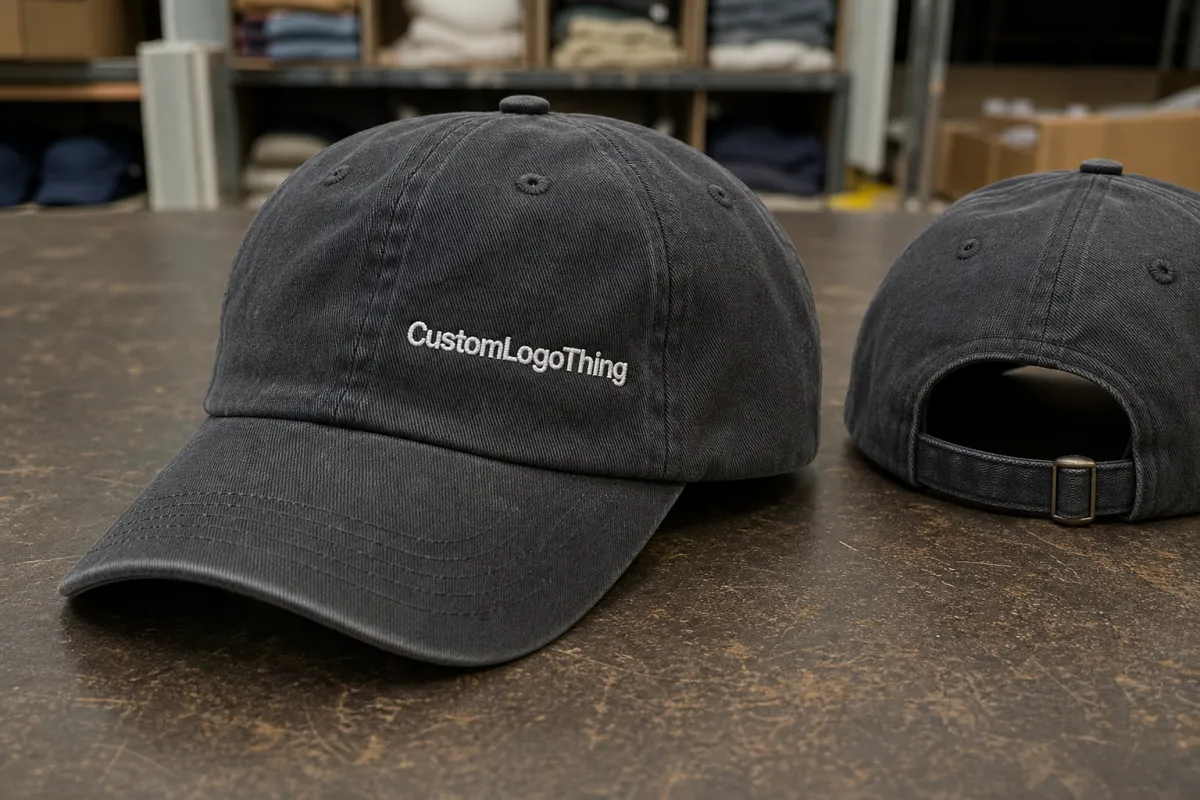
Unstructured Dad Hats are easy for buyers to accept because the front panel does not stand rigidly on its own. That relaxed build creates a worn-in look that feels current without looking overdesigned. In categories where comfort matters more than a crisp promotional appearance, this silhouette usually creates fewer objections than a structured crown.
That softer look also helps on shelf. A hard-front cap can drift into giveaway territory if the decoration is too loud, while an unstructured cap stays closer to everyday wear. The difference is subtle on paper and obvious in merchandising.
For merch programs, the shape gives buyers room to test color, placement, and closure style without committing to a niche profile. A low-profile cap with a clean logo can work for a campus shop, a brewery, a landscaping crew, or a weekend event series. It is a flexible base when one product needs to serve several audiences.
There is also a handling benefit. Soft-crown caps usually tolerate carton packing better than caps with firm fronts, as long as they are packed correctly. They are not indestructible, but they are less likely to arrive with a permanent crease from a hard mold, which lowers receiving issues in bulk.
Materials, Crown Shape, and Closure Options to Compare
Fabric choice affects both feel and price. Cotton twill is the most common baseline because it is durable and familiar. Garment-washed cotton gives a softer surface and a more broken-in appearance. Brushed cotton feels a bit richer and can hide handling marks better. Cotton-poly blends may add a little shape retention and reduce wrinkling, though they can feel less natural than all-cotton builds.
Crown construction matters just as much. Most dependable bulk programs use six panels, a low-profile fit, and an unstructured front with no firm buckram backing. That combination creates the relaxed silhouette buyers expect. If the crown is too limp, embroidery can pull it out of shape; if it is too reinforced, the cap starts behaving like a different product.
The bill is another decision point. A pre-curved visor usually looks finished out of the box and saves the customer a step. Flat visors can work, but they move the cap into a different style lane. The best choice depends on the audience, the logo, and whether the cap should feel ready to wear immediately.
Closures change both comfort and perceived value. Self-fabric straps create the most casual look. Tri-glides are a little tidier. Metal buckles feel more substantial and can lift the cap's perceived quality, but they also add cost and may not suit every buyer.
Small finishing details are worth checking in the sample. Sweatband quality, stitch density, seam alignment, and thread consistency all affect how polished the hat feels in hand. A clean sample should keep the bill curve stable, sit evenly across the crown, and avoid puckering near the front seams. For packaging or inserts, FSC-certified stock is a straightforward sourcing choice; the reference is at fsc.org. For transit protection and carton handling, ista.org is a useful benchmark.
Decoration Specs That Affect Fit, Finish, and Minimums
Decoration has a direct effect on both cost and how the cap wears. Flat embroidery is usually the safest starting point on a soft front panel because it keeps the logo readable without forcing too much structure into the crown. Limited 3D embroidery can work, but the raised areas need restraint. Too much height can make the front wrinkle or collapse in ways the mockup will not show.
Patches solve a different problem. Woven patches handle small details well, while leather patches create a cleaner, more understated finish that suits the relaxed silhouette. Patches can also reduce distortion from heavy stitching. That does not make them the default choice; it just means the artwork and the cap body do not have to fight each other as much.
Send vector artwork whenever possible. A supplier needs to see stitch count expectations, thread colors, patch dimensions, and whether thin text or narrow lines must be simplified. A simple logo may land around 6,000 to 8,000 stitches, while detailed artwork can run much higher. More stitches mean more thread time, more cost, and more room for the digitized design to read differently on a soft panel.
Minimums often shift with decoration. Blank caps can sometimes be ordered in smaller runs, while embroidered or patched versions usually need a clearer production plan and a larger quantity. That is not arbitrary. Every added process step brings setup time, and small orders carry more of that fixed cost per piece.
A low unit price only matters if the logo holds its shape, the cap fits cleanly, and the delivery window still works for the campaign.
Unstructured Dad Hats Wholesale Pricing: What Changes the Cost
Unstructured dad hats wholesale pricing usually comes down to quantity, fabric, closure type, decoration method, and whether the order ships blank or decorated. Quantity is still the biggest lever. Lower runs carry more setup cost per piece, so the unit price starts higher. As the order gets larger, fixed costs spread out and the per-hat number drops.
These planning ranges are typical market examples, not a promise from any one supplier. They assume one main decoration location and standard production handling.
| Quantity tier | Blank cap range | Decorated range | What is usually happening |
|---|---|---|---|
| 50-99 pieces | $5.50-$8.50 | $8.50-$14.00 | Setup and labor take up a larger share of the price. |
| 100-249 pieces | $4.25-$7.25 | $7.25-$12.50 | Common MOQ zone for many decorated orders. |
| 250-499 pieces | $3.75-$6.25 | $6.75-$10.75 | Better unit economics and more room for decoration choices. |
| 500-1,000+ pieces | $3.25-$5.25 | $5.95-$9.50 | Setup costs are diluted and pricing becomes more efficient. |
Fabric and finish change the number quickly. Garment-washed cotton usually costs more than standard twill. A metal buckle adds more than a self-fabric strap. Woven patches, leather patches, extra thread colors, oversized embroidery, one-time digitizing, special labels, rush service, and split shipping all add line items that buyers should expect to see.
Not every order needs every upgrade. A trade-show cap may not need a metal closure or a heavily stitched patch. A retail program may need both. The right spec depends on whether the product needs to sit closer to a price-sensitive giveaway or a shelf-ready accessory.
For the clearest cost view, compare sample cost, unit price, freight, and reorder savings together. A quote that looks good on the cap alone can become expensive once the hats are boxed and shipped. Asking for tiers at 100, 250, 500, and 1,000 units usually shows the break point where the larger run becomes more efficient.
Production Steps and Lead Time for Bulk Orders
A reliable production path is straightforward, but it needs to be documented. The usual sequence is quote review, artwork confirmation, proof approval, production scheduling, decoration, inspection, packing, and shipment. If any step is vague, the order can drift. Delays usually start with incomplete artwork, a missing color reference, or a front-panel decision that was never captured before the job entered the line.
Lead time should be split into three parts: stock availability, decoration time, and freight. Blank stock moves faster if the color is already in inventory. Decorated orders take longer because embroidery, patches, and label applications add setup and inspection time. Freight can add a separate delay, especially if the shipment needs to reach multiple locations or land before a seasonal launch.
For many bulk orders, a realistic decorated timeline sits around 12 to 18 business days after proof approval. Blank stock can move faster if inventory is on hand and no extra finishing is needed. That range can stretch when the quantity is large, the logo is dense, or the order needs a second round of sample review. A short quote is not the same thing as a short delivery window.
Quality control should happen throughout the run, not just at the end. The sample should be checked for crown symmetry, bill curve, stitch density, closure placement, and color consistency. On decorated runs, the first decorated piece should be approved before the full order continues. That catches problems early, especially if the front panel is softer than expected or the digitized logo reads too heavy on fabric.
Packing matters too. Hats packed loosely can shift in transit; hats packed too tightly can flatten in ways that are hard to reverse. If the order is headed for retail or distribution, carton strength and load handling should be considered before shipment leaves the floor. The packaging mindset used by ISTA is a useful reference point: protect the product, keep the stack stable, and avoid pressure points that show up after delivery.
How to Keep Repeat Hat Orders Consistent Across Reorders
Consistency is what turns a one-time purchase into a program. The same cap can look different on a reorder if the dye lot changes, the logo is resized, or the stitch density is adjusted just enough to alter the front-panel behavior. That is why repeat orders need a proper spec sheet, even when the first run felt simple.
Keep the approved color name, closure type, decoration placement, patch size, artwork file, and sample notes in one place. If the first sample required any correction, document it. A clean reorder record should include thread colors, logo scale, any backing or stabilizer used, and the exact approval that made the cap acceptable. That saves time later and reduces the chance that someone is matching the sample from memory.
Reorders matter most in retail drops, employee uniforms, and recurring event merchandise because the cap has to match a previous run closely enough that customers do not notice a difference. Small changes can be visible. A slightly different closure finish, a warmer fabric tone, or a patch cut a few millimeters larger can shift the whole look.
Substitutions are where buyers need to stay alert. Sometimes a comparable fabric or closure is acceptable. Sometimes it is not. The difference should be called out before production starts, not after delivery. If you are buying on a recurring basis, Wholesale Programs is a useful reference for tiered planning and repeat ordering. The goal is not only a lower price; it is a stable spec that keeps the first order and the third order looking like the same product.
What to Send for a Fast Quote and a Clean Next Step
Good quotes start with complete inputs. Send the target quantity, preferred colors, logo file, decoration method, placement notes, and the date the hats need to arrive. If the order is tied to a launch, say so plainly. A vendor can work around a hard deadline only if the deadline is visible from the start.
Ask for tiered pricing instead of a single number. A quote at 100, 250, 500, and 1,000 units gives a far better view of the market than one flat price. It also shows the break point where a larger run becomes efficient enough to justify the extra inventory. If the decoration is uncertain, request both a mockup and a sample, especially when the logo is large or the front panel is very soft.
- Quantity: the exact number you plan to buy, plus a backup tier if you can.
- Color: one shade or a short list of acceptable options.
- Decoration: embroidery, patch, label, or blank.
- Artwork: vector file, PMS references if available, and logo placement notes.
- Deadline: the real delivery date, not just the quote date.
If you are still narrowing the spec, use the Wholesale Programs page to frame the order around quantity and repeatability, then request a written quote for unstructured dad hats wholesale pricing before production starts. Confirm the MOQ, confirm the lead time, and approve the spec sheet in writing. That is the cleanest way to avoid surprises once the run is underway.
From a buyer’s point of view, the decision is straightforward: choose a soft-crown cap that wears well, match the decoration to the front panel, and judge pricing by landed cost rather than by the unit number alone. That approach is more practical than chasing the lowest quote, and it usually produces a better reorder later.
What affects unstructured dad hats wholesale pricing the most?
Quantity is usually the biggest driver, followed by decoration method, fabric choice, and any closure or label upgrades. Blank caps cost less than embroidered or patched versions because they avoid digitizing, setup, and decoration labor. Freight can change the final number too, so compare landed cost instead of only the base unit price.
What is a typical MOQ for unstructured dad hats wholesale orders?
MOQ depends on whether the hats are blank, embroidered, or patched, but decorated orders usually need more planning than stock blanks. Many programs price best at higher quantities, where the per-unit cost drops enough to offset setup charges. Ask for multiple tiers so you can see whether a larger run creates a better cost-per-hat result.
How long does production usually take for bulk dad hats?
Lead time depends on stock availability, artwork approval, and the decoration method selected. Blank orders generally move faster than decorated orders because there is less setup and fewer approval steps. If you have a hard deadline, confirm when production starts and whether freight time is included in the quoted timeline.
Which decoration method works best on unstructured dad hats?
Flat embroidery is the most common choice when you want a clean, durable logo with a lower profile. Patches can work well when the logo is detailed or when you want a more retail-style finish on a soft front panel. The best method depends on artwork complexity, budget, and how much structure you want the front of the cap to hold.
What should I prepare before requesting a quote?
Have your target quantity, color preference, logo file, decoration placement, and delivery deadline ready. If possible, ask for a mockup and a tiered quote so you can compare pricing at different volumes. Clear specs reduce revisions, shorten approval time, and make the final order easier to repeat later.