Buy Unstructured Dad Hats Wholesale for Fitness Studios
For fitness studios, a good merch item has to do more than sit neatly on a shelf. It has to move from a front desk impulse buy to a regular part of someone’s weekend outfit. That is why an unstructured dad hats wholesale supplier for Fitness Studio Buyers can matter more than a generic apparel vendor. Hats avoid sizing problems, travel well, and carry the brand without asking members to wear a full logo across their chest.
The appeal is practical as much as aesthetic. A cap can function as staff uniform, launch gift, challenge prize, and retail item without changing the product spec every time the use case shifts. That kind of flexibility is rare. Apparel programs often break down on sizing, fit complaints, and leftover stock. Hats keep the merchandising surface smaller and easier to control.
There is also a behavioral advantage. People wear hats outside the studio in a way they do not always wear shirts with heavy branding. A relaxed silhouette feels closer to everyday apparel than a promo item. For boutique fitness brands, that distinction matters. The right hat makes the logo look native to the brand rather than pasted onto a giveaway.
Buyers usually learn quickly that the best-performing merch is not the loudest piece. It is the one that leaves the building. Soft-crown caps do that better than rigid promotional hats because they look lived-in from the start. They also photograph better in lifestyle settings, which helps retail listings and social posts without needing special styling.
Why Fitness Studios Buy Unstructured Dad Hats in Bulk
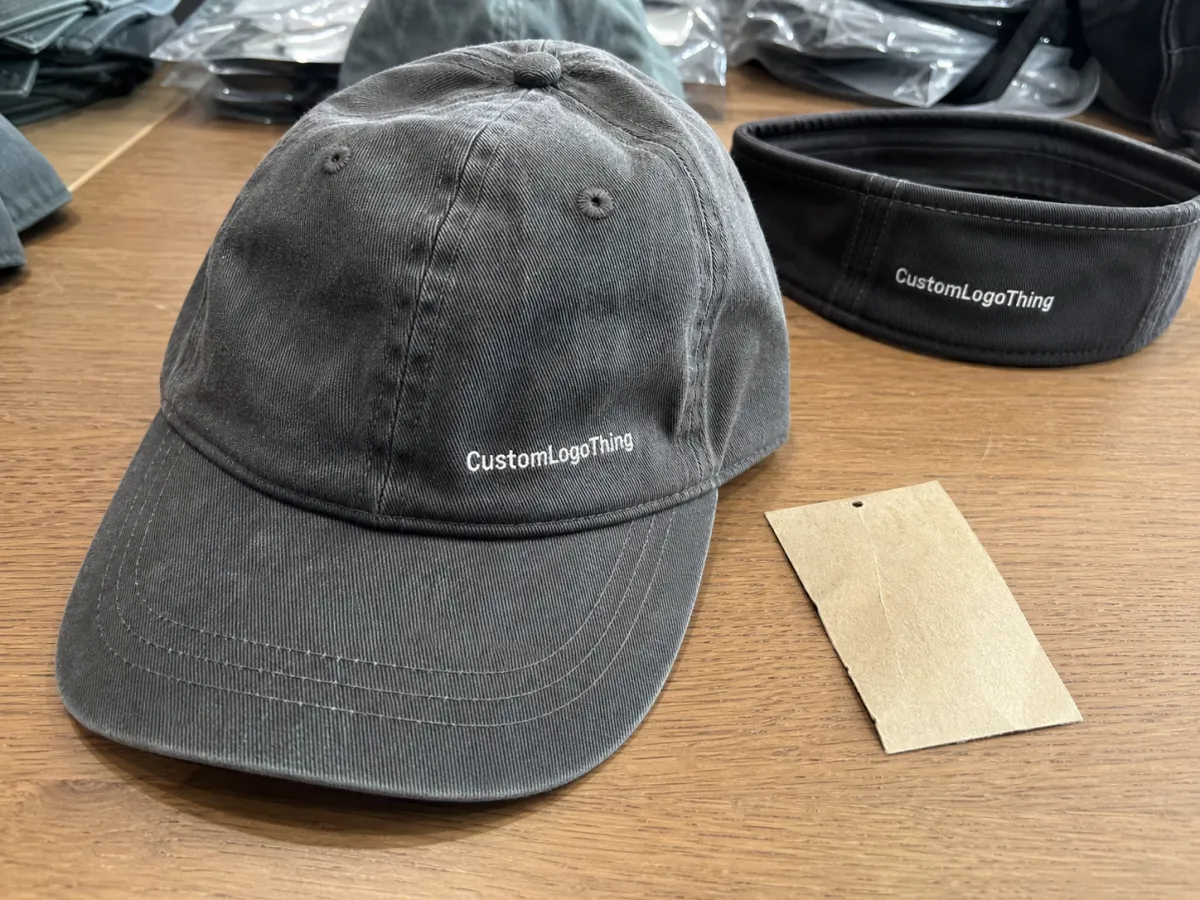
Fitness studios buy in bulk for the same reason they buy protein bars, towels, and water bottles in volume: consistency saves time and lowers friction. Hats are especially efficient because one size can cover a wide range of heads. There is no sizing matrix to manage, no exchange pile, and no leftover inventory in three nearly identical sizes that no one wants.
That simplicity gives the product four useful jobs. It can dress instructors, anchor a launch bundle, support referral rewards, and sit at checkout as a low-commitment add-on. A single cap line can do all of that if the fit, color, and decoration are chosen with restraint. Overdesign usually works against the order. The more a cap tries to do, the less likely it is to stay in rotation.
Unstructured hats are also easier to wear outside the studio because they do not read like corporate merchandise. The crown collapses softly, the profile sits lower, and the overall shape feels more casual. A structured cap may look stronger on a hanger, but it can feel too promotional once it is on a head. That difference sounds minor until you see which cap people keep reaching for.
Buyer reality: if a hat feels stiff, overbuilt, or too branded, it tends to live in a drawer. The cap that gets worn on errands does more brand work than the one that looks perfect in a mockup.
For studio operators, the smartest bulk program usually starts with one core color and one clear decoration plan. That keeps the order easy to repeat. It also makes the first run useful as a reference point for future production. A good supplier should be able to reproduce the same cap months later without changing the shape, decoration placement, or closure hardware.
If you need a general pricing and program starting point, the Wholesale Programs page is a practical reference.
Unstructured Dad Hats Wholesale for Fitness Studios
In sourcing terms, an unstructured dad hat is a soft-crown cap with a curved brim and an adjustable closure. The appeal is not complicated. It looks relaxed, it fits widely, and it takes decoration without turning into a hard-edged promo cap. For studios, that balance is useful because the brand can stay visible without looking aggressive.
The category fits a broad mix of fitness businesses. Yoga studios often prefer a quieter look, while boxing, barre, Pilates, and strength-training brands may want something with a little more edge. The same basic hat can serve all of them if the decoration is adjusted correctly. A small tonal embroidery mark feels very different from a large high-contrast patch, even when the blank is identical.
There are four common ways studios use this kind of cap:
- Front desk retail: easy to place near checkout for impulse purchases.
- Instructor uniforms: helps staff look consistent across classes and events.
- Member rewards: useful for challenges, milestones, and referrals.
- Launch bundles: works well in opening offers and membership packages.
The business case is better than it first appears. Retail apparel often gets judged by fit, but hats are judged by wearability. That means fewer objections and less friction at the point of sale. A cap that feels soft, comfortable, and easy to style has a real advantage over a piece that looks more “branded” but feels less desirable.
For repeat buying, ask the supplier to lock the base spec across orders: panel count, closure type, brim shape, thread colors, and decoration placement. If those variables drift, the product stops feeling like a line and starts feeling like a series of unrelated runs. A dependable unstructured dad Hats Wholesale Supplier for fitness studio buyers should be able to keep those details steady.
Specs Buyers Should Confirm Before Ordering
The difference between a cap that looks premium and one that feels like a cheap giveaway often comes down to a handful of specifications. Fabric is first. Cotton twill is common because it holds embroidery well and has enough body to keep a clean shape. Washed cotton creates a more relaxed hand feel and can suit brands that want a worn-in look from the start. Brushed finishes can feel nice, but they should be sampled before approval because they change the surface more than many buyers expect.
Construction matters almost as much. A 6-panel cap usually gives the front a cleaner decoration zone than a less defined build. Pre-curved brims are practical because they reduce the need for shaping after delivery. Ventilation eyelets help comfort, especially for staff who wear the cap for long shifts or for members who train outside. If the hat lacks airflow, the design starts to fight the use case.
Closures are another place where the spec changes the perceived value. Self-fabric straps with a metal buckle feel more polished than hook-and-loop. A brass buckle can read as more retail-ready, though it also increases cost slightly. Hook-and-loop is functional and often cheaper, but it can look less refined on a shelf. That tradeoff is worth deciding early, not after sampling.
Decoration should be planned with the same care. Embroidery is durable and familiar, but dense logos can pucker the front panel if the cap body is too soft. Patches add texture and can make the product feel more like retail merchandise, especially if the logo is simple and the brand wants stronger shelf presence. Thin text, tiny details, and complicated crests are risky on a soft crown. If the art is hard to read at thumbnail size, it will probably not improve on a hat.
Logo size should be approved with the blank in mind. Front embroidery often lands around 2.25 to 2.75 inches wide for a modest mark, while larger retail-style placements can go wider if the design is simple. Side embroidery should stay smaller and cleaner. Do not assume a digital mockup reflects real stitch behavior. Thread density, crown softness, and panel width change the final look.
| Spec | Why It Matters | Buyer Check |
|---|---|---|
| Cotton twill vs. washed cotton | Affects hand feel and how polished the cap reads | Request a sample if texture affects brand fit |
| 6-panel construction | Creates a cleaner front for decoration | Confirm the front panel width before approval |
| Closure type | Changes comfort and retail impression | Choose buckle hardware for a more finished look |
| Embroidery or patch | Shapes the perceived value of the hat | Match the method to the intended price point |
Color approval deserves attention too. Pantone references help, but fabric and thread are not paint. Small variation is normal. For launch-sensitive orders, a physical sample is safer than relying on a screen. Packaging should also be specified early if the hats are headed for retail shelves rather than a giveaway table. Polybags, tissue, inserts, and carton packing all affect presentation, and cartons that crush the crown can ruin a first impression before the product reaches the floor.
For buyers who care about packaging durability, the ISTA reference materials are useful when evaluating transit protection.
Cost, MOQ, and Unit Pricing for Bulk Orders
Wholesale pricing for studio caps usually breaks into four parts: blank cost, decoration, setup or digitizing, and freight. That breakdown matters because a low unit price can hide a higher total if the quote buries sample charges or rush fees. A clean quote is easier to compare and easier to defend internally.
Minimum order quantities vary by blank availability and decoration method. Stock caps with simple embroidery often support lower entry points, while custom colors, specialty trims, or custom-dye programs push the minimum up. A realistic planning range for many stock runs is somewhere around 48 to 100 pieces. Custom programs can move into the 300-piece range or higher. Those numbers are not a promise; they are a useful reference when comparing offers.
Unit cost usually falls once the run crosses a clean threshold. A 100-piece order may not be much more expensive to produce than a 250-piece order because setup work stays similar. For simple embroidery on stock caps, rough market pricing often lands around $3.25 to $6.50 per unit before freight, depending on blank quality, order size, stitch count, and decoration complexity. Patches, premium closures, and retail packaging can move the number upward quickly.
A useful comparison for budgeting:
| Order Type | Typical MOQ | Cost Pressure | Best Fit |
|---|---|---|---|
| Stock cap + simple embroidery | Low to moderate | Lower setup burden | Staff hats and member gifts |
| Stock cap + woven patch | Moderate | Higher decoration cost | Retail merch and premium bundles |
| Custom fabric or custom dye | Higher | More inventory and lead-time risk | Large brands with repeated demand |
| Split-color multi-location order | Varies by blank inventory | Can raise unit cost | Studio groups with several sites |
Extra charges are common enough to deserve a line item in the buying sheet: digitizing, extra sample rounds, split-color fees, special packaging, and expedited production. A reliable unstructured dad Hats Wholesale Supplier for fitness studio buyers should disclose them early. Freight also matters more than buyers expect, especially if the order is headed to several studios instead of one warehouse. Ask how cartons are packed and whether the supplier protects the crown during transit; shipping damage is usually a packaging failure, not a decoration issue.
Process and Timeline From Quote to Delivery
A workable production sequence is usually straightforward: quote request, design review, proof approval, sample check if needed, bulk production, quality control, packing, and shipping. The process itself is not the problem. The problem is opacity. If status updates are vague or delayed, the order is already at risk.
Lead time depends on what is being made and how much inventory is already on hand. Blank-to-embroidered orders are often faster than custom colors or specialty patch work. A practical timeline for many stock-cap runs is about 12 to 15 business days after proof approval, plus shipping time. Peak seasons, international freight, and split-location deliveries can stretch that window. If the hats are tied to a studio opening or campaign launch, add a buffer rather than hoping the fastest case will happen.
The buyer’s input can shorten or slow the cycle. Orders move faster when the logo file is usable, the quantity is clear, the decoration location is decided, and the delivery deadline is realistic. If a studio wants two colors or three different drop quantities, that should be quoted as a split order before approval. Making that decision early avoids last-minute revisions that cost time and money.
For repeat programs, the first order should be treated as the master spec. Save the approved thread colors, closure style, decoration placement, and packaging format. That way the second order is a reorder, not a new sourcing project. The difference shows up in both speed and consistency.
QC should never be a vague promise. Ask whether the supplier checks for loose threads, crooked patches, crown distortion, and inconsistent logo placement before shipment. A final inspection is not luxury. It is the difference between merchandise that looks intentional and a box of caps that needs sorting on arrival.
Decoration Options That Help Studio Merch Sell
Decoration should fit the cap, not overpower it. Flat embroidery is the safest starting point for a clean logo, especially if the studio wants a restrained look. It is durable, familiar, and easy to repeat. For many buyers, that is enough.
A patch can shift the hat toward retail. Woven patches work well for detailed artwork, while embroidered patches add texture and a little more depth. Leather-style patches can fit a premium, earth-toned brand, but only if the rest of the cap supports that language. Tonal embroidery is also useful for studios that want the logo visible without turning the cap into a billboard.
The best decoration depends on how the cap will be used:
- Staff hats: small embroidery, durable thread, low contrast.
- Member giveaways: comfortable fit and simple logo placement.
- Premium retail items: patch or elevated embroidery with tighter QC.
- Bundle offers: decoration that photographs well for product pages and social posts.
Logo complexity matters more on a soft crown than many buyers expect. Tiny type, dense crests, and thin lines can disappear once stitched. There is a practical rule here: if the art is difficult to read at a small digital size, it is probably too intricate for a cap. Keep enough contrast to make the mark visible, but not so much that the cap loses the studio’s visual tone.
The strongest retail caps are the ones members might wear even if the studio name were not on them. That is a high standard, but it is a useful one. It separates a true merchandise item from a giveaway. For that reason, a good Unstructured Dad Hats wholesale supplier for fitness studio buyers should help match decoration to the intended price point rather than defaulting to the cheapest method.
What Sets a Reliable Wholesale Hat Supplier Apart
Reliability shows up in the small things that are easy to overlook before the first order ships. Repeat-order consistency matters. So does proof accuracy, response time, and the ability to hold the same cap spec across multiple runs. If a supplier changes closure style, shifts logo placement, or cannot explain the difference between a sample and production, the buyer carries the risk.
Factory-direct pricing can look attractive, but it is not automatically the better buy. A reseller may charge more and still reduce friction by handling communication, file management, and quality review more tightly. The important question is not how close the factory is to the source. It is whether the second order matches the first without unnecessary correction.
Growing studios should also ask how the supplier handles multi-location needs. Can they split colors without changing the spec? Can they hold art files for reorder? Can they restock a core color when one site moves faster than the others? Those questions sound basic, but they often separate a workable supply line from a one-off order.
Process proof matters. A supplier should be able to describe final QC in plain terms: thread color checks, crown shape checks, logo placement verification, and packaging inspection. If the answer sounds improvised, the production system probably is. Transit should be treated as part of the product too. Cartons that protect caps from crushing are not a bonus feature; they are part of keeping the order saleable on arrival.
The question to ask is not whether the supplier can make hats. It is whether they can make the same hat again, to the same standard, on a predictable schedule. That is the real mark of a dependable wholesale partner.
Next Steps for Fitness Studio Buyers
Accurate quoting starts with a complete brief. Send the logo file, estimated quantity, preferred cap color, decoration placement, delivery destination, and target in-hand date. If retail packaging matters, say so early. If the order needs multiple colorways, list the split before the sample stage so the pricing reflects the actual plan.
For launch timing, the safest path is usually simple: approve the mockup, confirm the decoration method, check the sample if the order is tied to a deadline, and lock the shipping plan before production starts. Rushing the last two steps tends to add cost rather than save time.
For recurring demand, keep the program narrow. One core color and one secondary color are usually enough. Save the approved spec sheet and reorder from that record. The more variables that stay fixed, the easier it is to keep the hat line profitable and consistent across locations.
For studios that want merch members will actually wear, a well-specified cap line is one of the most practical places to start. The strongest programs are built on clear specs, realistic lead times, and repeatable production rather than constant redesign. That is what a serious unstructured dad hats wholesale supplier for fitness studio buyers should support.
What MOQ should fitness studio buyers expect from an unstructured dad hats wholesale supplier?
MOQ depends on decoration method, blank availability, and whether the cap is stock or custom-made. Simple embroidered stock runs are often easier to start smaller than custom-dye or custom-trim programs. If you need multiple studio colors, ask whether the supplier can combine them within one order structure.
Which decoration works best on wholesale unstructured dad hats for studios?
Flat embroidery is usually the safest choice for clean logos and repeat orders. A woven or embroidered patch can feel more retail-ready if the brand wants added texture. Thin lettering and dense detail should be checked carefully because soft crowns can blur the artwork.
How long does production usually take after proof approval?
Many stock-cap runs take about 12 to 15 business days after proof approval, plus shipping time. Custom colors, specialty patches, and peak-season backlog can extend that timeline. If the order supports a launch date, build in extra time rather than depending on the fastest case.
Can I mix hat colors in one wholesale order for multiple fitness locations?
Often yes, but it depends on blank inventory and the minimums for each color. A common approach is to anchor the order with one core color and add a smaller second color run. Ask for a split-color quote before approving so the final pricing is clear.
What should I send to get an accurate quote for fitness studio hats?
Send the logo file, quantity, preferred colors, decoration location, shipping destination, and target delivery date. Include sample requirements and packaging expectations if they matter to the rollout. The more complete the brief, the less likely the quote will change later.