Unstructured Dad Hats Fit and Sizing Guide for Buyers
An unstructured dad hat looks straightforward until you try to buy it at scale. Because the front panel is soft, fit depends on more than circumference. Crown depth, closure range, fabric weight, and decoration all change how the cap sits on the head.
That is why buyers need a practical Unstructured Dad Hats fit and sizing guide instead of a style name alone. A cap that feels good on a spec sheet can still wear too shallow, too loose, or too stiff once the materials settle.
The difference shows up in approvals, returns, and repeat orders. A hat that fits the intended wearer on the first sample is much more likely to stay in rotation, while a poorly balanced spec usually becomes a one-off mistake.
What Unstructured Dad Hats Are and Why the Fit Feels Softer
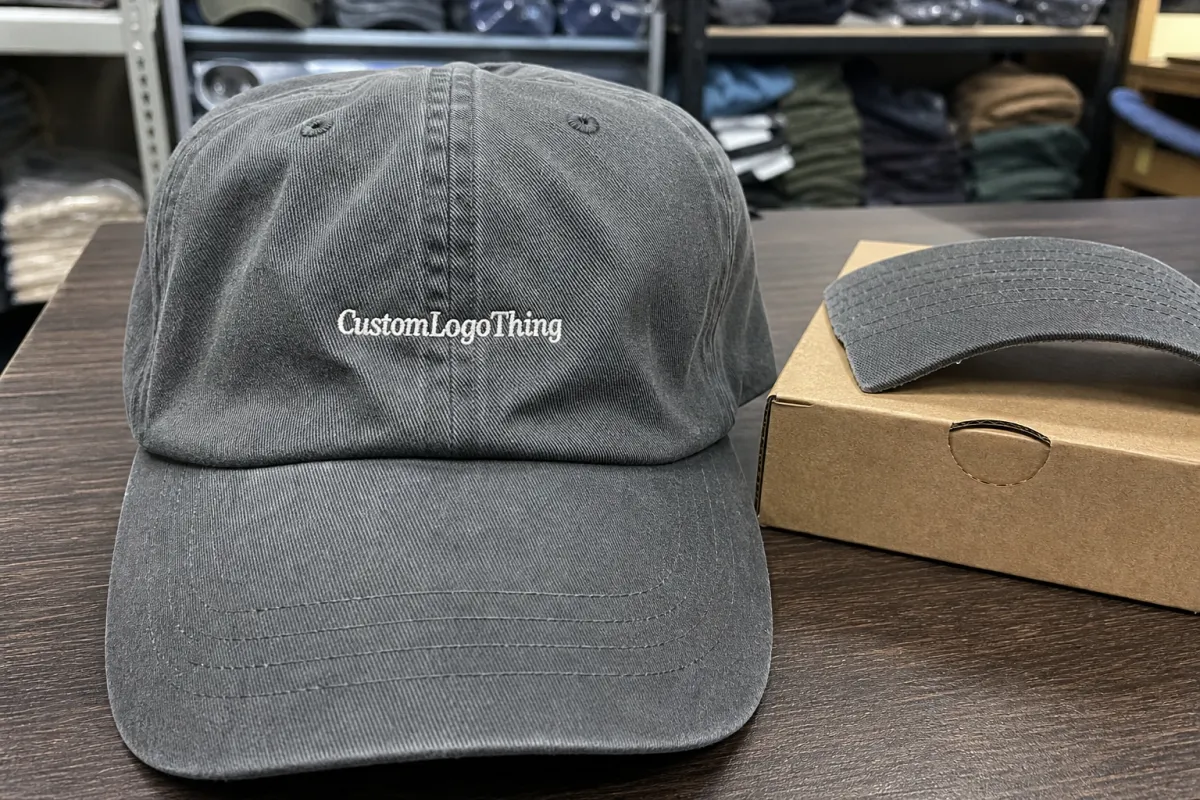
An unstructured dad hat uses an unreinforced front panel, so the crown collapses naturally instead of holding a fixed shape. That creates the relaxed, broken-in profile many buyers want from washed cotton and casual logo caps.
The softer front changes the wearing experience. Compared with a structured cap, the hat often sits closer to the forehead and temples, which can reduce pressure during long wear. At the same time, the same softness can make the fit feel less predictable if the crown depth or closure range is off.
Fit is not just a circumference number. Two hats can share the same nominal size and still feel different because one has a deeper crown, a firmer sweatband, or a fabric that relaxes more quickly.
- Structured cap: firmer front, stronger shape retention, more defined profile.
- Unstructured dad hat: softer front, lower visual stance, more relaxed drape.
- Actual fit: driven by crown depth, closure range, head shape, and fabric behavior.
Buyer takeaway: a soft crown can make the same size feel noticeably roomier or shallower depending on the build.
How the Crown, Panels, and Sweatband Change the Way It Sits
Most dad hats use a 6-panel construction because it balances shape and decoration space well. Once the front panel is unstructured, the seams, crown height, and internal tape have a bigger effect on the final silhouette.
Crown depth is one of the most overlooked measurements. A low-profile crown sits closer to the head and looks more compact. A deeper crown adds room, but it can also make the hat feel looser even when the strap is tight enough. Circumference alone does not tell the whole fit story.
The sweatband and internal taping matter too. A soft sweatband feels easier on first wear, while a firmer band can make the hat seem smaller. Stiffer taping can improve the line of the front panel, but it can also reduce the relaxed feel that buyers expect from an unstructured build.
Head shape changes the result more than many buyers expect. Broad foreheads, thicker hair, curls, and tied-back hair all affect how the front panel settles. That is why sample approval should include an actual try-on, not just a visual check.
Brim curve also changes perceived fit. A flatter brim usually reads more casual and gives the crown a little more visual height, while a pre-curved brim can make the cap feel closer to the face. The right choice depends on the target customer and the decoration layout.
Key Fit Factors: Size Range, Closure, Fabric, and Finish
Closure type matters, but only if the usable range is wide enough and the overlap stays secure. A simple fabric strap with good overlap can fit better than a more polished closure that barely adjusts.
| Closure type | Fit feel | Practical notes | Common add-on cost per unit |
|---|---|---|---|
| Self-fabric strap | Most relaxed and casual | Good for laid-back retail styles; overlap must be checked carefully | $0.00-$0.20 |
| Fabric strap with buckle | Secure and classic | Reliable if the strap length is generous and the hole spacing is clean | $0.10-$0.25 |
| Metal clasp or tri-glide | Clean adjustment, slightly firmer | Useful for premium presentation; hardware quality matters a lot | $0.15-$0.35 |
| Hook-and-loop | Fast to adjust, less refined | Wide range, but not always the right choice for retail display | $0.00-$0.15 |
Fabric changes the feel just as much as the closure. Cotton twill is the standard because it is stable and easy to decorate. Washed cotton and pigment-dyed fabric feel softer right away, but they relax faster after a few wears. Brushed cotton can be comfortable, though it may show wear sooner on high-touch areas.
Weight matters too. A common range for Unstructured Dad Hats is roughly 6 to 8 oz fabric weight, depending on the body and wash finish. Lighter cloth drapes more easily and feels airier. Heavier cloth keeps a cleaner line but may feel warmer and slightly stiffer.
Decoration can change fit even when the hat body is correct. Heavy front embroidery, a dense patch, or a large woven label can stiffen the front panel. That may be fine for a sharper merch look, but it is less ideal if the goal is a soft everyday cap that collapses naturally.
For buyers comparing options, the first question should be whether the cap needs to wear soft or hold a stronger shape. That answer will influence the body choice, decoration method, and overall price.
Unstructured Dad Hats Cost, Pricing, and MOQ Basics
Pricing usually starts with the blank body, then decoration, then finish details. In larger-volume orders, a plain stock unstructured dad hat can sit in the low single digits before decoration. Once you add embroidery, patches, special washing, custom hardware, or branded packaging, the finished price moves quickly. Decorated units often land around $3.50-$8.50, with premium builds going higher when the spec gets more complex.
MOQ follows production complexity. A simple stock body in one fabric color with one embroidery location can be efficient at a lower minimum, often around 100-300 units depending on the factory. Add custom dyes, multiple panel colors, several decoration methods, or special trim, and the minimum climbs because each extra variable creates more setup and inspection time.
| Spec choice | Fit impact | Cost impact | MOQ tendency |
|---|---|---|---|
| Stock cotton twill | Predictable and stable | Lowest | Lower |
| Pigment-dyed or washed cotton | Softer, more relaxed | Medium | Medium |
| Heavy front embroidery | Can stiffen the front panel | Medium to high | Medium |
| Custom patch plus specialty trim | More refined, less flexible | Highest | Higher |
Clear specs save money. A buyer who sends closure type, panel count, crown depth preference, decoration method, colorway, and target fit gets a cleaner quote and a faster sample round. A vague brief forces the factory to guess, then revise, then reprice.
Process and Timeline: From Spec Sheet to Finished Caps
A cap order usually moves through spec review, artwork confirmation, sample build, fit check, bulk cutting, sewing, decoration, finishing, inspection, and packing. Delays usually happen between approvals, not at the sewing machine.
For a stock body with straightforward decoration, a lead time of about 12-15 business days after proof approval is realistic if materials are available and no revisions are needed. Add custom fabric, special wash treatment, custom hardware, or a multi-step patch application, and the schedule can stretch to 20-35 business days.
Fit testing should happen before bulk production, not after. A cap can look correct on paper and still sit wrong on the head because the crown feels too deep, the brim curve is too sharp, or the sweatband pinches at the forehead.
Quality control should cover more than appearance. Useful checks include seam symmetry, strap overlap, bar-tack strength at the closure, embroidery pull distortion, sweatband stitching, and crown collapse consistency. If the hat is washed or pigment-dyed, color variation across the run should also be reviewed.
One production detail that gets ignored too often is the front-panel reaction after embroidery. Dense stitching can draw the fabric slightly and change the fit line. That is why pre-production samples should be evaluated after decoration, not just before it.
Measure Before You Order
The most dependable sizing method is to measure the head where the hat will actually sit. Use a soft tape just above the ears and across the forehead at the natural wearing line. Keep the tape level and record the result in both inches and centimeters if the order may serve multiple regions.
Most adult wearers fall somewhere around 21.25-24 inches in circumference, but that range does not tell the full story. The closure range and crown shape decide whether the cap feels secure, loose, or oddly perched.
Use a simple sample test:
- Measure head circumference at the intended wearing line.
- Compare that number to the actual closure range, not the tag.
- Check forehead pressure, temple contact, and back-strap overlap.
- Wear the cap for several minutes so the crown can settle.
That last step matters. Soft-crown hats often change after the first few minutes on the head. The front panel relaxes, the sweatband warms up, and the brim starts to behave like a worn item rather than a sample.
Hair volume, liners, and personal preference should also be part of the decision. Some wearers want a snug, low-sitting cap. Others want more room around the crown. The right result is the one that feels secure without leaving pressure marks or forcing the strap to its limit.
For a mixed-audience program, the fit spec should say more than “adjustable.” It should define the target head range, the preferred crown depth, and the intended wear style so the factory can build to a useful target instead of guessing.
Common Sizing Mistakes Buyers Make With Soft-Crown Caps
The most common mistake is buying from the style name instead of the measurement range. “Dad hat” sounds universal, but the actual fit depends on the body pattern, the fabric, and the closure. Two hats with the same description can wear like different products.
Another mistake is forgetting how the material changes over time. Washed cotton relaxes, pigment-dyed cloth softens, and heavy embroidery stiffens the front. A cap that feels ideal in the first minute may feel different after a week of wear.
Mixed-audience orders need extra scrutiny. Staff orders, retail drops, and event giveaways usually include people with different head sizes and hair types. If the spec only fits one narrow profile, the number of unhappy wearers grows fast.
- Approving a hat from photos instead of trying it on.
- Ignoring crown depth because the circumference looks right.
- Choosing decoration that makes the front panel too stiff.
- Assuming one-size-adjustable means the closure range is generous enough.
A soft-crown cap should be treated as a fit spec, not just a colorway. That mindset prevents a lot of first-run problems and keeps the order aligned with the intended wearer.
Expert Tips and Next Steps for a Better First Order
Send a complete fit brief before asking for a quote. Include the target head range, preferred closure, decoration method, color, and the way you want the cap to sit: low, mid, or relaxed. Add any packaging requirement that could affect the finished shape.
Ask for a sample or pre-production photos that show the front, side, and back under real lighting. Flat mockups help with design approval, but they do not show crown collapse, strap overlap, or brim curve.
When the sample arrives, compare it on more than one head if possible. One person may say the fit is perfect because it is snug. Another may say it rides too high. The goal is not to please every possible wearer; it is to match the intended audience without surprises.
A good Fit and Sizing process turns “one size” from a guess into a controlled decision.
That is the real advantage of getting the spec right. The hat wears better, is easier to approve, and is less likely to come back as a complaint or a dead stock item.
FAQ
How should unstructured dad hats fit on first wear?
They should feel secure without pinching, with the sweatband resting smoothly on the head instead of digging into the forehead. The crown will usually feel soft right away and then relax a little more as the fabric settles.
What size head works best for an adjustable unstructured dad hat?
The best fit depends on the actual closure range, not just the one-size label. Ask for the usable circumference range and check whether the strap has enough overlap to stay secure.
Do unstructured dad hats fit differently from structured caps?
Yes. Unstructured caps usually feel softer and less rigid because the front panel does not hold a fixed shape. That softer crown can make the same nominal size feel roomier, especially across the forehead and top of the head.
How do I reduce sizing problems when ordering custom unstructured dad hats?
Measure the intended wearer group and match that number to the closure range before approving the run. Request a sample and test it on different head shapes, since one person’s comfort point may not work for another.
What should I include in a fit and sizing request for custom dad hats?
Include head circumference targets, preferred fit feel, closure type, crown depth preference, and whether the hat should sit low, mid, or relaxed. Add artwork placement, decoration method, and any packaging requirements that could affect the final build.

