The fastest way to lose margin on embroidered headwear is to approve a proof that looks fine on screen but fails on a knit surface. A vitamin embroidered beanies Digital Proof Checklist is there to catch the expensive gaps before thread ever reaches fabric. Bright brand colors, small lettering, and textured yarn do not forgive loose planning.
From a buyer's perspective, the proof is not a decorative preview. It is a production decision tied to cost, timing, and quality. A logo that reads clean in vector art can collapse once it is moved onto a stretch-knit beanie with seams, folds, and surface texture. That risk is higher with high-chroma colors, where contrast carries most of the visual weight.
What the vitamin embroidered beanies digital proof checklist catches first
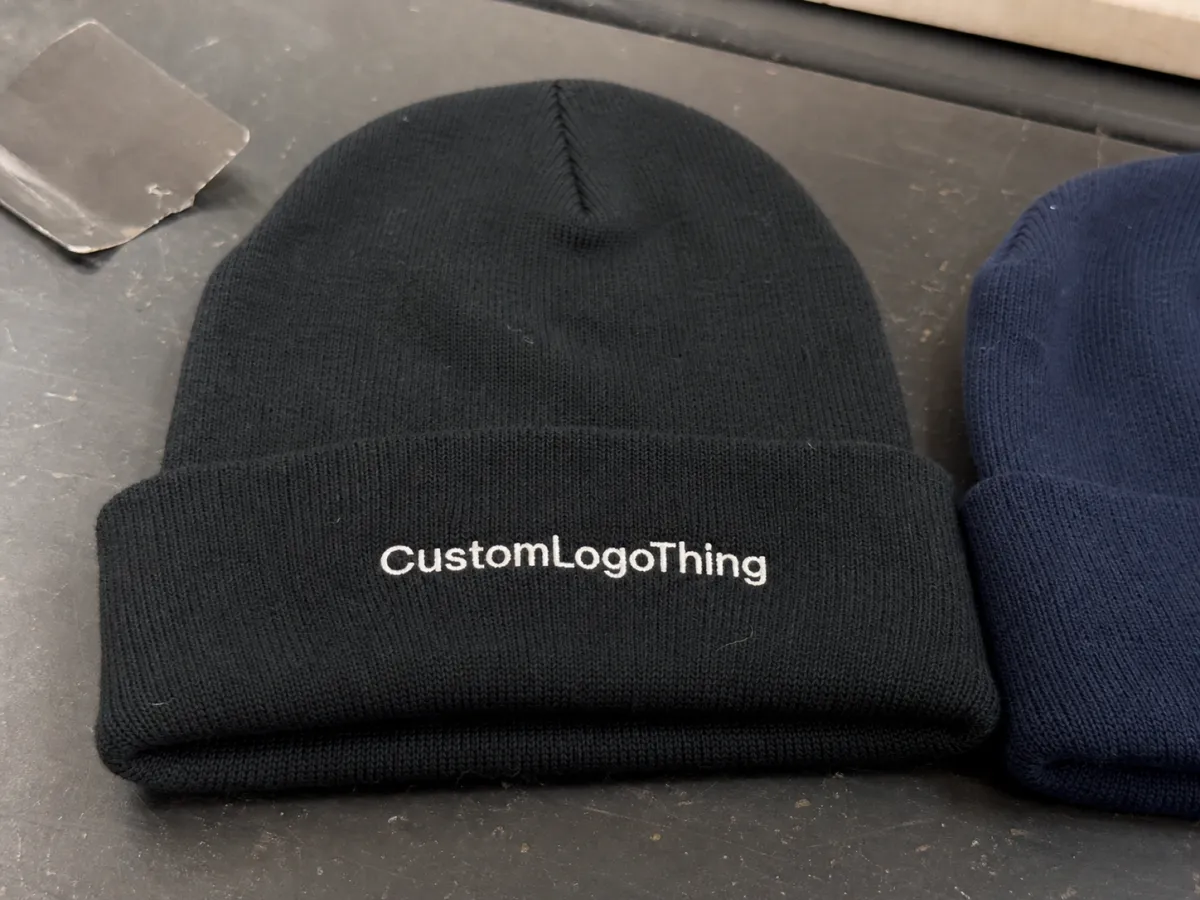
A useful vitamin embroidered beanies Digital Proof Checklist catches the issues that hide in the gap between artwork and fabric. The design may look balanced on an artboard, but once it is scaled to the beanie style, the proportions can shift. A logo that felt crisp at 100% can suddenly look crowded when it lands on a cuff, front panel, or crown area with natural stretch.
That matters more with vitamin-style branding because the visual job is clarity. Citrus orange, electric lime, coral, and similar high-chroma colors work only if the background supports them. Put those colors on a dark heather knit or fuzzy yarn and the impact drops fast. Bright thread does not guarantee visibility; contrast does the heavy lifting.
“The proof is not asking whether the design looks good in theory. It is asking whether the factory can build the same idea in thread, at the right size, on the actual beanie style, without losing legibility.”
The first review should catch four things immediately:
- Shape distortion from knit structure, seams, and cuff folds.
- Tiny lettering that may disappear once stitched at a workable size.
- Color contrast problems where yarn and thread are too close in tone.
- Build limits that force simplification before production starts.
Experienced buyers treat that as a filter, not a formality. If the design cannot survive the surface, the checklist should expose it before approval. That saves more time than trying to rescue a weak mockup later.
How digital proofing translates art into stitches
Digital proofing is the bridge between artwork and machine logic. The digitizer converts a flat file into stitch paths, direction, density, underlay, and sequence. That translation step is where most surprises begin. Gradients flatten out. Hairline strokes thicken. Complex shading becomes simplified color blocks because thread is physical, not printed ink.
A solid proof usually shows placement, approximate size, thread colors, and the beanie style being used. Better vendors also mark practical limits: minimum text height, thread substitutions, stitch-style choices, or any areas that need to shift from fill to satin stitching. If a supplier supports multiple decoration formats, a page like our Manufacturing Capabilities overview can help show how embroidery fits alongside other production options.
The buyer should not read the proof as a final photograph. It is closer to a production map. The mockup shows where the design sits, how large it will read, and whether the beanie color gives enough contrast. The digitizing notes show what changed to make the file stitchable. That distinction matters because the prettiest proof is not always the most buildable one.
Good review discipline also keeps the right people in the loop. Brand teams check logo standards. Merchandising checks size and visibility. Purchasing checks whether the proof aligns with the quote. If a retailer or licensing group is involved, they should verify the color direction too.
Once a proof is approved, small edits can become real setup changes. Move the mark 8 mm and the needle path changes. Swap thread color and the approval may need another round. Add text and the stitch count can rise enough to affect cost. The proof is where those decisions belong.
If speed matters, send a clean vector file, a written placement note, a target size, and one person who can approve without waiting on three other opinions. Clarity shortens the proof cycle more reliably than urgency does.
Key proof factors: placement, thread, stitch count, and knit type
Placement affects both visibility and cost. A cuff-front logo is usually the cleanest option because it gives the embroidery a flatter surface and a clear reading area. Side placement can look more understated, but it asks more of the artwork. Back tags, folded cuffs, and crown placements each create different constraints, so the proof should name the exact location instead of relying on a generic mockup.
Thread choice is the next variable. On knitwear, high-contrast thread usually reads better because the yarn already interrupts the surface. If the beanie is navy, charcoal, or forest green, a light logo color often performs better than a near-match. For brand colors, the proof should list actual thread codes or at least the closest Pantone translation so the buyer knows how far the match will drift.
Stitch count deserves more attention than many teams give it. More stitches can improve coverage and help solid shapes feel fuller, but they also add weight, stiffness, and price. A small badge-style mark may work well with a lighter count. Larger logos with outlines and text need more stitches to keep edges clean. That tradeoff changes the hand feel of the finished beanie, so it is not just a visual decision.
Knit type changes the result as much as artwork does. A smooth fine-gauge beanie behaves differently from a heavy rib knit. The same logo may need to be resized for one style and simplified for another. Chunkier knits can swallow detail; tighter constructions usually hold sharper lines. A design approved on one beanie should not be assumed valid on a different construction.
A practical checklist should include measurable limits:
- Minimum line weight so thin strokes do not vanish.
- Safe zone around seams and folds so the logo does not warp.
- Target size in millimeters or inches, not just “small” or “medium.”
- Tolerance range for placement, since hand-applied decoration always moves a little.
If the supplier can send both a close-up proof and an actual-size mockup, ask for both. One view shows readability. The other shows how the stitches will sit on the beanie in use.
Cost, pricing, MOQ, and quote variables to compare
Price in embroidered headwear usually comes down to stitch count, thread colors, placement, and order quantity. A simple cuff logo on a basic beanie tends to sit lower, while multi-location embroidery or a dense color build pushes the unit price up. The cheapest proof is not always the cheapest finished order, because digitizing, revisions, and setup can quietly expand the total.
For most buyers, a realistic range is more useful than a single number. The figures below are typical for custom programs at 250-500 pieces; smaller runs usually cost more per unit because setup is spread across fewer items.
| Option | Typical proof/setup impact | Indicative unit range | Best fit |
|---|---|---|---|
| Single-location cuff logo | Lowest digitizing and revision load | $2.25-$4.75 at 250-500 pcs | Simple branding, giveaways, internal merch |
| Multi-color front embroidery | Moderate digitizing, more thread changes | $3.50-$6.25 at 250-500 pcs | Retail programs, stronger logo presence |
| Two-location or oversized design | Higher stitch count and placement complexity | $4.75-$7.50+ at 250-500 pcs | Premium merch, more visible brand expression |
| Rush or custom yarn request | May add setup, sourcing, or expedite fees | Varies widely | Launches with fixed dates and limited float |
MOQ changes the math quickly. A 48-piece order can be perfectly workable, but the per-unit cost rises because digitizing and approvals are absorbed by fewer finished hats. Larger orders usually lower that burden. That is why a 500-piece run can look dramatically cheaper than a small-batch order even if the embroidery itself barely changes.
Ask what is included in the quote. Is digitizing covered? Are proof revisions free? Is shipping boxed by dozen or bulk packed? Are thread substitutions included or billed separately? A vague answer here often turns into a surprise invoice later.
Packaging can also affect the final budget. If the beanies ship with hang tags, inserts, or cartons, the paper spec may matter. FSC-certified stock can matter for tags and inserts, while shipping performance should be checked against relevant ISTA testing methods if the product is likely to move through a rough distribution chain.
Proof process and turnaround: from file upload to approval
The cleanest proof process starts before the file is uploaded. A buyer who sends vector art, a placement note, a target size, and thread direction usually gets a stronger first mockup than someone who sends a screenshot and hopes the vendor will interpret the rest.
The usual sequence is simple enough, but each step can stall if the spec is loose:
- File review and feasibility check.
- Digitizing and stitch mapping.
- Digital mockup on the selected beanie style.
- Buyer feedback, color corrections, or layout edits.
- Final approval and production release.
Turnaround depends on revision count and order size. A straightforward proof can move in a day or two. Complex embroidery takes longer, especially if the digitizer has to refine stitch density or adjust small lettering. Production lead time is a separate clock. A quick proof does not mean a quick delivery.
One approval owner helps more than most teams expect. If marketing wants one color, merchandising wants another, and procurement is still comparing quotes, the proof stalls. A single named decision-maker keeps feedback organized and avoids the “which file is final?” trap that slows everything down.
It also helps to confirm whether the supplier can handle the full order scope. Our Manufacturing Capabilities page is a useful reference for checking decoration breadth before comments begin. Some vendors embroider but do not package. Others can package but do not handle the proof detail a program needs.
There is one more detail worth verifying before approval: the trigger for production. Some suppliers start once the proof is signed off. Others require proof approval plus payment confirmation, or proof approval plus final artwork sign-off.
Common mistakes that slow embroidered beanie approvals
The biggest mistake is approving a proof without checking it at actual size. A logo that looks balanced as a thumbnail can become too small to read once it sits on the cuff. The reverse happens too: a bold design can feel oversized on the real beanie, especially if the knit is denser than expected.
Another frequent problem is expecting embroidery to behave like print. Thin outlines, tiny copy, and delicate gradients often need to be simplified. Thread has physical limits. The proof is where those limits show up. If the art depends on fine detail, ask early whether the design needs to be rebuilt before approval.
Color mistakes are common as well. Thread can look close under office lighting and noticeably off outdoors. That is one reason a daylight comparison matters. If the beanie will be sold in person, photographed for retail, or handed out at an outdoor event, the color check should reflect that environment.
Version control creates its own mess. One stakeholder comments on a PDF, another replies on a screenshot, and a third references an older file in a different email thread. Now the supplier is trying to reconcile three versions of the same logo. A dated file name, one approval channel, and a saved final proof can prevent that problem entirely.
Finally, do not assume every change is free. If the buyer asks for a different placement or a new thread map, the digitizer may need to rebuild the file. That is not a cosmetic tweak. It can be a setup change with real cost attached.
If the order includes packaging, ask whether the supplier can coordinate decoration, labeling, and cartons in one workflow. If not, it may be smarter to separate those tasks and approve each one against the correct spec.
Expert next steps before you submit the proof
Before sending the file, build a one-page approval sheet. Keep it plain: artwork file name, target beanie style, placement, size, thread colors, and the name of the person who can approve. That alone reduces confusion and gives the vendor a clear production brief.
Then request two views whenever possible. Ask for one at actual size and one close-up. The actual-size view helps the team judge readability. The close-up shows stitch texture, density, and how the thread will sit on the knit.
If the program will run across multiple beanie styles, compare the knits before approval. A fine-gauge beanie and a heavier rib knit do not accept embroidery in the same way. A logo that works perfectly on one may need to be resized for another.
It also helps to separate proof timing from production timing in writing. A vendor may return a proof quickly but still need weeks to finish the order, especially if the run includes custom yarn, extra review rounds, or a low MOQ. Clear timing keeps marketing and merchandising from promising a launch date the factory cannot support.
For teams that care about material sourcing, ask whether hang tags, inserts, or cartons use certified paper stock. FSC can matter there even if it has nothing to do with the embroidery. For shipping, refer back to ISTA guidance if the product will travel through a rough chain. Decoration approval and transit spec are different checks.
Use the vitamin embroidered Beanies Digital Proof Checklist one last time before approval: placement, size, contrast, stitch count, timeline, quote, and final decision owner. If those seven points line up, the proof is doing its job.
What should be included in a vitamin embroidered beanies proof?
The proof should show final placement, approximate size, thread colors, and a clear mockup on the actual beanie style. It should also flag limits such as tiny text, stitch-count changes, or thread substitutions that could affect the result.
How many revisions are normal for embroidered beanie digital proofs?
One to two rounds is common for straightforward artwork, especially when the buyer provides clean files and clear specs. More rounds usually mean the design needs size, placement, or digitizing adjustments rather than cosmetic edits.
Does a digital proof show the final stitch quality on beanies?
It shows the planned stitch structure and placement, but not the full tactile feel of the finished piece. Knit behavior, thread tension, and beanie stretch can still change how the embroidery reads in person.
What affects the price most on vitamin embroidered beanies?
Stitch count, number of thread colors, placement complexity, and order quantity usually have the biggest impact on price. Digitizing fees, rush timing, and extra revisions can also raise the total if they are not included in the base quote.
How long does proof approval and production usually take?
Proof turnaround is often faster than production, but both depend on how quickly the buyer responds and how many revisions are needed. Complex art, low-MOQ orders, and rush requests can extend lead time, so it helps to confirm both dates separately.


