The wine club woven label Beanies Digital Proof Checklist is one of those documents that looks routine until it saves a production run. A logo that sits 2 mm too high, a label stitched to the wrong panel, or a color that drifts a shade off brand can disappear on screen and turn obvious on a tasting room floor.
That is why wineries, club managers, and merch buyers should treat the proof as a production record, not a concept board. If the beanie has to work as both a member gift and a retail item, the proof has to protect brand consistency, resale appeal, and wearability at the same time.
The orders that move cleanly usually have three things in place early: the artwork is ready in the right format, the label placement is already decided, and the approval chain is short. The orders that stall rarely fail on the big idea. They stall on one small mismatch that nobody caught soon enough.
Wine club woven label beanies digital proof checklist essentials
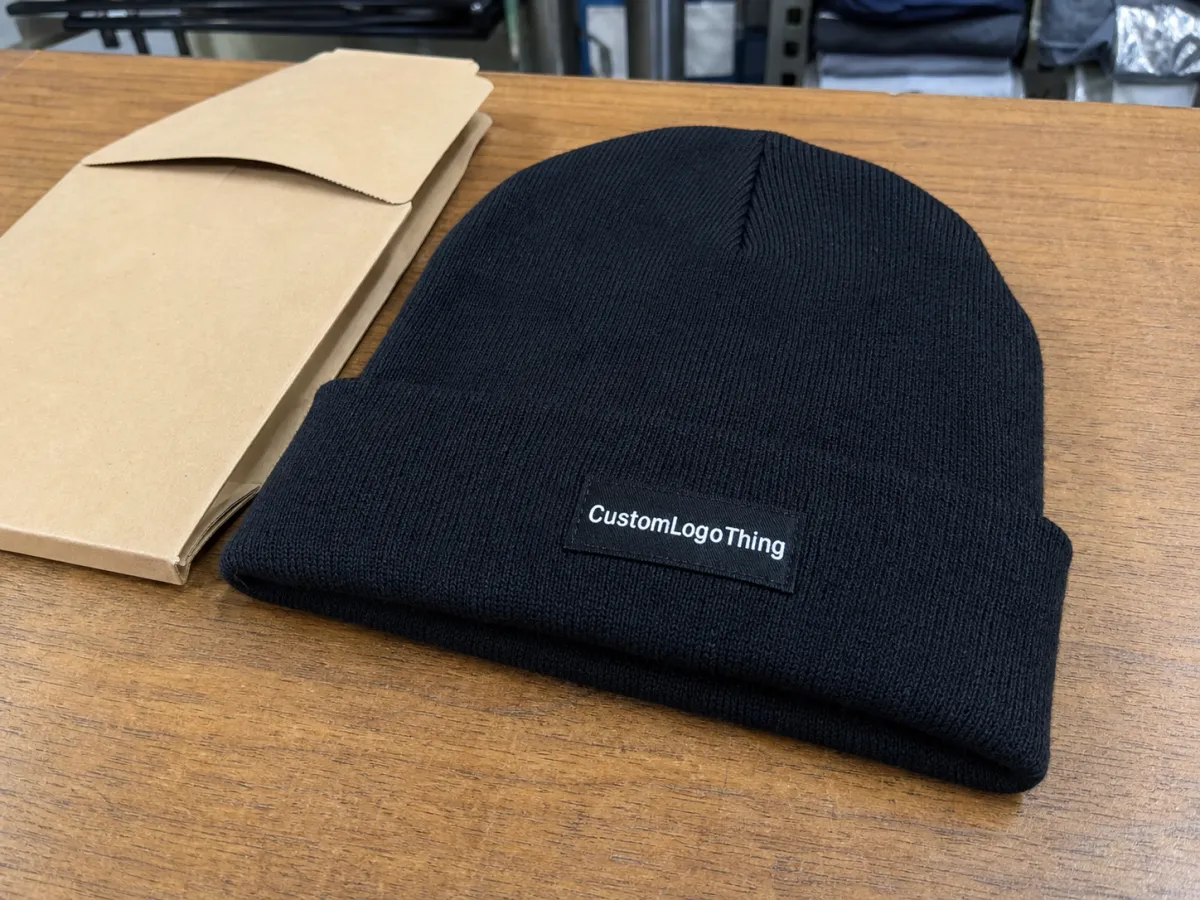
Start with the real question: what is the proof supposed to confirm? For wine club Woven Label Beanies digital proof checklist approval, it should verify logo scale, label dimensions, fold orientation, stitch density, edge finish, and any secondary copy. If the proof only shows a polished mockup, it is not carrying enough weight.
From a buyer’s perspective, the proof is the last inexpensive correction point before thread, loom time, and labor turn the order into fixed cost. That matters because woven labels can make a beanie feel premium or generic with little visual difference on a monitor. The separation usually comes down to the details: how the label sits against the cuff width, how much negative space surrounds the mark, and whether the artwork still reads at arm’s length.
For wine clubs, the beanie is rarely just merch. It usually has to feel curated enough for a member gift and credible enough for retail. A piece that looks fine in a spreadsheet can still fail in the hand if the label is too busy, the contrast is too soft, or the placement makes the hat look lopsided when worn.
A good proof does not ask for imagination. It removes uncertainty.
One useful habit is to define the proof as a list of production facts. If the winery already uses woven tags on other apparel, compare the finish and scale to Custom Labels & Tags so the line feels consistent across products. If the club order may later expand into scarves, caps, or gift bundles, the broader Manufacturing Capabilities page can help teams understand what can stay aligned across formats.
The phrase wine club woven label Beanies Digital Proof Checklist sounds narrow because the work is narrow. The more precise the approval conversation gets, the fewer assumptions survive into production.
How the proof process and turnaround should work
The normal sequence should be easy to follow: artwork intake, proof creation, revision round, final approval, production queue, and dispatch. Buyers move faster when they can see where the order sits, and they make fewer mistakes when the path is written out clearly.
Ask for proof turnaround separately from full production lead time. A digital mockup may return in 1-3 business days in many programs, but that does not mean the hats will ship quickly. If the factory still needs inventory confirmation, thread approval, or trim sign-off, the clock has only started on one side of the process.
Good proof management catches delays that sound minor and become expensive in practice: missing vector art, a PMS reference that does not translate well to the knit method, a club name that differs from the order sheet by one word, or a copy edit that arrives after the file is already built. Once those issues enter the queue, they are no longer small.
For event-linked club drops, write down the latest approval time. That gives the chain a hard date instead of a hope. A one-day delay on proof approval can become a week of schedule pressure once freight windows, internal sign-off, and holiday demand begin competing with one another.
It also helps to assign approval roles before the proof arrives. Marketing usually owns brand accuracy, operations owns ship timing, and finance often owns the final price. If one person signs off without the others checking the file, a clean-looking mockup can still create a messy release.
If a supplier offers several proof types, ask which one is the production document. A flat digital rendering, a 3D mockup, and a pre-production sample answer different questions. They are not interchangeable, and they should not be priced or judged as if they are.
That distinction matters more than many buyers expect. A flat proof is good for catching spelling, layout, and placement. A sample tells you more about hand feel, label stiffness, seam behavior, and how the beanie sits after it is folded. If the launch is high-stakes, the second step pays for itself quickly.
Pricing, MOQ, and unit cost signals to watch
Pricing usually moves with quantity, label complexity, color count, placement, and finishing. A quote that looks attractive at first can rise once the proof adds custom hangtags, special packaging, extra revision rounds, or split shipping. The cheapest line item is not always the least expensive order.
MOQ affects the economics more than many buyers expect. Smaller runs usually carry a higher unit cost because setup, weaving, and approval work are spread across fewer beanies. Larger club orders tend to flatten that curve, especially when the same artwork is reused across a few seasons or membership tiers.
For a useful comparison, ask suppliers to quote the exact same spec sheet. A label that is 8 mm smaller, uses fewer thread colors, or omits a backing finish is not the same product even if the headline price looks better. Consistency in the request is what makes the pricing comparison meaningful.
| Proof / order option | Typical cost signal | Typical timeline | Best use |
|---|---|---|---|
| Flat digital proof | Often included; if charged separately, about $0-$35 | 1-3 business days | Fast review of artwork, placement, and copy |
| Revised digital proof | Sometimes included, sometimes $15-$50 per round | 1-2 business days per revision | Fine-tuning size, label position, or wording |
| Pre-production sample | Often $35-$120, depending on material and labor | 7-15 business days | Higher-risk club launches or premium retail programs |
| Rush proof and production priority | Usually a surcharge, sometimes 10%-20% | Varies by queue and inventory | Event deadlines and seasonal drops |
Ask whether the quote includes freight, sample changes, packaging, and split-shipment requirements. Those details matter because a club program often ships in more than one direction: member fulfillment, tasting-room stock, and sometimes retail replenishment. If one destination is missed, the order may be “done” on paper and incomplete in practice.
When the order includes paper inserts or hangtags, ask about paper stock and transit packaging. FSC-certified paper can support a cleaner sourcing story, and if cartons will move through parcel networks, it is worth checking transit expectations against ISTA test standards. For broader paper guidance, FSC remains the most recognizable reference point for responsibly sourced paper products.
There is one more pricing trap to watch: changes made after the first quote. A revised proof that adds a second label placement, a heavier cuff, or a different carton count can move the unit price more than expected. That is normal. The problem is not the change; it is treating the old quote as still valid after the spec changed.
Artwork, label placement, and knit specs that change the outcome
Woven labels handle detail better than many decoration methods, but they still have limits. Fine lines, tiny serif type, and long taglines often need simplification before the proof is production-ready. A file that looks elegant on screen can collapse once the loom translates it into thread tension and density.
Placement matters just as much as artwork. A cuffed beanie stretches, folds, and sits differently than a flat mockup, so the label should be checked in the actual wearing position. Centered artwork on a flat render can drift left or right once the cuff is folded, especially on softer knits that relax after handling.
Confirm the technical specs with uncomfortable precision:
- Label size: width and height in millimeters, not just “small” or “medium.”
- Fold style: flat, center-fold, end-fold, or sewn patch treatment.
- Thread count: how many colors are actually being woven.
- Backing and attachment: sewn, heat-applied, or stitched with border reinforcement.
- Placement: front cuff, side cuff, hem, or alternate panel.
Those details decide whether the finished piece feels intentional or generic. They also explain why two beanies with the same headline price can feel completely different in the hand. In practice, a label that is well scaled and well placed usually reads as more premium than one that simply uses more colors.
Brand color is another place where buyers get tripped up. Digital screens are not exact thread references. If the winery palette needs to stay tight, ask for tolerances, Pantone direction, or thread card references before approving the proof. That is much easier than arguing about a slight shift after production has started.
Fiber content and knit structure matter too. Acrylic beanies usually hold embroidery and woven labels predictably, while wool blends can feel warmer but may behave differently around stitches and shrinkage. A looser gauge knit can show more movement around a sewn label than a tighter one. If the hat is meant for cold-weather club events, think about warmth, stretch recovery, and pilling before you think about the mockup background.
If the project includes matching accessories, this is the point where label geometry should line up across the whole set. A tasting-room apron, a bottle bag, and a beanie can all share the same visual language without being identical. That consistency usually comes from a disciplined proof process, not from a generic mockup.
The strongest proof checklist forces one simple question: does this file reflect the actual object the customer will wear? If the answer is uncertain, the proof is not ready.
A step-by-step approval checklist before you sign off
Before you approve the art, walk through the proof like an operator, not a designer. The first pass should catch obvious errors; the second should catch the expensive ones.
- Check spelling, logo shape, and club name first. If the brand is wrong, nothing else matters.
- Confirm the label sits where the buyer will actually see it. This is especially important on cuffed beanies and folded front panels.
- Compare the proof against the order sheet. Quantity, colorway, size, and ship-to details should match exactly.
- Review the copy one more time. If there is a seasonal message or membership reference, make sure it still fits the current campaign.
- Save the approved proof with the quote and purchase order. That file trail matters if questions return from production or receiving.
- Request a revised proof for any change. Do not assume a factory will silently absorb late edits.
Version control is not glamorous, but it is what keeps a beanie order from becoming a guessing game. The approved proof should be dated, saved, and attached to the final spec. If the release changes later, there should be a fresh file trail. That sounds bureaucratic until a mismatch appears between the order note and the artwork file.
There is also a buyer-side discipline that often gets skipped: decide who can make last-minute changes. If three people can edit the message after approval, the production file is not truly approved. It is just waiting for another round.
One more practical check: print the proof if possible. A logo that looks balanced on a laptop can feel too small once it is reduced to a physical page. Even a rough paper copy helps catch proportion errors before the order is released.
Common proof mistakes that cause delays or rework
The biggest mistake is approving a mockup that looks attractive but does not reflect the final build. A clean render can hide label size issues, color drift, or placement errors. That is why the proof needs to behave like a technical document, not an ad concept.
Another common error is ignoring how the beanie will be worn. A design that looks centered while flat may shift off-center once the cuff is folded or the knit stretches under normal wear. Buyers often spot the problem too late because they reviewed the file on a monitor, not on a shaped sample or a realistic mockup.
Teams also lose time when the proof turns into a creative debate after the quote has already been issued. Every new revision is another decision point, and every decision point is another chance for delay. A better habit is to settle the visual direction before requesting final pricing.
Operational mistakes are just as damaging. Wrong ship dates, unconfirmed quantities, missing rush fees, and split-location confusion can all change the economics of the order. These are not glamorous problems, but they are the ones that push a club program from controlled to chaotic.
Short copy is another easy place to make a mistake. If a beanie includes a year, membership tier, event name, or winery sub-brand, verify whether the wording still matches the current release. A one-line change can create a new proof cycle and a new sign-off path.
Here is the hard truth: a proof failure usually costs more time than money. The hidden cost is internal attention. Someone has to reopen the file, someone else has to confirm the count, and the production queue has to be re-slotted. That is the real penalty.
The best merch teams do not review proofs faster; they review them with fewer assumptions. That is a skill, and it shows up most clearly when the order is small enough to tempt shortcuts.
Next steps: lock the order, schedule production, and confirm shipment
Once the proof is approved, turn it into a clean handoff. Final artwork, final quantity, final ship date, and final price should all live in one written confirmation. If any one of those changes after approval, treat the file as a new version.
Before release, ask whether the factory needs file-format cleanup, packaging notes, or split-shipment instructions for club distribution. This is also the moment to confirm whether the beanies need retail hangtags, carton labeling, or polybagging. Those small instructions can make the difference between tidy receiving and a pile of manual fixes at destination.
If the order is tied to a seasonal offer, work backward from the delivery date and add buffer for transit, reproofs, and internal sign-off. For club merchandise, one missed week can collide with a mailing schedule or a member event. Planning around a hard delivery date is safer than hoping production will speed up later.
It also helps to ask one final question: does the approved proof still match the quote? That sounds obvious, but it is where mismatches hide. If the final version changed thread colors, packaging notes, label placement, or quantity, the pricing should be rechecked before release is authorized.
For wineries that want a coherent merch line, this process scales well across other items too. A beanie proof that follows disciplined approval habits often pairs smoothly with bottle apparel, sewn tags, and accessory sets because the same quality checks can be reused. That is exactly why the wine club woven label beanies Digital Proof Checklist belongs in the workflow instead of sitting in an email thread.
Use the proof checklist one last time before approval so the released order matches the quote, the artwork, and the delivery plan. That final pass is usually the cheapest insurance a merch team can buy.
What should a wine club check first on woven label beanie digital proofs?
Start with spelling, logo proportions, and label placement before you review color details. If the beanie will be cuffed or folded, confirm the artwork still reads clearly in that worn position.
How long does proof approval usually take for custom beanies?
Simple proofs can move quickly, but revision rounds, art cleanup, and internal approvals often add time. Build extra buffer if the beanies are tied to a tasting-room launch, club shipment, or seasonal retail drop.
Why does my woven label beanie quote change after the proof?
The price can shift when the proof adds extra colors, custom placement, special packaging, rush timing, or a different quantity. Ask for a line-item quote so you can see exactly which spec changed the unit cost.
Can a digital proof show exact thread colors for club beanies?
It can show the intended color direction, but screens are not exact matches for woven thread. For strict brand matching, ask for color references or swatches before final approval.
What is the safest way to approve a beanie proof for production?
Use a checklist covering artwork, size, placement, quantity, ship date, and final cost. Approve in writing only after every spec matches the order and the factory has issued the final version.


