The beauty Ribbed Winter Beanies Material sample guide matters because a ribbed swatch can look almost identical on a table and still behave very differently once it is stretched, worn, and washed. From a buyer's point of view, the real job is to catch those differences before they show up as returns, customer complaints, or a production run that looks close to the approved sample but feels just different enough to trigger problems.
That is why the sample process should not stop at touch. It should compare fiber content, knit density, finish, color accuracy, trim options, and label placement in context, whether the beanies are for retail, private label, promo programs, or direct-to-consumer drops. A cheap swatch can be useful, but only if it reveals the behavior of the finished piece. One avoided remake usually protects margin far more than a short sample cycle ever costs.
In practice, the strongest approvals separate visual appeal from performance. A beanie can photograph beautifully, fold neatly in a tray, and still lose shape after a day of wear. That gap is where many orders go sideways.
A sample is not a promise. It is a working snapshot of how the final beanie is likely to perform when the real order arrives.
What the beauty ribbed winter beanies material sample guide includes
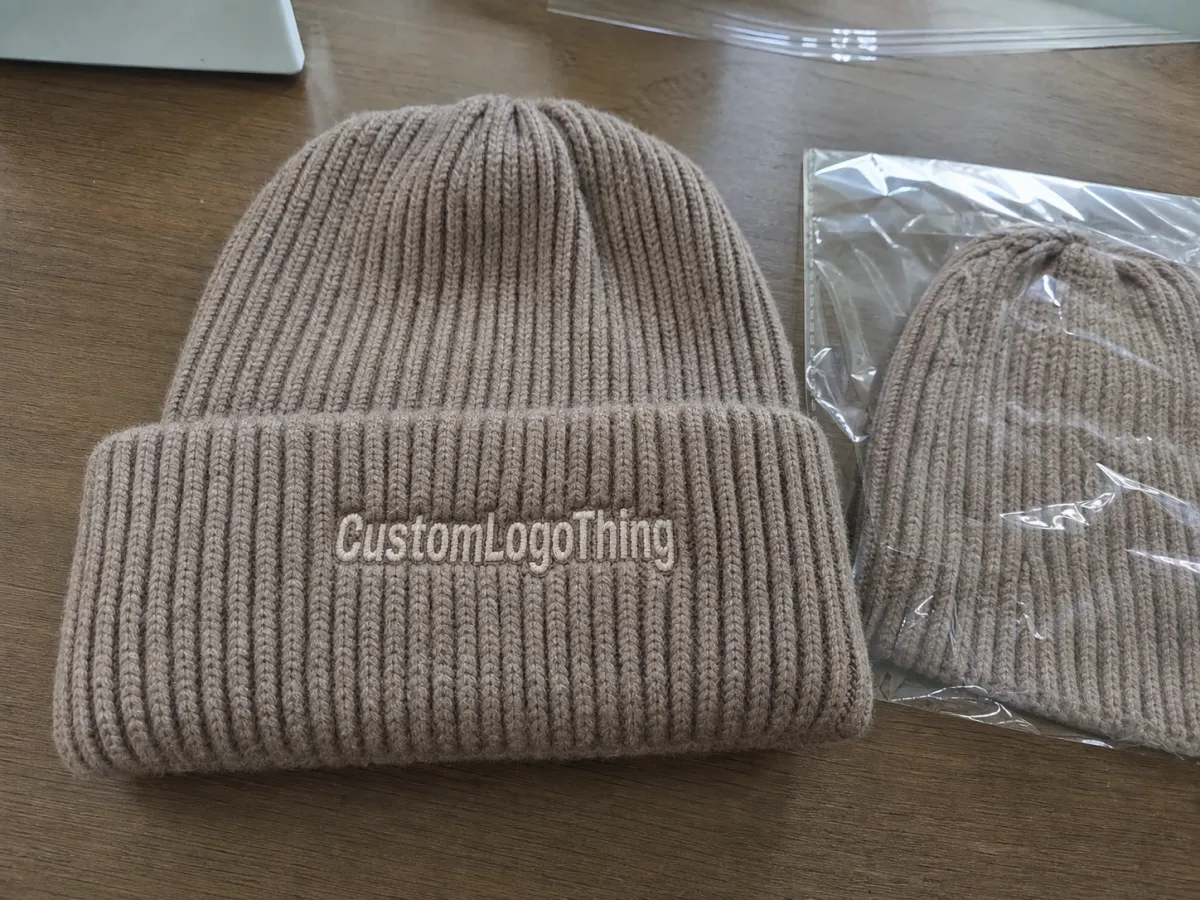
This beauty Ribbed Winter Beanies Material Sample guide is best treated as a buyer tool, not a mood board. On the surface, a ribbed beanie sample may tell you the color and logo location. Under load, it tells you whether the crown collapses, whether the cuff rebounds, and whether the handfeel stays pleasant after repeated stretching. Those are different questions, and they deserve different checks.
Ribbed Winter Beanies are harder to judge than flat knits because the rib structure changes fit, recovery, and warmth retention at the same time. The ridges create compression, which makes the sample feel more elastic than it may in bulk production. If the gauge is loose, the knit can look premium at first glance but grow faster than you want. If the gauge is tight, it may feel more structured and warmer, yet less forgiving on varied head sizes.
A practical sample package should show the full decision set: fiber blend, yarn count, stitch density, finish, inside comfort, edge stability, and branding method. Buyers often underestimate trim choices too. A woven label, patch, embroidery, or silicone badge can change stretch behavior, especially on the cuff. Even the placement of a care label can matter if it sits where the beanie folds sharply or presses against skin.
One thing that helps is to ask for the sample in the same construction you expect to order in bulk. That sounds obvious, but it is where many approvals drift. A stock body with a custom logo is not the same as a fully custom knit. The former may only prove that the decoration works; the latter proves the complete product system.
In a clean process, the sample should answer one question: does this exact construction support the job it needs to do? The answer for a premium retail line may be different from the answer for a volume giveaway. That is normal. The useful part is deciding which version of "good enough" belongs to the project before production starts.
What to look for in the sample kit:
- Fiber content and blend ratio.
- Knit gauge, yarn ply, and rib tightness.
- Trim method, label placement, and cuff depth.
- Color match under daylight and indoor light.
- Care behavior after stretch and wash.
How rib construction changes fit, warmth, and recovery
Rib construction is not just a look. It is an engineering choice. Alternating raised and recessed stitches create stretch and compression, which changes how tightly the beanie grips the head and how quickly it returns to shape. A 1x1 rib and a 2x2 rib do not wear the same way, and the difference becomes obvious after a few hours, not after a quick try-on in a sample room.
Fiber choice matters just as much. Acrylic tends to keep sample costs manageable and can be soft enough for broad retail use. Wool usually brings better warmth and a more premium story, but it can raise the price and, for some buyers, the itch risk. Polyester blends, including recycled materials, often improve durability and shape retention. Cotton blends can feel cleaner and more breathable, though they do not hold heat as aggressively. Recycled yarns also deserve a closer look if sustainability claims matter, because not every recycled construction behaves the same way in a ribbed knit.
Yarn thickness and stitch density shape the silhouette. A thicker yarn with open spacing can create a slouchier, more casual beanie. A fine yarn with higher stitch density usually makes a tighter, more structured profile and often improves warmth retention. That said, a denser knit may reduce drape. Buyers sometimes describe that as "less soft," when the real issue is simply a different geometry.
Finishing details are where many approvals go wrong. Brushing can increase softness but may also encourage pilling later. Washing can settle the fabric and slightly change size. Anti-pill treatments help, but they are not magic. Fleece lining adds warmth and can improve skin comfort, yet it changes the inner feel and can affect breathability. This is why a sample should be stretched, worn, and checked again after recovery. Initial handfeel is useful. It is not the whole story.
One simple test works well: place the beanie on a head form or a few different head sizes, stretch it to its normal wear point, then remove it and measure how fully it rebounds after 10 to 15 minutes. The first read tells you comfort. The second read tells you behavior. Those are not interchangeable, and the gap between them often predicts whether the final product feels premium or merely adequate.
Key material factors to compare before you approve a sample
The fastest way to make a better decision is to compare the right variables in the same order every time. When buyers skip a structured sample review and judge on appearance alone, they usually miss the details that drive returns: itchiness, shape loss, dye inconsistency, or weak trim behavior. A good sample review is less about taste and more about eliminating preventable uncertainty.
Start with fiber blend ratios because they shape warmth, softness, durability, and price at once. Then check gauge, yarn ply, and stitch tightness. A two-ply yarn often feels sturdier than a single-ply yarn of similar weight, while a tighter gauge can improve structure but reduce drape. If the beanie sits close to the forehead, skin contact comfort becomes a real issue. That matters more for long wear than for a quick showroom fit.
Color and surface performance deserve early attention too. Winter accessories see friction from coats, scarves, bags, and hair products, so pilling resistance should not be an afterthought. Ask for a rub or wear test, and if the supplier can provide a documented pilling result, even better. For a knit accessory, a method aligned with ASTM D3512 or a clear internal test is more useful than a vague "good quality" claim.
Moisture behavior matters more than many teams expect. A beanie that traps too much heat can feel cozy in a display tray and uncomfortable in use, especially during commuting or outdoor activity. If the plan is for cold-weather retail, a mix that balances warmth with breathability usually outsells one that feels heavy or clammy after twenty minutes of wear. That is not a styling issue; it is a performance issue.
Here is a simple comparison buyers can use when reviewing common material paths:
| Material path | Typical sample read | Bulk price signal | Main tradeoff |
|---|---|---|---|
| Acrylic rib knit | Soft, consistent, easy to color match | $1.80-$3.20 per unit at 3,000-5,000 pcs | Can pill sooner than blends |
| Wool blend | Warmer, more premium handfeel | $4.50-$8.50 per unit | Higher cost and possible itch risk |
| Polyester or recycled blend | Stable shape, good recovery, lower linting | $2.40-$5.00 per unit | May feel less lofty than wool |
| Cotton blend | Breathable, clean, less fuzzy | $2.20-$4.60 per unit | Lower heat retention |
Ask the supplier how the approved sample becomes a production spec sheet. If the sample is built with a 2x2 rib, 9-gauge knit, folded cuff, and embroidered badge, all of those details should reappear in writing. Small substitutions can alter the fit more than buyers expect. That is the hidden risk. A sample that feels right can still drift if the bulk order is not tied back to a fixed spec.
It also helps to confirm what is being measured during sampling. Width, height, cuff depth, and recovery should be written in a way that two people can repeat the same check and get the same answer. Vague notes like "good stretch" do not survive production.
Cost, pricing, and MOQ signals to watch
Sample cost and production cost are related, but they are not the same line item. A low-cost swatch can be misleading if the final piece uses upgraded yarn, special dyeing, or more complex decoration. That is why the sample guide should always be paired with a quote review. If you only see the swatch price, you are missing the real commercial picture.
The biggest cost drivers are usually fiber choice, custom dye matching, embroidery complexity, woven labels, patch applications, and packaging. MOQ matters too. Small orders often carry higher per-unit costs because the factory cannot spread setup work over many units. A run of 300 pieces can cost materially more per hat than a run of 3,000, even when the design looks almost unchanged.
For most buyers, a clean quote should separate the sample fee, any revision fee, freight, duty, and the final bulk unit cost. Ask whether the sample fee is refundable or credited to the order. That one detail can change the true cost of approval by a meaningful amount, especially if you need two or three rounds before sign-off.
As a rough market signal, stock-material samples may be cheap or even free aside from freight, while custom knit samples usually carry a higher development fee because the factory is building something that may never enter production. That is not a penalty so much as a reflection of labor and setup. Repeated changes can add up quickly, which is why the best brief is specific before the first sample is made.
Packaging can also affect the final landed number. If the sample kit ships in corrugated cardboard with kraft paper inserts, that is usually simple and economical. If the brand wants a more sustainable presentation, ask for recycled materials, FSC certified board, or a specific share of post-consumer waste. Biodegradable packaging can be a good fit for some programs, but it is not a free win if the route is humid, long, or rough on compression.
For brands that care about transit performance, packaging and testing should line up. The International Safe Transit Association explains distribution testing methods that many parcel shipments are designed around; their guidance is useful when samples or final packs need to survive real-world handling. See ISTA for the current framework.
Use this quote structure when comparing options:
- Option A: stock yarn, one logo method, lowest sample fee.
- Option B: custom yarn or dye, same logo method, mid-range fee.
- Option C: upgraded yarn, revised trim, premium packaging, higher fee but stronger retail story.
If the supplier gives you only one number, ask for a second path. The comparison is where the real insight lives. It shows whether the project is expensive because the product is better, or simply because the process is loose.
Process, timeline, and turnaround for sample approval
A cleaner approval process starts with a better brief. Tell the supplier the target handfeel, fit profile, logo method, color references, and end use before they knit anything. If the product is for retail, say so. If it is for a promotion that needs a lower unit price and broad comfort, say that too. The clearer the use case, the less likely the sample will miss the mark.
In a normal sequence, the factory pulls or sources yarn, knits the swatch, applies trims, and sends a photo or physical sample for review. After that come revisions, if any, and then final approval. Simple stock-material samples may move in a few business days. Custom knit samples often take 7-15 business days, and seasonal congestion can push that longer. Custom dye matching, special labels, or repeated change requests are the usual schedule killers.
Two roles reduce delay more than anything else: one decision-maker and one deadline. Too many internal reviewers can turn a simple approval into a week of conflicting comments. It is usually faster to assign one person to make the call, then collect optional feedback after the fact. That is especially true when the line is a private label or promotional run with fixed launch dates.
Version control matters as much as speed. Label every sample with a date, style code, and color name. Keep one physical reference sample and one photo record in good light. If the team mixes up an early prototype with the approved version, the final order can drift without anyone meaning to cause the problem. That mistake is avoidable, and it happens more often than most buyers admit.
For brands that care about finish quality and traceability, a dated spec sheet is not paperwork for paperwork's sake. It is the bridge between what was approved and what gets made. If the supplier can also note packaging details, such as FSC certified cartons or recycled materials in the sample mailer, that helps align the whole order with the brand story.
One useful habit is to ask for a revision log. Even a simple list of what changed from version one to version two can prevent later disputes. That record becomes invaluable when a bulk shipment lands and someone asks why the cuff looks narrower or the badge sits slightly lower than expected.
For buyers who need to compare packaging claims, the Forest Stewardship Council is a useful reference point for certified fiber and chain-of-custody language. Their site is clear and public: FSC.
Common sampling mistakes that create avoidable returns
The most common mistake is approving a beanie because it feels good for 10 seconds. Quick touch tells you almost nothing about stretch fatigue, seam comfort, or how the knit behaves after a full day of wear. If the cuff digs in, the yarn sheds, or the crown sags, the customer will notice long before they care about the swatch story.
Lighting is another trap. Heathered and melange yarns can shift dramatically between showroom light, office light, and daylight. I have seen buyers sign off on a tone that read warm in one room and cool in another. The fix is simple: review samples under at least two lighting conditions and, if possible, compare them against the intended Pantone or visual reference near a window.
Price-first decisions can also backfire. A cheaper yarn can save pennies and cost dollars later if the final beanie pills, loses shape, or feels scratchy after one or two wears. That is especially risky for ribbed knit accessories because the structure itself invites stretch. If the fabric cannot recover cleanly, the whole product reads less premium within days.
Logo testing is easy to overlook on ribbed surfaces. Embroidery can distort if the knit is too loose, and a patch can shift after stretching if the placement is not stable. Ask the supplier to apply the branding exactly where it will sit after normal wear, not just where it looks centered on a flat table. The difference is subtle in production notes and obvious in customer photos.
The last mistake is not documenting tolerances. Approved trims, acceptable shade variance, wash behavior, cuff depth, and label positioning should all live in the same record. If there is no written target, the factory is guessing, and so are you. A sample guide works because it turns "looks fine" into measurable approval points.
There is also a quieter failure mode: approving the sample without testing how it sits alongside packaging, hangtags, or inserts. On a flat lay, the hat may appear perfect; in a carton, a thicker cuff or a bulky badge can change the entire presentation. Retail buyers notice that quickly. So do warehouse teams when the pieces stop stacking cleanly.
Expert tips and next steps for a cleaner final order
Build a comparison grid before you make the call. Score handfeel, recovery, warmth, color accuracy, pricing, and lead time side by side. A simple 1-to-5 scale is enough. The point is not to pretend the decision is scientific in a lab sense. The point is to make the tradeoffs visible so the loudest opinion in the room does not win by default.
Ask for one control sample and one alternate blend. That gives you a clean read on whether the result comes from the fabric or the finishing. Then wear-test both on different head sizes and repeat after one wash cycle. Ribbed knit can relax, tighten, or shift slightly after laundering, and that change tells you more than a fresh sample ever could.
Turn the winning sample into a written tech pack. Include fiber content, gauge, cuff depth, logo method, packaging notes, and the exact sample version you approved. If the shipment is part of a branded kit, specify the outer pack too: corrugated cardboard, kraft paper fill, recycled materials, or FSC certified board, depending on the brand claim. Do not write "eco-friendly" and stop there. That tells a supplier almost nothing.
My short checklist before sign-off:
- Compare at least two material options.
- Wear-test on different head sizes.
- Check stretch recovery after a wash.
- Confirm logo placement on the ribbed surface.
- Lock the spec sheet before bulk production.
If the brand promises lower-impact packaging, make the claim precise. Recycled materials, post-consumer waste content, and biodegradable packaging all mean different things, and the right choice depends on distribution, storage, and the buyer's sustainability policy. The best sample process does not treat packaging as an afterthought; it treats it as part of the product experience.
The same logic applies to timing. If the sample looks right but the schedule is slipping, it is better to pause and fix the spec than rush into a batch that will need sorting later. A week spent clarifying fit, packaging, and finish usually costs less than a warehouse full of near-misses.
Use the beauty Ribbed Winter Beanies Material Sample guide as the final checkpoint before sign-off, then place a pilot run before full production. That one extra step is usually cheaper than a correction, and it gives you a much better read on how the beanie will behave when real customers start wearing it.
What should a beauty ribbed winter beanies material sample include?
The sample should show fiber content, knit gauge, finish, color, and trim so the buyer can judge the full product, not just the yarn. It should also include care notes or wash guidance, because recovery and pilling often show up after cleaning, not on first touch.
How do I compare ribbed winter beanie samples fairly?
Use the same lighting, the same wear time, and the same stretch test for every sample so the comparison stays consistent. Test fit on multiple head sizes and check what happens after one wash cycle, since ribbed knits can relax or tighten differently.
What drives the price of a ribbed winter beanie sample?
Custom yarns, dye matching, embroidery, labels, and special finishes usually push sample pricing higher than stock-material options. Freight, handling, and whether the sample fee is refundable can also change the true landed cost of the approval process.
How long does the sample and approval process usually take?
Simple stock-material swatches can be quick, while custom knit samples take longer because yarn, gauge, and trim decisions all add time. Revision cycles are the biggest delay, so clear feedback and one designated approver help keep the schedule under control.
What if the sample looks right but the production order changes?
Ask for a written spec sheet, a dated reference sample, and a pilot run so the factory has a fixed target before bulk production. Confirm the exact yarn source, stitch count, and finishing method, because small substitutions can change fit and feel more than buyers expect.


