A vitamin slider lock bags Unit Cost Review should start with a practical warning: the lowest quote rarely tells the full story. A bag that saves a fraction of a cent can still become the expensive option if it leaks, crushes in transit, or fails to reseal after a few openings. Once that happens, the cost moves out of procurement and into repacking, credits, replacements, and customer support.
Supplement packaging lives under a different kind of pressure than plain retail pouches. Gummies pick up moisture fast. Capsules can puncture weak film. Powder blends expose every flaw in the top seal and closure track. A slider bag is doing more than carrying product; it is holding shelf life, usability, and brand perception together in one piece of packaging.
That is why the right review looks beyond the headline price. The question is not whether the bag is cheap. The question is whether the film, closure, print, and size match the product well enough to avoid waste later. That difference is often bigger than buyers expect.
Why resealable vitamin bags cut waste before price does
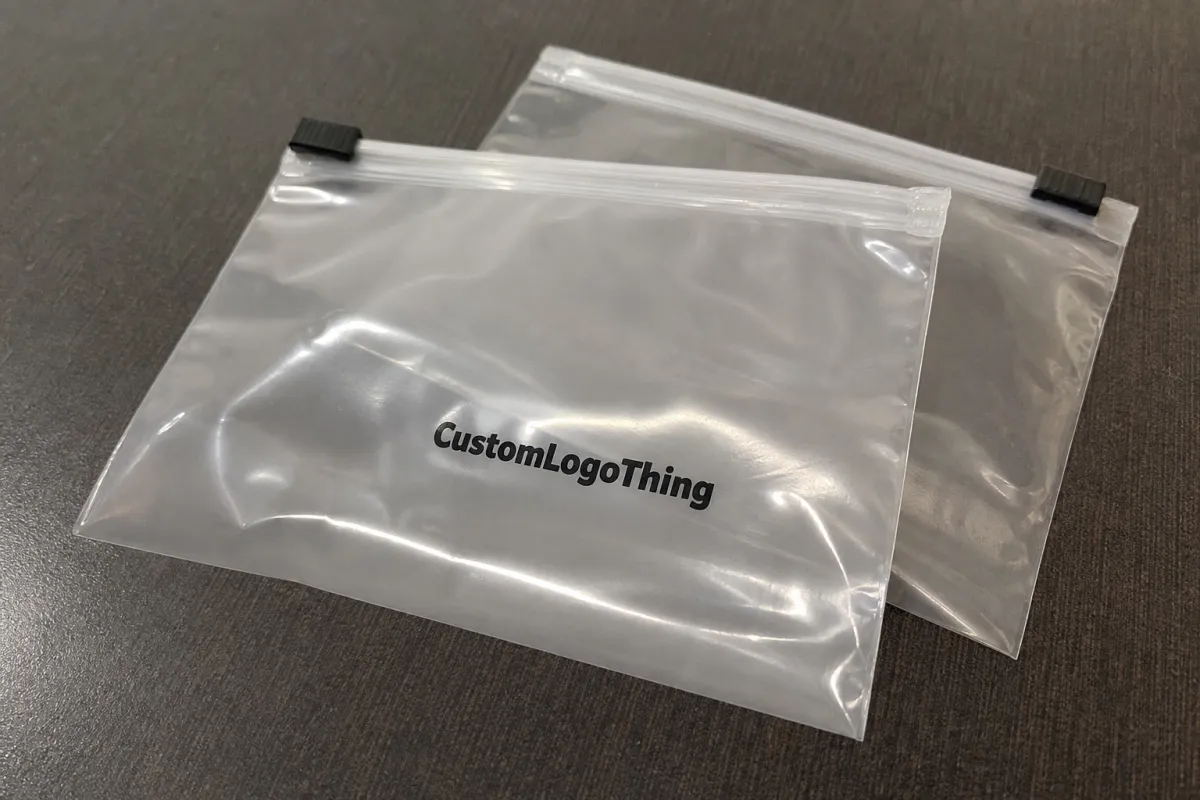
Resealable bags earn their keep by reducing avoidable losses. When a consumer can close the pack properly after each use, the product stays fresher and the package stays cleaner. That matters more for gummies and chewables than for many dry goods because moisture pickup changes texture quickly. A bag that opens easily but closes poorly creates the opposite effect: the product is exposed every time.
In the factory, the waste problem appears in a different form. Thin film, weak top seals, or poor slider installation can create inconsistency during filling and shipping. Some units look fine at packing, then fail after a few compression cycles or a rough delivery route. If even a small percentage of the run needs inspection, relabeling, or replacement, the original savings disappear.
Buyers often focus on the per-piece quote because that number is easy to compare. What gets missed are the side costs. A 2% failure rate on a 10,000-piece order is 200 units. That can mean labor to inspect, product to recover, freight on replacements, and a margin hit that lands much harder than the original price difference. The bag is part of the profit equation whether procurement wants it to be or not.
There is also a shelf problem. A loose pouch with a stiff or unreliable closure feels temporary. A closure that operates smoothly gives the impression that the whole package was designed with the product in mind. That kind of usability is hard to quantify in isolation, but it shows up in repeat purchases and fewer complaints. Packaging teams see that pattern often enough to take it seriously.
A closure that does not stay shut turns a packaging decision into a service issue, and service issues are always more expensive than they look on paper.
The more sensitive the formula, the more this matters. If the product absorbs odor, moisture, or oxygen easily, the bag has to do real work. A low-spec pouch may be fine for a temporary internal pack, but it is a poor bet for a retail supplement that needs a stable, consumer-friendly structure.
Material, barrier, and slider options that change performance
Film choice sets the ceiling for performance. For supplements, the common options are mono-PE structures, laminated films such as PET/PE, and higher-barrier versions that add metallized or specialty layers. A plain polyethylene bag can be suitable for some dry tablets, especially in controlled distribution. It is not the right choice for every vitamin product, and it is usually the first place where false economy shows up.
Barrier matters because many supplement ingredients react to moisture and light before the consumer ever opens the bag. Gummies are the clearest example. If the film does not slow moisture transfer enough, the texture changes and the customer notices it long before the product is technically expired. Powders also demand attention, particularly if they are hygroscopic or odor-sensitive. A stronger barrier raises cost, but it can prevent product loss that would be far more expensive.
The slider itself deserves the same level of scrutiny. Some closures glide cleanly and lock with minimal force. Others stick, wobble, or fail to engage fully unless the user presses twice. That is not a minor ergonomic issue. It changes how customers judge the package. A closure that feels cheap makes the whole pack look cheap, even if the print is excellent.
Thickness plays a quieter role. Heavier film, often in the 3.5 to 6 mil range depending on the format, improves puncture resistance and can help the bag stand better during filling and storage. Thinner builds reduce material cost, but they need to be evaluated against the shape of the product. Sharp capsule edges, dense tablet counts, and larger gummy fills create stress points that thin film does not always handle well.
Finish changes presentation, not protection. Gloss makes color and contrast pop. Matte softens glare and can make a line look more premium under store lighting. Soft-touch or satin finishes can improve the first impression, but they do not replace barrier performance. That distinction matters, especially when a buyer is trying to justify higher packaging spend internally.
Clear film has its place. For colorful gummies or mixed-form supplements, visibility can support the sale because the product itself does some of the marketing. That said, clear structures may show scuffs, fingerprints, or dust more easily. If the bag will be handled often, a matte or printed finish may hide wear better.
For teams that need a reference point on packaging testing and material claims, Packaging.org remains a useful starting place. It will not tell you which film to choose for a specific vitamin formula, but it helps frame the questions before the quote stage begins.
Sizing, print, and finish specs to confirm before you quote
Size errors create some of the most avoidable packaging costs. A buyer may send a fill count and assume that is enough. It usually is not. Ten large capsules do not occupy the same volume as ten small tablets, and a gummy blend behaves differently from a powder with the same net weight. Actual dimensions, product density, and headspace all affect the finished pouch size.
The slider and top seal need room to function without being stressed. If the pack is too tight, the closure can wrinkle or deform the top area. If it is too large, the bag wastes film and looks underfilled. In supplement packaging, that balance is important because the consumer often reads a package size as a sign of value, not just utility.
A gusset may be worth adding when the product is bulky or the package has to stand on shelf. It helps the bag sit more upright and can improve packout behavior during filling. It also changes the cost structure because more material is involved and the seam geometry becomes more complex. That is not a reason to avoid gussets. It is a reason to confirm them early.
Print details can break a quote if they are left vague. The supplier needs to know how many colors are involved, whether the artwork uses solid backgrounds or fine text, and where variable data such as lot codes and expiry dates will sit. A beautiful design with a barcode crossing a fold is not production-ready. Neither is copy that leaves too little room for compliance text.
Finish should be specified with the product in mind, not the mood board. Gloss can highlight bright colors, but it also shows scuffing more easily. Matte reduces glare and can hide handling marks. Either is fine if the film structure is correct and the artwork is laid out for actual production. Neither choice makes up for weak sealing or the wrong film gauge.
Before approving any run, check the sample with the actual product inside it. A flat mockup can hide problems that appear once the bag is filled. Corners may bulge. The closure may sit higher than expected. The top seal may become cramped once the contents settle. Those are not cosmetic issues. They are the points where field complaints start.
The simplest way to avoid expensive changes is to lock the functional details first and the decorative details second. That sequence saves time, and it usually saves money too.
Vitamin Slider Lock Bags Unit Cost Review: Pricing and MOQ Drivers
For a useful vitamin slider lock bags Unit Cost Review, the quote has to be read as a combination of material, labor, setup, and quantity. The same bag can change price significantly depending on the film structure, print coverage, closure type, and minimum order quantity. A buyer comparing only one number is not seeing the full cost picture.
As a rough market range, unprinted slider bags in a standard barrier build often fall around $0.18-$0.28 per piece at a 5,000-unit order. One-color printed versions commonly move into the $0.24-$0.36 per piece range. Multi-color retail builds with better finishes or thicker film frequently land around $0.32-$0.58 per piece. High-barrier or specialty-closure versions can rise to $0.45-$0.75 per piece or more if the spec is unusual. Those ranges are not promises; they are useful starting points for procurement discussions.
MOQ influences the math almost immediately. A 1,000-piece order usually carries more setup cost per unit because plates, press setup, and labor are spread across fewer bags. At 5,000 pieces, the per-piece rate often becomes more stable. At 10,000 or above, the cost can improve again if the spec is standard and the artwork does not require extra handling. That is why the same product can appear expensive at one volume and reasonable at another.
| Build | Typical MOQ | Cost per piece at 5,000 | Main driver | Best fit |
|---|---|---|---|---|
| Plain standard-barrier slider bag | 1,000-3,000 | $0.18-$0.28 | Film gauge and closure | Internal packs, simple launches |
| One-color printed retail bag | 3,000-5,000 | $0.24-$0.36 | Setup charges and print coverage | Small brands with a clean shelf read |
| Full-color matte finish build | 5,000-10,000 | $0.32-$0.58 | Artwork complexity and finishing | Premium supplement lines |
| High-barrier or specialty closure build | 10,000+ | $0.45-$0.75 | Material spec and tooling fees | Moisture-sensitive formulas |
The quote becomes far more useful when the buyer sends the right inputs up front. Exact bag dimensions, fill weight, product type, closure preference, print count, shipping destination, and compliance copy all change the cost. If any of those are missing, the vendor has to assume, and assumptions tend to produce pricing that shifts later.
Tooling and setup deserve a separate line of thought. Some projects need new plates, new closure tooling, or test runs to confirm the finish. Those costs may be small relative to the full order, but they matter on lower quantities. A 1,000-piece run can look disproportionately expensive because fixed costs are not spread very far. That is normal, not a sign that the supplier is padding the job.
Buyers should also compare the landed number, not just the ex-factory number. Freight, customs, and any local handling fees can change the economics enough to alter the decision. A lower unit price that ships poorly may cost more overall than a slightly higher unit price with better logistics assumptions.
The cheapest quote is only useful if the bag performs. Thin film, vague finish specs, and underspecified closures often come back as rework, complaints, or returns. That is not a hypothetical risk. It is the pattern seen when the spec is too loose and the purchase decision is made on price alone.
Process, timeline, and lead time from artwork to shipment
The production path is usually straightforward: inquiry, quote, dieline, artwork proof, sample or pre-production check, production, then shipment. Most delays are not mysterious. They come from incomplete product data, late artwork changes, or freight timing. Once those variables are managed, the schedule becomes much easier to control.
For a standard build, a sample round often takes about 5-10 business days after the specs are clear. Production after final approval commonly runs 12-20 business days. More complex orders take longer. Multi-color printing, custom finishes, unusual dimensions, and high-barrier film structures all add time. A second sample request adds more time again. That is the cost of getting a real approval rather than a guess.
Artwork is one of the biggest schedule risks. A small correction to the barcode location can be harmless, but a late change to the panel structure or copy layout can force the supplier to redo proofing. Color matching can also add time if the brand expects a specific tone and the original file is not prepared cleanly. The same goes for compliance language. If it is still being rewritten while production is waiting, the lead time stretches for no useful reason.
Packaging teams that need a tighter schedule should narrow the approval chain. One person should own artwork, one should own compliance, and one should own payment. More people can review if needed, but a long approval ladder slows every handoff. The problem is rarely the press. It is usually the decisions around it.
Transit testing is worth discussing if the product will move through parcel networks, wholesale distribution, or mixed handling. The ISTA resources are useful when teams need a shared language for package performance. That kind of testing is not only for large brands. Small supplement lines can benefit from it just as much, especially if the bag is expected to survive compression and repeated handling.
Production timing also depends on the level of change between runs. Reorders with locked specs usually move faster than first-time jobs because fewer questions remain open. If the artwork, size, and film are unchanged, the main work is confirming that the same build is being repeated. That repeatability is one of the quiet advantages of a stable packaging program.
Why supplement brands keep reordering this build
Supplement brands reorder slider bags because the format solves several problems at once. It protects the contents. It gives the customer a closure that makes sense in daily use. It presents well enough for retail without becoming overcomplicated. That combination is hard to beat when the product has to move through multiple channels.
Consistency is a major reason the build stays in rotation. If the seal strength shifts from one lot to the next, quality control notices. If the print color drifts, the brand looks less disciplined. If the closure feel changes, customers notice even faster. Reorders are where packaging programs prove whether they are truly under control or merely lucky on the first run.
Good sizing also matters across repeat production. An oversized bag wastes material and freight. An undersized bag creates stress around the closure and raises the odds of failure. The best reorder program is the one that keeps the same fit and finish while keeping the spec lean enough to avoid unnecessary cost. That balance is rarely accidental.
There is a daily-use advantage too. A customer can open the bag, take a serving, and close it again without needing another container. That sounds ordinary, but ordinary is exactly what makes the pack useful. Products that are handled every day are judged more on convenience than on theory, and slider bags score well when the closure works the way people expect.
Repeat orders expose weak specs quickly. A bag that survives one launch but not the second is usually telling you that the original approval left too much unresolved.
The reuse pattern also helps with brand discipline. Once a working size, print layout, and barrier spec are established, the company is less likely to keep revisiting the same packaging problems. That stability is valuable because packaging changes consume time that could go into sales, compliance, or formulation work.
For teams that want documented material claims across the pack system, the same discipline should apply to cartons, inserts, and display components. A claim such as FSC-certified board only matters if the material and supply chain actually support it. Vague sustainability language is easy to print and hard to defend. Specific claims are better, provided they are true.
This format keeps coming back because it is practical, not flashy. In packaging, practical usually wins over time.
What to send for an accurate quote and faster approval
If the goal is an accurate quote, the first package of information should be simple and complete. Send the fill weight, product type, bag dimensions, closure preference, print count, shipping destination, and any compliance text that must appear on-pack. If the product is a gummy, capsule, or powder blend, say so. Those categories behave differently inside the same-looking bag.
Ask for a sample and at least two quantity breaks. That reveals how MOQ affects the unit cost and shows whether the price improves enough at a higher volume to justify a larger order. Without the breaks, a buyer only sees one number. With them, the decision becomes easier to compare against inventory risk and storage capacity.
Use the quote to shape the spec, not just to accept or reject it. If the bag is too expensive, simplify the print. If the package is oversized, reduce the dimensions. If a higher quantity lowers the unit cost sharply and the shelf life can support it, the larger run may be the better business move. The point is to make the bag fit the product and the margin, not one or the other.
Final approval should wait until the dieline, artwork, closure type, and compliance copy are locked. A good quote is only useful if it matches the actual build. Small changes after approval can ripple into lead time, setup, and cost. That is especially true with custom print or special finishes, where even a minor revision can require a fresh proof cycle.
For buyers who are comparing options, the right metric is the landed vitamin Slider Lock Bags unit cost after setup, freight, and expected performance are all included. Anything less can distort the decision. The cheapest line on the quote sheet is not always the best buy, and in supplement packaging it often is not.
FAQs
What affects slider-lock vitamin bag pricing most?
Film structure usually moves price first because it changes raw material use and barrier performance. Print coverage, finish choice, and closure hardware add setup and production cost. Quantity matters as well: higher volumes reduce the unit cost faster because fixed costs are spread across more bags.
What MOQ should I expect for custom slider-lock supplement bags?
Plain or lightly printed jobs often start at lower quantities than full-color retail packs. Higher MOQs usually improve bulk pricing and give more stable color control. It is common to request at least two quantity breaks so the price curve is visible before the order is placed.
How do I choose the right size for vitamin slider bags?
Start with fill weight, product shape, and whether the pack needs a gusset or extra headspace. Then confirm space for the slider track and any printed code area. A sample filled with the actual product is the best check before the dieline is approved.
How long does production usually take after artwork approval?
Simple builds can move within a few weeks, while custom print or special-barrier jobs take longer. Sampling, proofing, and freight all affect the calendar. A clear approval chain and final artwork reduce avoidable delays.
Can I get a quote with just my bottle count
Related Articles

Matte Zipper Bags Unit Cost Guide for Smart Buyers
Jun 26, 2026

Shipping Bags How to Choose the Right Custom Fit
Jun 23, 2026
Drawstring Plastic Bags Factory Quote Request Tips
Jun 23, 2026