A wedding trucker caps Unit Cost Review is the fastest way to move from guesswork to a quote that actually holds together. Trucker caps are one of the few wedding favors people will wear during the event, which means the branding stays visible in photos instead of disappearing into a tote bag before the cake is cut.
That practical quality is why these caps keep showing up in planning decks, bridal-party kits, and resale bundles. They work as favors, photo props, staff identifiers, and low-friction branded items without asking guests to learn anything or carry anything fragile. The appeal is simple. If an item is useful the same day it is handed out, the unit cost starts to look more rational.
For buyers, the real question is not whether the cap looks good in a mockup. It is whether the blank, the decoration, the packaging, and the freight all support the event date and the budget without creating a pile of hidden charges.
Why trucker caps get worn, not left on the tables
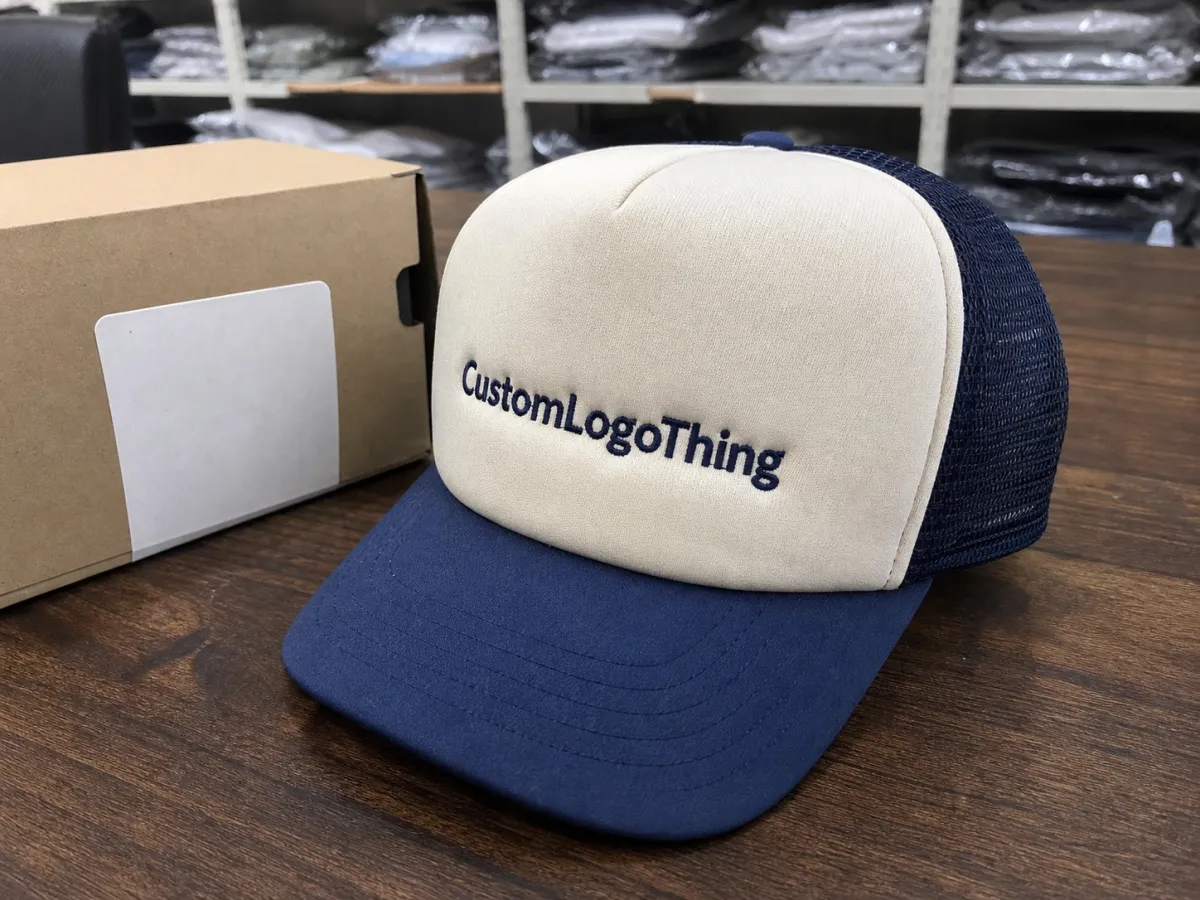
Outdoor weddings make the case almost immediately. Mesh-back caps breathe better than beanies, heavy novelty hats, or fashion pieces that look better on a rack than on a guest in the sun. On a beach, in a garden, under a tent, or in a venue with poor airflow, a cap that lowers heat and still looks deliberate earns its place fast.
That utility changes the economics. A cap can do four jobs at once: mark the event, unify the bridal party, improve group photos, and hand guests something they can actually use. Most favors do one of those things. Few do all four.
- Visible in photos: a matching cap reads clearly from a distance.
- Easy to use: guests already know how to wear a cap.
- Flexible branding: the front panel fits a name, date, monogram, or logo.
- Better perceived value: a wearable item usually feels more substantial than a token gift.
That is why the product belongs in the same conversation as event signage and packaged giveaways. It is not decorative clutter. It is a functional branded item with a measurable cost per piece, and that matters more than the mockup makes obvious.
Practical takeaway: if the brief says “useful, photogenic, and easy to hand out,” trucker caps usually beat most decorative favors. The remaining work is keeping the unit cost controlled without making the hat feel flimsy.
Product details that change print quality and comfort
The standard build is straightforward: a structured front panel, mesh back, curved brim, and an adjustable closure, usually snapback or Velcro. Basic is not a problem. In bulk orders, basic is often the safest place to be. The budget usually gets strained when buyers add custom touches that do not improve fit, appearance, or durability.
Decoration method is the first major decision. Embroidery gives a durable, premium feel and handles simple logos well. Woven patches are better for tight text and cleaner line work. Printed patches can keep color transitions and more complex art affordable, but they demand good artwork and careful color handling. Poor source files make even decent printing look muddy.
Comfort details matter more than many buyers expect. A better sweatband changes how the cap feels after an hour outdoors. Crown height affects how the cap sits in photos. Brim stiffness determines whether the hat holds its shape or starts to look tired before the reception ends. Small differences, yes. Visible differences too.
For buyers comparing materials and decoration methods, neutral industry references help keep terminology aligned before quoting starts. Resources from packaging.org are useful for checking material language, print basics, and common handling assumptions before you request production pricing.
| Decoration method | Typical MOQ | Unit cost tendency | Best use case | Main tradeoff |
|---|---|---|---|---|
| Direct embroidery | 100-300 pcs | Mid to higher | Simple logos, clean text, durable finish | Less friendly to tiny detail and gradients |
| Woven patch | 100-250 pcs | Mid | Small type, sharper edges, crisp branding | Patch setup adds a step |
| Printed patch | 100-250 pcs | Lower to mid | Colorful artwork, gradients, fast visual impact | Less tactile than embroidery |
| Multiple decoration locations | Usually 300+ pcs | Higher | Front plus side or back branding | More setup charges and labor |
Perceived value depends heavily on what the buyer sees first. A clean front panel, balanced logo size, and structured crown usually feel more expensive than they are. A crooked patch, loose stitch density, or soft brim does the opposite. It is the same problem seen in packaging: a good product can look less convincing if the visible execution is sloppy.
Specs to confirm before you request a quote
The fastest way to get a usable quote is to send the entire spec at once. Quantity, cap color, decoration method, logo size, and decoration location should all be settled before pricing begins. If the order is for guests, bridal party members, vendors, or staff, say that too. The use case changes the quality target more than buyers usually expect.
Artwork format matters just as much. Vector files reduce proofing back-and-forth and preserve edge quality. Low-resolution logos usually trigger redraws, which adds time and can add fees. That is not a vendor stalling. It is a production team trying to avoid printing a blurry file on the front of a hat.
Packaging details belong in the first quote request. Ask whether caps ship bulk-packed, polybagged, labeled, or tagged individually. If you need custom inserts, gift tags, or retail-style labels, mention them early. Those add labor and can change freight density, which changes the landed cost more than people realize.
Good quote requests save money. Clear specs reduce proof rounds, revision loops, and the kind of surprise add-ons that appear after the design is already approved.
Shipping destination and event date should also be locked before approval. A quote to a warehouse is not the same promise as a quote to a venue across the country. For transit planning, the test resources at ista.org are useful if you want to understand how cartons are handled, stacked, and stressed in real shipping conditions.
- Quantity: exact count plus any backup buffer.
- Color: one cap color or a planned mix.
- Decoration: embroidery, patch, or print.
- Artwork: vector file preferred, fonts outlined, colors identified.
- Packing: bulk, polybag, label, or gift-ready.
- Delivery: ship-to address and hard event date.
Wedding trucker caps unit cost review: pricing, MOQ, and add-ons
Here is the part buyers actually use. A wedding trucker caps Unit Cost Review should break out the blank cap, decoration, labor, packaging, and freight. If a quote bundles everything into one number and skips the breakdown, the lower line item is usually hiding something. Simplicity is nice. Ambiguity is expensive.
For bulk wedding orders, pricing normally moves in tiers. Lower quantities carry more setup pressure because the art, production prep, and labor are spread across fewer units. Once the order reaches mid-volume, the cost per piece usually drops in a visible way. That is where MOQ starts to matter. A 100-piece order and a 500-piece order behave very differently in factory terms.
| Order tier | Typical unit cost range | What usually drives the price | Buyer note |
|---|---|---|---|
| 100-199 pcs | $4.75-$8.50 | Setup charges, small-run labor, decoration complexity | Good for bridal parties and small guest counts |
| 200-499 pcs | $3.60-$6.25 | Spread of tooling fees, steadier production, simpler packing | Often the best balance of price and flexibility |
| 500-999 pcs | $2.85-$4.90 | Cleaner bulk pricing, lower labor per unit, more efficient freight | Common for planners, venues, and resale programs |
| 1,000+ pcs | $2.20-$4.20 | Volume efficiency, standardized packing, repeatable decoration | Best for larger events or multi-event programs |
Those numbers are realistic only if the decoration method, blank color, and packing spec are already defined. Add embroidery to a clean one-color logo and the price usually stays manageable. Add a full-color patch, a second decoration location, or retail-style packaging and the quote moves up. That is normal. It should move up.
Buyers should also ask about the extras that tend to appear line by line:
- Rush fees: charged when the event date is too close for a normal run.
- Sample charges: common when a physical pre-production sample is requested.
- Proof revisions: extra artwork rounds can add both time and cost.
- Split shipments: useful in multi-location planning, but rarely free.
- Special packaging: boxes, hang tags, and labeled bags all add labor.
What lowers cost most? Keep one decoration location, use a standard blank color, and increase quantity if the guest count supports it. A simple embroidery or single-color patch often gives the best mix of appearance and price. Multi-color art and layered decoration are fine, but they are not free, and the quote should say so plainly.
Freight can also distort the unit number if the shipment is small or the destination is remote. A low cap price with poor shipping math is not a low landed cost. That is why the quote should include packing assumptions and delivery details from the start, not after the artwork is approved.
Production steps and lead time from artwork to delivery
A useful wedding trucker caps Unit Cost Review includes lead time, because price without timing is only half the story. Production normally starts after final artwork approval and deposit confirmation, not when the first inquiry lands. That distinction avoids a lot of preventable confusion later.
The workflow is usually predictable:
- Quote approval and order confirmation.
- Artwork proof sent for review.
- Sample or mockup approved if the order requires one.
- Production starts after sign-off.
- Inspection and packing happen before dispatch.
- Freight or courier shipment heads to the delivery address.
Simple orders often move in about 10-15 business days after proof approval. Clean logos, stable quantities, and straightforward decoration tend to keep the schedule steady. Add custom colors, stitched patches, or a revised proof, and the calendar gets longer. Add a rush request and the price usually climbs with it.
Most delays come from the same places: slow logo approval, missing PMS references, and last-minute changes after production has already been scheduled. The cleanest way to avoid that is to give one person authority to approve artwork and answer fast. More people in the loop rarely improves control. It usually just stretches the timeline.
If the caps are traveling through a parcel network or mixed freight, ask how cartons are packed and labeled. A solid carton spec should protect the crown from crushing and keep the brim shape intact. That matters more for event kits and retail-style handouts than many buyers realize. A bent cap on arrival is still a bad first impression, even if the decoration itself is perfect.
What makes our wedding cap orders easy to approve and repeat
Repeatability is where event suppliers quietly win or lose. Consistent blanks, repeatable decoration files, and disciplined proofing make the first run and the reorder look the same. That matters for planners, venues, and resellers who do not want a second batch that feels unrelated to the first.
Buyers care about the same shade, the same stitch density, and the same front-panel shape every time. They should. The difference between a cap that looks intentional and one that looks slightly off is often buried in small process controls rather than big promises. Good suppliers hold onto the approved color notes, the reference artwork, and the packing spec so the next order starts from facts, not memory.
Order history helps too. Saved specs reduce quote time. Approved artwork cuts proof rounds. Prior production notes lower the risk of obvious mistakes. For a wedding planner or reseller, that means less back-and-forth and fewer surprises when the delivery window is already tight.
That stability also explains why bulk pricing is easier to defend on repeat orders. When the production path is stable, the unit cost stays predictable. When it is not, the quote gets padded to cover uncertainty. That is manufacturing reality, not a sales trick.
A practical benefit follows from that predictability: stable specs make it easier to compare vendors on the true cost per piece, not just the headline number. One quote may look lower until you notice the packing charge, the second proof charge, or the freight exclusion. In practice, the cheapest line item is often not the cheapest order.
Next steps to lock quantity, art, and ship date
Start with the essentials: guest count, logo file, cap color, decoration method, and the exact delivery date. If you have a backup quantity in mind, include that too. It gives the supplier a real planning range instead of a vague target.
Ask for a tiered quote. That lets you compare bulk pricing at common breakpoints and see where the value actually sits. Sometimes 250 pieces is the right order. Sometimes 500 barely changes the total and improves the per-piece math. The point is to see the options before the order gets locked.
Before production starts, confirm proof approval, deposit terms, packaging details, and freight responsibility. That is the unglamorous part, and it is usually the part that prevents confusion later. Wedding orders do not need drama. They need caps that arrive on time and look like the approved sample.
If you are comparing vendors for a wedding or planner program, use the wedding trucker caps Unit Cost Review to evaluate more than the headline price. Look at MOQ, decoration method, packing, and lead time together, then choose the version that fits the event date and budget without forcing awkward compromises.
What does wedding trucker cap unit cost usually include?
It usually covers the blank cap, one decoration method, standard labor, and basic packing. It may exclude freight, rush service, extra proof rounds, and special retail-style packaging, so ask for a full breakdown before comparing quotes.
How does MOQ affect wedding trucker cap pricing?
Lower quantities usually cost more per cap because setup and labor are spread across fewer units. Higher quantities usually unlock better tier pricing, especially when the decoration stays simple and the packing spec stays standard.
Which decoration method keeps the unit cost lowest for bulk wedding caps?
A single-color patch or simple embroidery is often the most cost-efficient balance of appearance and price. Multi-color embroidery, full-print patches, or multiple locations usually raise the unit cost because they add labor and setup time.
How long does production take after artwork approval?
The clock starts after final proof approval and deposit, not after the first inquiry. Simple orders move faster; custom colors, revised proofs, or rushed freight can extend the schedule, so lock the art early if the event date is fixed.
Can I lower the wedding trucker cap unit price without changing the design?
Yes, by increasing quantity, keeping one decoration location, and choosing a standard blank color. You can also avoid rush fees and keep packaging simple to protect the final per-piece number without changing the artwork.

