A coffee roaster cuffed knit beanies Unit Cost Review starts with a practical problem, not a fashion one. Can one item work as staff gear, counter merch, and a seasonal add-on without pushing the margin off a cliff? A cuffed knit beanie is one of the few apparel pieces that can do all three. It lives comfortably in a cold morning shift, looks reasonable next to a bag of coffee, and still feels like something a customer would actually pay for.
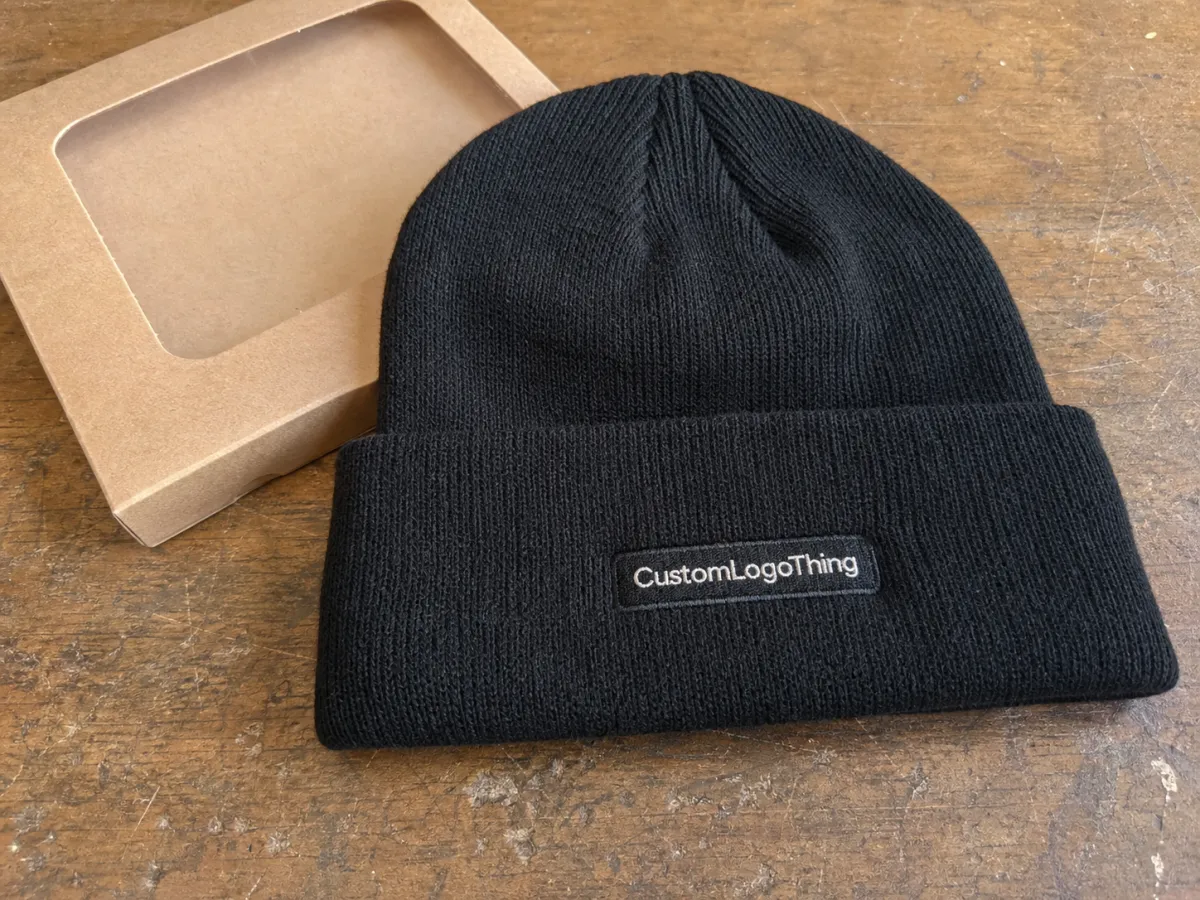
The fold is doing more work than it gets credit for. The cuff gives the logo a stable, visible platform, adds visual weight on the shelf, and usually makes the beanie look more finished than a loose knit cap. That matters in coffee, where texture sells as much as color. A good roaster product already speaks in paper bags, roast notes, and matte labels; a beanie has to sound like it belongs in the same room.
"A beanie that looks substantial at retail and still survives daily wear is the one that tends to earn its keep twice: once in the shop, once on the street."
The real question is not whether cuffed knit beanies are useful. It is which build, decoration method, and quantity break give the cleanest balance between unit cost and perceived value. That is where the useful numbers live.
Coffee Roaster Cuffed Knit Beanies Unit Cost Review
Price follows construction. A stock acrylic beanie with a small embroidery hit will usually sit near the lower end of the range, while a heavier custom knit with a woven patch, private labeling, or specialty yarn can climb quickly. That jump is not arbitrary. It reflects material weight, stitch density, decoration complexity, and how much setup the factory needs before the first piece is made.
For coffee roasters, the spread matters because the same beanie may need to function in two different economies. As staff gear, it has to be durable enough to justify repeat wear. As merch, it has to feel worth the retail sticker. A cheap blank is not a bargain if it pills in a month or lets the logo warp after a few wears. Buyers feel that failure immediately, even if they cannot explain why.
The best value usually sits in the middle: a cuffed beanie with enough body to hold a fold cleanly, enough stretch to fit most adults, and enough surface stability for a crisp logo. That combination tends to photograph well, stack neatly in cartons, and retain shape after the first winter. All three matter. A lot of beanies look fine flat on a sample table and disappointing once they are worn, folded, and repacked several times.
There is also a subtle retail effect. A beanie with a cleaner hand feel and better structure can support a higher mark-up than a visibly soft or loose knit, even if the difference in manufacturing cost is only a dollar or two. In small programs, that gap can decide whether the item is worth carrying. In larger runs, it is the difference between a margin that breathes and one that feels pinched.
Why roaster merch buyers choose cuffed knit beanies
Cuffed Knit Beanies fit coffee branding better than most seasonal apparel because they feel utilitarian without looking bland. Roasting already trades on warmth, craft, and texture. A knit cap carries those cues naturally. It does not need to be loud. It just needs to look like something a team would actually wear during a winter shift, then something a customer would still want after the rush ends.
The cuff is especially useful for logos with a simple shape. Monograms, short wordmarks, badges, and small icons all read more clearly on a fold than they do on a flat crown. That reduces decoration risk and usually improves shelf appeal. A small, well-placed mark often looks more premium than a larger one that is forced onto a soft or uneven surface.
There is a second reason roaster buyers like the style: it straddles staff uniform and retail product. That dual use is not a minor detail. A piece that works in both channels justifies more attention during quoting because its cost affects the operating budget and the merch margin at the same time. If it only served one function, the buying standard would be easier.
Seasonality also helps. Beanies sell when the weather turns, but in coffee they rarely feel dated. The same item can support a holiday table, a winter gift set, or a first-quarter staff rollout without looking out of place. Compared with a printed tee, the beanie has a longer useful window and usually lower sizing risk. Compared with a tote, it feels more personal. That combination explains why buyers keep returning to it.
Packaging still matters here. A folded beanie with a neat hang tag and a clean carton presentation tells a different story from a loose bulk-packed item. For buyers who want a broader frame for retail-ready presentation, the Institute of Packaging Professionals is a solid reference point for language and standards.
Cuffed knit beanie styles, yarns, and decoration methods
The style choices are simple on paper and costly in practice. Single-layer knits are lighter and usually less expensive. Double-layer knits feel fuller, trap more warmth, and often give embroidery a better base. A deeper cuff provides more decoration space and usually improves the visual proportion of a logo. Slouch fits can look relaxed, but they are less controlled on a mixed staff team and can read inconsistent on a shelf.
Yarn choice changes both hand feel and cost. Standard acrylic is common for a reason: it is predictable, easy to color-match, and generally holds up well at a workable price point. Acrylic-wool blends add warmth and a softer hand, though the unit cost tends to rise and the finish can become more sensitive to pilling if the knit is loose. Recycled blends can be appealing, but buyers should judge the sample, not the label. Some recycled yarns hold shape well; others relax after a few wears and make the cuff look tired sooner than expected.
Color deserves more attention than it usually gets. Oat, black, charcoal, and heathered greys tend to be the most forgiving for roaster merch because they pair easily with packaging and hide minor texture variation better than saturated bright colors. Deep greens and burgundies can look excellent, but they raise the stakes on color consistency. If the run is small and the palette is controlled, that is fine. If the same item needs to be reordered later, neutral shades often make life easier.
Decoration method is where the cost discussion gets real. Embroidery is still the standard because it is durable and visually direct. It works best with simple marks and thicker yarn surfaces. Woven patches help when the logo has fine detail, small type, or thin lines that embroidery would swallow. Woven-in logos create a more integrated look, but they usually require more planning, higher minimums, and tighter approval discipline. Sewn-on badges can feel handcrafted, though they add one more material and one more place for quality to drift.
The right method depends on the artwork, not the buyer’s default preference. A compact emblem can look excellent in embroidery. A detailed script mark may need a patch. Tiny lettering is rarely a good candidate for a knitted surface unless the decoration is scaled carefully. That is why the useful quote question is not simply, "How much is the beanie?" It is, "Which build will preserve the logo without wasting budget on over-engineering?"
For a quick comparison, the market usually lands in these bands:
| Option | Typical MOQ | Unit cost range | Setup charges | Best use case |
|---|---|---|---|---|
| Blank stock beanie | 50-100 pcs | $3.50-$6.00 | Low or none | Fast retail test, staff basics, in-house decoration |
| Embroidered cuffed beanie | 100-250 pcs | $5.50-$9.00 | Digitizing or setup fees | Clean roaster logo, strong retail value |
| Woven patch application | 150-300 pcs | $6.50-$10.50 | Patch tooling and application setup | Fine-detail logos, sharper contrast, premium feel |
| Custom knit construction | 300-500 pcs | $8.50-$15.00+ | Higher tooling fees and program setup | Large programs, branded patterns, fully custom retail lines |
Those figures are starting points, not fixed rules. Freight, packaging, sampling, and any label work can move the landed cost enough to change the buying decision. A 60-cent difference sounds minor until it is multiplied across 250 units, and then the spread is large enough to matter to both margin and inventory risk.
Material specs should also be checked against the decoration method. A very loose knit can let embroidery pucker. A very thick knit can make small patches sit awkwardly. That is why the sample is not a formality. It is the first proof that the yarn, stitch density, and logo scale actually belong together.
Fit, stitch density, and finishing specs that change wear
Fit is a cost issue disguised as a comfort issue. If the crown is too short, the beanie reads tight and cheap. If it is too tall, the shape can look sloppy on retail display and pull unevenly during wear. The safest fit for most coffee programs sits in the middle: enough depth for a proper cuff, enough stretch for a wide adult range, and enough recovery that the shape returns after being taken off and stuffed into a pocket or apron.
Stitch density matters even more than many buyers expect. A tighter knit usually holds a logo better, photographs more cleanly, and resists distortion after repeated wear. It also supports a more premium visual impression. A looser knit may feel soft on first touch, but it can reveal the backing of embroidery, lose edge definition around a patch, and relax faster after washing. That is the tradeoff. Soft does not always mean better.
Ask about gauge, cuff depth, finished crown height, and stretch recovery before the order is placed. Those numbers are not decoration. They are what determine whether the same style can be reordered six months later without becoming a different product. Buyers who skip those details often end up with a beanie that looks close enough from a distance but feels off in hand.
Finishing is where a lot of small quality problems hide. Interior seams should be tidy, label placement should be centered, the fold should sit evenly, and the decoration should not tilt when the cuff is worn at different heights. Yarn that resists early pilling is worth more than it sounds, because pilling shortens the useful life of retail merch faster than many people realize. A customer may tolerate a little softness; they usually do not tolerate a cap that looks worn out after a few weeks.
If packaging and transit are part of the order, protection should be treated as a spec too. Knitwear can be crushed, stretched, or distorted in carton loading if it is packed carelessly. For buyers who want a standard reference on shipping durability and distribution testing, ISTA methods are a useful benchmark.
Coffee roaster cuffed knit beanies unit cost, pricing, and MOQ
This is where the quote becomes readable. A real price is usually built from several parts: the blank or base beanie, the decoration, any digitizing or tooling, packaging, sample costs, and freight. If the style is fully custom, there may also be development fees for pattern work or knit programming. That is normal. The mistake is evaluating a single line item without checking what is included.
Quantity moves the whole structure. Small runs absorb setup cost poorly, so the unit price stays higher. Larger runs spread that same setup over more pieces, which can lower the per-unit number enough to change the sell-through math. That is why serious buyers ask for more than one break point. A quote at 100, 250, and 500 pieces often shows where the pricing curve starts to flatten and whether it makes sense to buy ahead for a season.
MOQ depends on the build. Stock blank beanies can usually be sourced in smaller quantities. Embroidered or patched programs often need a bit more volume to make the setup worthwhile. Custom knit programs sit higher because they need more planning, more coordination, and more control over color and construction. If this is the first run, it usually makes sense to keep the structure simple and see how the item moves before committing to a more specialized build.
From a merchandising perspective, the cleanest answer is not always the cheapest one. A beanie that costs a little more but looks polished, fits well, and survives the season often supports a better retail price and a better brand impression. That matters for roasters with a strong cafe identity or an e-commerce shelf where the beanie sits beside bags, mugs, and other branded goods. The item has to earn its place visually as well as financially.
A useful way to read the options:
- Lowest entry cost: blank stock beanie with a small embroidery hit or label.
- Best retail balance: medium-weight cuffed knit with embroidery and a clean woven label.
- Most control: custom knit construction with planned colorwork and dedicated packaging.
There is a margin lesson here that buyers sometimes miss. A 10 percent swing in unit cost can be invisible on a small sample order and obvious on a replenishment order. The first purchase is about testing the market. The second is about whether the item can be repeated without changing the financial shape of the program.
Sampling, approval, and production timeline
A realistic timeline keeps a merch program from slipping. The usual sequence is intake, artwork review, proofing, sample approval if needed, bulk production, inspection, then shipment. Straightforward stock-based orders can move faster, while custom knit projects need more room for setup and revision. The more the item changes from standard, the more the calendar stretches.
Revisions are the main source of delay. Artwork changes, thread color matching, patch adjustments, and label swaps all add time. So do requests to shift the logo slightly higher or lower on the cuff. None of those changes are unreasonable, but they should be treated as production decisions, not casual edits. Every time the spec changes, the schedule gets another turn of the screw.
Sampling and bulk production do not run on the same clock. A sample may be ready well before the full order, and that gap is useful because it gives buyers a chance to catch problems before quantity is committed. The sample should answer a few blunt questions: does the beanie hold shape, does the logo sit where expected, and does the yarn feel like the price suggests it should? If the answer is no, the bulk run should not begin.
For seasonal coffee launches, the safest planning method is backward scheduling. Start from the date the beanies need to be on the shelf or in the shipping box, then count back through approval, production, and transit. Waiting until the proof looks polished is too late. Retail calendars do not care that a mockup finally came together.
A practical lead-time frame is often a couple of weeks for simple stock decoration and longer for custom knit or more complex patch work, though the exact span depends on factory load, approval speed, and freight method. The key is not the number itself. It is whether the timeline is honest enough to protect the launch date.
How to keep fit and decoration consistent on repeat orders
Repeat orders expose whether the process is actually controlled. The first run can look fine even if details are loose. The second or third run is where inconsistency starts to show up: a slightly different cuff depth, a logo that creeps upward, a darker yarn lot, or a patch that sits at a different angle. For a coffee roaster, that drift can make a merch line look unplanned very quickly.
The antidote is documentation. Keep the approved artwork file, color reference, finished measurements, cuff placement, decoration size, and packaging note together. If the supplier stores those details under a repeatable item code, even better. That gives the reorder a fixed starting point and reduces the odds of everyone trying to remember what was approved six months earlier.
Quality control should focus on a few simple checks before bulk production begins. Confirm the yarn shade against the reference sample, verify decoration size on the cuff, inspect the fold orientation, and check that the beanie recovers shape after stretching. Those checks are fast and they prevent the sort of variation that makes a merchandise program feel loose around the edges.
It also helps to ask what the vendor records after approval. A useful production record should preserve the final artwork, yarn type, finish, packaging, and measurements. That is especially important if the beanie is likely to be reordered across seasons. Strong documentation is not glamorous, but it is what keeps a product from changing every time someone says, "Just rerun the old one."
If a roaster expects restocks, the safest choice is the style that can be repeated cleanly, not the one that only looks impressive in the first photo. That distinction matters more over time than most initial quotes admit.
What to send for a fast quote and next-step approval
The cleanest quote request is specific about the parts that change production. Send target quantity, preferred color, logo file, decoration method, deadline, and whether the beanies are for retail, staff, or both. If there is a rough mockup or even a simple placement note, include it. Placement is one of the most common sources of back-and-forth, and a quick visual can prevent days of confusion.
Ask for pricing at multiple quantity levels. A quote at 100, 250, and 500 units shows whether the item becomes materially cheaper as volume rises or whether the break is too small to justify extra inventory. If the difference between breaks is modest, you can stay conservative. If the drop is steep, it may be worth buying ahead while the season is still open.
Before signing off, check the details that affect the actual sellable item rather than just the proof. The beanie style should be identified clearly. The yarn type should be named. Decoration size, thread color, and placement should all match the approved version. MOQ, setup charges, sample cost, ship date, and transit method should be visible in the quote. If any of those are vague, the landed cost is still moving.
A short approval checklist helps keep the order honest:
- Confirm the exact beanie style, yarn type, and cuff depth.
- Review decoration size, placement, and color details.
- Check MOQ, setup charges, and sample cost.
- Verify the production window and shipping method.
- Approve only after the proof matches the sell plan.
That is the real value of a coffee roaster cuffed knit beanies Unit Cost Review: it narrows the field, exposes the tradeoffs, and helps a buyer commit to a product that can actually carry the brand in use, not just in a mockup.
What affects coffee roaster cuffed knit beanie unit cost the most?
Yarn type, stitch density, decoration method, and order quantity drive the price more than anything else. Freight, packaging, label work, and sampling can also change the delivered cost, especially on smaller runs where setup is spread across fewer pieces.
What MOQ should I expect for cuffed knit beanies with a roaster logo?
MOQ depends on whether the item is blank stock, embroidered, patched, or fully custom knit. Simple decoration usually allows lower minimums than custom construction. If the order is new, ask for pricing at several quantity breaks so the best value point is visible.
Which decoration method looks best on coffee roaster beanies?
Embroidery is still the most dependable choice for a clean, classic look. Woven patches work better when the logo has fine detail or needs sharper contrast. The right option depends on artwork complexity, budget, and how premium the final piece needs to feel.
How long does a custom cuffed knit beanie order usually take?
Lead time usually includes proofing, sample approval if needed, production, and shipping. Straightforward stock orders are faster than custom knit programs. Revisions to artwork or color matching are the most common reasons the schedule stretches.
Can I reorder coffee roaster cuffed knit beanies in the same color and fit?
Yes, if the first order was documented carefully. Keep the approved yarn, measurements, decoration file, and packaging notes on record. Repeat orders are much more consistent when the original spec is preserved instead of reconstructed from memory.