Waterproof Plastic Zip Bags Lead Time and MOQ for Buyers
When buyers compare waterproof plastic zip bags Lead Time and MOQ, the real decision is rarely about shipping speed alone. It is about whether the bag will hold up through storage, packing, transport, and customer handling without adding rework, returns, or avoidable scrap. A bag that looks inexpensive on a quote can become expensive if it tears on a corner, seals inconsistently, or forces a second packing step on every order.
That is why packaging teams usually look at three questions together: what the bag is made from, how fast it can be produced, and how many pieces the supplier needs to justify the run. Those three factors shape the quote more than anything else. Once the structure is clear, the rest of the order becomes much easier to manage.
Why Waterproof Zip Bags Reduce Loss and Rework
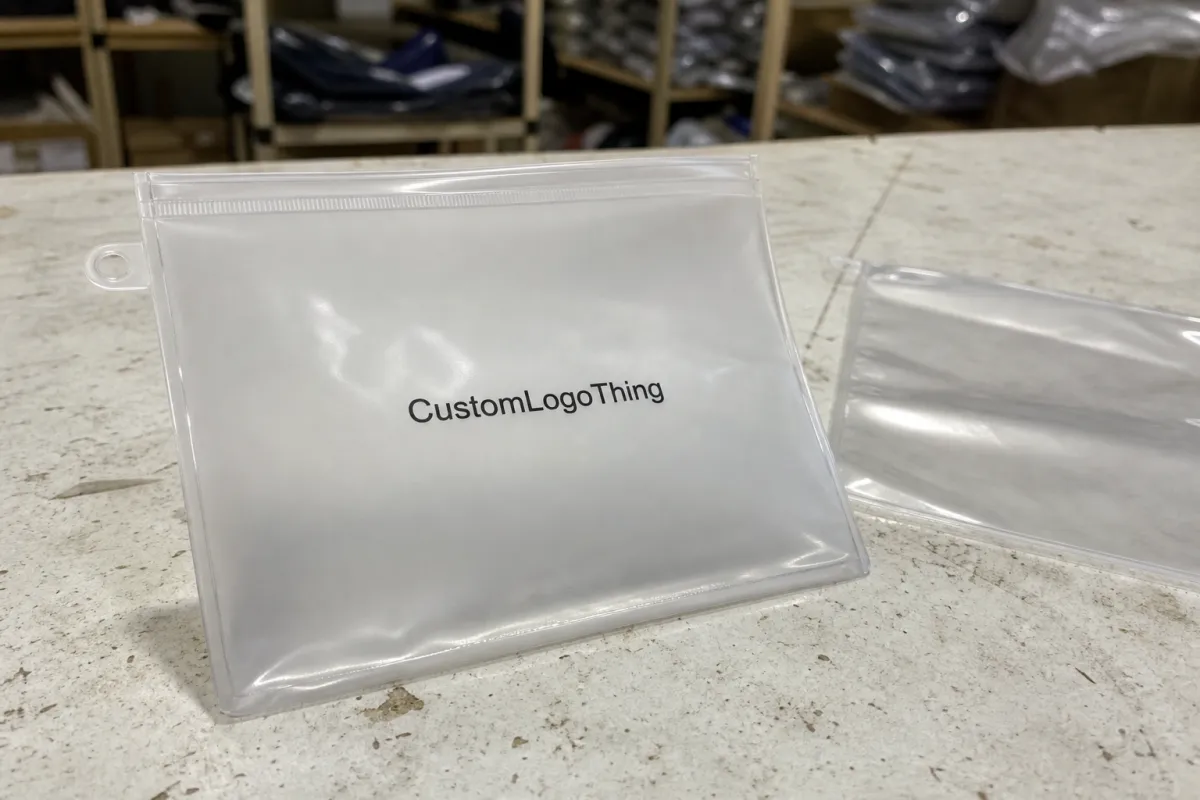
Moisture protection sounds basic until a pallet sits in a humid warehouse or a carton crosses a cold-to-warm lane and condensation shows up inside the packaging. Then the bag is no longer just packaging; it is part of the product protection system. Buyers who source waterproof plastic zip bags usually care about one or more of these conditions: backstock storage, e-commerce fulfillment, retail replenishment, or small parts that must arrive clean and dry.
The savings are not always visible on the unit price. A bag that performs well can lower labor in packing, reduce damaged inventory, and cut down on customer complaints tied to wet labels, fogged surfaces, or contaminated contents. Even when the product itself is fine, a poor bag can make the order look less reliable at the moment of opening. That matters for cosmetics, accessories, kit components, tools, and other items where presentation is part of the sale.
Buyers also notice that waterproof bags simplify handling. Staff do not need to second-guess whether an item needs a secondary liner or extra tape, and that can speed up packing lines more than expected. A clean, consistent zipper and a stable seal reduce small decisions that slow people down. The best bag is not the one with the most claims on the spec sheet; it is the one that keeps the workflow predictable.
A good waterproof zip bag protects more than the product. It protects packing time, inventory condition, and the confidence that the item will still look sellable when it reaches the next handoff.
Choose the Right Film, Seal, and Closure
Not every clear zip bag behaves the same in production or in use. Film type changes clarity, stiffness, tear resistance, and how the bag sits once filled. Low-density polyethylene, or LDPE, is common because it is flexible and economical. It can feel soft in hand, which is useful for consumer packaging, but it also means thickness matters more when the contents have corners, edges, or uneven weight.
Some buyers ask about EVA or blended structures when they want a clearer, slightly firmer look. Others prefer heavier PE film when the bag needs to survive repeated opening, stacking, or compression inside a carton. The right choice depends on the product, not the trend. For example, a sample kit may need a nicer feel and clear visibility, while a warehouse refill pack may need more puncture resistance and less stretch.
The seal deserves just as much attention as the film. A press-to-close zipper is standard, but the alignment of the zipper track, the consistency of the weld, and the finish at the top edge determine whether the bag truly resists moisture or only keeps out dust in light handling. If the bag must stay closed in a damp stockroom, a more consistent seal line is worth more than decorative features. Some programs use a double-zip closure for better closure confidence, especially when the bag will be opened and closed several times.
One practical rule helps buyers avoid surprises: if the product can rub against the inside of the bag, the film needs enough body to resist abrasion and corner stress. If the product is lightweight but sensitive to moisture, the seal and closure need more attention than the film thickness alone. The build has to match the actual risk.
- Standard PE film is a common choice for clear, flexible, cost-conscious packaging.
- Heavier gauge film works better for sharp edges, dense kits, and repeated handling.
- Double-zip closures add confidence when the bag will be reopened often.
- Clean welds and straight zipper tracks matter as much as the material itself.
For buyers who want a distribution-focused reference, ISTA transit testing guidance is useful because it keeps the evaluation tied to actual handling and shipping conditions rather than a simple visual check.
Lock In Size, Gauge, and Print Details
Quote accuracy depends on detail. If the finished size is vague, the supplier has to assume too much. A bag that holds one loose item does not need the same dimensions as a bag that must fit a nested kit or a product with irregular geometry. Finished width, usable opening, side allowance, and the way the item sits inside the bag all affect the final spec.
Film thickness, often called gauge or mil in U.S. buying conversations, has a direct effect on cost and performance. A 4 mil bag and an 8 mil bag are not minor variations; they behave differently in hand, on the line, and in transit. Thinner film can lower unit cost, but it can also feel flimsy, wrinkle more, and puncture more easily. Thicker film uses more resin, so it raises the material portion of the price, yet it can save money if the product is difficult to pack or sensitive to damage.
Print adds another layer. A simple one-color logo is a different job from multi-color artwork or a design that runs across both sides. More print coverage usually means more setup time, more proofing, and more opportunity for color variation. If the bag includes a barcode, legal copy, or a small warning message, the text size should be checked early. Tiny type that looks acceptable on screen can become unreadable on film if the bag shrinks slightly during sealing or the ink coverage is too heavy.
Tolerances deserve attention too. If the product is flexible, a little variation may be harmless. If it is rigid or boxed tightly inside the bag, small dimensional shifts can affect packing speed and carton fit. A clear note about whether the bag needs exact fit, slight extra room, or a forgiving fill window saves time later. It also prevents the common problem where a sample looks fine but production pieces feel too tight once the line starts filling them at speed.
- Finished dimensions should reflect the usable bag size, not just the nominal spec.
- Gauge should be confirmed in mil or microns so everyone quotes the same build.
- Print area should define single side, double side, or full-panel coverage.
- Tolerance should be stated when the product is a tight fit or has an irregular shape.
For brands that care about material choices and waste reduction, the EPA recycling guidance is a practical reminder that end-of-life expectations should be part of the buying conversation, not an afterthought.
What Changes Waterproof Plastic Zip Bags Lead Time and MOQ
Waterproof plastic zip bags Lead Time and MOQ usually move together because the same factors affect both. A standard clear bag with a simple closure and minimal print can often be produced with a lower minimum and a shorter schedule. Add special sizing, heavier film, custom printing, or a more complex closure, and both the order quantity and the time to ship tend to rise.
Material availability is one of the first things that affects the schedule. If the film grade is common, production can start sooner. If the build requires a specific thickness, a special blend, or a closure style that is not already loaded on the line, the factory needs more setup time. Printing also matters. Some jobs need plates or cylinders, while others need more proofing and color matching. Even when the actual run is short, the setup still has to be paid for somewhere, and that usually gets spread across the order quantity.
The table below is a practical way to compare common buying scenarios. Numbers vary by supplier, season, and order complexity, but these ranges reflect what buyers usually encounter when the quote is based on a real production spec rather than a generic estimate.
| Bag Option | Typical MOQ | Typical Lead Time After Approval | Typical Unit Price | Best Fit |
|---|---|---|---|---|
| Plain clear zip bag, standard size | 3,000-5,000 pcs | 7-12 business days | $0.10-$0.20 | Samples, internal packing, low-graphic use |
| Custom printed zip bag, 1-2 colors | 5,000-10,000 pcs | 12-18 business days | $0.18-$0.34 | Retail kits, branded fulfillment, barcode use |
| Heavy-gauge or double-zip waterproof bag | 5,000-8,000 pcs | 15-22 business days | $0.24-$0.45 | Damp storage, repeated opening, stronger protection |
These ranges are only useful if the buyer compares like with like. A low price that excludes proofing, cartons, overrun limits, or freight can be less favorable than a slightly higher quote that includes better packing and clearer delivery terms. Freight alone can swing the landed cost enough to erase a seemingly attractive unit price. The smartest comparison is not the lowest number on the page; it is the full cost to receive usable bags on the shelf.
There are also tradeoffs that do not show up in the first quote. More print colors can raise setup time. A thicker bag can improve protection but reduce carton count and increase freight. A very small order may be possible, but it usually carries a higher unit cost because setup is spread over fewer pieces. The buyer’s job is to decide which variable matters most: price, schedule, presentation, or protection. The answer is rarely all four at once.
Sample Approval and Production Timeline
The fastest projects tend to follow a clean sequence. First comes the spec review, then the quote, then the proof, then sample approval if needed, and only after that does full production start. Once production is complete, the bags still need inspection, packing, and shipping arrangements. A delay anywhere in that chain can affect the release date. In many cases, the slowest step is not machine time but waiting for missing information or late approval.
Sample timing should be treated separately from bulk timing. A stock-material sample can often be prepared quickly. A custom printed preproduction sample takes longer because the artwork, closure behavior, and dimensional fit all need to be checked. Mass production usually starts only after the proof is approved, and the line is scheduled. Depending on quantity and print complexity, the production window may run roughly 12-20 business days after approval, though that can stretch during busy periods or when a specific film grade is not in stock.
Use the sample phase to answer practical questions. Does the zipper close cleanly every time? Does the bag open and refill easily on the line? Does the filled bag sit flat, or does it bulge and waste carton space? Does the film feel strong enough around corners and seams? These are small questions, but they usually reveal whether the final order will run smoothly.
The quickest schedule usually comes from the simplest setup: complete specs, clear artwork, and a prompt approval cycle.
One more detail matters more than many buyers expect: the condition of the contents during filling. If the product is powdery, sticky, brittle, or irregular, the bag may need a different gauge or a different seam allowance than a standard sample suggests. A bag that works perfectly for a clean, flat item can become awkward once the product has corners, movement, or trapped air. That is why preproduction checks are worth the time.
Quality Checks That Matter on Repeat Orders
For repeat programs, the second order often exposes whether the supplier has control of the process. If dimensions, print placement, and closure behavior stay consistent, the reorder is straightforward. If the first run was not documented well, the buyer ends up re-explaining the same points and checking the same sample questions again. That costs time even when the price stays the same.
Good quality control on waterproof bags is not complicated, but it needs to be disciplined. Bags should be checked for zipper engagement, weld uniformity, film clarity, print position, seal strength, and dimensional consistency. Some buyers also ask for carton packing checks so they know the bags are not arriving crushed, scuffed, or folded in ways that affect filling speed. On moisture-sensitive programs, a simple visual inspection is not enough; the bag has to be judged in the context of actual handling.
Saved records make a difference. Keeping the approved artwork version, the film gauge, the closure style, and the packing method on file reduces the risk of drift between orders. It also helps when quantity changes. A small test order may be useful for launch, but a larger follow-up order may improve unit cost if the line can run longer without changeover. Sometimes the bigger order does not just reduce price; it also improves consistency because the same setup stays in place.
Buyers should also ask where the practical limits are. A lower MOQ may be available for a standard build, but a highly customized bag often needs a bigger run to be efficient. Honest suppliers usually explain this plainly. That is helpful, because the goal is not to force every project into the same mold. The goal is to keep the quote realistic enough that the bags can be made well and delivered on time.
What to Send for a Faster Quote
The cleanest quote request is the one that leaves little room for guessing. Start with the finished size, the film thickness, the closure type, the quantity, the print requirement, and the delivery date. If the product is irregular, include a photo or the packed dimensions. If the contents are moisture-sensitive, mention the storage or shipping conditions so the packaging can be matched to the risk.
It also helps to state what matters most. Some buyers need the lowest possible unit cost. Others need the shortest lead time. Others care most about presentation or protection. Those priorities change the recommended build. A simpler structure can shorten production; a heavier gauge can improve durability; a smaller run can be used for a test launch even if the price is higher per piece. Clear priorities make the quote more useful and reduce the chance of revisions later.
There is a practical way to manage these projects without overcomplicating them: set the spec, compare a small number of realistic options, and choose the one that fits the product and the timeline. Waterproof plastic zip bags lead time and MOQ become much easier to handle once the order is tied to a specific material, closure, and print plan. At that point, the supplier can quote against a real production path instead of a rough idea.
For most buyers, the best result is not the absolute cheapest bag or the fastest possible date. It is the bag that arrives with the right balance of protection, cost, and schedule, so the rest of the operation can move without extra handling or avoidable risk.
What affects waterproof plastic zip bags lead time the most?
Material availability, print complexity, and approval time are usually the biggest variables. Standard sizes with simple closures move faster than custom dimensions, heavier gauges, or multi-color printing. A complete spec sheet and quick proof approval often save more time than any other single step.
How can I lower MOQ without pushing unit cost too high?
Standardizing the size, simplifying the artwork, and avoiding extra finishing steps can help keep the order efficient. Smaller runs usually carry a higher unit price because setup costs are spread over fewer pieces. If the project is a test order, a standard construction is often the safest place to start.
Can I get a sample before placing a full order?
Yes, and it is usually the best way to check fit, zipper feel, clarity, and how the bag behaves with the actual product. Samples can also reveal whether the film feels too soft, whether the print placement is readable, or whether the filled bag needs more headspace. For time-sensitive launches, ask whether a stock sample or preproduction sample is the faster route.
What should be included in a fast quote request?
Send the finished size, desired gauge, quantity, closure style, print details, and shipping destination. If the item is irregular, include product photos or the packed dimensions. The more exact the request, the less likely the quote will need correction later.
How do I speed up a reorder when the spec is already approved?
Reference the exact prior spec, quantity, artwork version, and delivery address so the order can move straight to confirmation. Check whether the packing method or freight terms have changed since the last run. If the date is tight, say that early so the production schedule can be set around it.


