Wedding Favor Poly Mailers Unit Cost: Request a Quote
The quickest way to misread wedding favor Poly Mailers Unit cost is to price the bag as if it were the whole job. It rarely is. Oversized mailers increase film usage, can add dimensional shipping weight, and often create the kind of slack packing that leads to wrinkles, crushed corners, or a second round of sorting. The printed shell may look inexpensive on paper; the waste around it is where the budget slips.
The smarter comparison is finished favor pack versus finished favor pack. A candle in a rigid box, a folded garment, and a small gift set do not behave the same way once tissue, inserts, ribbon, or inner trays are added. A 7 x 10 x 2 inch pack can fit neatly in one bag and feel loose in another, depending on the closure design and film gauge. That difference shows up in speed, spoilage, and the final invoice.
For event buyers, unit cost is not just a factory number. It is the real per-piece cost after print setup, proofing, material selection, freight, and rework risk. A quote that looks lower by a few cents can become more expensive once you account for a bad fit or a late shipment. Small orders feel that mismatch more sharply because there is less volume to absorb mistakes.
Wedding Favor Poly Mailers Unit Cost: What Changes It?
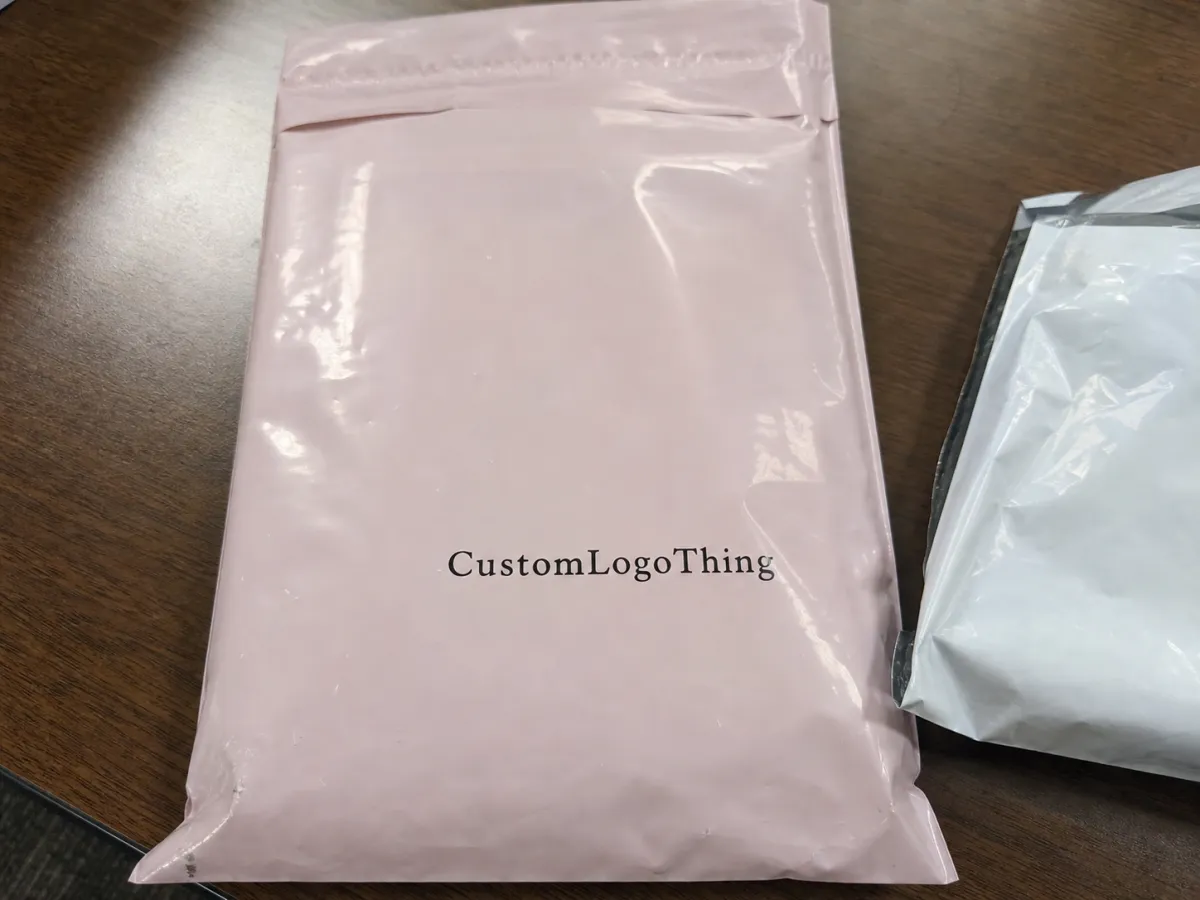
The price is usually pushed around by five variables: quantity, size, film thickness, print coverage, and shipping. That sounds ordinary until you see how quickly the curve bends. A 500-piece run with a simple one-color logo can sit in a very different price band from a 5,000-piece run with full-bleed artwork, even if the bag dimensions are identical.
Waste is the hidden line item buyers miss most often. If the mailer is too large, packing gets slower and the finished presentation loses its polish. If it is too tight, the favor can scuff, bow, or force the adhesive to fight the contents. Either way, the unit cost rises through labor, defects, or reprints rather than through the mailer price alone.
Extra stock looks harmless until it starts sitting in storage. Ordering 10 to 15 percent above need may seem cautious, but for wedding favors that margin can trap cash in unused inventory. If the event changes, the guest count shifts, or the artwork needs a date adjustment, the leftovers are not a savings story; they are a write-off risk.
Packaged presentation also matters more for wedding favors than it does for generic e-commerce mailers. Guests are handling the bag at a table, not pulling it from a porch. The print has to read cleanly, the closure has to feel deliberate, and the film should hold shape without looking inflated. In practice, the best unit cost is the one that delivers the fewest corrections per hundred pieces.
A practical buyer’s test is simple: compare the cost of the mailer against the cost of the finished favor pack moving through the room. If a slightly better bag cuts packing time by 20 seconds per unit on a 300-piece order, the labor saved can matter more than a penny or two in print price. That is the sort of math that separates event packaging from casual bulk buying.
Mailer Structure, Materials, and Print Options That Fit Event Orders
For most wedding favor orders, the standard material choices are LDPE or a co-extruded film. LDPE stays flexible and is usually the lower-cost option. Co-extruded film adds strength and better opacity, which becomes useful when the favor is heavy, sharp-edged, or meant to stay hidden until opened. That upgrade can raise unit cost, but it often prevents more expensive damage later.
Film thickness deserves more attention than it usually gets. A thin bag can work for soft goods or flat inserts. Once the favor includes a box, candle jar, or layered contents, a thicker gauge helps the bag hold its form and resist puncture. Buyers sometimes compare thickness only on a spec sheet and forget that the bag is also being handled by venue staff, set out on tables, and sometimes repacked before the event.
Closure design is not a minor detail. A permanent adhesive strip is efficient when the bag needs to stay closed during transport. A tamper-evident seal gives a cleaner signal that the package has not been opened. A tear-strip matters when guests are expected to open the favor neatly without shredding the film. The closure choice affects perceived quality as much as the print does.
Print coverage is the next pressure point. A simple logo panel with a date usually costs less than full-bleed coverage because it is easier to register, proof, and run consistently. Multi-color art can look excellent, but each added color usually increases setup work and the chance of a mismatch. On smaller runs, the difference between one-color and full-color print can be larger than buyers expect.
Finish changes the mood of the package. Matte film reads softer and more upscale under warm venue lighting, while gloss reflects more and can make color pop if the design is bold. Opaque white film is often the cleanest backdrop for wedding monograms and fine typography. Clear or tinted film can work, but only if the contents are attractive enough to carry the look on their own.
Trade guidance from Packaging Consortium resources and handling standards from ISTA are useful reference points when comparing bag performance. Those sources do not pick the design for you. They do help separate visual preference from the mechanics of shipping, sealing, and storage.
That distinction matters because the prettiest option is not always the one that ships best. A wedding favor poly mailer that prints well but splits at the seam is a bad buy, no matter how good it looks in a proof. A plain-looking bag that closes consistently and survives transit often delivers the better total value.
Exact Sizes, Thickness, and Artwork Specs Buyers Should Confirm
Before a quote can be trusted, the supplier needs the packed dimensions, not just the product dimensions. That means flat width, length, gusset if the item has depth, seal area, and the actual filled thickness. The last number is the one that gets overlooked most often. A favor that sits neatly on a worktable can swell once tissue, filler, or a rigid insert is added.
A lot of pricing errors come from one bad assumption: the item and the pack are the same thing. They are not. A candle in a box may require more room above the closure line than the candle itself suggests. A folded garment may behave well in a sample but pinch once the last piece is added. If the mailer is sized from the bare item, the run often comes back too tight.
Film gauge should be stated plainly. A lighter gauge lowers unit cost and may be perfectly adequate for soft favors. A heavier gauge costs more, but it gives the bag body and helps it resist tearing at the corners or around the seal. For wedding work, that tradeoff often shows up as a choice between a bag that looks neat on day one and a bag that still looks neat after transport.
Artwork specs need the same discipline. Confirm resolution, bleed, safe area, and file type before the design is submitted. If the print is one color, the supplier may want vector art only. If the artwork is multi-color, ask how many colors are actually being counted, because some setups charge for each ink station, while others group close hues differently. That detail can change the quote more than the graphic itself.
Venue lighting should be part of the design check. A proof viewed on a screen does not tell you how metallic ink, pale blush, or fine script will read under warm uplighting. If the design includes a monogram or date lockup, leave breathing room around the art. Tight layouts often look clever in a mockup and cramped on the finished bag.
- Measure the packed favor, not the empty product.
- Confirm film gauge so thickness matches weight and handling.
- Approve artwork specs for bleed, safe area, and file type.
- Check finish under venue lighting, not only on a monitor.
One more practical detail: if the mailer includes a date, location line, or event-specific message, ask whether the print plate or setup can be reused later. That question matters for repeat events and multi-day celebrations. If the artwork is flexible, the buyer may get better value by keeping the main panel constant and changing only a small variable area.
Pricing, MOQ, and Unit-Cost Breakpoints for Event Orders
Two quotes for the same-looking mailer can differ because they are not truly the same job. One may include setup, proofing, and freight assumptions. The other may leave those items hanging until later. If the estimate is not itemized, comparing wedding favor poly mailers unit cost is almost impossible.
MOQ changes everything. A lower minimum order quantity is useful for intimate weddings or premium favors, but it usually raises the unit price because setup work is spread across fewer pieces. As quantity climbs, the curve usually drops in steps, not in a straight line. The bag becomes cheaper per piece, while the setup cost shrinks as a percentage of the order.
Here is a practical planning range for Custom Poly Mailers before freight. These are working ranges for quote comparison, not promises. The point is to make it easier to spot a number that is too high or suspiciously low.
| Order profile | Typical spec | Planning range per unit | Main cost driver |
|---|---|---|---|
| Small event run | 500 pieces, 1-color logo, standard size | $0.68-$1.15 | Setup charges and MOQ pressure |
| Mid-size wedding order | 1,000 pieces, 2-color print, 2.5-3 mil film | $0.36-$0.72 | Print coverage and artwork complexity |
| Value-focused bulk order | 2,500 pieces, simple logo panel, standard closure | $0.24-$0.48 | Volume spread across tooling fees |
| Higher-volume bulk pricing | 5,000 pieces, limited colors, consistent sizing | $0.16-$0.34 | Production efficiency and lower setup burden |
Tooling and setup should be called out separately whenever possible. A modest setup charge can be reasonable on a tight run. A large one can erase the benefit of a lower unit price. The fastest way to improve the number is often to simplify the art, choose a standard size, or reduce the number of colors instead of trying to squeeze the bag price down by force.
Freight deserves its own line as well. Wedding orders are time-sensitive, which means shipping can move from ordinary ground service into a much pricier lane if the deadline is tight. A quote that hides freight or assumes the wrong destination ZIP can make the unit price look better than the landed cost. For event planning, landed cost is the only number that matters.
There is also a softer breakpoint that experienced buyers watch: the point where a quote gets cheaper per piece but forces more inventory than the event can use. That is not savings. It is storage. If the leftover quantity is likely to sit for months, the lower unit cost may be the wrong answer.
Artwork Approval Process and Production Timeline
The cleanest orders start with complete information. When requesting a quote, include quantity, packed dimensions, artwork file, print color count, shipping ZIP code, and the event deadline. If one of those pieces is missing, the supplier has to estimate. Estimating may be acceptable for a rough conversation; it is not good enough for a wedding schedule.
The approval path usually follows a straightforward sequence: concept review, digital proof, corrections if needed, final signoff, then production. Each extra revision round adds time and can add cost if the artwork shifts after setup has already begun. Clean files and a clear print area shorten the process more than aggressive follow-up ever will.
For standard production, 12 to 15 business days after proof approval is a practical planning assumption for many custom runs, then freight on top. Some jobs move faster, but only if the film, inks, and press schedule line up. Rush timing often looks shorter on paper than it is in reality. Transit delays, not machine time, are where event orders most often go wrong.
Build in margin if the favor is fragile or the guest count is fixed. A one-day cushion can absorb a proof correction, a print adjustment, or a shipment that moves one day slower than expected. That extra time is usually cheaper than a reprint.
Buyer rule: a quote is only useful if the proof schedule is clear. If the supplier cannot tell you when the proof will land, how many revisions are included, and when production starts after approval, the number is incomplete.
Quality Checks That Prevent Damaged Favors and Reprints
Quality control should be concrete, not vague. The core checks are seal strength, print alignment, color consistency, and film condition across the run. If the seam opens too easily, or if the print drifts from one bag to the next, the whole order starts looking less premium. Wedding favors magnify small defects because guests tend to inspect them at table distance.
A good sample review includes a pull test on the seal, a check of the edge welds, and a quick trial fit with the actual favor. Many buyers skip the trial fit and only discover the issue during assembly, which is the worst possible moment. A bag that technically fits but is awkward to load can slow the event team and create uneven results.
For shipment-heavy orders, it helps to think in the same direction as ISTA-style handling logic. That does not mean every order needs a formal lab report. It does mean the bag should be judged against stacking, friction, and opening cycles rather than a single static photo. Will it arrive flat, stay sealed, and still look crisp when the table is set? That is the real question.
Consistency matters visually too. One off-size mailer can make the display look uneven. One slightly dull print can stand out against fifty good ones. Small event runs are more sensitive to this because the guest sees every piece, not a diluted sample of the batch.
If the favors are premium, order a few extras. A short pack is usually more expensive than a modest overage, and a replacement run tends to cost more than the spare units themselves.
That spare quantity is not padding for its own sake. It protects against packing mistakes, count changes, damaged samples, and the one bag that gets scuffed right before the event opens.
How to Compare Suppliers Without Paying for Guesswork
Not every quote is built the same way. The cleanest comparison is an itemized one, because a low total can hide proofing charges, tooling, rush handling, or freight assumptions. Once those items surface later, the first quote may no longer be the cheaper one.
Three questions reveal a lot: how fast is the proof, how many changes are included, and what is the sample policy? A supplier that catches artwork errors early and confirms shipping in writing often delivers more value than a lower quote that leaves the buyer to manage every correction. For wedding orders, predictability usually beats theoretical savings.
Operational value matters here. The right supplier reduces corrections, reduces damaged pieces, and keeps the order stable from proof to delivery. If the favor pack is unusual, ask whether the team can match the mailer size to the packed item rather than to a rough description. That small step often improves both fit and unit cost.
It also helps to compare the mailer against other packaging formats if the job is not locked in yet. Some favor sets are better in a different outer pack, especially when the contents are delicate or the presentation needs more structure. See Custom Packaging Products for broader options, or start with Custom Poly Mailers if the format is already fixed and the only question is spec.
Compare quotes line by line. If one number hides freight, proofing, or tooling fees, it is not the best value. It is just the least informative quote.
That matters even more for wedding favor poly mailers unit cost because a small oversight can tilt the landed cost more than the printed bag price itself. Buyers who compare complete specs usually get a cleaner result, fewer surprises, and a better final piece.
Next Steps: Build a Quote-Ready Spec Sheet
The easiest way to get an accurate quote is to hand over a concise spec sheet. Include final quantity, packed dimensions, artwork file, print color count, closure preference, delivery deadline, and ZIP code. If the favor includes tissue, inserts, boxes, or protective wrap, say so explicitly. Those extras change both the fit and the price.
If the favor is fragile, premium, or tied to a fixed date, ask for one sample or mockup before approval. That single step can confirm size, seal behavior, color balance, and the way the package sits on a table. It also catches problems that are hard to spot in a digital proof, such as a closure strip that is too short or artwork that crowds the edge.
The final quote should separate unit price, setup cost, shipping, proof fee if there is one, and rush charges if they apply. A good quote does not blur the logic. It shows the pieces clearly so the buyer can compare options without reading tea leaves.
For most event orders, the most practical path is straightforward: gather a few itemized quotes, ask for a sample fit check if the favor is unusual, and choose the supplier that gives the clearest production path. That approach keeps wedding favor poly mailers unit cost under control without turning the order into a guessing contest.
What affects wedding favor mailer unit cost the most?
Quantity is usually the biggest lever because higher volume spreads setup work across more pieces. Size, film thickness, and print colors also move pricing quickly, especially on smaller event runs. Freight, proof changes, and special packaging can change the landed cost more than buyers expect.
How does MOQ change the price for custom favor poly mailers?
Lower MOQ usually raises the cost per piece because setup work is spread over fewer bags. If the budget is tight, use a standard size and one print color to keep the minimum practical. Also ask whether the MOQ is tied to the print method, not just the bag itself.
What size should I order for wedding favors in poly mailers?
Measure the fully packed favor, not the item by itself, and add room for closure and easy insertion. If the favor has boxes, tissue, or inserts, confirm packed depth so the mailer does not bow open. A sample fit check is the safest way to avoid a mismatch.
How long is the usual turnaround after proof approval?
Standard production is often 12-15 business days after proof approval when the artwork is final and requires no revisions. Rush timing depends on size, print complexity, and whether the supplier has the film and inks ready. Always add shipping time to the estimate.
Can I get a sample before ordering printed wedding favor mailers?
Yes. Ask for a plain sample or a printed mockup if color accuracy or fit matters. A sample helps confirm seal quality, size, and how the mailer looks with the actual favor inside. For premium events, sample approval is a low-cost way to avoid a full reprint.


