Book Subscription Poly Mailers Unit Cost
Book subscription brands often default to boxes because boxes feel safe. That instinct is understandable, but it is not always economical. For single books, slim hardcovers, zines, and flat kit add-ons, a properly specified poly mailer can protect the contents, reduce postage, and cut packing time without forcing the customer to pay for empty space. That is why book subscription Poly Mailers Unit cost matters more than the headline price of any one carton or bag.
The buying question is less dramatic than it sounds: do you need rigid board protection, or do you need a mailer that holds the stack steady, resists punctures, and does not add unnecessary freight weight? For many subscription programs, especially those shipping one or two books at a time, the answer is the mailer. Not because it is fashionable. Because it solves a real logistics problem.
"A mailer that fits the kit saves money twice: once in postage, again in labor."
That idea sounds simple until the order lands in production. If the film is too thin, the adhesive too weak, or the dimensions too loose, the savings vanish in rework, damages, and slow pack-out. If the specification is right, the package moves faster through fulfillment, the branding looks more intentional, and the books arrive without corner crush. Clean economics usually look boring from the outside.
Why Poly Mailers Beat Boxes For Book Subscriptions
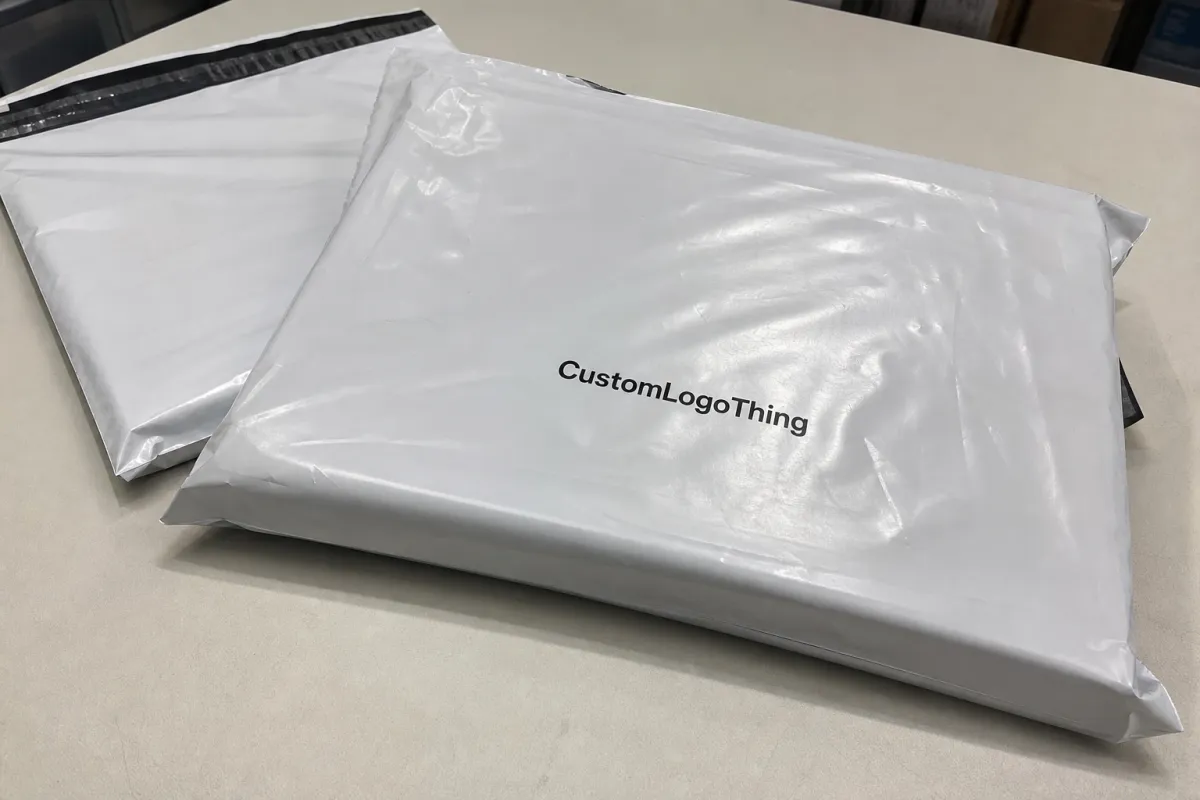
Boxes still have a place. Oversized hardcovers, mixed merchandise bundles, and fragile presentation kits may need rigid packaging. But a lot of subscription mailers exist because nobody challenged the default. A standard corrugated carton adds material, takes more shelf space, and often needs filler that does little except raise the cost per order. A poly mailer removes much of that waste.
That difference shows up in warehouse operations as much as in postage. A packer can slide in a paperback, add a card or bookmark, seal the flap, and move to the next order. No folding sequence. No tape gun. No void fill. On a month with a heavy subscription drop, those seconds accumulate into real labor savings. Across 10,000 units, even a small reduction in pack time matters.
There are three practical gains buyers usually see:
- Lower shipping weight because the package stays flat and does not carry carton mass.
- Faster fulfillment because fewer materials are handled at the packing station.
- Better shelf and brand presentation because the exterior can carry printed artwork, a logo, or return information without extra labels.
Protection is not the weakness people assume, provided the mailer is specified correctly. A paperback corner does not need the same structure as a ceramic item. It needs enough clearance, a reliable seal, and film that can resist puncture through sortation and delivery. Buyers who test the actual kit, not just a sample sleeve, usually make the right call faster. For packaging validation, many teams reference general transit testing practices such as those published by ISTA, while paper inserts or companion cards may be sourced with forestry claims checked against FSC documentation.
The main mistake is assuming a lower unit price on a box equals a lower total cost. It rarely does. Once filler, tape, inventory space, and labor are included, the carton can become the expensive option. The landed cost is the number that matters, not the shelf price of the packaging itself.
There is also a quieter advantage: consistency. A well-made mailer ships flatter, stacks more predictably, and often creates less variation in carrier surcharge exposure than a box that balloons depending on how much void fill the team adds that day. That is not glamorous. It is useful.
Material, Print, And Closure Choices That Actually Matter
The film choice sets the tone for both durability and appearance. LDPE is the flexible workhorse: soft hand feel, good sealability, and common in custom mailers. HDPE feels crisper and lighter at the same gauge, though it can read as less substantial if the print and finish do not carry the design well. Co-extruded film is often the better option when the outer layer needs puncture resistance and the print surface has to stay clean and even.
Color matters more than some teams expect. Opaque white gives a retail-clean look and hides inserts well. Black or charcoal can feel more premium and offers better concealment. Clear film is rarely the right move for subscription books unless the contents are meant to be visible; otherwise, the package can look unfinished and reveal too much of the contents during handling. A good mailer should look intentional on the sorting belt, not just on a product page.
Finish changes perception quickly. Matte tends to feel more editorial and restrained. Satin splits the difference between clean color and a softer surface. Gloss delivers stronger pop for bright graphics but can show scuffs more readily, especially if the route is rough or the package is handled repeatedly before delivery. For literary brands, the quieter finish usually looks more consistent with the product.
Print choices drive cost and the production method:
- One-color logo print keeps setup simpler and usually holds the unit price down.
- Two-color print improves visibility, but it adds plates, alignment checks, and often higher minimums.
- Full-coverage artwork can look strong in unboxing content, though it increases ink usage and quality-control time.
- Inside print works for thank-you copy, promotional messages, or return instructions, but it is not a free add-on.
Closure details can make or break pack-out. A peel-and-seal adhesive flap remains the standard because it is fast and consistent. For hand-packing operations, a wider flap or a thumb notch can improve speed and reduce misalignment. If the shipment needs tamper evidence, ask for a closure that shows obvious opening rather than relying on a generic flap. Resealable closures are useful for returns or subscription exchange programs, but they should be chosen for a reason, not because they sound premium.
For buyers, the real question is whether the package protects the books while keeping the cost per piece in a range that still makes sense for the margin. A polished sample is not proof. A workable specification is proof.
Size, Thickness, And Finish Specs For Common Book Kits
Measure the actual kit, not the trim size on the cover. That sounds obvious, yet it is one of the most common errors in packaging procurement. A paperback with a dust jacket, belly band, bookmark, and promo card behaves differently from a bare book. The quote needs the real stack dimensions: height, width, thickness, insert count, and whether the contents vary from month to month.
Fit is a balancing act. Too tight, and the packer slows down while trying to slide the contents in without scuffing the corners. Too loose, and the book moves in transit, which can lead to crushed edges or a crooked seal. A mailer should have enough working room for clean insertion, but not so much that the contents drift around inside the bag. That middle ground is where the savings show up.
Thickness deserves the same attention as size. A thinner film can work well for a single lightweight paperback if the corners are soft and the seal is dependable. Once a kit includes heavier hardcovers, multiple inserts, or sharp-edged items, the spec should step up. A few extra microns often cost less than the first return wave.
A practical starting range looks like this:
- Light single-book shipments: 2.5-3 mil film, simple print, standard peel-and-seal flap.
- Paperback plus insert kit: 3-3.5 mil film, opaque finish, one-color or two-color branding.
- Hardcover or heavier bundles: 3.5-4.5 mil film, stronger puncture resistance, wider seal area.
- Sharp-corner or premium kits: thicker co-extruded film and a more forgiving closure zone.
That range is directional, not universal. A locally delivered order behaves differently from a long cross-country shipment that passes through more sortation points and more rough handling. If the route is especially hard on packaging, test the actual stack under real handling conditions. A flat sample in a conference room tells you almost nothing.
There is also a visual angle. If the brand is careful with photography, the mailer finish should not fight the book design. Matte or satin surfaces tend to hide scuffs better than glossy ones, especially on darker inks. That matters when the package appears in customer photos and social posts. A package that looks good after shipping is more valuable than one that only looks good in a mockup.
A simple approval checklist saves money later:
- Drop test the loaded mailer from a reasonable handling height.
- Check the corners against a rough surface for puncture resistance.
- Pull the seal to confirm the adhesive holds under normal pressure.
- Run a short pack-out trial with the exact insert stack.
- Inspect opacity under bright light to make sure the contents are not visible through the film.
If the fit is right and the closure stays stable, the two expensive problems are avoided: damaged product and slow production. Both show up as rework. Rework is just a more polite word for money leaking out of the process.
Book Subscription Poly Mailers Unit Cost, MOQ, and Pricing
This is the part buyers usually want to shortcut. They ask for a price, compare the first number they see, and later discover that freight, tooling, and proofing changed the economics. Book Subscription Poly Mailers unit cost depends on a limited set of variables: size, film thickness, print coverage, number of colors, adhesive type, and order volume. Once those are fixed, the quote becomes much more meaningful.
MOQ changes the picture fast. Short runs cost more per piece because fixed work has to be spread across fewer units. Plates, setup, matching, and changeovers do not shrink just because the order is small. A pilot run can look expensive, and usually is. The point of that run is not to achieve the best unit cost; it is to validate demand before committing to a larger volume.
Here is a realistic planning framework for custom printed book mailers. These are order-of-magnitude ranges, not promises, because the final spec still controls the number.
| Quantity | Typical Spec | Cost Per Piece | What Usually Changes |
|---|---|---|---|
| 1,000-2,500 | Simple size, 1-color logo, standard peel-and-seal | $0.42-$0.78 | Higher setup charges, less batch efficiency, limited bulk pricing |
| 5,000 | Mid-size mailer, 1-2 color print, opaque finish | $0.18-$0.34 | Better spread on tooling fees and more stable production cost |
| 10,000-25,000 | Optimized spec, simple artwork, repeatable monthly reorder | $0.11-$0.24 | Bulk pricing improves, freight and carton packing matter more |
The table above is useful only if the spec matches. A quote that looks cheaper because it uses thinner film or excludes freight is not a better quote. Ask whether sampling is included. Ask whether freight is included. Ask whether carton packing is included. Ask whether a revision to the artwork triggers a fresh setup charge. Those are the details that turn a low number into a high landed cost.
Another trap is comparing suppliers with different assumptions. If one quote uses a 3 mil bag, another uses 4 mil, and a third includes inside print, the price gap is not a real comparison. Align the dimensions, thickness, closure, print side, and quantity before drawing conclusions. Otherwise the spreadsheet is accurate and the buying decision is not.
For subscription programs that reorder every month, price stability matters as much as the first-run unit cost. A supplier with steady reprint pricing, predictable proofing, and fewer hidden fees is often the better choice over time. A difference of a few cents per piece can be worth it if the file is clean, the schedule holds, and the packaging does not need constant intervention.
There is also a practical scale effect that brands sometimes overlook. On a 20,000-unit run, a $0.05 change per piece is a $1,000 swing before freight. That is enough to change margin expectations, especially for boxes that already carry paper goods, inserts, and carrier fees. Packaging choices are small only until they are multiplied across recurring subscriptions.
Production Process, Proofing, And Lead Time
A clean order starts with a clear spec sheet. The workflow is usually straightforward: quote review, artwork check, proof approval, pre-production confirmation, bulk production, quality control, and dispatch. The process only gets messy when one of those steps is vague or changes midstream.
For simple print jobs, production often takes 12-15 business days after proof approval. More complex artwork, tighter color matching, or custom film construction can stretch that to 18-25 business days. Freight comes after that, and buyers often underestimate the transit time. In some cases, the shipping leg takes longer than the run itself, particularly for cross-border orders or cartons moving through multiple distribution points.
Common delay points are predictable:
- Measurements are incomplete or based on the wrong book stack.
- Artwork revisions continue after the proof has been approved.
- Logo files are low resolution or missing the correct color values.
- The closure style changes after sample approval.
Quality control should be specific, not decorative. A useful check includes gauge verification, seal adhesion testing, print rub resistance, and a look at the opacity under light. If the mailer has a matte finish, the surface should also be checked for scuffing after handling. If the print is critical to the brand, ask for color control references instead of trusting a generic "close enough" match.
Good suppliers lock the spec before production starts. They do not treat every email as a reason to redesign the mailer. That discipline protects the schedule and keeps book subscription Poly Mailers Unit Cost from drifting with each revision. Consistency is not a luxury in recurring subscription work. It is the whole point.
If sustainability claims are part of the packaging story, they should be documented early. Buyers get into trouble when the marketing message is set first and the material specification is checked later. Recycled content, resin claims, and paper inserts should be backed by the actual file set and supplier documents, not a vague line in a presentation deck. Clear paperwork is better than a polished claim that cannot be verified.
The strongest production file answers the questions a plant would otherwise have to ask later: final dimensions, film gauge, print colors, closure type, carton count, destination, and delivery window. Nothing about that is flashy. It just reduces mistakes.
What To Send For A Fast Quote And Repeat Reorders
If you want a useful quote quickly, send the facts. Not a mood board. Not a sentence that says "something premium." Give the supplier the actual kit data so they can price the job accurately the first time.
- Book dimensions and whether the kit includes one book or multiple books.
- Insert count and whether any inserts are sharp-edged, folded, or coated.
- Target quantity plus at least one alternate volume for volume-based pricing.
- Print colors, artwork files, and whether inside print is needed.
- Closure preference such as standard peel-and-seal or tamper-evident sealing.
- Ship date and whether the order ships to one site or multiple locations.
- Monthly variability if the subscription kit changes from drop to drop.
Ask for two or three volume tiers: pilot quantity, mid-volume run, and full reorder volume. That shows the unit cost curve instead of one headline number that may disappear once freight and setup are added. If the order is likely to repeat, say so. Reorders often justify cleaner pricing and fewer proofing surprises.
For recurring programs, consistency matters more than novelty. The right supplier should keep the dimensions stable, the print repeatable, and the proof cycle short enough that the monthly drop does not turn into a scramble. That is how a packaging line stays predictable instead of becoming a monthly exception.
If your broader shipping set includes inserts, cards, or branded outer packaging, make sure those pieces are specified with the mailer, not after it. A good mailer quote can be undermined by a mismatched insert stack that changes thickness, adds friction, or forces a last-minute resize. Packaging works best when the parts are designed together.
The short version is straightforward: size the mailer to the real stack, keep the print disciplined, test the actual books, and compare quotes on the same spec. Do that, and book subscription Poly Mailers Unit cost becomes a buying decision instead of a guessing game.
FAQ
What affects book subscription poly mailers unit cost the most?
Size, film thickness, and print coverage usually move the price first. MOQ matters as well because setup costs are spread across fewer units on smaller runs. Freight, samples, and any special finish should be checked before comparing suppliers, or the number will not mean much.
What thickness is best for book subscription poly mailers?
Lighter single-book kits can use thinner film if the corners are soft and the adhesive is reliable. Heavier bundles, hardcovers, and kits with sharp inserts usually need a thicker spec for puncture resistance. Test the real stack before approving the order.
Can I print branding on both sides of book subscription poly mailers?
Yes, but double-sided printing usually increases unit cost and can lengthen production. Outside print is standard; inside print works well for messages, return instructions, or promotional copy. Simple artwork keeps approval and repeat orders easier.
What MOQ should I expect for custom book subscription poly mailers?
MOQ depends on size, print complexity, and film specification, so there is no universal number. Pilot runs are useful for testing demand, but the per-piece price will be higher. Ask for tiered pricing so you can see where the better unit cost starts.
How do I compare quotes for book subscription poly mailers fairly?
Make sure every quote uses the same size, thickness, closure, and print spec. Check whether tooling, samples, freight, and carton packing are included or billed separately. Compare reorder consistency and proof quality, not just the cheapest opening price.


